The Tesla Cybertruck’s angular silhouette isn’t just a conversation starter—it’s a bold declaration that the automotive world has entered an era where utility and avant-garde design can coexist. But beneath its sci-fi aesthetic lies a question that lingers like a stubborn riddle: Is this angular titan truly practical for the daily grind? For commuters, road-trippers, and weekend adventurers alike, the Cybertruck’s promise of rugged capability and futuristic flair collides with the mundane realities of parking spaces, grocery hauls, and pothole-pocked city streets. Can a vehicle designed by Elon Musk’s visionary engineers and clad in Cold War-inspired steel actually function as a reliable, day-to-day workhorse? Let’s dissect the Cybertruck’s practicality with the precision of a surgeon—and the skepticism of a seasoned critic.
The Unconventional Exterior: A Double-Edged Blade
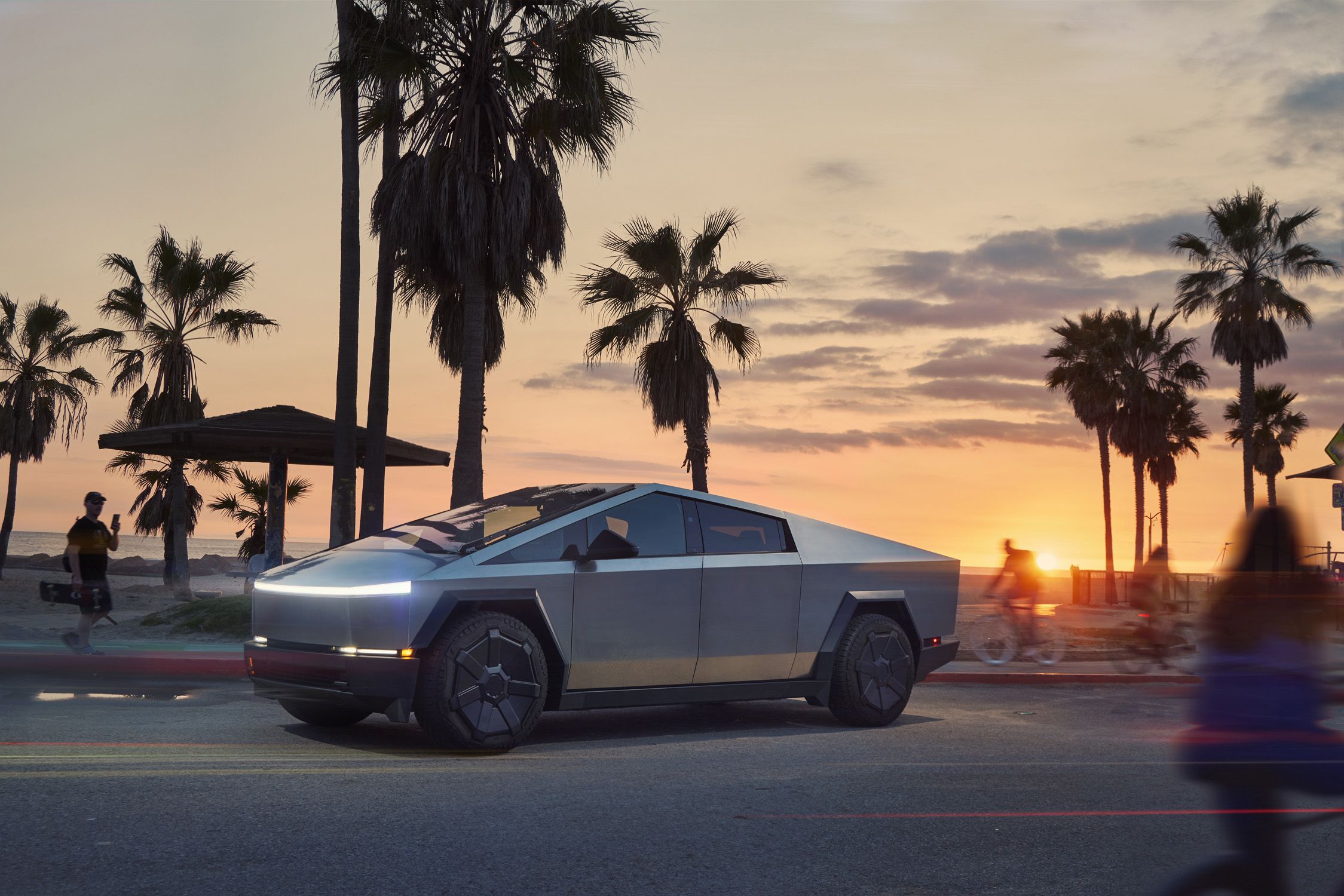
The Cybertruck’s stainless-steel exoskeleton isn’t merely a stylistic flourish; it’s a statement of defiance against conventional automotive norms. Unlike the sleek curves of a Porsche Taycan or the understated elegance of a Lexus RX, the Cybertruck’s geometric brutality demands attention—and space. Parallel parking becomes a tactical exercise in spatial reasoning, as its 75-inch width (nearly a foot wider than a Toyota Camry) transforms tight urban lots into potential parking purgatories. Yet, this same uncompromising design grants it an indomitable presence on the road, repelling minor dings and scratches that would cripple a traditional vehicle’s paint job.
But practicality isn’t just about fitting into a spot. It’s about enduring the elements. The Cybertruck’s monocoque construction, while reducing weight, also means repairs aren’t merely costly—they’re nearly impossible without Tesla’s proprietary tooling. A fender bender in a Cybertruck isn’t just a dent; it’s a potential financial migraine. For those who prioritize longevity and ease of maintenance, the Cybertruck’s design philosophy may feel less like innovation and more like a high-stakes gamble.
Interior Spaciousness: A Cargo Cult’s Dream
Step inside, and the Cybertruck’s interior unfolds like a minimalist’s sanctuary—or a cavernous void, depending on your perspective. The expansive cabin, with its vaulted ceiling and panoramic glass roof, offers a sense of openness that few trucks can match. The rear seats, though not as plush as those in a Mercedes-Benz GLE, provide ample legroom for adults, and the front cabin’s ergonomics are surprisingly intuitive, with a yoke-style steering wheel that harks back to aviation’s golden age. Yet, the lack of traditional stalks for turn signals and wipers (replaced by touch-sensitive controls) may frustrate drivers accustomed to tactile feedback.
The real star of the show is the frunk and bed, which together offer a combined 11 cubic feet of storage—more than enough for a week’s worth of groceries or a weekend’s worth of camping gear. The bed’s 6.5-foot length and waterproof, stain-resistant surface make it a versatile platform for everything from furniture hauls to tailgate parties. However, the absence of a traditional tailgate (replaced by a clamshell-style door) can feel awkward when loading oversized items, and the lack of a bed liner means hauling anything abrasive risks scratching the stainless steel.
Performance and Driving Dynamics: A Paradox of Power and Precision
The Cybertruck’s acceleration is nothing short of breathtaking. The CyberBeast trim, with its tri-motor all-wheel-drive system, catapults from 0 to 60 mph in a scant 2.6 seconds—faster than a Lamborghini Huracán. Yet, this raw power comes with a caveat: the stiff suspension and heavy-duty steering feel more akin to a sports car than a work truck. The Cybertruck’s ride quality is jarringly firm, transforming even the smoothest of highways into a rumble strip. For daily commuting, this means every pothole and expansion joint becomes a percussive reminder of the road’s imperfections.
Handling, too, is a study in contradictions. The Cybertruck’s low center of gravity and precise weight distribution lend it a surprising agility for its size, but the lack of a traditional suspension system (replaced by adaptive air suspension in higher trims) means it can feel unsettled on uneven terrain. Off-road enthusiasts will appreciate the adaptive air suspension’s ability to raise the ride height by up to 16 inches, but the Cybertruck’s 35-inch all-terrain tires and 3,500-pound payload capacity are more about capability than comfort. In short, the Cybertruck drives like a sports car in a tuxedo—impressive, but not always appropriate.
Charging and Range: The Electric Paradox
As an electric vehicle, the Cybertruck’s practicality hinges on its ability to keep up with the demands of daily life. With a range of up to 340 miles (depending on trim and conditions), the Cybertruck can easily handle most commutes without a recharge. However, the reality of long-distance travel introduces a new set of challenges. Tesla’s Supercharger network is robust, but the Cybertruck’s massive battery pack (the largest in any production vehicle) means charging times are longer than those of smaller EVs. A 250 kW Supercharger can replenish 80% of the battery in about 30 minutes, but that’s still a significant chunk of time compared to a five-minute gas station pit stop.
Moreover, the Cybertruck’s weight (nearly 7,000 pounds in CyberBeast trim) means its energy efficiency is less than stellar. EPA estimates peg its efficiency at around 60 MPGe, which is impressive for a truck but still means more frequent stops on road trips. For those who live in areas with sparse charging infrastructure, the Cybertruck’s practicality may be limited by the same range anxiety that plagues other EVs.
Cost and Ownership: A Premium Price for a Polarizing Vehicle
Practicality isn’t just about functionality; it’s also about affordability. The Cybertruck’s starting price of $60,990 (before incentives) is steep, but not outrageous for a high-performance electric truck. However, the CyberBeast trim, with its full suite of performance and luxury features, commands a price tag north of $100,000—putting it in the same league as a Porsche 911 or a Mercedes-AMG G-Wagon. For this kind of investment, buyers expect not just capability, but refinement, and the Cybertruck’s sparse interior and utilitarian design may leave some feeling underwhelmed.
Ownership costs are another consideration. Tesla’s lack of a traditional dealership network means service and repairs are handled directly by the company, which can be both a blessing and a curse. On one hand, Tesla’s over-the-air updates ensure the Cybertruck is always improving. On the other, the absence of a local service center can make repairs a logistical nightmare. Additionally, the Cybertruck’s unique design means replacement parts (like the stainless-steel panels) are expensive and often require special ordering.
Is the Cybertruck Practical? The Verdict
The Tesla Cybertruck is a vehicle of extremes. It’s a statement piece that demands attention, a performance machine that defies convention, and a utilitarian workhorse that challenges expectations. For those who prioritize style, power, and innovation over comfort and practicality, it’s a dream on wheels. But for the average commuter or family driver, the Cybertruck’s quirks—its size, its ride quality, its charging requirements—may outweigh its charms.
Ultimately, the Cybertruck’s practicality depends on how you define it. If practicality means fitting into a tight parking spot, hauling a load of lumber, or cruising silently to the grocery store, then the Cybertruck falls short. But if practicality means making a bold statement, turning heads at every stoplight, and embracing a future where trucks are as much about identity as they are about utility, then the Cybertruck is nothing short of revolutionary.
For the rest of us, the Cybertruck remains a tantalizing what-if—a glimpse into a world where cars are as much about art as they are about function. And in that world, practicality is whatever you choose to make it.