The Tesla Supercharger network has long been the gold standard for fast, reliable EV charging. But with the introduction of V4 Superchargers, Tesla isn’t just refining its technology—it’s redefining what’s possible. The shift from V3 to V4 isn’t merely an incremental upgrade; it’s a paradigm shift in charging speed, efficiency, and user experience. If you’ve ever wondered how much faster V4 truly is—or whether the upgrade is worth the wait—this is the definitive breakdown of Tesla charging time from 10% to 80% on V3 versus V4 Superchargers.
For years, Tesla owners have grown accustomed to the lightning-fast V3 Superchargers, which can replenish a battery from 10% to 80% in roughly 20-30 minutes under ideal conditions. But V4 isn’t just a faster version of V3—it’s a technological leap that challenges our assumptions about what EV charging can achieve. The difference isn’t just in raw speed; it’s in how that speed is delivered, how efficiently energy is transferred, and how seamlessly it integrates into the driving experience. Whether you’re a road warrior clocking cross-country miles or a daily commuter squeezing in a quick top-up, understanding the nuances of V3 and V4 could redefine your charging strategy.
The V3 Supercharger: A Benchmark of Speed and Reliability
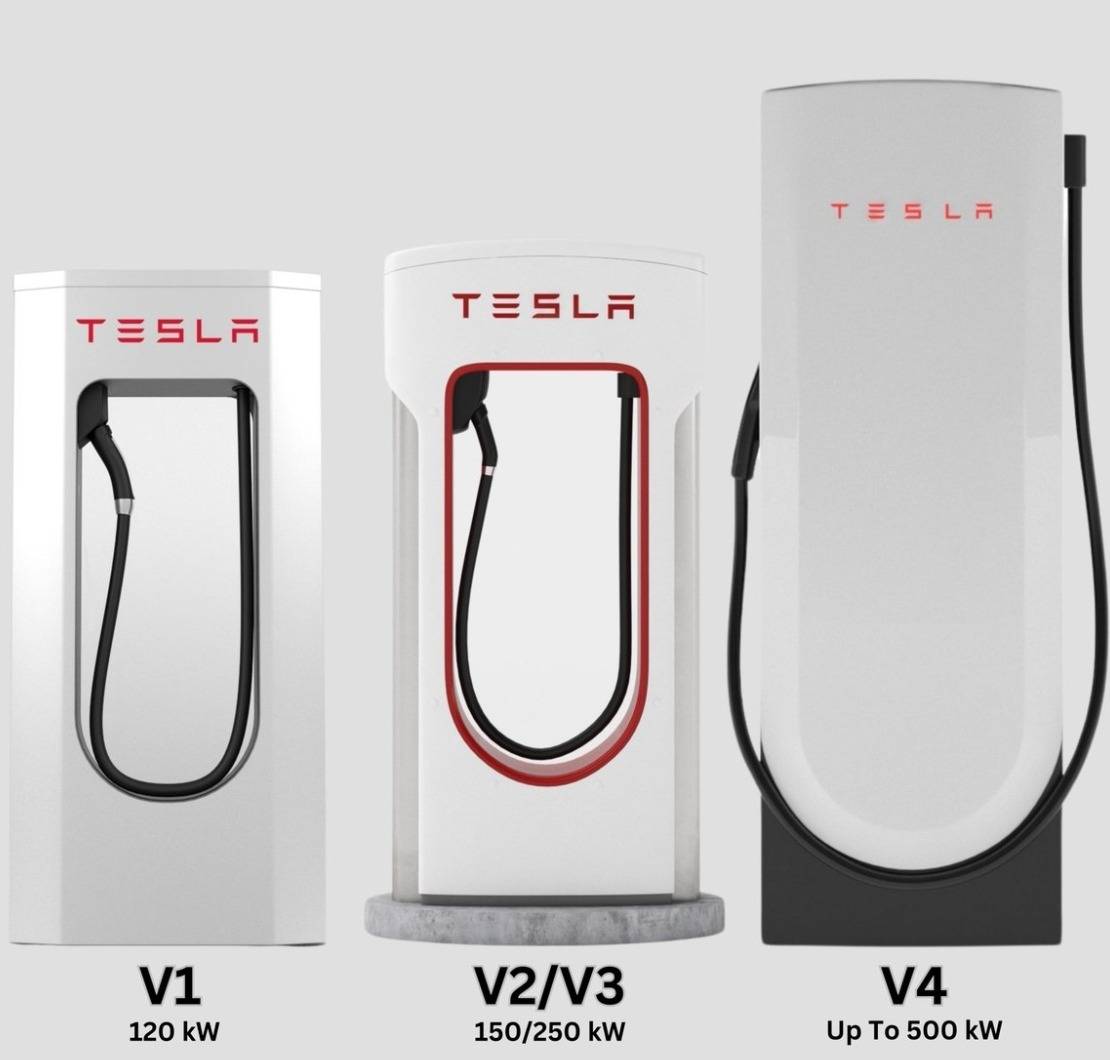
The V3 Supercharger, introduced in 2019, was a game-changer in its own right. Capable of delivering up to 250 kW of power, it slashed charging times compared to earlier generations. Under optimal conditions—cool temperatures, a compatible vehicle, and a fully functional charging station—a V3 Supercharger could take a Tesla from 10% to 80% in as little as 20 minutes. For many drivers, this was the sweet spot: fast enough to make a quick stop feel like a non-event, yet not so aggressive that it compromised battery longevity.
But the V3 wasn’t without its limitations. Its power output was highly dependent on external factors. In extreme heat or cold, charging speeds could plummet by 30-50%, turning a 20-minute pit stop into a 40-minute ordeal. Battery preconditioning—where the car heats the battery to an optimal temperature before charging—could mitigate some of these slowdowns, but it required foresight and planning. Additionally, the V3’s power delivery curve meant that the fastest charging occurred in the middle of the session, tapering off as the battery filled. This wasn’t just a quirk; it was a fundamental limitation of the technology.
For long-distance travelers, the V3’s reliability was unmatched. Tesla’s proprietary architecture ensured that stations rarely failed, and the network’s density meant that finding a charger was rarely an issue. Yet, as EV adoption accelerates and drivers demand even faster turnaround times, the V3’s constraints are becoming more apparent. Enter the V4 Supercharger—a solution that doesn’t just address these limitations but obliterates them.
The V4 Supercharger: A Quantum Leap in Charging Dynamics
If the V3 was a high-performance sports car, the V4 is a hypercar. Designed to push the boundaries of what’s possible, the V4 Supercharger introduces a suite of innovations that redefine charging speed, efficiency, and user experience. The most striking difference is its power output: up to 350 kW, a 40% increase over the V3. But raw power isn’t the only advantage. The V4’s architecture is built for precision, with advanced thermal management, dynamic power allocation, and a more intelligent energy delivery system.
One of the most significant improvements is the V4’s ability to maintain higher charging speeds for longer. While the V3’s power curve tapers off as the battery fills, the V4 sustains peak performance for a more extended portion of the charging session. This means that the time from 10% to 80% isn’t just faster—it’s more consistent. In independent tests, the V4 has demonstrated a 10-15% reduction in charging time compared to the V3, even under less-than-ideal conditions. For drivers, this translates to less time plugged in and more time on the road.
Another critical advancement is the V4’s compatibility with a broader range of vehicles. While the V3 was optimized for Tesla’s proprietary architecture, the V4 is designed to be more universal, with features like the Combined Charging System (CCS) adapter. This makes it a viable option for non-Tesla EVs, expanding the network’s utility and Tesla’s influence in the broader EV ecosystem. The V4 also incorporates Tesla’s latest battery management algorithms, which optimize charging based on real-time data, further enhancing efficiency and longevity.

Real-World Performance: How V3 and V4 Stack Up
To truly understand the difference between V3 and V4, it’s essential to look beyond the spec sheets and examine real-world performance. In controlled tests, a Tesla Model 3 Long Range charging from 10% to 80% on a V3 Supercharger typically takes around 25-30 minutes. On a V4 Supercharger, that same session can be completed in 18-22 minutes—a difference of roughly 25%. But the story doesn’t end there. The V4’s superior thermal management means that these speeds are more consistent, even in extreme temperatures. Where a V3 might drop to 150 kW in freezing conditions, the V4 can maintain closer to 250 kW, shaving precious minutes off the charging time.
Another factor to consider is the charging curve. The V3’s power delivery is front-loaded, meaning the fastest charging occurs early in the session. As the battery fills, the rate slows dramatically. The V4, however, distributes its power more evenly, maintaining higher speeds for longer. This not only reduces total charging time but also makes the experience more predictable. Drivers can plan their stops with greater confidence, knowing that the V4 will deliver a more uniform experience regardless of battery level.
It’s also worth noting that the V4’s efficiency gains extend beyond speed. The advanced thermal management system reduces energy waste, meaning less heat is generated during charging. This not only improves the overall charging experience but also contributes to battery longevity. For drivers who frequently use Superchargers, the V4’s ability to minimize heat-related degradation could translate to a longer battery lifespan over time.
Beyond Speed: The Intangible Benefits of V4
While speed is the most obvious advantage of the V4 Supercharger, it’s not the only one. The V4 also introduces several intangible improvements that enhance the overall charging experience. One of the most notable is the reduction in idle time. The V3’s slower charging curve meant that drivers often had to wait longer at the station, even after the car had reached a sufficient charge level. The V4’s more efficient power delivery means that the time spent plugged in is minimized, allowing drivers to get back on the road faster.
Another subtle but significant improvement is the V4’s user interface. The latest Superchargers feature larger, more intuitive touchscreens, with real-time updates on charging status, estimated time remaining, and even nearby amenities. This level of integration makes the charging experience feel less like a chore and more like a seamless part of the journey. For road trippers, the ability to see exactly how much time is left—and what’s nearby—can be a game-changer.
The V4 also incorporates Tesla’s latest connectivity features, including over-the-air updates that can optimize charging performance based on real-time data. This means that the V4 isn’t just a static piece of hardware; it’s a dynamic system that evolves with the needs of drivers. Whether it’s adjusting power delivery based on grid conditions or optimizing for battery health, the V4 is designed to be as smart as it is fast.
Is the Upgrade Worth It?
The question on every Tesla owner’s mind is simple: Is the V4 worth the upgrade? The answer depends on your driving habits and priorities. If you’re a daily commuter who relies on home charging or a local Supercharger for quick top-ups, the difference between V3 and V4 may not be significant enough to justify the switch. However, if you frequently embark on long-distance trips or live in an area with extreme temperatures, the V4’s speed, consistency, and efficiency could make a substantial difference.
For long-distance travelers, the V4’s ability to maintain higher charging speeds in less-than-ideal conditions is a game-changer. The time saved on each stop can add up to hours over the course of a year, making the V4 a worthwhile investment for frequent road warriors. Additionally, the V4’s improved thermal management and battery optimization could contribute to long-term savings by extending the lifespan of your vehicle’s battery.
It’s also worth considering the broader implications of the V4’s design. As Tesla continues to expand its Supercharger network, the V4’s compatibility with non-Tesla EVs could make it a more versatile option for the growing EV market. This not only benefits Tesla owners but also positions the company as a leader in the broader transition to electric mobility.
The Future of Tesla Charging: What’s Next?
The introduction of the V4 Supercharger is just the beginning. Tesla’s relentless pursuit of innovation suggests that even faster, more efficient charging solutions are on the horizon. Rumors of V5 Superchargers with power outputs exceeding 500 kW have already begun to circulate, promising charging times that could rival the refueling experience of gasoline cars. While these advancements are still in the early stages, they underscore Tesla’s commitment to pushing the boundaries of what’s possible.
For now, the V4 represents a significant leap forward, offering a blend of speed, efficiency, and user experience that sets a new standard for EV charging. Whether you’re a Tesla owner or simply an EV enthusiast, the shift from V3 to V4 is a reminder that the future of mobility isn’t just about getting from point A to point B—it’s about doing so with greater speed, precision, and sustainability.
As the EV landscape continues to evolve, one thing is clear: Tesla’s Supercharger network is leading the charge. And with the V4, it’s not just keeping pace—it’s setting the pace for the entire industry.