The road ahead is no longer a question of destination, but of capability. As the sun casts long shadows across the asphalt, two names dominate the conversation about autonomous driving: Tesla’s Autopilot and its more ambitious sibling, Full Self-Driving (FSD). These systems represent not just technological advancements, but a paradigm shift in how we perceive mobility, responsibility, and the very nature of transportation. To the uninitiated, they may appear interchangeable—both promise a future where the car does the driving. Yet beneath the surface lies a chasm of difference, one that stretches from the practical to the philosophical. This isn’t merely a tale of two systems; it’s a narrative about the evolution of human-machine symbiosis, where the line between passenger and pilot begins to blur.
What, then, truly separates Autopilot from FSD? The answer isn’t found in a single feature or a flashy demo, but in a mosaic of intent, capability, and the audacious promise of what’s yet to come. To understand this, we must peel back the layers of marketing jargon and technical specifications, revealing the stark realities—and the tantalizing possibilities—hidden within. Buckle up. The journey is as illuminating as it is unexpected.
The Genesis of a Revolution: From Driver Assistance to Autonomous Ambition
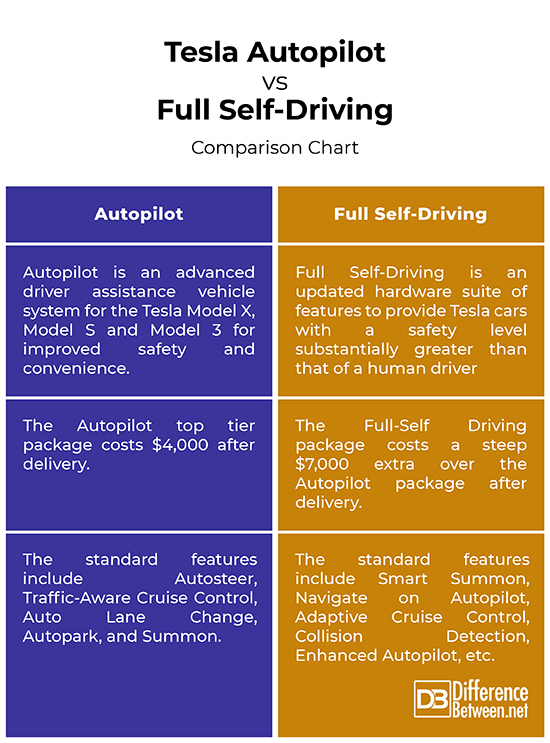
Autopilot, in its most distilled form, is a sophisticated driver-assistance system—a digital co-pilot designed to ease the burden of long drives and monotonous commutes. Introduced in 2014, it was Tesla’s first foray into the realm of semi-autonomous driving, leveraging a suite of cameras, ultrasonic sensors, and radar to interpret the road. Its primary function? To maintain lane position, regulate speed, and even navigate highway interchanges with minimal human input. Think of it as a seasoned first mate, ever-vigilant but always deferring to the captain’s ultimate authority.
FSD, on the other hand, is Tesla’s magnum opus—a system engineered to transcend assistance and approach autonomy. Marketed as a beta feature (though its name suggests otherwise), FSD promises to handle not just highways, but city streets, traffic lights, stop signs, and even the chaotic ballet of urban driving. It’s not merely a tool; it’s a claim to redefine the very act of driving. Where Autopilot whispers, FSD roars. Where one system adapts, the other aspires to master. The distinction isn’t just technical; it’s existential. One system augments human skill. The other seeks to render it obsolete.
Yet this ambition comes with a caveat. FSD is not a finished product. It’s a work in progress, a living experiment where every update inches the system closer to an ideal that remains tantalizingly out of reach. Autopilot, by contrast, is a polished tool, refined through years of real-world data and iterative improvement. One is a bridge. The other is a destination still under construction.
The Technological Divide: Sensors, Software, and the Illusion of Omniscience
At the heart of this divergence lies a fundamental difference in hardware and software philosophy. Autopilot relies on a combination of eight cameras, ultrasonic sensors, and radar—a setup optimized for highway driving, where lane markings are clear, traffic flows predictably, and the environment is relatively controlled. The system excels in scenarios where the rules are straightforward: stay in your lane, match the speed of traffic, and avoid collisions. It’s a master of the mundane, performing admirably in the 90% of driving that occurs on open roads.
FSD, however, demands a more omniscient approach. To navigate city streets, it requires a sensory arsenal capable of deciphering the unpredictable—the jaywalking pedestrian, the cyclist swerving into traffic, the construction zone where lane markings vanish overnight. Tesla’s solution? A neural network trained on billions of miles of real-world driving data, supplemented by a camera-only system (no radar) that mimics the human eye’s ability to interpret depth, motion, and context. This isn’t just an upgrade; it’s a reimagining of perception.

Yet here lies the paradox. While FSD’s camera-only approach is more aligned with human cognition, it also introduces vulnerabilities. Radar, for all its limitations, is impervious to glare, fog, or the blind spots of a camera lens. In heavy rain or blinding sunlight, Autopilot’s radar can still “see” where FSD’s cameras might falter. The system’s reliance on software also means that its performance is only as good as its training data—and no dataset, no matter how vast, can account for every edge case. The result? A system that can handle most scenarios with eerie competence, but stumbles in the face of the truly novel.
The Human Factor: Trust, Liability, and the Psychology of Surrender
No discussion of autonomous driving is complete without addressing the elephant in the cabin: the human behind the wheel. Autopilot is designed with the understanding that the driver remains engaged, hands on the wheel, eyes on the road. It’s a partnership, albeit an asymmetrical one. The system handles the tedious; the human retains ultimate control. This balance fosters trust, but it also imposes limitations. Drivers must remain alert, ready to intervene at a moment’s notice. The system is a crutch, not a replacement.
FSD, in theory, seeks to dissolve this boundary. The promise is seductive: sit back, relax, and let the car do the work. Yet this vision collides with the harsh realities of human psychology. Studies have shown that even when drivers are instructed to remain attentive, they quickly lapse into complacency. The brain, wired for efficiency, offloads responsibility onto the machine. This phenomenon, known as automation bias, is a silent saboteur. It lulls drivers into a false sense of security, leaving them unprepared for the rare but catastrophic moments when the system fails.
The liability implications are equally fraught. Who is at fault when an FSD-equipped vehicle makes a miscalculation? The driver, who trusted the system implicitly? The manufacturer, whose beta software may have missed a critical edge case? The legal landscape is a minefield, and until clear precedents are established, the promise of FSD remains tethered to uncertainty. Autopilot, by contrast, operates within a framework where responsibility is unambiguous: the driver is always the ultimate authority.
The Road Ahead: A Future of Ambiguity and Aspiration
To compare Autopilot and FSD is to gaze into a crystal ball clouded by both promise and peril. Autopilot is the pragmatic choice—a system that enhances safety and convenience without overpromising. It’s the bridge between the driving of today and the autonomy of tomorrow. FSD, meanwhile, is the siren song of progress, a tantalizing glimpse of a world where the car is no longer a machine to be operated, but a companion to be trusted.
Yet the journey to that future is fraught with challenges. Technical hurdles remain, from the refinement of neural networks to the ethical dilemmas of split-second decision-making. Regulatory frameworks lag behind innovation, leaving a patchwork of laws that vary by jurisdiction. And perhaps most critically, the human element—our innate distrust of relinquishing control—poses a barrier that may take decades to overcome.

So where does this leave us? Autopilot is the safe bet, the system that delivers tangible benefits today while inching toward tomorrow’s autonomy. FSD is the gamble, the high-stakes wager on a future where the act of driving itself becomes a relic of the past. One is a tool. The other is a revolution.
The road ahead is not a straight line, but a winding path of incremental progress and sudden leaps. Autopilot and FSD are not opposing forces, but two sides of the same coin—a coin that, when flipped, could land on a world transformed. Until then, the question isn’t which system is superior, but which one aligns with your vision of the future. Do you want a co-pilot, or a chauffeur? The choice, as they say, is yours.
The journey has only just begun.