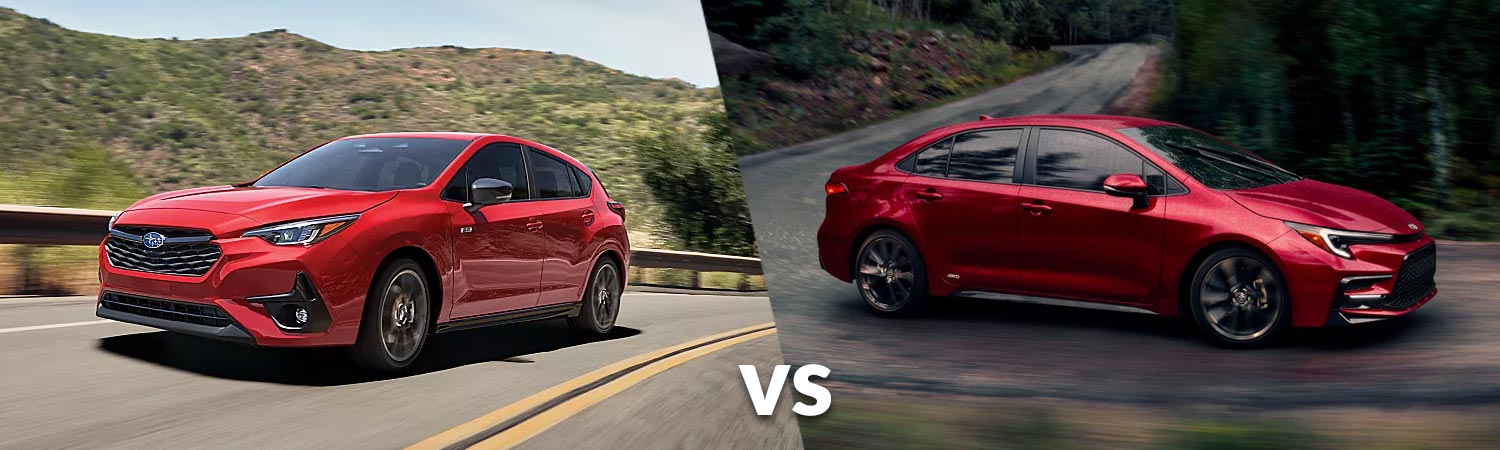
Imagine two hatchbacks standing under the same streetlight—one humming with rally-bred confidence, the other wearing the calm, dependable grin of a commuter that’s done this dance for decades. Now ask yourself a playful question: Do you want your weekends to feel like an open-road dare, or like a well-oiled routine that simply refuses to quit? That’s the heartbeat of the Subaru Impreza versus the Toyota Corolla Hatchback debate. And here’s the potential challenge: choose the wrong “priority” and you might end up resenting the car you bought. One side is ready to bend traction to its will. The other is built to make ownership feel frictionless—down to the last oil change.
So, let’s put the matchup under the lens: AWD capability versus everyday reliability. We’ll travel from drivetrains to driving feel, from long-term ownership instincts to the subtle costs that never make it onto the brochure. By the end, you should be able to answer not just which car is better, but which temperament fits your life.
Subaru Impreza: AWD as a Lifestyle, Not Just a Feature
The Subaru Impreza’s identity is inseparable from all-wheel drive. It’s not merely a mechanical ornament; it’s a philosophy. Even when the weather plays nice, AWD changes how confidence manifests. Power delivery can feel composed and steady, as if the car is quietly negotiating with the pavement instead of arguing with it.
And when the conditions turn—rain slicker than a freshly waxed sidewalk, snow that clings stubbornly, or dirt roads that look harmless until they aren’t—the Impreza’s AWD can feel like an insurance policy you actually enjoy paying for. The vehicle’s traction logic tends to help smooth out the chaos of low-grip surfaces.
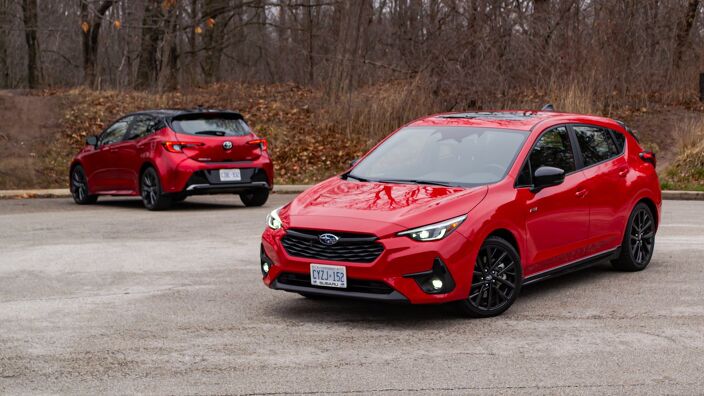
Still, playful question time: what if you rarely face bad weather? AWD can become a “cool factor” you pay for without fully using. That’s the tradeoff—capability versus frequency. Some drivers treat that trade like a bargain. Others treat it like a tax.
Toyota Corolla Hatchback: Reliability With a Calm, Consistent Rhythm
The Toyota Corolla Hatchback is the embodiment of reliability culture. It’s not usually described in fireworks terms. It’s described in the language of persistence: the kind of vehicle that keeps showing up, keeps starting, and keeps doing its job without needing drama.
For many buyers, reliability isn’t merely about avoiding breakdowns. It’s about predictability. Predictability is comforting. It means fewer surprises, fewer “unexpected” appointments, and a maintenance routine that feels like a calendar you can trust.
The Corolla’s front-wheel-drive layout can also be a subtle advantage in ownership economics. Fewer drivetrain components can sometimes translate to less complexity over time. That doesn’t automatically mean it’s “better” in every measurable category, but it often aligns with the expectation of long-term hassle reduction.
And here’s where the debate becomes a little mischievous: reliability doesn’t always feel exciting during the test drive. It feels exciting after a few months of real life. The Corolla tends to deliver that kind of delayed gratification.
AWD Versus FWD: How Traction Shapes Everyday Confidence
On dry pavement, the Impreza’s AWD won’t necessarily announce itself like a spotlight. It may feel similar enough to front-wheel traction that you’d be forgiven for thinking, “Maybe the difference is overstated.” But the story changes when grip becomes negotiable.
In wet conditions, the Impreza can offer a more even sense of traction across the drive wheels. That can reduce the “uncertain” feeling that sometimes appears during acceleration on slippery surfaces. In snow, the difference can be more pronounced—especially when road conditions demand precision rather than bravado.
Meanwhile, the Corolla Hatchback can still be a perfectly capable daily performer. Its traction strengths may lean toward predictable behavior and stable control, especially when driven within its limits. The question is not whether it works. The question is whether it works comfortably in your typical environment.
So, consider the challenge again: do you live in a region where precipitation is seasonal and winter is not just a rumor? If yes, AWD is more than a feature—it’s a habit of security.
Durability and Longevity: What “Reliability” Really Means
Reliability isn’t a single metric. It’s a compound result of engineering choices, material durability, powertrain design philosophy, and—most importantly—how cars behave after years of imperfect human conditions. That includes temperature swings, short trips, long highway stretches, and the occasional “why is this road like that?” detour.
Toyota has built a reputation around long-running dependability. Many drivers trust Toyota vehicles because the brand historically aligns with low drama. That trust isn’t magic. It’s earned through patterns: consistent quality control and a tendency for systems to age gracefully.
Subaru’s reliability reputation is also respected, particularly among owners who value its mechanical honesty. AWD systems and drivetrain components do add complexity, though. Complexity can be a double-edged sword: it provides capability, but it can introduce extra variables that must be properly maintained.
In other words, both cars can be dependable. The difference is what “dependable” feels like. For the Corolla, it’s typically steadiness and predictability. For the Impreza, it’s confidence under challenging traction.
Maintenance Reality: The Hidden Cost of Ownership
Let’s talk about the unglamorous truth: maintenance is where ownership expectations meet time. The Corolla’s simpler drivetrain architecture can sometimes mean less complexity and fewer potential points of failure. That can matter over a long horizon.
On the Impreza side, AWD maintenance considerations exist—things like ensuring the system stays healthy through appropriate service intervals and mindful driving practices. If you treat the car well, those complexities often remain invisible. If you ignore the basics, no drivetrain—AWD or not—will reward neglect.
So the challenge isn’t choosing a car that never needs attention. The challenge is choosing a car that matches your willingness to engage with it. If you’re the type who wants “set it and forget it,” the Corolla tends to align with that instinct. If you’re the type who wants capability ready on command, the Impreza matches that temperament.
Performance Character: The Subtle Differences You’ll Feel
Performance is not just about horsepower. It’s about how the car communicates. The Impreza can feel more eager in traction-limited moments. Its AWD can help maintain composure, which makes acceleration and cornering feel less like a gamble and more like a controlled persuasion.
The Corolla Hatchback often delivers a more straightforward, predictable response. It can feel tuned for everyday smoothness—less about theatrics, more about consistency. That’s a legitimate kind of performance. Not every driver wants their car to feel like it’s waiting for a gravel road.
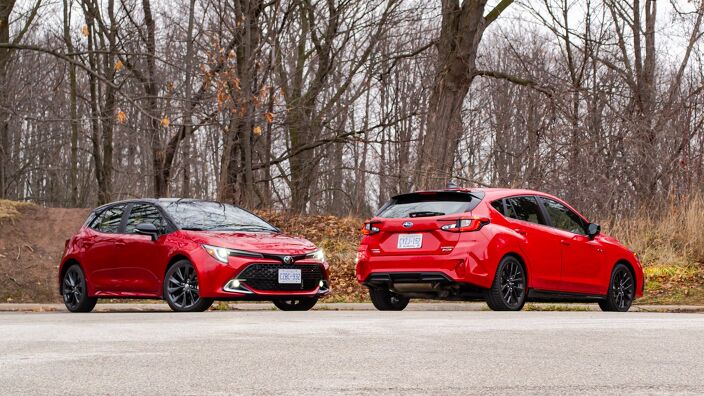
If your life includes commuting in challenging weather, the Impreza’s composure can feel like speed—even if the stopwatch numbers don’t change dramatically. If your life is mostly predictable asphalt, the Corolla’s calm demeanor can feel like a feature of its own.
Which One Should You Choose? A Practical Decision Framework
Here’s a structured way to decide, without overthinking. Ask three questions:
1) How often do you drive in low-grip conditions? If it’s frequent—snow, ice, heavy rain—AWD becomes more than comfort. It becomes a safety multiplier.
2) How do you define reliability? If you mean low-maintenance fuss and long-term peace of mind, the Corolla’s reputation aligns well with that definition.
3) What kind of driver are you day-to-day? If you want confidence that’s ready to intervene when traction wavers, the Impreza fits. If you want a car that stays steady and straightforward, the Corolla fits.
And remember the playful question from the beginning: is your heart drawn to the dare, or to the routine? Neither choice is wrong. The “best” choice is the one that harmonizes with your real roads and your real habits.
Conclusion: AWD Confidence or Reliability Comfort?
In the Subaru Impreza versus Toyota Corolla Hatchback showdown, AWD and reliability aren’t enemies—they’re different kinds of value. The Impreza leans into traction confidence, especially when weather turns into a variable you can’t control. The Corolla Hatchback leans into long-term dependable ownership, with a calm character that tends to minimize surprises.
So the final challenge is simple: don’t buy the car that sounds best in theory. Buy the one that matches your environment and your expectations. When the rain arrives or the roads get slippery, the Impreza may feel like a wise decision. When you’re months into ownership and everything just works, the Corolla may feel like relief.
Whichever you choose, you’re not just selecting a hatchback—you’re choosing a daily rhythm. Choose wisely, and the road will feel like it belongs to you.