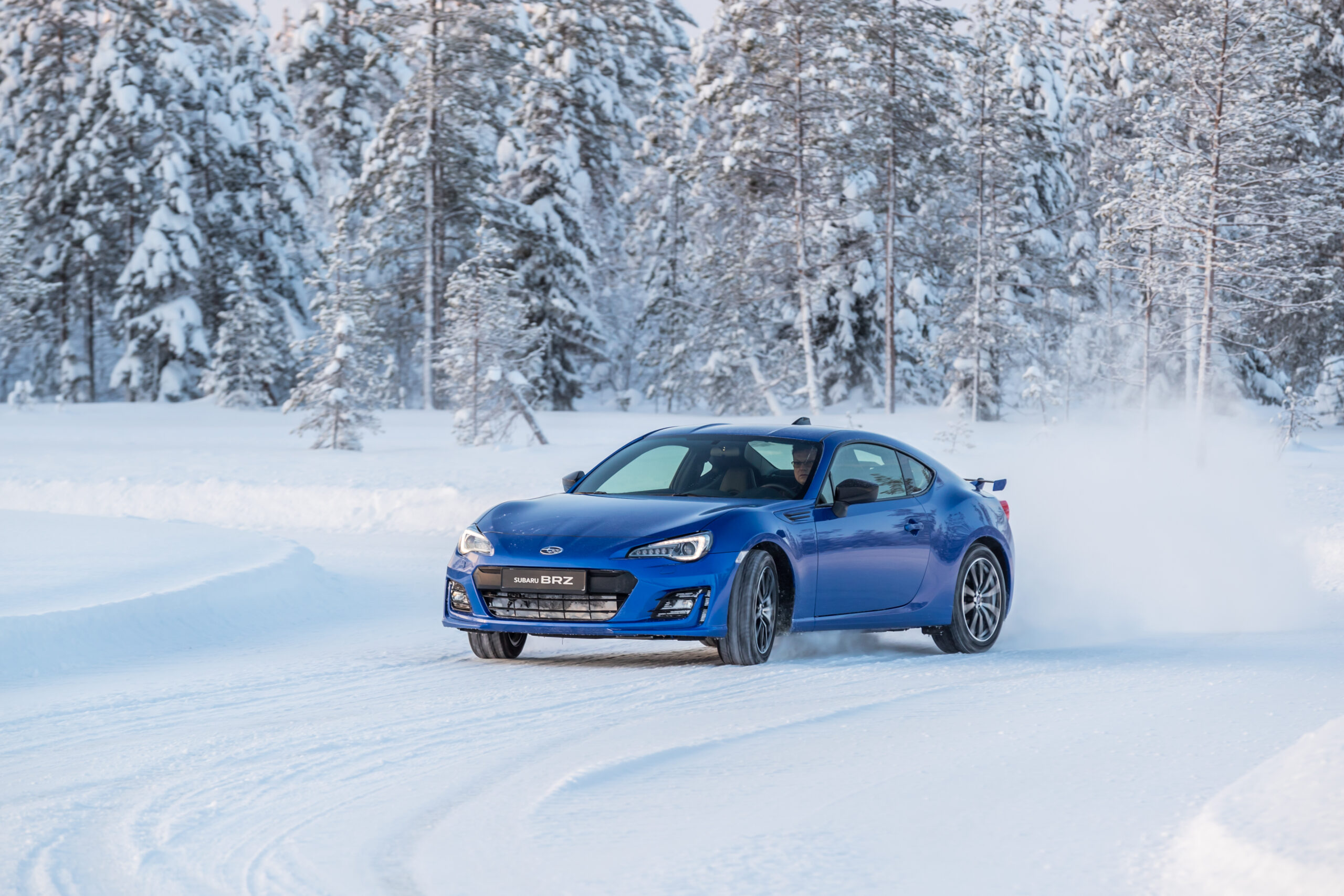
The Subaru BRZ is a paradox wrapped in a sports car’s sleek silhouette—an automotive enigma that dares to defy convention. Rear-wheel drive in winter? To the uninitiated, it sounds like a recipe for disaster, a slippery slope of fishtailing and frantic steering corrections. Yet, for those who’ve felt the BRZ’s rear end dance on a snow-dusted backroad, it’s something far more profound. It’s not just about getting from point A to B; it’s about the visceral connection between driver and machine, the raw dialogue of throttle, weight transfer, and road grip. This isn’t a car that merely endures winter—it thrives in it, turning what others see as treacherous into a playground of controlled chaos.
What makes the BRZ’s winter prowess so compelling isn’t just its ability to handle snow; it’s the philosophy behind that capability. In an era where all-wheel drive dominates the conversation around cold-weather motoring, the BRZ’s RWD layout feels almost rebellious. It’s a statement that performance isn’t about brute force or traction aids—it’s about finesse, about understanding the nuances of a car’s behavior. The BRZ doesn’t just plow through winter; it whispers to it, coaxing every ounce of grip from the road while demanding the driver do the same. That’s the fascination. That’s what makes winter drives in this car an exercise in pure, unfiltered driving.
The Myth of RWD in Winter: Why It’s Not as Mad as It Sounds
Conventional wisdom dictates that rear-wheel drive is the antithesis of winter driving. The logic is simple: power to the rear wheels means less control when traction is scarce. But the BRZ shatters this myth with a quiet confidence. The key lies in its design philosophy—lightweight, balanced, and driver-focused. Unlike many performance cars that prioritize raw power over agility, the BRZ is built for precision. Its low center of gravity, thanks to a front-mounted boxer engine and a near 50:50 weight distribution, means it’s inherently stable. When the rear wheels lose grip, they do so in a predictable, manageable way. It’s not about brute force; it’s about finesse.
Consider the physics at play. In a front-wheel-drive car, understeer is the enemy—plowing wide in corners when the front tires lose grip. In an all-wheel-drive car, the sensation of control can lull drivers into a false sense of security, masking the limits of traction. But in a rear-wheel-drive car like the BRZ, every slide, every drift, every moment of oversteer is a conversation. The driver isn’t just a passenger; they’re an active participant. The BRZ teaches you to read the road, to anticipate weight transfer, to modulate throttle and steering with surgical precision. Winter driving in an RWD car isn’t about avoiding slip; it’s about embracing it, understanding it, and using it to your advantage.
The Art of Weight Transfer: How the BRZ Dances on Ice
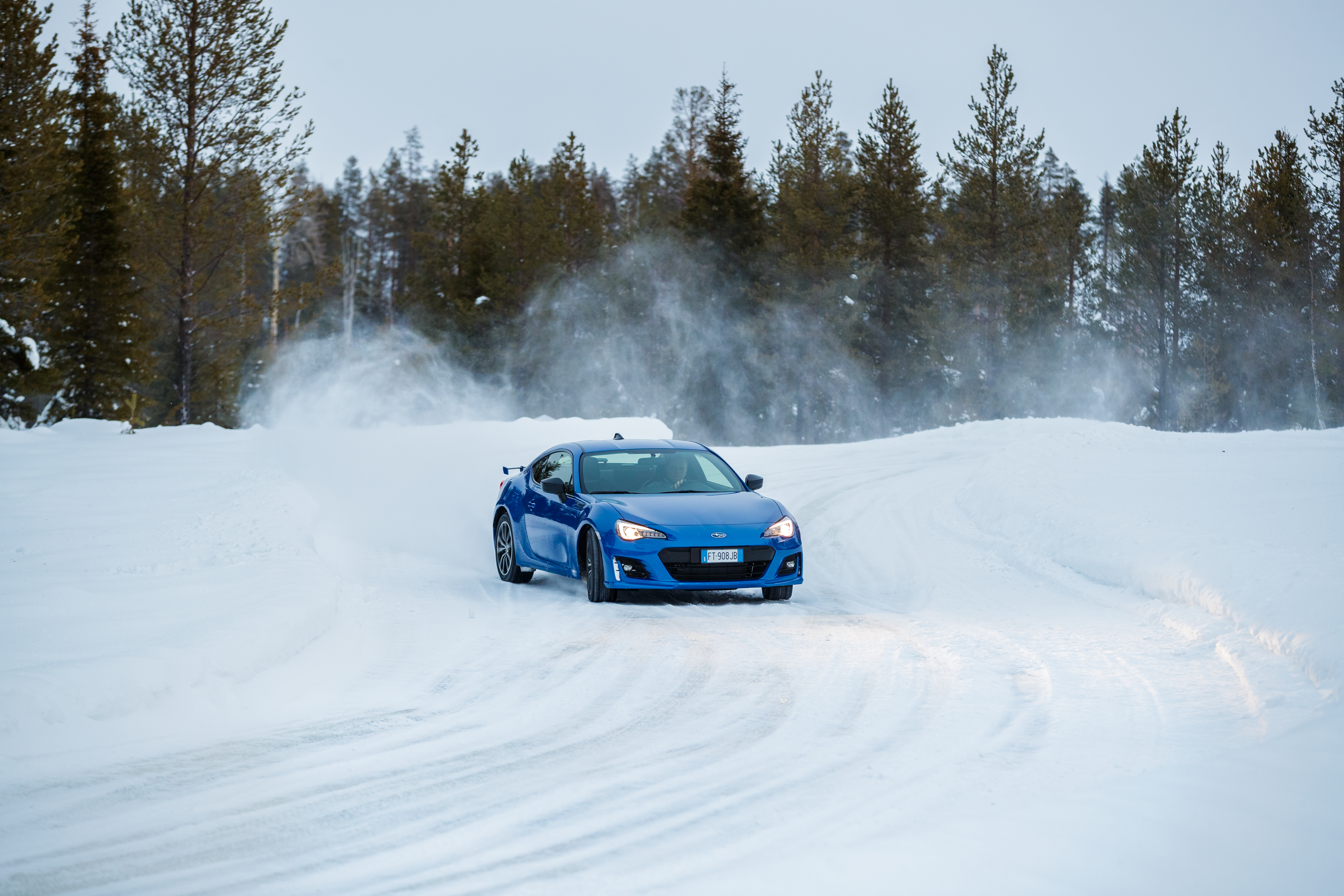
Weight transfer is the silent maestro of any car’s behavior, and in the BRZ, it’s a symphony. When you lift off the throttle mid-corner, the car’s weight shifts forward, tightening the line and reducing understeer. When you apply power, the opposite happens—the rear end lightens, and the car becomes more responsive to steering inputs. This dance is exaggerated in winter conditions, where grip is transient and unpredictable. The BRZ’s RWD layout amplifies these sensations, making every input feel amplified, every correction a lesson in physics.
Imagine approaching a snow-covered bend. The BRZ’s nose dips slightly as you brake, stabilizing the car. You ease off the throttle, and the weight shifts forward, sharpening the turn-in. As you roll through the apex, you feather the throttle, letting the rear end drift slightly—just enough to feel the car’s tail hang out, a controlled slide that’s more about finesse than correction. The steering wheel becomes an extension of your hands, the throttle a whisper of intent. It’s not about fighting the slide; it’s about guiding it, using the BRZ’s natural balance to carve a line that feels almost telepathic.
This is where the BRZ’s true genius lies. It doesn’t just tolerate winter; it revels in it. The lack of electronic nannies—no torque vectoring, no aggressive stability control—means the driver is in complete control. There’s no interference, no correction that robs you of the experience. It’s raw, unfiltered driving, the kind that forges a bond between human and machine. In a world where cars are increasingly sanitized, the BRZ’s winter behavior is a breath of fresh air—a reminder that driving is as much about skill as it is about speed.
Tires: The Unsung Heroes of RWD Winter Driving
No discussion of the BRZ’s winter capabilities would be complete without acknowledging the role of tires. The car’s RWD layout is only as good as the rubber gripping the road, and in winter, that grip is everything. The BRZ’s enthusiast-oriented design means it rewards good tires with sublime feedback. A set of dedicated winter tires—preferably with a directional tread pattern and a soft compound—transforms the car from a capable commuter to a winter weapon. These tires don’t just provide grip; they communicate. Every crackle of ice under the tread, every subtle shift in traction, is relayed back to the driver through the steering wheel and pedals.
But it’s not just about having winter tires; it’s about choosing the right ones. The BRZ’s light weight and balanced chassis mean it doesn’t need the aggressive, knobby treads of a heavy SUV. Instead, a set of performance winter tires—like the Bridgestone Blizzak WS90 or the Michelin Pilot Alpin PA4—strikes the perfect balance between grip and feedback. These tires are designed to remain pliable in cold temperatures, offering predictable behavior even when the road surface is unpredictable. They allow the BRZ to maintain its poise, to dance rather than fight, turning every drive into an exercise in precision.
The Driver’s Seat: Why RWD Winter Driving is a Masterclass
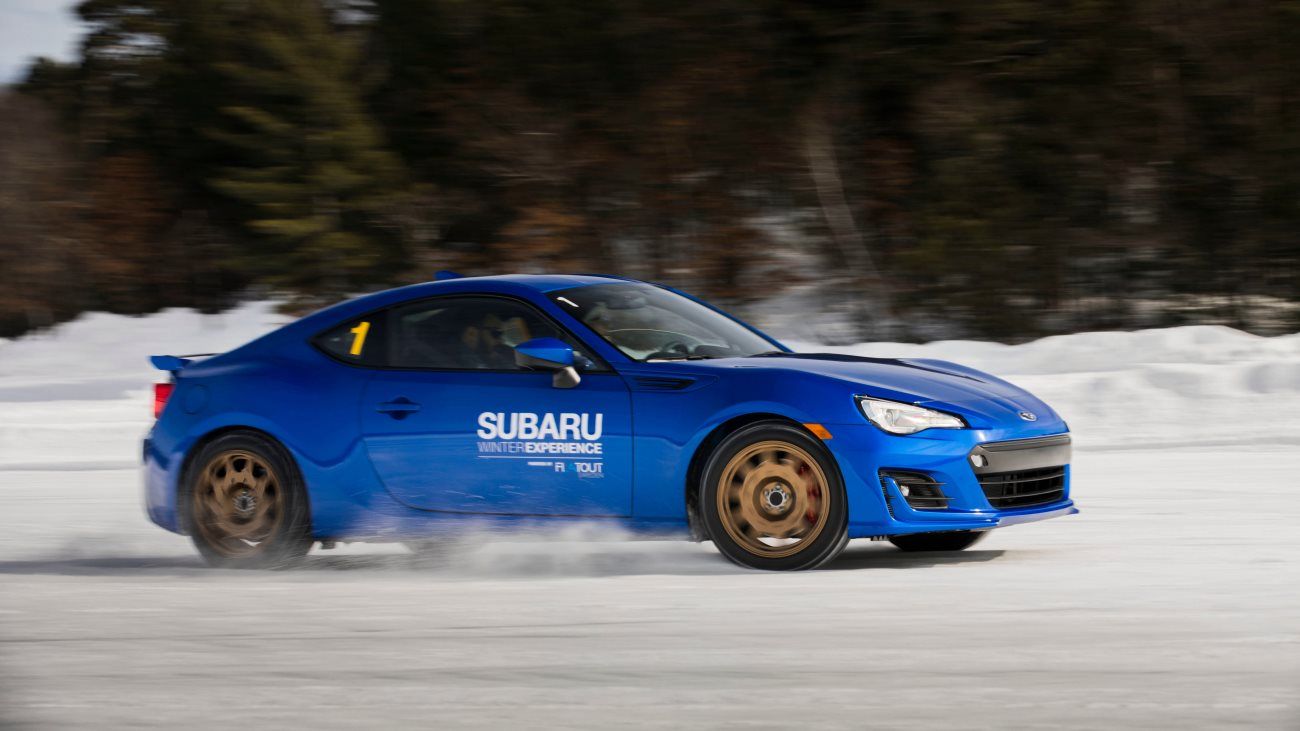
Driving a rear-wheel-drive car in winter is less about the car’s capabilities and more about the driver’s skill. It’s a masterclass in car control, a test of patience, anticipation, and finesse. The BRZ doesn’t hold your hand; it challenges you. It forces you to think ahead, to plan your lines, to modulate your inputs with a surgeon’s precision. Every corner becomes a puzzle, every acceleration a lesson in patience. The reward? A sense of accomplishment that’s hard to match in any other driving scenario.
There’s a psychological aspect to this as well. Driving an RWD car in winter strips away the illusion of invincibility that all-wheel-drive cars often provide. It forces you to confront the limits of traction, to accept that the road is a dynamic, ever-changing surface. But it also instills confidence. The more you drive the BRZ in winter, the more you learn to trust its balance, its predictability. You begin to understand that a slide isn’t a failure; it’s an opportunity to correct, to finesse, to feel the car’s soul. It’s a humbling experience, one that reminds you that driving is as much about skill as it is about the car.
For those who’ve never experienced it, RWD winter driving can seem daunting. But for those who have, it’s addictive. There’s a purity to it, a connection to the road that’s lost in the sanitized world of modern motoring. The BRZ doesn’t just drive in winter; it engages you, challenges you, and rewards you in ways that few other cars can. It’s not about the destination; it’s about the journey—the slippery, exhilarating, unforgettable journey.
The Subaru BRZ is more than just a sports car; it’s a philosophy. It’s a reminder that driving isn’t about brute force or electronic aids—it’s about connection, about the dialogue between driver and machine. Winter driving in an RWD car like the BRZ isn’t for the faint of heart, but for those willing to embrace it, it’s an experience that transcends the ordinary. It’s a dance on ice, a ballet of physics and finesse, a testament to the idea that sometimes, the most rewarding journeys are the ones that challenge us the most. So the next time you see a BRZ on a snow-covered road, don’t just see a car—see an invitation. An invitation to feel the road, to dance with the elements, to drive in a way that’s as pure as it is exhilarating. The BRZ doesn’t just defy winter; it celebrates it.