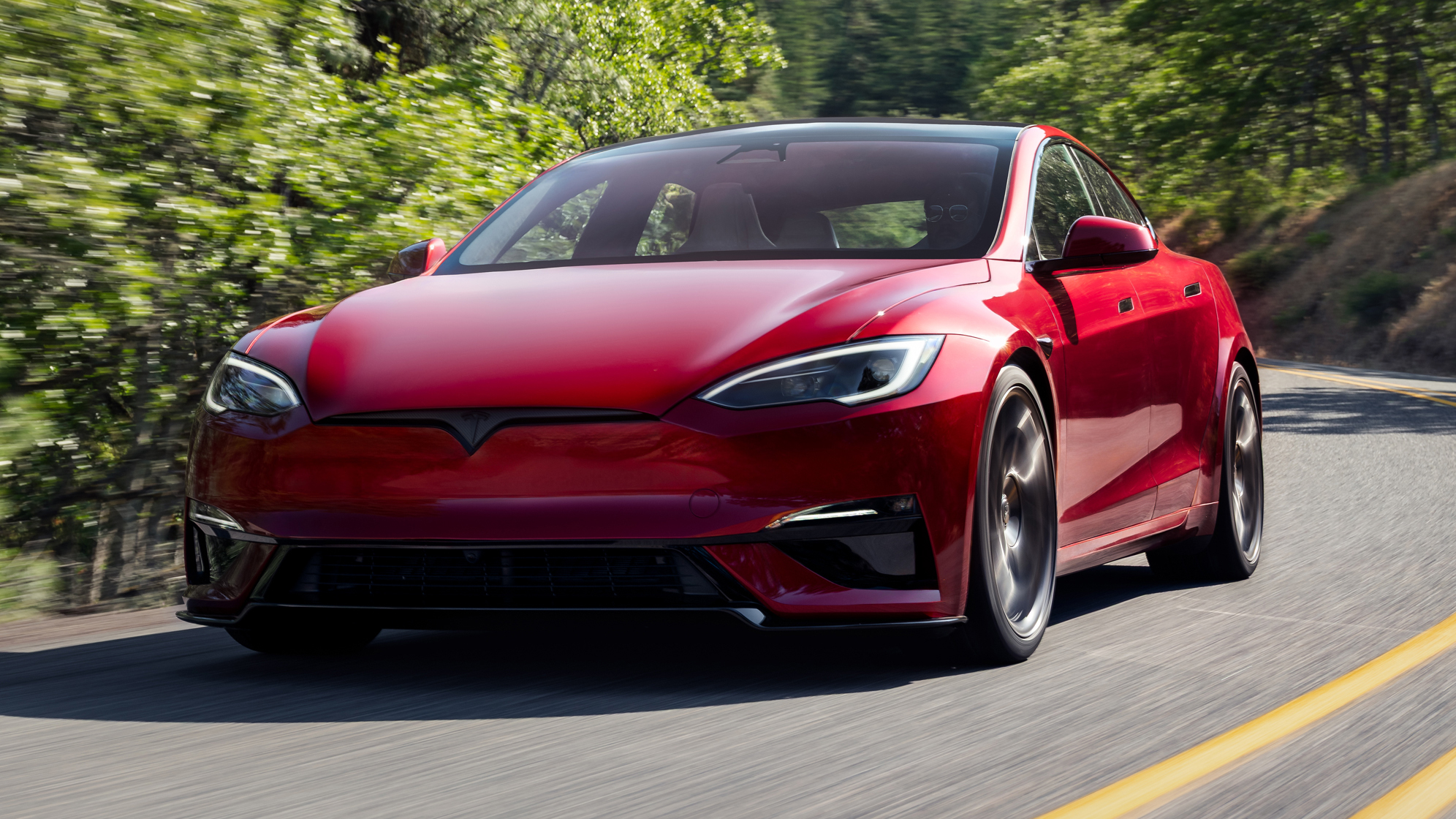
The automotive landscape is on the cusp of a seismic shift. As 2026 looms on the horizon, Tesla’s next-generation vehicles promise to redefine what we expect from electric mobility—blending cutting-edge technology, audacious design, and sustainability into a cohesive driving experience. Yet, the question lingers for prospective buyers: Is this the year to commit to a purchase, or should one exercise patience and wait for the 2027 wave of innovation? This decision hinges not only on financial considerations but also on evolving consumer expectations, technological maturation, and the broader trajectory of the EV market. To navigate this pivotal moment, we must dissect the promises of the 2026 lineup, weigh the risks of early adoption, and examine the potential rewards of strategic delay.
The Allure of the 2026 Tesla Lineup: What’s on the Horizon?
The 2026 Tesla fleet is poised to be a tour de force of engineering ambition. Rumors and official teases suggest a lineup that includes the next iteration of the Cybertruck, a refreshed Model Y, and possibly a compact crossover codenamed “Juniper.” Each model is expected to integrate Tesla’s latest 4680 battery architecture, promising enhanced energy density, faster charging, and extended range. The Cybertruck, in particular, may finally deliver on its long-awaited promise of bulletproof durability, with a stainless-steel exoskeleton and adaptive air suspension for off-road prowess.
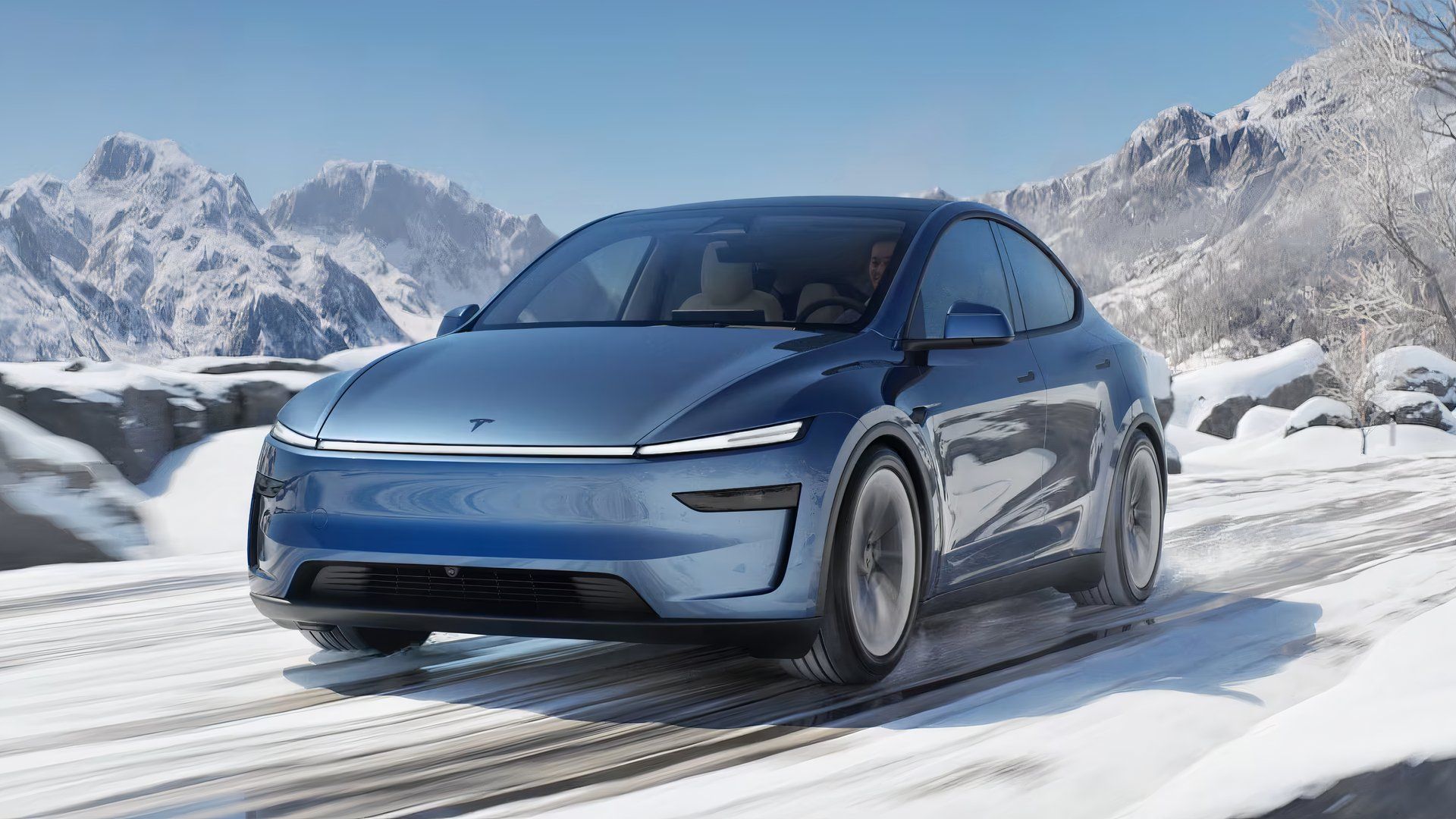
Design language will also evolve. The Model Y, for instance, is rumored to adopt Juniper’s sleek, aerodynamic silhouette, reducing drag and improving efficiency. Inside, expect a minimalist cockpit dominated by a single, expansive touchscreen—now with haptic feedback—replacing physical buttons and dials. Autopilot and Full Self-Driving (FSD) capabilities are slated for further refinement, with improved neural network training and real-world edge-case handling. For tech enthusiasts, the 2026 models may also introduce vehicle-to-everything (V2X) communication, enabling cars to interact with traffic lights, charging stations, and even smart city infrastructure.
Financial Realities: Sticker Shock vs. Long-Term Value
Purchasing a 2026 Tesla is not merely a transaction; it’s an investment in a rapidly depreciating asset. Early adopters often face premium pricing—sometimes 15–20% above projected long-term values—as manufacturers recoup R&D costs. The 2026 Cybertruck, for example, could debut at $80,000, a figure that may plummet to $60,000 within two years as production scales and competition intensifies. Conversely, waiting for 2027 could yield significant savings, especially if Tesla introduces cost-optimized battery chemistries or partners with suppliers to reduce component expenses.
Yet, financial prudence isn’t solely about upfront costs. Consider the total cost of ownership (TCO). The 2026 models are expected to boast superior efficiency, with some estimates suggesting a 10–15% improvement in miles per kWh. This translates to lower charging expenses over time, particularly for high-mileage drivers. Additionally, Tesla’s Supercharger network continues to expand, with V4 chargers promising up to 350 kW speeds—ideal for long-distance travel. If you’re planning to keep your vehicle for a decade, the efficiency gains might offset the initial premium.
Depreciation isn’t the only risk. Tesla’s warranty policies, while robust, have evolved. The 2026 lineup may come with an 8-year/120,000-mile battery warranty (up from 7 years in some regions), but extended coverage often comes with higher purchase prices. Buyers must weigh whether the peace of mind is worth the added cost or if self-insuring through careful maintenance is a viable alternative.
Technological Maturation: Early Bugs vs. Refined Systems
Every new vehicle generation arrives with teething issues. The 2026 Tesla models will likely debut with untested software quirks, minor hardware inconsistencies, and the occasional Autopilot misstep. Early owners often become de facto beta testers, reporting bugs that Tesla’s over-the-air updates may or may not resolve promptly. For those who prioritize reliability above all else, waiting until 2027—when most kinks are ironed out—could be prudent.
However, early adoption has its perks. Tesla’s software updates are legendary for their iterative improvements. A 2026 buyer might enjoy features like real-time traffic-aware routing, AI-powered climate control, or even gamified driving modes months before latecomers. The company’s agile development cycle means that by 2027, the 2026 models could already be running on version 2027.12.3, a version that might include breakthroughs like neural network-driven suspension tuning or predictive battery thermal management.
For enthusiasts, the thrill of being among the first to experience a new platform is unparalleled. The 2026 Cybertruck, with its unconventional design and polarizing aesthetics, could become a cultural icon—much like the original Tesla Roadster. Owning one might grant access to exclusive Tesla events, early access to software features, or even resale value spikes if the model gains cult status.
Sustainability and Environmental Impact: A Greener Future?
Tesla’s mission extends beyond performance; it’s rooted in sustainability. The 2026 lineup is expected to incorporate recycled materials at unprecedented levels, with interior plastics derived from ocean waste and battery cathodes using cobalt-free chemistries. The shift to 4680 cells, which eliminate nickel-rich coatings, could reduce the environmental footprint of production by up to 20%. For eco-conscious buyers, purchasing a 2026 model aligns with Tesla’s vision of a circular economy.
Yet, the environmental calculus isn’t one-dimensional. The production of any new vehicle—even an electric one—has a carbon footprint. Waiting for 2027 might allow Tesla to implement even greener manufacturing processes, such as closed-loop battery recycling or on-site solar-powered factories. Additionally, the grid’s decarbonization progress could mean that charging a 2027 Tesla emits fewer greenhouse gases than its 2026 counterpart, depending on regional energy mixes.
Another consideration is the second-life applications of batteries. Tesla’s 2026 models may be designed with repurposing in mind, enabling owners to lease their used batteries for grid storage after vehicle retirement. This could extend the environmental benefits of your purchase far beyond the car’s operational lifespan.
The Competitive Landscape: Rivals Waiting in the Wings
Tesla no longer operates in a vacuum. By 2027, the market will be flooded with compelling alternatives. Legacy automakers like Ford, GM, and Volkswagen are scaling up their EV production, while Chinese manufacturers such as BYD and NIO are pushing the boundaries of affordability and technology. The 2026 Tesla lineup must contend with these rivals, which may offer longer warranties, superior build quality, or more intuitive infotainment systems.
For instance, the 2027 Ford F-150 Lightning could boast a more refined interior and a proven track record of reliability, while the 2027 Volkswagen ID. Buzz might appeal to those seeking retro-futuristic charm with modern efficiency. Waiting allows buyers to assess how Tesla’s offerings stack up against these alternatives. It also provides time for third-party reviews and real-world ownership data to surface, offering a clearer picture of long-term satisfaction.
Moreover, Tesla’s pricing strategy could shift dramatically in response to competition. If rivals undercut Tesla’s 2026 models by 10–15%, the value proposition of waiting becomes stronger. Conversely, if Tesla’s brand loyalty and Supercharger network retain their premium status, early adoption might still hold merit.
Personal Circumstances: Aligning Purchase with Lifestyle
The decision to buy now or later isn’t purely technical or financial—it’s deeply personal. A growing family might prioritize the Model Y’s expanded cargo space and safety ratings, while a tech professional could crave the Cybertruck’s futuristic appeal. Those with long commutes may benefit from the 2026 models’ efficiency gains, while urban dwellers might wait for 2027’s rumored compact sedan, rumored to be the “Model 2,” which could offer unparalleled maneuverability.
Consider your driving habits. If you frequently embark on road trips, the 2026 Cybertruck’s projected 500+ mile range could be a game-changer. If you’re a city dweller, the 2027 Model 2’s sub-3,500-pound curb weight might offer nimble handling and easier parking. Leaseholders nearing the end of their term may find it financially savvy to wait, while cash buyers could negotiate better deals on 2026 inventory as dealerships clear stock for new models.
Family planning also plays a role. Tesla’s 2026 models are expected to introduce advanced child safety features, such as rear-seat alert systems and ISOFIX anchors with load limiters. If you’re planning for a growing household, the peace of mind these features provide might justify an earlier purchase.
The choice between a 2026 Tesla and a 2027 model is a study in trade-offs. The former offers the thrill of innovation, the prestige of early adoption, and the potential for long-term efficiency gains. The latter provides the wisdom of hindsight, the benefit of competition-driven pricing, and the assurance of refined technology. Ultimately, the decision rests on your priorities: Are you chasing the cutting edge, or do you value the stability of a matured product?
One thing is certain—Tesla’s 2026 lineup will set the stage for the next era of electric mobility. Whether you choose to embrace it now or bide your time, the future of driving is electric, and the road ahead is paved with possibility.