There’s a particular kind of quiet suspense that arrives when a vehicle gets evaluated on the harshest days: the days when engineers chase the last brittle edge of safety. In the United States, that chase often means two overlapping lenses—IIHS (Insurance Institute for Highway Safety) and NHTSA (National Highway Traffic Safety Administration). If you’ve been wondering which 2026 Chevrolet models feel most secure on paper and, more importantly, in reality, you’re asking a question many drivers ask right before they sign on the dotted line. The curiosity is understandable. Safety ratings can look like mere numerology at first glance, yet their patterns reveal something far deeper about design priorities, engineering discipline, and how a vehicle behaves under duress.
And yes—there’s a common observation that people make: “Safety ratings are complicated.” That’s true. But the fascination that follows is usually the same. People don’t just want a number. They want reassurance that the car’s architecture has been interrogated from multiple angles, that its protections are deliberate rather than decorative.
Why IIHS and NHTSA Ratings Feel Different (And Why That’s Useful)
It helps to understand why these systems can appear to disagree. IIHS tends to emphasize specific crashworthiness scenarios, often with detailed evaluations like front overlap behavior, head restraint effectiveness, and the performance of structural components. NHTSA, by contrast, is built around a broad set of ratings derived from standardized crash tests and a star-rating structure that many drivers can interpret quickly.
That difference is not a flaw. It’s a map with distinct legends. When you see a Chevrolet model scoring strongly across both frameworks, the story becomes harder to dismiss. You’re not just looking at one perspective. You’re comparing two investigative methodologies, each probing how occupants are protected and how the vehicle’s structure manages energy.
In practice, that “two-lens” scrutiny is why some drivers gravitate toward certain models. The safest feeling isn’t always the loudest. It’s the one that consistently behaves predictably—absorbing impact without letting the passenger compartment become a collapsing compromise.

What “Safest” Really Means for 2026 Chevrolet Vehicles
“Safest” is not synonymous with “invincible.” It’s more accurate to think of it as risk reduction across multiple failure modes: frontal impacts, side impacts, rear-end collisions, occupant protection in rollover-prone situations, and how crash-avoidance technologies may prevent the crash from occurring in the first place.
For 2026 Chevrolet models, safety isn’t just about how a structure holds up. It’s also about whether the vehicle helps prevent errors—like lane drift, distracted driving moments, or an inability to brake in time. The deeper reason people become fascinated with safety ratings is that they translate engineering nuance into practical expectation. When a vehicle earns strong marks, it suggests a coherent safety strategy rather than a patchwork of features.
Consider the difference between passive and active safety. Passive safety protects occupants when physics has already taken over. Active safety attempts to intervene earlier—often through sensor fusion, robust braking control, and driver-assist algorithms calibrated to real-world conditions.
Front Crash Protection: The Battle Over Occupant Space
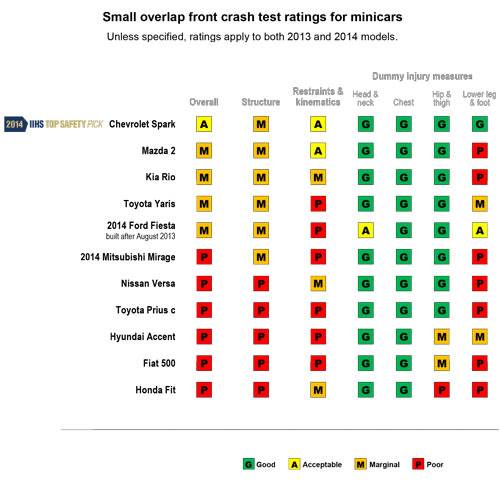
Front crashes dominate headlines, but they also dominate design attention. IIHS tests tend to scrutinize how well the vehicle maintains a protective envelope during frontal overlap events—situations where only part of the front end engages, potentially stressing the restraint systems and structural members in unusual ways.
NHTSA emphasizes test results that support a star framework, but the underlying theme remains similar: how forces are managed, how quickly deceleration occurs, and how the restraint system controls occupant motion.
For a 2026 Chevrolet to be considered among the safer choices, you’re typically looking for strong performance signals in frontal crashworthiness. The deeper fascination lies in what those signals imply about structural design: reinforced rails, energy-absorbing crumple zones, and carefully tuned seatbelt and airbag deployments that reduce the odds of injury escalation.
Side Impact and Rollover Dynamics: Where Structural Discipline Matters
Side impacts feel different—often sudden, angled, and unforgiving. That’s why both IIHS and NHTSA place significance on side crash protection. A high-performing vehicle often demonstrates effective intrusion resistance, robust door and pillar reinforcement, and occupant protection strategies that reduce lateral movement.
Rollover protection adds another layer. Even when the vehicle remains upright, the distribution of forces during sudden maneuvers can affect how occupants are held in place. The best-rated vehicles are usually those that combine stable handling characteristics with restraint systems designed for unpredictable motion.
It’s easy to treat this as theoretical. Yet the human body responds to forces in patterned ways—patterns engineers can anticipate. Strong ratings hint that those patterns were addressed rather than ignored.
Rear-End Protection: Comfort and Safety Share the Same Skeleton
Rear-end crashes are common, and severity can be deceptively variable. IIHS evaluations often include head restraint and whiplash mitigation considerations. The fascinating part is that rear safety is not just a “soft tissue” issue—it’s connected to geometry. Head restraints, seatbacks, and seat positioning form a system, not a set of individual parts.
When ratings suggest effective rear protection, it often means the seats are designed to meet the occupant’s head at the right time, with the right support characteristics. NHTSA’s evaluations can reinforce the broader safety story, particularly when a vehicle demonstrates strong crash test performance.
People rarely notice seat design until they need it. That’s why the best safety systems feel almost invisible—like good architecture. They work while you’re still driving, unaware.
Crash Avoidance Technologies: Preventing the Crisis Before It Starts
Active safety features are often where the fascination becomes personal. If IIHS and NHTSA validate crash performance, crash avoidance technologies can change the odds of ever reaching the crash stage. These systems may include forward collision alert, automatic emergency braking, pedestrian detection, lane departure warning, lane keeping assistance, and adaptive cruise behavior.
The deeper reason drivers obsess over these systems is that they represent a shift from passive protection to predictive intervention. Sensors and control logic can reduce delays that occur during human reaction time. The best-rated vehicles typically integrate these features with competent calibration and consistent behavior—so the system helps instead of distracting.
For 2026 Chevrolet models, the safest choices are usually those with robust suite coverage across multiple risk scenarios, not merely a single standout feature. Safety is cumulative. It’s not one hero device; it’s a chorus of coordinated behaviors.
Restraint Systems and Airbag Logic: Precision Matters
Airbags are often misunderstood as simple deployment events. In reality, they’re part of a broader orchestration—timing, pressure profiles, sensor inputs, and occupancy considerations all influence how protection is delivered.
Seatbelts and pretensioners also play a critical role in controlling occupant kinematics. A high-performing vehicle tends to manage how quickly and how firmly the occupant is contained, preventing secondary impact within the cabin during chaotic moments.
When ratings reflect strong restraint outcomes, it implies the vehicle’s engineering considered the occupant as a dynamic system rather than a static passenger. That nuance is part of what makes safety ratings so compelling. They reveal how seriously a manufacturer took the job of managing force transfer.
How to Use Ratings Responsibly: Avoiding the “Score Mirage”
Even with strong evaluations, no rating tells the full story of every road, every weather event, or every driver behavior. A common pitfall is to treat ratings as a substitute for situational awareness. The safest driver remains attentive, regardless of star count.
Instead, use ratings as a filter and a guide: prioritize vehicles with consistent performance across frontal, side, and rear protection domains, then verify that the crash avoidance technology is present and well-integrated.
Also consider vehicle-specific factors such as tire quality, brake health, and whether the vehicle is maintained properly. Ratings are snapshots created under controlled assumptions. Real life is more chaotic. The best outcomes emerge when the vehicle remains in tune with the engineering intentions behind the rating.
Picking a Safer 2026 Chevrolet: A Practical Checklist
If you want a structured approach, look for these cues as you compare 2026 Chevrolet options:
1) Consistency across crash modes: Strong signals in frontal and side protection suggest a well-balanced structure.
2) Strong occupant restraint and head protection: Evidence of effective head restraint and whiplash mitigation often matters more than people expect.
3) Crash avoidance readiness: Verify whether the suite includes automatic emergency braking, lane support, and pedestrian detection features.
4) Features that reduce driver workload: A system that assists smoothly can reduce cognitive friction during stressful moments.
5) Maintenance-friendly reliability: Safety technology depends on sensors and brakes operating correctly.
The fascination isn’t just about finding the highest score. It’s about discovering which model’s safety identity matches your life—your commute patterns, your typical passenger count, your parking environment, and your tolerance for new driving assistance behaviors.
The Big Picture: Why Safety Ratings Create Confidence
When safety ratings come together—IIHS nuance, NHTSA clarity, and a coherent blend of passive and active protection—they generate confidence that feels earned. The best-rated 2026 Chevrolet vehicles tend to share a common trait: they treat safety as an engineering system, not an afterthought.
That’s the deeper reason people keep returning to safety evaluations. A strong rating is not only a result. It’s an indirect witness to the discipline inside the design process—how engineers anticipated failure, how they refined geometry, how they calibrated restraints, and how they structured the vehicle to resist collapse while supporting controlled recovery.
In the end, the safest choice is often the one that performs well across multiple tests and aligns with real driving needs. With the 2026 Chevrolet lineup, thoughtful comparison guided by both IIHS and NHTSA perspectives can turn uncertainty into a more grounded kind of reassurance.
Drive carefully, stay alert, and let the ratings do what they’re best at: translating rigorous evaluation into practical decision-making—so your next journey starts with confidence, not guesswork.