The modern luxury SUV is expected to do everything at once: swallow potholes without complaint, absorb crosswinds like a seasoned sailor, and remain composed when city streets turn choppy. Yet none of that matters as much as one sensory benchmark—cabin quiet. In 2026, the quietest luxury SUVs are no longer defined only by how “smooth” they feel. They’re judged by how decisively they erase the everyday soundtrack: tire roar, wind hiss, suspension clatter, and the faint mechanical chatter that seeps into the corners of your attention.
This cabin-noise test is less about a single number and more about a lived experience. Think of it as a forensic audit performed in motion, where the vehicle becomes a room and the road becomes a narrator. When the cabin is genuinely hushed, voices in the back seat sound closer than they should, conversations don’t require raised volume, and long drives don’t accumulate fatigue the way ambient grit does.
Below is what readers can expect from a comprehensive look at quietness testing—how it’s measured, why it varies, what design choices matter, and which quiet 2026 luxury SUVs stand apart in real-world conditions.
1) What “cabin noise” means in a 2026 luxury SUV
Cabin noise is a composite phenomenon. It can be broken down into distinct contributors that behave differently across speed ranges. At low speeds, the dominant suspects are often tire sidewall chatter, drivetrain tonalities, and suspension micro-vibrations. At highway speed, the story changes: wind shear, air turbulence around mirrors and roof rails, and aerodynamic flow separation start to dominate the soundtrack.
Noise is also more than decibels. There’s psychoacoustics—the brain’s interpretation of sound. A higher-reading frequency can feel less intrusive than a lower, steady hum. That’s why truly quiet SUVs are engineered to avoid “annoying frequencies,” not merely to lower overall volume.
In a cabin-noise test, luxury vehicles are evaluated as systems. The goal is to measure how effectively they prevent sound transmission from outside to inside, and how consistently they do so over time and across driving scenarios.
2) How the cabin-noise test is designed for real life
A credible quietness assessment uses a repeatable setup while preserving realistic conditions. Typically, the test sequence moves through multiple environments: smooth urban stretches, medium-speed suburban roads, and sustained highway cruising. Each setting changes the balance between tire noise, wind noise, and powertrain noise.
To make results meaningful, the test emphasizes consistency in variables such as tire temperature (which influences tread noise), vehicle loading, HVAC settings, and window state. Even the placement of microphones or sensors matters; subtle differences in location can alter the captured frequency profile.
Drivers often notice a pattern long before data confirms it. The quietest SUVs share a trait: they feel “sealed” rather than merely “dampened.” The difference is critical. Dampening reduces sound energy; sealing reduces sound intrusion in the first place. A sealed cabin tends to feel more tranquil because it doesn’t require heavy attenuation to make noise tolerable.
3) The speed spectrum: quietness isn’t one thing
Readers should expect that the quietest 2026 luxury SUVs do not simply rank highest at every speed. They often excel in particular regimes. City quietness is influenced by tire pattern noise, stop-and-go drivetrain behavior, and how well the SUV manages transient impacts from lane markings and resurfacing.
At highway speeds, aerodynamic engineering takes center stage. The quietest candidates refine airflow management: optimized mirror geometry, reduced turbulence at the A-pillar, and roofline designs that minimize vortices. Even small changes—like the way air transitions around door edges—can yield noticeable reductions in wind hiss.
There’s also resonance. Certain cabin structures can create a “singing” effect at specific frequencies. The best luxury SUVs are designed to avoid structural resonance, using tuned mass damping, strategic bracing, and damping layers that suppress vibrations before they become perceptible.
4) What interior materials actually do (and why it matters)
Luxury quietness starts with materials, but not in the simplistic way people assume. Dense materials can reduce transmission, yet they also increase weight if used indiscriminately. The better approach is layering: combining foam, felt, viscoelastic damping sheets, and targeted insulation where sound pathways are most active.
Floorpan noise control, for example, is rarely about one layer. It’s a stack of components: underbody shielding, wheel-well treatments, acoustic mats, and strategically sealed underlayment under the cabin. Similarly, headliner systems can be more than aesthetic. They can serve as acoustic diffusers that prevent sound from reflecting sharply back into the cabin.
When the quietest SUVs succeed, the cabin feels less like a box and more like a cocoon. Short and long sentences both apply here: short because the sensation arrives quickly, long because the effect is sustained over miles.
5) Tires and wheel wells: the unsung variables
Readers may be surprised to learn that tire choice can make a measurable difference. Tire compound and tread design influence how much energy turns into airborne noise. Sidewall stiffness can also affect how vibrations transmit through the wheel hub and into the chassis.
Wheel wells are critical because they sit near powerful noise sources. The interface between the tire’s turbulence and the body’s inner panels often determines whether you hear a dry roar or a muted rumble. The quietest SUVs tend to treat wheel wells as acoustic hotspots, using shielding and sound-deadening methods that prevent noise from reverberating inside the structure.
If you’ve ever heard the difference between two vehicles on the same road with different tires, you already understand the logic. Quietness is not only engineering; it’s also the system’s contact with pavement.
6) Wind management: the invisible design battle
Wind noise can be stubborn, because it arises from airflow behavior that changes with speed, yaw angle, and crosswinds. Even well-designed vehicles can develop a faint hiss if airflow separates behind a feature like a mirror or roof rail.
The best 2026 luxury SUVs apply meticulous aerodynamic detailing. Seams are refined, gaps are minimized, and body surfaces are shaped to reduce turbulence. Door seals and window boundary layers also play a role. When the cabin is truly quiet, you don’t just hear less—you notice that the sound doesn’t “wake up” as speed increases.
Readers should look for signs of wind control in real driving: steady silence at 70 mph without a rising treble hiss, and reduced buffeting that makes passengers feel unbothered even on longer stretches.
7) Drivetrain and suspension: the rhythm beneath the road
Cabin quietness is often mistaken for purely aerodynamic noise control. Yet many luxury SUVs demonstrate that powertrain acoustics can be engineered with great care. Transmission behavior during gentle acceleration, the smoothness of engine loading, and how exhaust harmonics are routed all influence what occupants hear.
Meanwhile, suspension contributions are subtle but critical. Micro-clunks over expansion joints, slight vibrations through steering, and rattles that appear only on certain pavement textures can erode the feeling of refinement. The quietest 2026 luxury SUVs manage these disturbances through tuned suspension settings, bushing selection, and assembly precision.
One more factor deserves attention: chassis isolation. Good isolation reduces the amount of impact energy that becomes audible. It’s like reducing the “echo” of the road inside the cabin.
8) The role of HVAC and “masking” noise
Another nuance in any cabin-noise test is HVAC noise. Climate systems can introduce their own tonalities—fan speed hum, airflow noise, and vibration transmitted through ducting. Quiet cabins must handle HVAC gracefully, especially at moderate settings that drivers use most often.
In addition, there’s masking. Sometimes a consistent, low-level hum can feel less intrusive than intermittent noise bursts. The goal isn’t to eliminate all sound; it’s to prevent sharp, irritating peaks while keeping the overall acoustic character smooth.
A professional test typically controls HVAC settings, then evaluates whether the vehicle maintains silence when fans are adjusted. Readers will notice whether the cabin remains serene or whether the air system becomes the loudest voice.
9) How to interpret test results like a pro
Raw numbers can mislead without context. A “quiet” cabin may still have a particular frequency peak that becomes annoying over time. Conversely, a vehicle might show slightly higher readings but with a more benign frequency profile that the brain tolerates better.
To interpret results well, look at multiple metrics: overall sound pressure levels across speeds, frequency distribution, and consistency during acceleration and deceleration. Consistency matters. A cabin that is quiet at cruise but noisy during merges may feel less refined because the brain flags transient changes.
Readers should also pay attention to how results correlate with subjective impressions. The best data tells the same story your ears do.
10) What quiet means for daily living
The true purpose of the quietest 2026 luxury SUVs isn’t academic. It’s practical. Quiet cabins reduce listening fatigue on long commutes and make road trips feel effortless. They also elevate comfort for families, because background noise can make conversations harder to follow.
In a hushed SUV, phone calls sound clearer. Music feels more detailed. Even the silence itself becomes a kind of luxury—one that lets you enjoy the landscape instead of fighting it.
Picture the moment you pull onto a smooth highway ramp. The SUV glides forward, and the outside world becomes distant. That’s the difference between a vehicle that’s simply “refined” and one that’s truly calibrated for serenity.

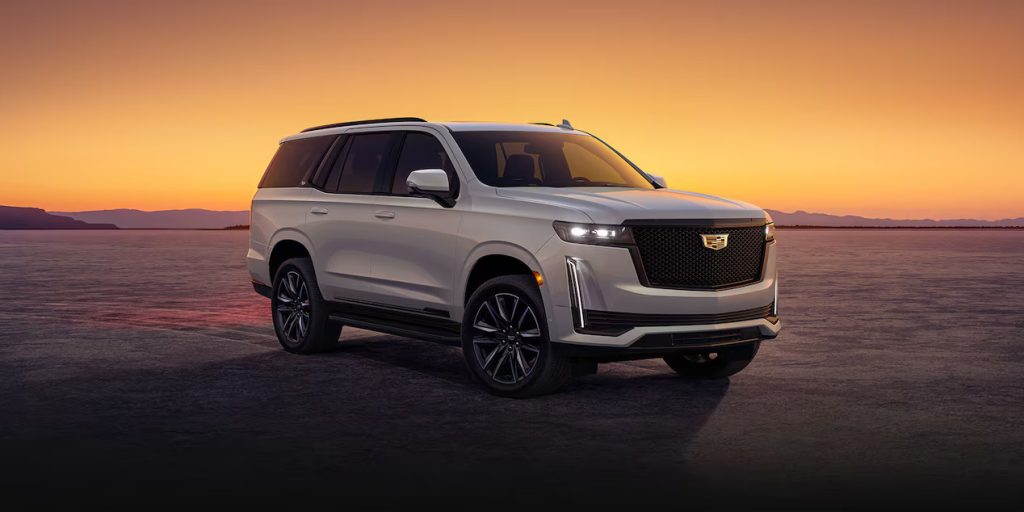
Conclusion: choosing the quietest 2026 luxury SUV
The quietest 2026 luxury SUVs aren’t defined by a single magic trick. They’re the result of a disciplined approach: sealing against wind intrusion, layering materials to stop sound transmission, tuning suspension and drivetrain acoustics, and ensuring HVAC remains unobtrusive. The best cabins create a consistent acoustic environment—calm in the city, composed on the highway, and stable when driving conditions change.
When you test a luxury SUV for cabin noise, treat the experience like a narrative. Listen for patterns. Notice the transitions between speeds. Evaluate how sound behaves when the road gets rough or when traffic tightens and acceleration becomes frequent.
In the end, a truly quiet cabin doesn’t just lower noise. It elevates your attention. It turns the ride into a steady, confidence-inducing hush—so every mile feels less like travel and more like arrival.