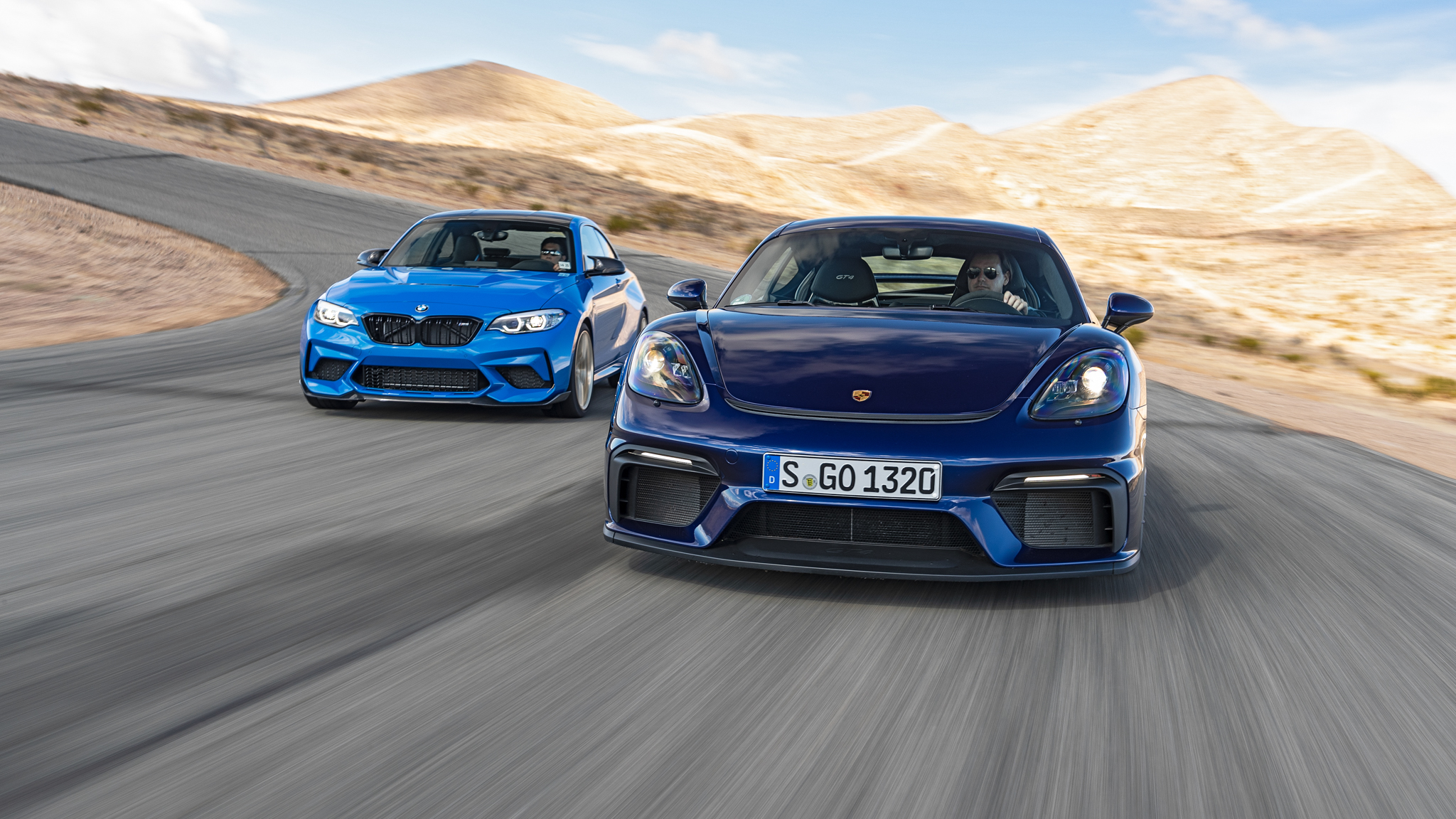
The Porsche 718 Cayman and the BMW M2 are not just cars—they are manifestos. One whispers of precision from a mid-engine perch, where balance is king and every input feels like a conversation with the road. The other roars from a front-engine stance, a mechanical symphony of thrust and torque, where the driver’s will is met with unyielding response. This isn’t merely a comparison of two sports cars; it’s a collision of philosophies, a duel between two distinct visions of what a driver’s car should be. One prioritizes harmony and agility; the other, raw power and visceral engagement. To choose between them is to choose a way of driving—and perhaps, a way of living.
At first glance, they seem like distant cousins—both sleek, both German, both engineered to thrill. But beneath their carbon-fiber skins and polished exteriors, they are worlds apart. The Porsche 718 Cayman is a sculptor’s masterpiece, its mid-engine layout a silent promise of neutrality and poise. The BMW M2, by contrast, is a front-engine titan, its weight planted firmly over the front axle, daring the driver to harness its unruly energy. This isn’t just a technical distinction; it’s a fundamental reimagining of what it means to be connected to the road. One car feels like a scalpel—precise, surgical, effortless. The other feels like a sledgehammer—brutal, exhilarating, alive. And when you drive them back-to-back, the differences don’t just emerge—they explode.

The Mid-Engine Mirage: Porsche 718 Cayman’s Silent Revolution
The Porsche 718 Cayman doesn’t shout—it seduces. Its mid-engine architecture isn’t just a layout; it’s a philosophy. By placing the engine behind the driver but ahead of the rear axle, Porsche has engineered a car that feels like it’s defying gravity. The weight distribution is near-perfect—40:60 front-to-rear in the base model, shifting to a near 50:50 split in the GT4. This isn’t just balance; it’s alchemy. The Cayman doesn’t lean into turns—it carves them, the steering transmitting every nuance of the road like a Morse code of grip and feedback.
But the magic of the Cayman lies deeper than its chassis. It’s in the way the car communicates. Turn the wheel slightly, and the response is immediate, almost telepathic. The mid-engine layout eliminates the understeer that plagues so many front-engine cars, allowing the driver to trail-brake into corners with confidence. The throttle isn’t just a pedal—it’s a wand, capable of summoning either delicate whispers of power or a full-throated howl from the flat-six. And when you push it to its limits, the Cayman doesn’t just hold on—it invites you to dance.
Yet, for all its precision, the Cayman is not without compromise. The mid-engine layout demands sacrifices in packaging—less cabin space, a smaller trunk, and a higher price tag. But Porsche has always believed that perfection comes at a cost. And in the Cayman, that cost is worth every penny.
The Front-Engine Frenzy: BMW M2’s Unapologetic Power Play
If the Porsche 718 Cayman is a scalpel, the BMW M2 is a flamethrower. The M2’s front-engine layout isn’t a flaw—it’s a feature, a deliberate choice to maximize traction and torque. The 3.0-liter twin-turbo inline-six, mounted up front, is a force of nature, delivering 473 horsepower in the M2 Competition and a shriek that could wake the dead. The weight distribution—57:43 front-to-rear—isn’t balanced; it’s a statement. The M2 doesn’t just accelerate—it obliterates, the front tires clawing for grip as the car launches forward with a ferocity that borders on the obscene.
But the M2’s true genius lies in its ability to make the driver feel like a hero. The steering is heavy, the throttle response instantaneous, and the exhaust note a symphony of mechanical aggression. The M2 doesn’t just corner—it powers through them, the front tires digging in as the rear end steps out in a controlled drift. It’s not subtle. It’s not refined. It’s a car that demands your attention, your respect, and your commitment. And in return, it offers an experience that is nothing short of electrifying.
Of course, the M2’s front-engine layout comes with trade-offs. The weight bias can make the car feel tail-happy at the limit, and the steering, while communicative, lacks the telepathic precision of the Cayman. But for those who crave raw power and unfiltered engagement, the M2 is a revelation. It’s a car that doesn’t just drive you—it commands you.
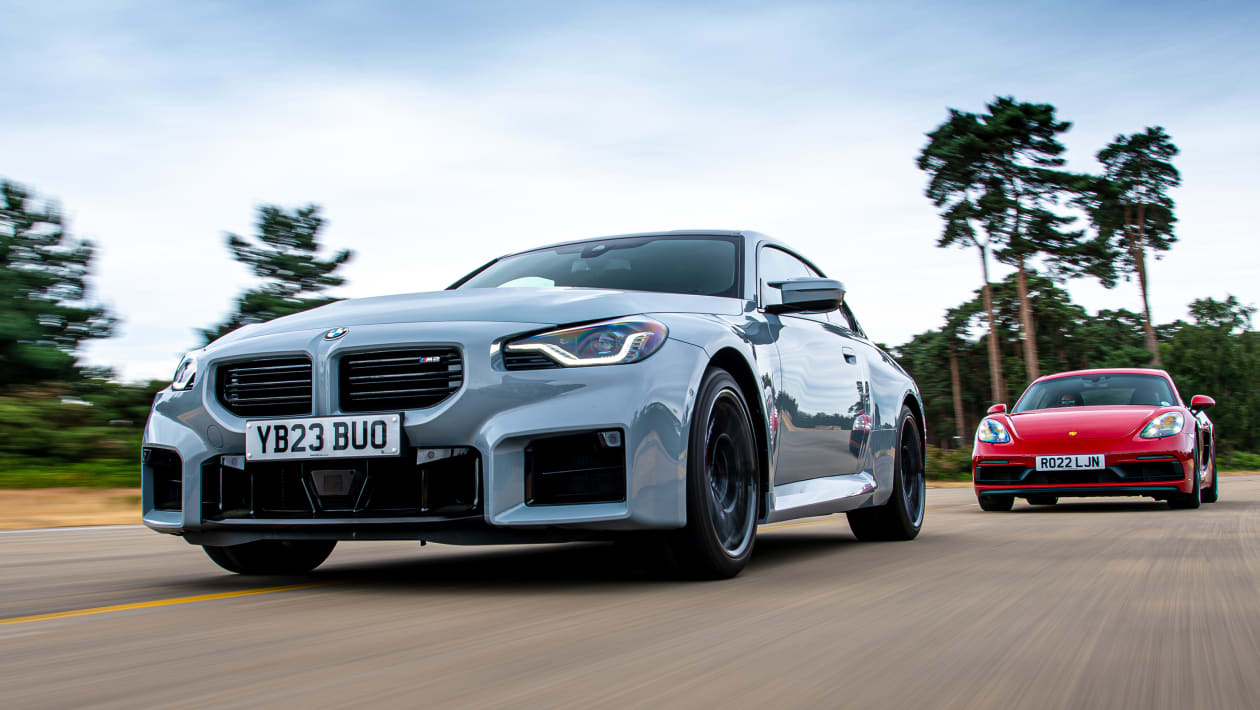
The Great Divide: Handling, Feedback, and the Illusion of Control
The difference between the Porsche 718 Cayman and the BMW M2 isn’t just about where the engine sits—it’s about how the car makes you feel. The Cayman is a partner, a collaborator in the art of driving. It doesn’t fight you; it works with you. The steering is light, the responses crisp, and the car feels like an extension of your body. It’s a car that rewards finesse, where every input is met with a predictable, almost reassuring output.
The M2, on the other hand, is a force of nature. It doesn’t ask for your input—it demands it. The steering is heavier, the throttle more aggressive, and the car feels like it’s constantly on the edge of breaking loose. It’s not a car for the faint of heart. It’s a car for those who want to feel alive, who want to push boundaries and test limits. The M2 doesn’t just handle corners—it devours them, the front tires digging in as the rear end steps out in a controlled, exhilarating drift.
But here’s the paradox: the Cayman, with its mid-engine balance, feels more stable at the limit. It’s easier to drive fast, easier to extract maximum performance without drama. The M2, with its front-engine weight bias, is more of a handful. It rewards aggression but punishes hesitation. It’s a car that will humble you if you’re not paying attention—and reward you if you are.
The Soul of the Machine: What These Cars Say About Their Drivers
Choosing between the Porsche 718 Cayman and the BMW M2 isn’t just about performance—it’s about identity. The Cayman driver is a connoisseur, someone who values precision, balance, and the quiet thrill of a perfectly executed corner. They’re the kind of person who appreciates a car that feels like a well-tailored suit—effortless, elegant, and understated.
The M2 driver, by contrast, is a thrill-seeker, someone who craves raw power and unfiltered engagement. They’re the kind of person who wants a car that feels like a weapon, a machine that responds to their every command with a roar of approval. They’re not interested in subtlety—they want spectacle, drama, and a driving experience that leaves them breathless.
But here’s the thing: neither approach is inherently better. They’re just different. The Cayman offers a masterclass in balance and precision, while the M2 delivers an unapologetic assault on the senses. One is a symphony; the other, a concerto. And the beauty of it is that both are right.
The Verdict: Which One Wins the Battle?
If you’re looking for a car that feels like an extension of your body—a machine that responds to your every whim with grace and precision—then the Porsche 718 Cayman is your soulmate. It’s a car that rewards finesse, that makes you feel like a better driver simply by being in its cockpit. It’s not the fastest. It’s not the most powerful. But it might just be the most satisfying.
If, however, you want a car that feels like a force of nature—a machine that will push you to your limits and beyond—then the BMW M2 is your partner in crime. It’s a car that doesn’t just drive you; it commands you. It’s not subtle. It’s not refined. But it’s exhilarating in a way that few cars can match.
So which one wins? Neither. And both. Because the Porsche 718 Cayman and the BMW M2 aren’t just cars—they’re experiences. And the only way to truly understand them is to get behind the wheel and let them show you what they’re made of.
The road awaits. Which one will you choose?