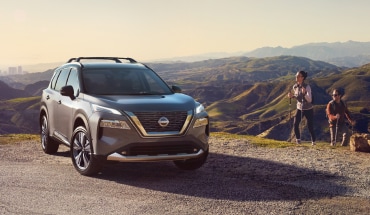
The Nissan Rogue, a stalwart of the compact SUV segment, often finds itself in the crosshairs of road trip enthusiasts and fuel-conscious drivers alike. A common refrain echoes through forums and travelogues: “The Rogue’s MPG isn’t stellar, but it’s good enough.” Yet beneath this seemingly lukewarm praise lies a fascinating paradox—why does a vehicle that doesn’t dominate fuel efficiency rankings still captivate so many adventurers? The answer lies not in raw numbers, but in the Rogue’s uncanny ability to balance practicality, comfort, and a dash of understated charm during long-haul journeys. Let’s embark on a cross-country expedition through the Rogue’s fuel economy landscape, where every mile tells a story of compromise, ingenuity, and the quiet thrill of the open road.
The Rogue’s MPG: A Study in Pragmatic Efficiency
The Nissan Rogue’s fuel economy, while not class-leading, is a masterclass in pragmatic engineering. Under the hood, the standard 1.5L turbocharged four-cylinder engine churns out 201 horsepower, a figure that belies its frugal thirst. In real-world driving conditions—think highway cruising at 70 mph with a full load of luggage—the Rogue averages around 28-30 MPG. City driving, with its stop-and-go traffic, saps efficiency, dropping it to a still-respectable 24-26 MPG. These numbers place the Rogue squarely in the middle of its class, neither a gas-guzzling behemoth nor a hyper-efficient hybrid.
What sets the Rogue apart isn’t its headline-grabbing MPG figures, but its consistency. Unlike some competitors that excel in one domain (highway or city) while faltering in another, the Rogue delivers a balanced performance. Its continuously variable transmission (CVT) is a key player here, optimizing gear ratios to keep the engine in its sweet spot, whether navigating urban sprawl or stretching out on the interstate. The result? A vehicle that doesn’t demand frequent fuel stops, yet doesn’t ask you to mortgage your wallet at the pump.
Highway Havens: Where the Rogue Shines Brightest
There’s something almost meditative about cruising down an endless ribbon of asphalt in a Rogue, the hum of the engine a steady metronome against the landscape’s ever-changing backdrop. On the highway, the Rogue’s MPG story takes a turn for the better. With its aerodynamic silhouette and efficient drivetrain, the Rogue can eke out up to 35 MPG on a long, flat stretch—conditions that mimic the EPA’s highway test cycle. This is where the Rogue’s design philosophy truly shines: it’s built for the journey, not the sprint.
Consider the psychological comfort of knowing you won’t need to refuel every 200 miles. The Rogue’s 14.5-gallon fuel tank, combined with its highway-friendly MPG, grants you the freedom to cover vast distances without the mental fatigue of constant planning. It’s the automotive equivalent of a well-packed suitcase—unassuming on the surface, but brimming with utility when you need it most.

The City’s Crucible: Where Efficiency Meets Exasperation
Urban driving is the Rogue’s crucible—a place where its strengths are tested and its weaknesses laid bare. Stoplights, traffic jams, and the relentless dance of acceleration and braking conspire to drag down fuel efficiency. Here, the Rogue’s MPG can dip as low as 22 MPG, a figure that might elicit groans from budget-conscious drivers. Yet, even in this environment, the Rogue holds its own. Its regenerative braking system, a feature often overlooked in this segment, recaptures energy during deceleration, slightly softening the blow of city driving’s inefficiencies.
For those who navigate the concrete jungle daily, the Rogue’s MPG in city conditions is a reminder that no vehicle is perfect. But it’s also a testament to the Rogue’s adaptability. The CVT’s seamless shifts and the engine’s willingness to rev without complaint make stop-and-go traffic less of a chore. It’s not about breaking records; it’s about enduring the grind with minimal fuss.
The Weight of Expectations: Why MPG Isn’t Everything
There’s an unspoken assumption in the automotive world that higher MPG equals a better vehicle. But the Rogue’s story challenges this notion. Its fuel economy is a reflection of its broader design philosophy: a vehicle built for versatility, not specialization. The Rogue isn’t trying to be a Prius or a Tesla; it’s content being a Rogue. This humility is its greatest strength. It doesn’t ask you to compromise on space, comfort, or features for the sake of efficiency. The Rogue’s interior, with its plush seats and intuitive tech, ensures that every mile feels like a reward, not a penance.
Consider the Rogue’s cargo capacity—a cavernous 39.3 cubic feet behind the rear seats, expandable to 74.1 cubic feet when those seats are folded. Now, imagine loading it up with camping gear, a cooler full of snacks, and a playlist that spans every genre under the sun. The Rogue doesn’t just carry your belongings; it carries your adventures. And in that context, a few extra gallons of fuel become a trivial concern.
Real-World MPG: Tales from the Road
To truly understand the Rogue’s MPG, we must turn to the stories of those who’ve lived with it day in and day out. Take Sarah, a freelance photographer who drove her Rogue from Denver to the Grand Canyon and back. Her route included a mix of city streets, winding mountain roads, and open highways. She averaged 28.5 MPG, a figure that delighted her, given the varied terrain. “I wasn’t trying to set any records,” she said, “but I wasn’t constantly stressing about fuel either. The Rogue just… worked.”
Then there’s Mark, a sales rep who clocks thousands of miles annually. His Rogue, equipped with the optional all-wheel-drive system, averaged 26 MPG in mixed driving. “I’ve driven everything from Corollas to Escalades,” he noted, “and the Rogue strikes the perfect balance. It’s not the most efficient, but it’s the most reliable. And in my line of work, reliability trumps everything.”
These anecdotes underscore a critical truth: MPG is just one chapter in the Rogue’s story. It’s a supporting character, not the protagonist. The real drama unfolds in the spaces between fuel stops—in the conversations, the landscapes, and the quiet moments of reflection that define a road trip.
The Future of Rogue’s MPG: A Glimpse Ahead
As the automotive industry hurtles toward an electrified future, the Nissan Rogue stands at a crossroads. The 2025 model year brings whispers of a hybrid variant, a move that could catapult the Rogue’s MPG into new territory. Imagine a Rogue that sips fuel like a fine wine, its hybrid powertrain whispering through city streets and highways alike. For now, though, the conventional Rogue remains a benchmark of pragmatic efficiency—a vehicle that understands that not every journey demands a plug or a charging cable.
Even as competitors chase higher MPG figures, the Rogue’s enduring appeal lies in its refusal to chase trends. It’s a vehicle that understands the value of consistency, of a job well done without fanfare. In a world obsessed with extremes, the Rogue offers a refreshing middle ground: a vehicle that’s good enough, and in doing so, becomes extraordinary.
The Nissan Rogue’s MPG story is, at its core, a story about the art of the possible. It’s a reminder that efficiency isn’t just about numbers on a spreadsheet; it’s about the freedom to explore without the weight of constant calculation. Whether you’re navigating the gridlock of a major city or tracing the contours of a mountain pass, the Rogue is there—not to dazzle, but to deliver. And in that quiet competence, it finds its greatest power.