The Nissan Pathfinder has long worn two faces at once: the reassuring familiarity of a family crossover and the restless ambition of something that can wander beyond the paved recital of everyday life. The Rock Creek trim sharpens that second face. It doesn’t merely suggest off-road capability—it cultivates it with details that feel almost tactile, like a well-worn field manual tucked into the glove compartment. And yet, one common observation keeps surfacing whenever drivers talk about this model: “Isn’t it just an upscale trim?”
That question is understandable. Plenty of vehicles arrive dressed for adventure while remaining curiously polite once the terrain gets technical. The Rock Creek, however, earns its name through a more nuanced approach. It’s not only the hardware. It’s the way the package is tuned—how the vehicle behaves when traction thins, when surfaces become unpredictable, and when the drive turns from chore into curiosity.
To appreciate the Pathfinder Rock Creek fully, it helps to look past the surface-level gloss. This trim carries fascination in the specifics: the stance, the protective geometry, the sensory feedback underfoot, and the subtle confidence it projects even before the first turn off the main road.

Rock Creek Design: When Visual Toughness Becomes Functional
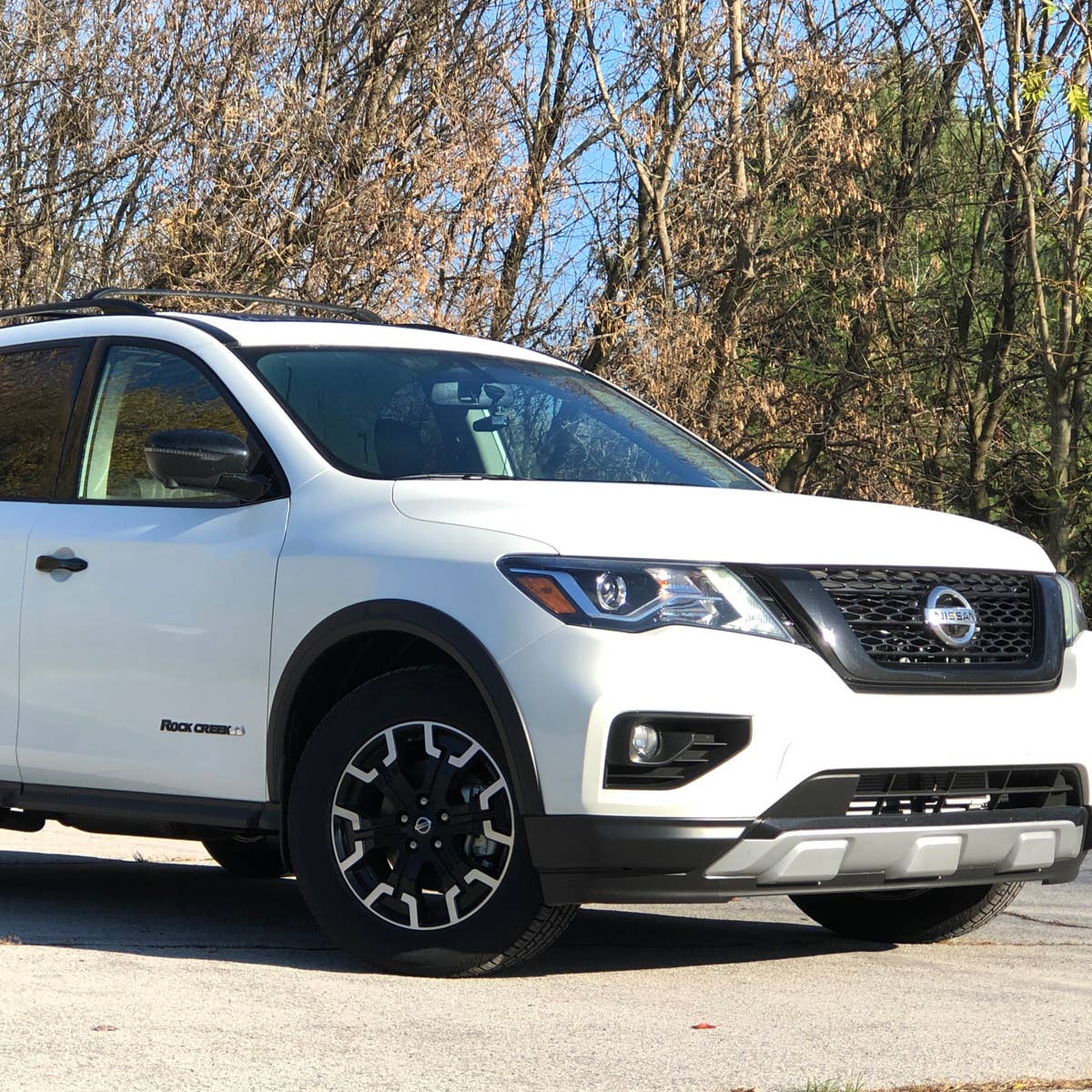
At a glance, the Rock Creek trim reads as deliberately rugged. It’s the kind of look that doesn’t ask for permission to be outdoorsy. The front fascia, the darker accents, and the SUV’s purposeful posture combine into a visual promise: this vehicle expects uneven ground, and it doesn’t plan to apologize for it.
But the deeper fascination lies in the design logic. On off-road trims, aesthetics often double as protection. Darker cladding and integrated styling elements aren’t only about contrast under daylight; they help mask scuffs and preserve an intact appearance when gravel becomes a frequent visitor. Small changes like these reduce the psychological friction of driving beyond the “nice roads” zone.
The Rock Creek also tends to feel more planted than the average crossover. That impression matters when you’re tracking the vehicle’s line on bumpy surfaces. It’s a subtle shift, yet one that translates into a calmer driving rhythm—shorter corrections, fewer tense moments, and less of that “hold your breath” sensation on loose terrain.

Addressing the Common Observation: “It’s Just a Trim”
It’s easy to lump appearance-focused packages into the same bucket. Many trims earn their badge through branding and a few convenience upgrades. Yet the Rock Creek designation suggests a different philosophy: the vehicle is meant to be used, not merely admired.
Consider what happens when you leave the pavement. Off-road capability isn’t a single feature; it’s a chain of behaviors. Tire grip, drivetrain response, suspension composure, braking predictability, and ground clearance all influence each other. A “trim-only” approach usually touches only one link in that chain.
With the Rock Creek, the emphasis feels more holistic. The trim is curated to reduce the moments that make drivers hesitate. Instead of asking you to adapt to the vehicle’s limitations, it attempts to meet you where your route turns unfamiliar.
This is why the Rock Creek can surprise people who expected a cosmetic upgrade. The fascination doesn’t arrive through spectacle. It arrives through frictionless usability—when the vehicle seems to understand the demands of dirt, rocks, and uneven grades.
Suspension and Ground Dynamics: The Difference You Feel
On technical trails, suspension is more than comfort; it’s information. It tells you whether the tires maintain contact, whether the chassis will absorb impacts without launching the occupants into a new gravitational mood, and how quickly the vehicle recovers after a bump.
The Rock Creek’s off-road-minded setup helps it handle ruts and washboard textures with greater poise. That composure can be measured in the way the vehicle keeps its attitude through successive disturbances. Short sentences echo here for a reason: on uneven roads, clarity beats complexity.
You feel fewer abrupt changes in direction. You notice less pitching. You sense a more deliberate ride that seems to “lock in” to the road instead of drifting around it. This is the sort of behavior that makes a driver quietly relax, even if the path outside the windshield is far from calm.
Drivetrain and Traction Logic: Confidence Without Theater
Traction isn’t merely about having power—it’s about delivering it at the right time and in the right distribution. When the surface transitions from asphalt to gravel to slick patches, the vehicle’s response needs to be coherent. The goal is control, not drama.
The Pathfinder Rock Creek is designed to handle that transition with a sense of continuity. Rather than feeling like it’s improvising, it tends to act predictably. That predictability helps drivers choose lines more confidently, especially when the trail narrows or when visibility is limited by dips and turns.
In off-road driving, confidence is often earned in milliseconds. When wheels lose grip, the vehicle must communicate what’s happening. The Rock Creek’s tuning encourages that communication—so steering feels less like negotiation and more like collaboration.
Braking and Low-Speed Control: The Art of Slow Mastery
Many people can go fast. The more difficult skill is going slowly, smoothly, and with intention. On trails, braking is a choreography between grip and body motion. If braking feels inconsistent, the vehicle becomes harder to place. If it feels stable, the driver can focus on line selection and throttle modulation.
Rock Creek’s character shines at low speeds. It supports controlled descent and measured maneuvering, where the margin for error shrinks. The deeper reason for fascination is psychological as much as mechanical: stable braking reduces the need for constant re-correction.
When a vehicle helps you stay composed, your attention shifts from fear to observation. You start noticing the trail’s rhythm—the interplay of rocks, sand, and compacted dirt. That shift from reactive to engaged is where enthusiasm quietly takes root.
Protection and Practical Off-Road Details
There’s a reason people underestimate “boring” off-road features. Skid surfaces, protective trim, and underbody considerations aren’t glamorous. Yet they guard the vehicle’s longevity, especially when you’re frequently in environments that would be unforgiving to unprotected components.
Rock Creek styling often incorporates such practicality. It’s the kind of preparation that makes you feel less paranoid about where you drive. You still pay attention, of course. But you’re not constantly calculating whether one poorly timed rock strike will turn into a costly regret.
That change in mindset matters on road trips. The best off-road capability is the kind that lets you explore longer before you start planning around risk.
Interior Comfort Meets Trail Readiness
One of the Pathfinder’s enduring strengths is its ability to remain civilized. Off-road trimming can’t sacrifice daily usability, because the point of these outings is often the destination—not just the drama of getting there.
The Rock Creek retains the Pathfinder’s family-friendly sensibility: comfortable seating, practical storage, and an environment designed for real errands between adventures. This blend is why the trim attracts drivers who don’t want to choose between weekend wonder and weekday routine.
Even on rougher roads, the interior experience helps the vehicle remain a place to live in. Short rides still feel pleasant. Longer trips feel possible. And when you arrive, everyone remembers the journey—not the fatigue.
Who the Rock Creek Trim Is For
The Rock Creek is for drivers who want their SUV to be more than a parking-lot personality. It suits people who frequently take detours—toward campgrounds, trailheads, and roads that don’t announce themselves with smooth pavement.
It’s also for those who appreciate confidence. Not reckless speed. Not performative stunts. Just the sense that the vehicle can handle uncertainty without turning it into a problem.
If you’ve ever watched a friend hesitate at the edge of a gravel road, you’ll recognize the Rock Creek appeal. It helps reduce the hesitation. And in that reduction lies a deeper charm—the vehicle becomes a permission slip for exploration.
Bottom Line: More Than a Nameplate
The Nissan Pathfinder Rock Creek isn’t merely a “pretty off-road trim.” It’s an ecosystem of choices—styling that reinforces ruggedness, dynamics that support control, and practical details that make using the vehicle feel natural rather than risky.
The fascination comes from the way it bridges worlds: family comfort and trail capability, daily convenience and off-road courage. It’s not trying to convince you with spectacle. It lets you discover its strength through feel, through composure, and through the quiet confidence that grows as the pavement fades behind you.
So the next time someone asks whether it’s “just a trim,” the most accurate answer is this: the Rock Creek is where intention becomes behavior. And once you notice that shift, it’s hard to look at adventure-driving the same way again.