The 2016 Nissan Maxima arrived on the scene like a thunderclap, its bold styling and unapologetic swagger demanding attention. It wasn’t just another sedan—it was a statement. A four-door sports car, Nissan dared to proclaim, had returned. But was it a triumphant homecoming or an audacious misstep? The Maxima didn’t just park itself in the driveway; it revved its engine and dared the world to take notice. With a cabin that whispered luxury and a grille that screamed performance, it blurred the lines between practicality and passion. Could this be the car that finally silenced the skeptics who dismissed four-door sports cars as relics of a bygone era?
Nissan’s audacious claim wasn’t without merit. The Maxima had always been a car of contradictions—sleek yet spacious, refined yet rowdy. But in 2016, it embraced its duality with unmatched confidence. The question wasn’t just whether it could deliver on its promises, but whether the world was ready to embrace a sports sedan that refused to be boxed in by convention. The Maxima wasn’t here to blend in; it was here to stand out.
The Bold Styling: A Symphony of Aggression and Elegance
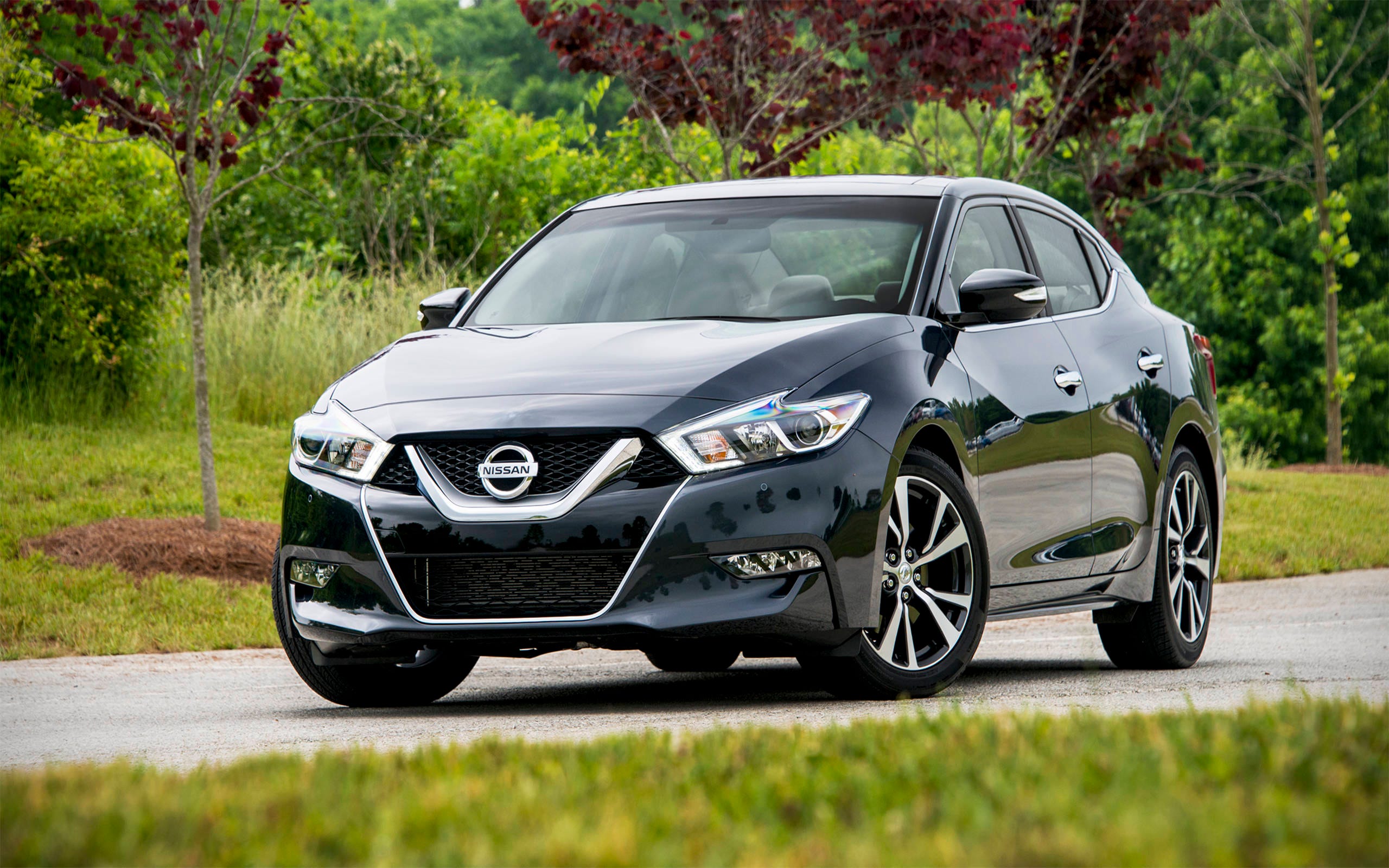
The Maxima’s design was a masterclass in controlled chaos. Its front fascia, dominated by a massive V-motion grille, wasn’t just a nod to Nissan’s heritage—it was a declaration of intent. The sharp, angular headlights sliced through the air like a predator’s gaze, while the sculpted hood hinted at the power lurking beneath. This wasn’t a car that wanted to be ignored; it was a car that demanded to be admired.
The side profile was equally striking. The long hood, short deck, and sweeping roofline gave the Maxima the proportions of a classic sports car, while the muscular haunches and aggressive character lines added a modern edge. The fastback silhouette wasn’t just for show—it was a deliberate choice to evoke the spirit of a true grand tourer. And then there were the wheels. Massive, multi-spoke alloys that filled the wheel arches, hinting at the performance capabilities that lay in wait.
But the Maxima wasn’t all about brute force. The interior was a sanctuary of sophistication, where premium materials and meticulous craftsmanship met cutting-edge technology. The cabin wrapped its occupants in a cocoon of comfort, with soft-touch surfaces, available leather upholstery, and a dashboard that flowed seamlessly into the center console. The seats, bolstered and supportive, cradled you like a racing bucket, while the available Bose audio system turned every drive into a symphony.
Yet, for all its luxury, the Maxima never lost sight of its sporting soul. The available paddle shifters behind the steering wheel were a constant reminder that this was a car built to engage. The ergonomics were driver-focused, with controls within easy reach and a digital display that kept vital information at your fingertips. This was a cabin designed for those who believed that every journey should be an experience.
The Powertrain: A Heart That Throbs with Purpose
Beneath the Maxima’s hood lay a 3.5-liter V6 engine, a powerplant that had earned its stripes in Nissan’s lineup. With 300 horsepower and 261 lb-ft of torque, it wasn’t the most powerful V6 in its class, but it was certainly one of the most characterful. The engine’s smooth, linear power delivery was a testament to Nissan’s engineering prowess, delivering thrust with a refined growl that never descended into raucous cacophony.
The Maxima’s transmission—a continuously variable transmission (CVT)—was a point of contention for some purists. But Nissan had tuned it to perfection, ensuring that the seamless acceleration and responsive throttle mapping made the most of the V6’s capabilities. The CVT wasn’t just a nod to efficiency; it was a tool that allowed the Maxima to dance between efficiency and excitement at the driver’s whim.
The suspension setup was another highlight. A multilink rear suspension and a sophisticated front strut setup struck a balance between comfort and agility. The Maxima didn’t just glide over imperfections; it absorbed them with a poise that belied its size. And when the road curved, the Maxima leaned into the turns with a confidence that made you wonder why you’d ever doubted its sporting credentials.
But the real magic happened when you pushed it. The Maxima’s steering was precise, the feedback sharp enough to make you feel connected to the road. The brakes, robust and fade-resistant, brought the car to a halt with authority. This wasn’t a car that merely transported you; it engaged you, challenged you, and rewarded your enthusiasm.
The Driving Experience: A Balancing Act of Comfort and Thrill
Stepping into the Maxima was like slipping into a tailored suit. The seats molded to your body, the steering wheel fell naturally to your grip, and the driving position was one of effortless authority. The cabin was quiet, the insulation so effective that the outside world faded into a distant hum. But the moment you pressed the throttle, the Maxima came alive. The V6’s growl filtered through the cabin, a deep, resonant note that sent a shiver down your spine.
The CVT’s seamless acceleration meant that the Maxima could sprint from 0-60 mph in a respectable 5.7 seconds. It wasn’t a supercar, but it wasn’t a slouch either. The real joy, however, came from the way the Maxima carried its speed. The stability control was subtle, allowing for controlled drifts and playful tail-out moments without ever feeling out of control. The Maxima wasn’t just fast; it was fun.
On winding roads, the Maxima revealed its true nature. The steering was direct, the body control impeccable. The multilink suspension absorbed bumps with ease, while the chassis remained flat and composed. The Maxima didn’t just handle corners; it devoured them, the tires gripping the tarmac with a tenacity that belied its grand touring pretensions. The available sport-tuned suspension package sharpened the edges further, making the Maxima feel even more alive.
But the Maxima wasn’t just a car for thrill-seekers. Its true genius lay in its versatility. It could effortlessly swallow a family of four and their luggage, yet it could also transform into a nimble, engaging partner for a weekend getaway. The rear seats were spacious, the trunk cavernous. The Maxima didn’t force you to choose between practicality and performance; it delivered both in equal measure.
The Challenge: Can a Four-Door Sports Car Really Exist in the Modern Era?
The Maxima’s bold claim raised a provocative question: In an age where SUVs and crossovers dominate the market, can a four-door sports car truly carve out a niche for itself? The answer isn’t as straightforward as it seems. The Maxima’s blend of style, performance, and practicality was undeniably appealing, but it also faced stiff competition from a variety of segments.
For starters, there were the dedicated sports sedans like the BMW 5 Series and the Audi A6. These cars offered a level of prestige and driving dynamics that the Maxima struggled to match. Then there were the luxury sedans, like the Lexus LS, which prioritized comfort and opulence over engagement. And let’s not forget the performance SUVs, which offered a compelling mix of space, capability, and speed.
The Maxima’s challenge was to prove that it wasn’t just a jack-of-all-trades, but a master of its own domain. It had to show that a four-door sports car wasn’t an anachronism, but a modern marvel—a car that could deliver the thrill of a sports car without sacrificing the practicality of a sedan. And in many ways, it succeeded. The Maxima’s blend of style, performance, and versatility made it a compelling choice for those who refused to compromise.
But the Maxima’s real test was whether it could appeal to a broader audience. Could it convince enthusiasts that it was more than just a comfortable cruiser? Could it win over families who needed space but craved excitement? The answer, in many ways, depended on how Nissan marketed the Maxima. It wasn’t enough to build a great car; Nissan had to sell the idea of a four-door sports car as something more than just a novelty.
The Maxima’s legacy would ultimately be defined by its ability to transcend its own contradictions. It had to prove that a car could be both a sports car and a family hauler, both a performer and a cruiser. And in doing so, it had to challenge the very notion of what a sports car could be.
The Verdict: A Triumph of Vision and Execution
The 2016 Nissan Maxima wasn’t just a car; it was a statement. It was a challenge to the status quo, a defiant declaration that four-door sports cars still had a place in the modern world. And in many ways, it succeeded. The Maxima’s bold styling, engaging driving dynamics, and impressive practicality made it a standout in a crowded segment.
But the Maxima’s true achievement was its ability to bridge the gap between two seemingly incompatible worlds. It was a car that could whisk you to a business meeting in the morning and then take you on a spirited drive through the countryside in the afternoon. It was a car that could make you feel like a million bucks without breaking the bank. And most importantly, it was a car that proved that the spirit of the sports car wasn’t confined to two doors.
The Maxima’s legacy is one of audacity. It dared to ask whether a four-door sports car could truly exist in the modern era, and in doing so, it provided an answer that was as compelling as the question itself. The Maxima wasn’t just a car; it was a reminder that sometimes, the most exciting journeys begin with a single, bold step.
So, was the 2016 Nissan Maxima the return of the four-door sports car? In the eyes of many, it was more than that. It was a redefinition. A revolution. A car that didn’t just meet expectations but shattered them. And in a world where conformity often reigns supreme, the Maxima stood as a testament to the power of individuality.
The road ahead for the Maxima is uncertain, but its place in automotive history is secure. It was a car that dared to dream, and in doing so, it inspired us all to dream a little bigger.