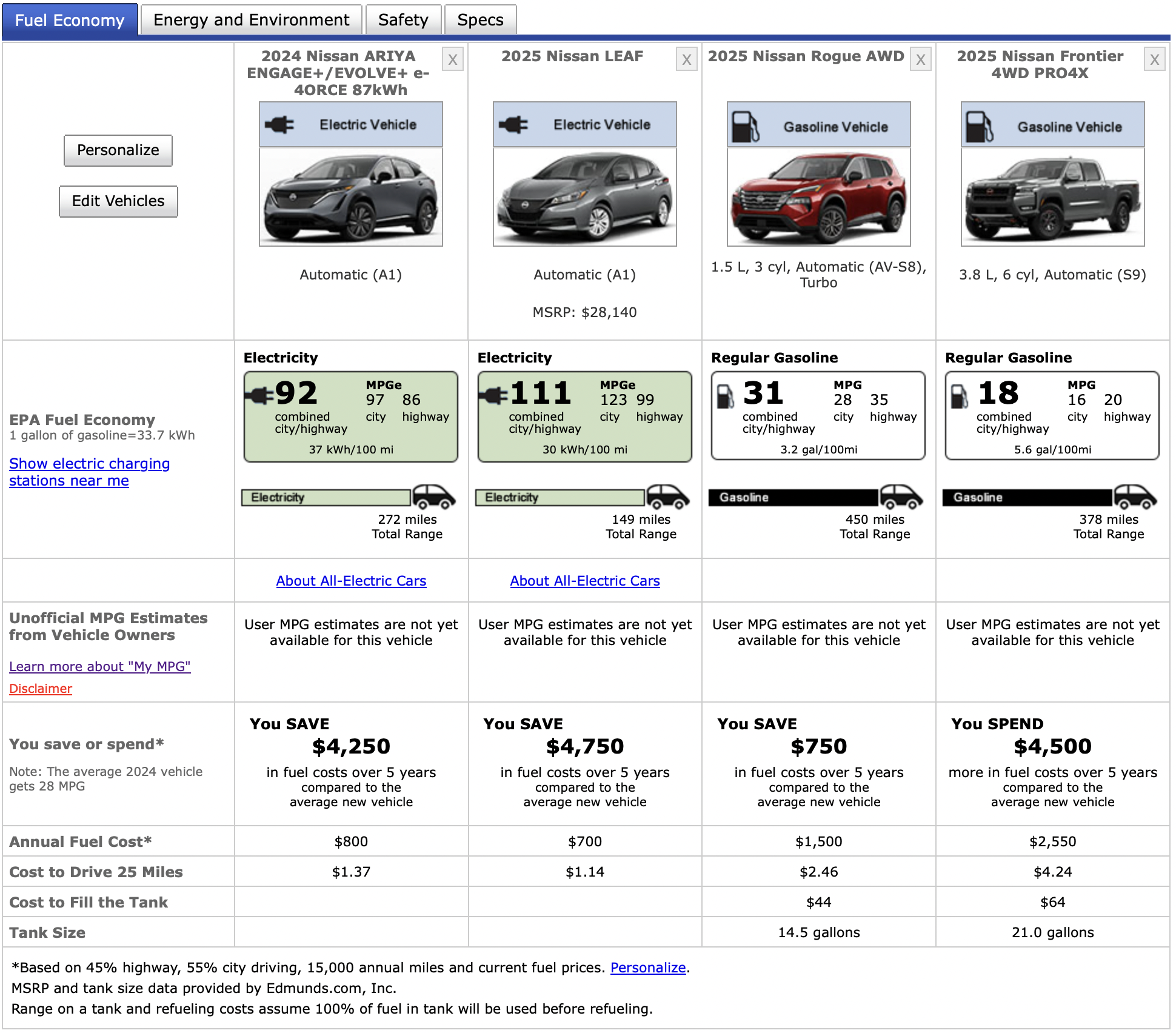
Modern EV buyers don’t simply ask, “How far will it go?” They ask, “How far will it go when the sun is blazing, the temperature is biting, the roads are congested, and the driver is using real-world habits instead of laboratory rituals?” That is where the Nissan Ariya’s EPA range and MPGe story meets the messier, more revealing theater of daily driving. The EPA test cycle offers a clean, repeatable baseline. Real-world efficiency—sometimes dazzling, sometimes sobering—tells you what your calendar and commute will likely demand.
MPGe (miles per gallon equivalent) is the bridge between gasoline intuition and electric reality. It translates electricity use into a familiar metric, then wraps it in standardized testing. Yet when the Ariya rolls into the world—where hills exist, wind has moods, and drivers toggle heat, cool, and acceleration—the measured efficiency can drift. The question isn’t whether the EPA rating is “wrong.” It’s whether it’s optimistic, conservative, or somewhere in between for your particular pattern of driving.
What MPGe Means—And Why Drivers Feel Its Difference
MPGe is often introduced as a single number, but it behaves more like a moving target. It’s calculated based on how much energy the vehicle consumes to travel a mile, converted into the energy content of a gallon of gasoline. That means the Ariya’s MPGe is less about “miles” and more about energy economy.
In everyday terms, higher MPGe typically translates to fewer charging sessions, longer intervals between fill-ups, and a more relaxed approach to range planning. But MPGe isn’t only about the powertrain. It reflects a symphony of variables: tire choice, driving speed, HVAC usage, battery temperature, road grade, and even how aggressively the driver modulates throttle.
When drivers compare real-world figures to EPA expectations, they are essentially checking how well the Ariya’s efficiency behaves outside the laboratory’s tidy choreography.
EPA Testing: The Controlled Baseline Behind Nissan Ariya Numbers
The EPA rating is designed to be repeatable, not perfectly predictive. The test procedures model a variety of driving behaviors, smoothing out extremes so the outcome can be compared across vehicles. For the Ariya, that means its reported range and MPGe are anchored to assumptions about temperature, speed, and accessory loads.
EPA results generally provide clarity for cross-shopping: two EVs can be compared on the same measuring stick. That part is crucial. Still, the EPA cycle cannot fully anticipate your commute’s personality—whether it’s stop-and-go downtown congestion, highway cruising at steady speed, or a route that forces repeated acceleration uphill.
So while an Ariya’s EPA MPGe offers a map, it is not a GPS. It suggests efficiency potential, but the route you drive decides how much of that potential survives the real world.
Real-World MPGe: Where the Ariya’s Efficiency Reveals Its Character
Real-world MPGe can look both better and worse than the EPA rating depending on conditions. For many drivers, the most significant determinant is speed. Efficiency often drops at higher velocities because aerodynamic drag escalates quickly—like a leak in a tire that grows more noticeable the faster you go. Wind resistance is the EV equivalent of paying a toll to the atmosphere.
Another major factor is temperature. Cold weather compresses battery performance and demands more energy for cabin comfort. Warm conditions can feel like a gift, letting the Ariya maintain more favorable chemistry and reduce heating or defrosting loads.
Driving style matters, too. Smooth modulation—gentle acceleration, patient coasting, and restrained “punches”—can preserve energy. Aggressive inputs, even if they’re brief, can drain MPGe. Regen braking helps, but it is not magic; it recovers energy that would otherwise become waste, yet it cannot fully neutralize the energy spent surging from a stop.
Then come the smaller, sneaky gremlins: roof racks, tire pressures, and even how frequently doors are opened in hot climates. These details don’t sound dramatic, but MPGe is often won in the margins.
Speed, HVAC, and Terrain: The Three Big Levers
If you want a practical framework for predicting how the Ariya might perform, focus on three levers: speed, climate control, and elevation changes.
Speed: At lower speeds, the Ariya may approach EPA-like efficiency more closely. On highways, real-world MPGe often declines. The vehicle’s aerodynamic efficiency becomes the starring actor, and it performs better at moderate velocities than at sustained high speeds.
HVAC: Heating and cooling can become energy hogs. Cabin heat in winter—or heavy air conditioning during a warm afternoon—can reduce MPGe noticeably. EV drivers sometimes underestimate this because gasoline vehicles also “burn fuel” for comfort. The difference is that EVs expose the cost immediately through range estimates and charge planning.
Terrain: Hilly roads create a constant energy exchange. Climbing consumes energy; descending may recuperate some of it through regenerative braking. The net effect depends on how steep the route is and how often you have to crest and descend. In stop-and-go terrain, brake-to-regen cycles can help, but repeated accelerations still tax efficiency.
When these levers align unfavorably—high speed, harsh weather, and constant grades—real-world MPGe can fall short of EPA projections. When conditions are friendly—moderate driving, temperate weather, and predictable terrain—the Ariya can feel remarkably efficient.
How to Read Range Estimates Without Losing Your Mind
Many drivers start with a simple question: “Why did my range number change?” The answer is that modern EVs continuously re-estimate energy use based on current data. That means range can fluctuate even within the same drive. The Ariya, with its intelligent systems, watches patterns—speed, acceleration, HVAC demand—and updates your future.
Instead of treating the displayed range as a prophecy, treat it as a weather forecast. It becomes more accurate as the car learns your conditions. Short trips may not allow enough data for a stable estimate, while longer routes often settle into a clearer trend.
For buyers comparing real-world MPGe versus EPA rating, this dynamic is important: your own usage pattern is gradually shaping the estimate, so your observed MPGe over time can become a reliable personal baseline.
Expectations by Driving Pattern: City, Suburban, and Highway
Each driving environment has its own energy “accent.”
City driving: Stop-and-go travel can produce mixed results. Regen braking captures some of the energy wasted during slowing. However, frequent acceleration still requires substantial power. In gentle urban flow, the Ariya’s efficiency can look closer to EPA values. In a traffic grid with constant surges, MPGe can slide.
Suburban commuting: This is where many drivers find the sweet spot: moderate speeds, occasional hills, and fewer brutal speed swings. If the commute includes enough coasting and regen opportunities without excessive high-speed cruising, real-world MPGe often feels encouraging.
Highway driving: Expect the EPA rating to be more aspirational. Sustained speeds increase drag and can make cabin comfort strategies more noticeable in consumption. If you do highway runs, your MPGe will likely settle into a lower band than the EPA figure—but it can still be competitive among EVs depending on the Ariya variant and tire setup.
Understanding the environment you drive in is the fastest way to interpret why your Ariya might be outperforming or underperforming the EPA number.
What Accessories and Habits Can Quietly Change MPGe
Some efficiency killers arrive disguised as convenience. Fast charging is not the culprit here—consumption per mile is. But charging behavior affects battery temperature and readiness, which can indirectly influence efficiency later.
Cabin preconditioning can be a net positive or negative depending on how it’s managed. Preheating or precooling while plugged in may preserve battery energy on the drive. Doing it after departure can draw from the battery directly, lowering MPGe.
Then there’s the question of tires and pressure. Underinflated tires increase rolling resistance, and the Ariya will pay for it mile after mile. Similarly, roof racks or added cargo can alter airflow. Even small changes in frontal area can influence aerodynamic drag, especially at highway speeds.
Lastly, driver habits are the hidden author of efficiency. One driver may treat accelerator input like a scalpel. Another may use it like a drumbeat. Both are valid styles—yet they write different MPGe outcomes.
Real-World Comparisons: Why MPG-Equivalent Numbers Can Feel Confusing
Comparing real-world MPGe to EPA MPGe can create cognitive friction because the numbers don’t share the same reality. EPA figures are standardized. Real-world numbers depend on your weather, your roads, and your habits. When someone posts “my Ariya achieved X MPGe,” the X may be true—and still not resemble your own X at all.
To make comparisons meaningful, focus on context: Was it winter? Was it highway-heavy? Were tires recently replaced? Were HVAC settings moderate or extreme? A single anecdote is informative, but a trend across similar drivers and similar conditions is more reliable.
In other words, you’re not just comparing vehicles. You’re comparing circumstances.
Visualizing Efficiency: What the Dashboard Can Tell You
Modern EV dashboards are more than decorative interfaces—they are interpretive tools. They help track energy consumption, range estimates, and how often regenerative braking is activated. Observing these patterns over a week can be more useful than obsessing over a single trip statistic.
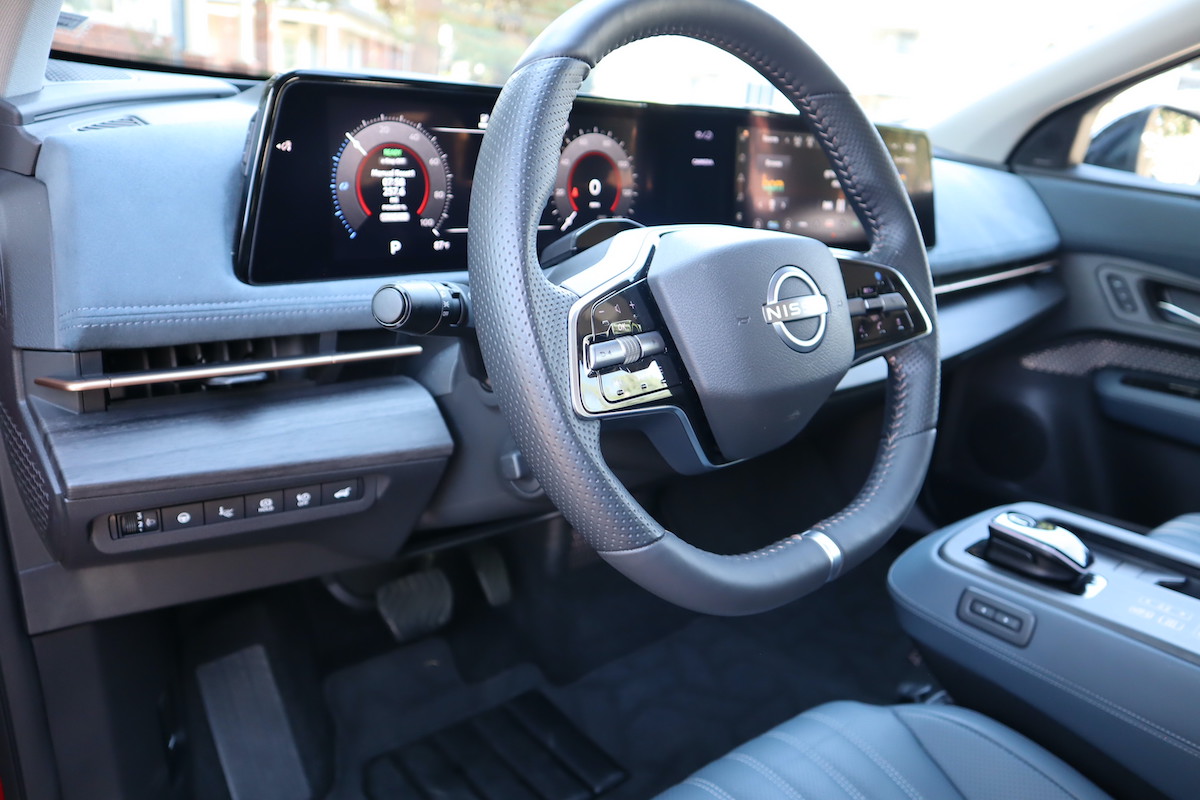
If you notice that HVAC usage spikes during certain segments, your MPGe will likely follow. If energy consumption rises when the road becomes faster or hillier, your personal MPGe baseline will reflect that shift.
Making the EPA MPGe Work for You: A Practical Planning Approach
Instead of asking “Will the Ariya match the EPA MPGe exactly?”, a more productive question is: “What reduction should I plan for?” Many drivers find a buffer helps reduce range anxiety. A conservative planning approach accounts for wind, speed, temperature, and accessory loads.
A useful method is to build a personal efficiency profile. Track your observed MPGe over several typical drives—one city route, one suburban route, and one highway stretch—then compare the average to the EPA rating. The gap between them becomes your reality-based adjustment factor.
That approach turns confusing spreadsheets into decisions you can trust.
Conclusion: The Ariya’s MPGe Story Is Personal, Not Universal
The Nissan Ariya’s real-world MPGe versus EPA rating isn’t a contest with a winner. It’s a comparison between standardized promise and lived experience. The EPA number provides a credible yardstick for understanding potential efficiency. Real-world MPGe explains how that potential survives daily life.
When speed climbs, weather turns harsh, or terrain becomes relentless, the MPGe narrative can darken. When conditions are moderate and driving habits are steady, the Ariya can come surprisingly close to the expectations that initially win hearts.
Ultimately, the most confident EV ownership comes from aligning the dashboard’s feedback with your own routine. In that alignment, EPA ratings become more than marketing—they become a starting point for a smarter, calmer interpretation of every mile.