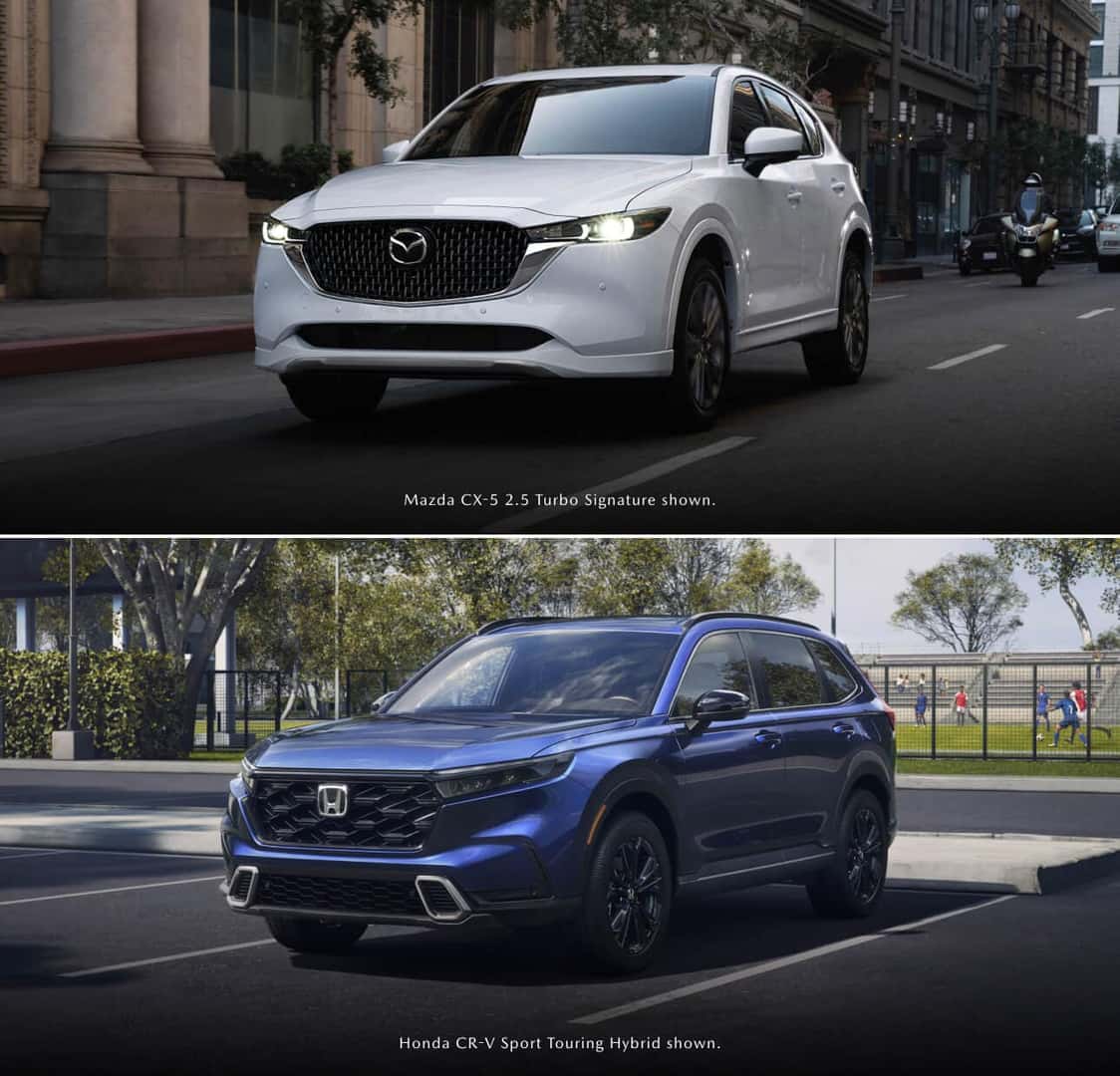
The debate between the Mazda CX-5 and the Honda CR-V often feels like choosing between two musical genres that both promise comfort, but deliver it through radically different rhythms. The CX-5 leans into a kind of kinetic poetry—sprightly, tactile, and slightly mischievous. The CR-V, meanwhile, behaves like a well-run workshop: steady, methodical, and always prepared for whatever task the day tosses into its path. In the end, this is not merely a comparison of compact SUVs. It’s a contrast of personalities—one tuned for fun, the other engineered for practicality.
To understand why drivers fall for these machines differently, imagine a pair of paths through the same forest. Both lead to civilization, yes. But one trail is carpeted with wildflowers and quick turns; the other is lined with convenient trail markers, water stations, and a calm sense of direction. That’s how the CX-5 and CR-V feel once you start living with them.
First Impressions: A Smile vs. a Steady Hand
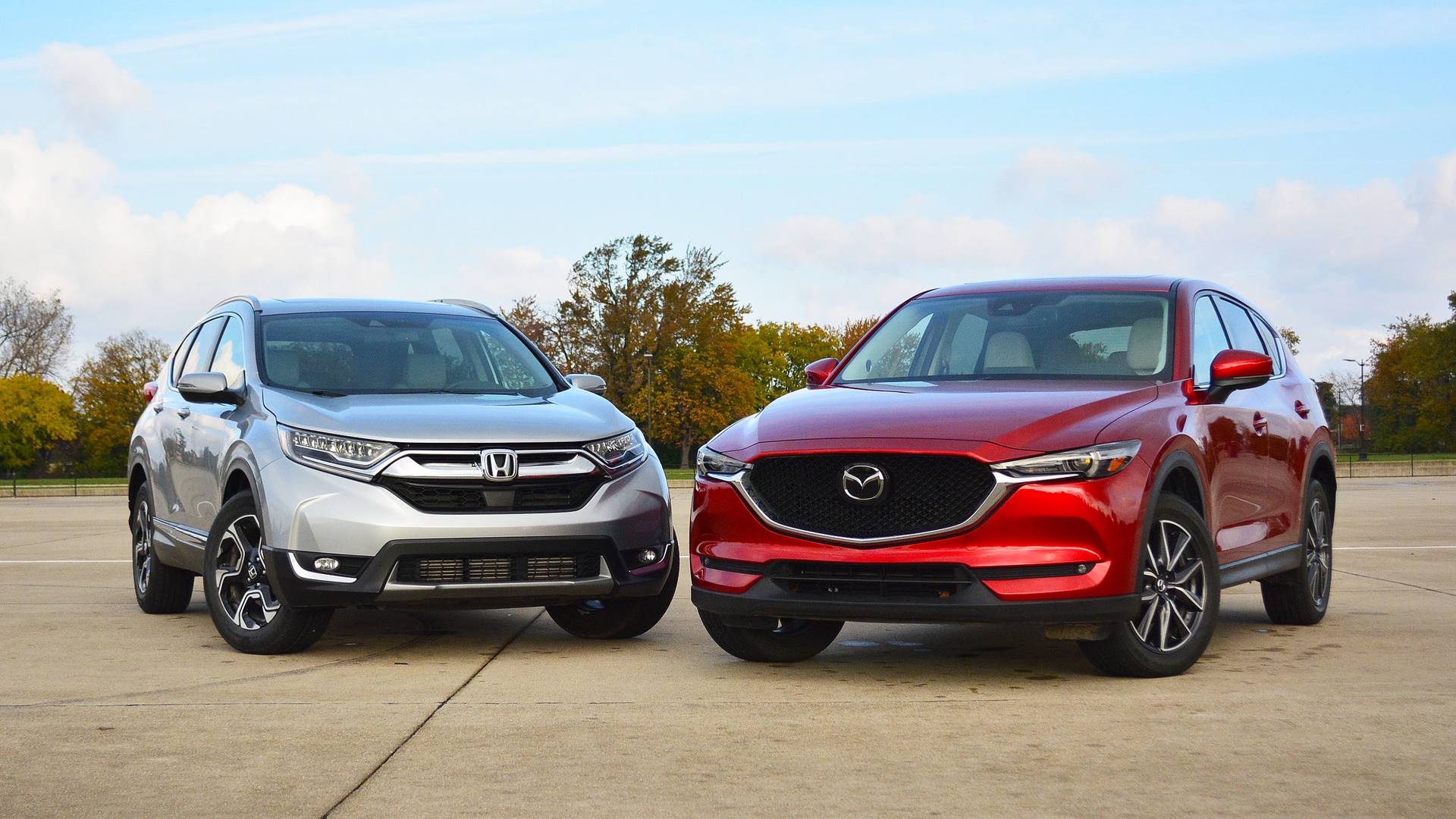
From the outside, the Mazda CX-5 carries an aesthetic confidence that resembles a confident wink. Its design language is intent on drama without being loud—more charcoal ink than neon sign. It’s the kind of styling that looks good in motion, as if the body panels are always slightly mid-conversation.
The Honda CR-V presents a different kind of appeal: sensible symmetry with a welcoming stance. It doesn’t chase attention; it earns it. Think of it as a longtime friend who remembers what you like and shows up early. Practicality, in its visual language, feels like a promise kept.
Choosing between them can feel less like selecting a car and more like selecting a mood.

Driving Character: Fun That Feels Earned
The Mazda CX-5 is built around the idea that driving should be an event, even if you’re just commuting between errands. The steering tends to feel more communicative—an invitation to “participate” rather than simply “endure.” The chassis often gives back a sense of cohesion, like the car is refusing to break its own rhythm when the road turns.
It’s not just about speed. It’s about the sensation of connection: throttle response that encourages confident decisions, and a layout that feels intuitively arranged for human hands and eyes. Shorter bursts feel lively. Longer drives feel less like a chore, more like a guided tour.
In contrast, the CR-V typically prioritizes ease over excitement. It’s composed, smooth, and forgiving. The ride quality can feel like a comfortable coat—enough structure to keep you confident, enough softness to keep you relaxed.
Where Mazda tends to flirt with your senses, Honda tends to soothe them.
Interior Atmosphere: Crafted Delight vs. Everyday Command Center
Step into the CX-5 and you’ll likely notice how the interior tries to pull you inward. Materials and layout evoke a sense of careful selection—an environment that feels designed rather than merely assembled. Even when the day is mundane, the cabin manages to feel slightly special. It’s like having a well-edited playlist for your daily route.
The CR-V interior, on the other hand, leans toward utilitarian comfort. Its layout frequently emphasizes what you’ll use most: visibility, practical storage, straightforward controls. The cabin feels like a command center that never loses its bearings.
If the CX-5 interior is a thoughtful novel with character development, the CR-V interior reads more like a reliable manual—efficient, familiar, and quietly reassuring.
Space and Cargo: The Real World Test
Compact SUVs live or die by their cargo practicality. The CR-V is famously adept here, often feeling like it can swallow groceries, sports gear, or last-minute travel plans without complaint. Its packaging tends to encourage flexible loading—an advantage for families, weekend planners, and anyone who treats a trunk like an always-ready pantry.
The CX-5 can still offer sensible cargo capabilities, but its vibe is slightly more “driver-focused.” It’s less about turning the SUV into a moving organizer and more about keeping the experience polished and engaging. For some buyers, that trade-off feels perfectly acceptable. For others, especially those hauling children, gear, or frequent purchases, the CR-V’s advantage may feel like gravity.
In this section, practicality doesn’t just mean space. It means frictionless living.
Technology and Infotainment: Smooth Convenience vs. Tasteful Simplicity
Modern SUVs are expected to be smart, but “smart” can mean different things. The CR-V often emphasizes intuitive usability—interfaces that make it easy to access navigation, audio, and connectivity without needing a tutorial. This matters more than people think. In real life, screens are consulted at stoplights, in unfamiliar neighborhoods, and while multitasking.
The CX-5, meanwhile, can feel more stylistically cohesive. The experience often feels curated, with a sense that everything is placed where it should be. Mazda’s approach can be described as “tasteful minimalism”—less clutter, more focus. It doesn’t always aim for maximum features; it aims for a smoother experience.
In both SUVs, technology becomes the steering wheel for modern habits—one chooses comfort in the interface, the other chooses elegance in the flow.
Fuel Economy and Efficiency: Predictability Wins
Efficiency is the silent partner in every ownership story. The CR-V is often associated with consistently competitive fuel economy, making its running costs easier to forecast. It behaves like a spreadsheet that doesn’t suddenly change its numbers mid-month.
The CX-5 can deliver impressive efficiency as well, and it frequently blends it with a more engaging driving character. Yet the emotional headline for the Mazda tends to remain: driving feel rather than sheer predictability.
For budget-minded drivers, predictability is an underrated luxury. For drivers who love the act of driving, efficiency becomes a bonus rather than the main event.
Safety and Confidence: Guardrails for the Real World
Safety tech is no longer optional; it’s the invisible framework that makes families and solo commuters alike feel less stressed. Both vehicles typically offer driver-assistance features designed to reduce strain—features that help with lane awareness, collision mitigation, and adaptive cruise control scenarios.
What changes from buyer to buyer is how they perceive confidence. The CR-V often feels like it keeps you enveloped in a protective bubble—calm, watchful, and stable. The CX-5 tends to feel confident through control feel—less like a net, more like a well-practiced handshake.
Both aim for peace of mind. They simply express it in different dialects.
Who Should Buy Which? Two Different Kinds of Satisfaction
If you crave a vehicle that makes your drives feel more alive, the Mazda CX-5 may feel like the right match. It’s for people who enjoy a little extra sensory involvement—steering that talks back, a cabin that feels curated, and a driving personality that treats the road as more than a conveyor belt.
If you prioritize day-to-day practicality—space that flexes, usability that reduces effort, and a routine-friendly ownership experience—the Honda CR-V is often the better bet. It’s designed for people who want their SUV to work as reliably as it looks approachable: groceries today, school pickups tomorrow, weekend escapes right after.
In metaphorical terms: the CX-5 is a pocket-sized adventure novel. The CR-V is a dependable field guide.
The Verdict: Fun vs. Practical, and Why Both Matter
At the heart of the CX-5 vs. CR-V comparison is a philosophical difference. Fun is not just speed; it’s the feeling that the machine respects your input. Practicality is not just storage; it’s the confidence that your vehicle will handle your life without turning it into a negotiation.
Choose Mazda if you want your SUV to be a companion with personality—sprightly, designed, and a little more emotionally interactive. Choose Honda if you want your SUV to be a dependable utility—efficient, accommodating, and built around real-world momentum.
Whichever you select, the reward is the same: a compact SUV that fits modern life. The CX-5 offers joy with refinement. The CR-V offers capability with composure. Between them lies the satisfying truth—there is no single “better” choice, only the better match for the way you actually move through the world.