Compact sedans have long been the unsung heroes of the automotive world—reliable, efficient, and understated, yet capable of delivering driving experiences that belies their modest dimensions. Yet, in an era where SUVs dominate parking lots and crossovers clog the highways, the humble sedan persists, evolving not just in design but in purpose. The latest contenders in this enduring segment, the Kia K4 and the 2025 Honda Civic, represent more than just transportation; they embody a quiet revolution in how we perceive value, comfort, and even identity behind the wheel. This isn’t just a comparison of two cars—it’s a clash of philosophies, a duel between tradition and innovation, and a testament to the enduring allure of the sedan form.
At first glance, both vehicles appear to cater to the same demographic: the practical commuter, the budget-conscious enthusiast, the family looking for a blend of space and efficiency. But beneath their polished exteriors lies a deeper narrative—one that speaks to shifting consumer expectations, technological integration, and the subtle art of brand storytelling. Why, in a world obsessed with size and spectacle, do these sedans continue to captivate? The answer lies not in what they are, but in what they promise: a return to balance, a sanctuary from the chaos of modern mobility, and a reminder that sometimes, less truly is more.
The Design Philosophy: Form Meets Function in a World of Excess
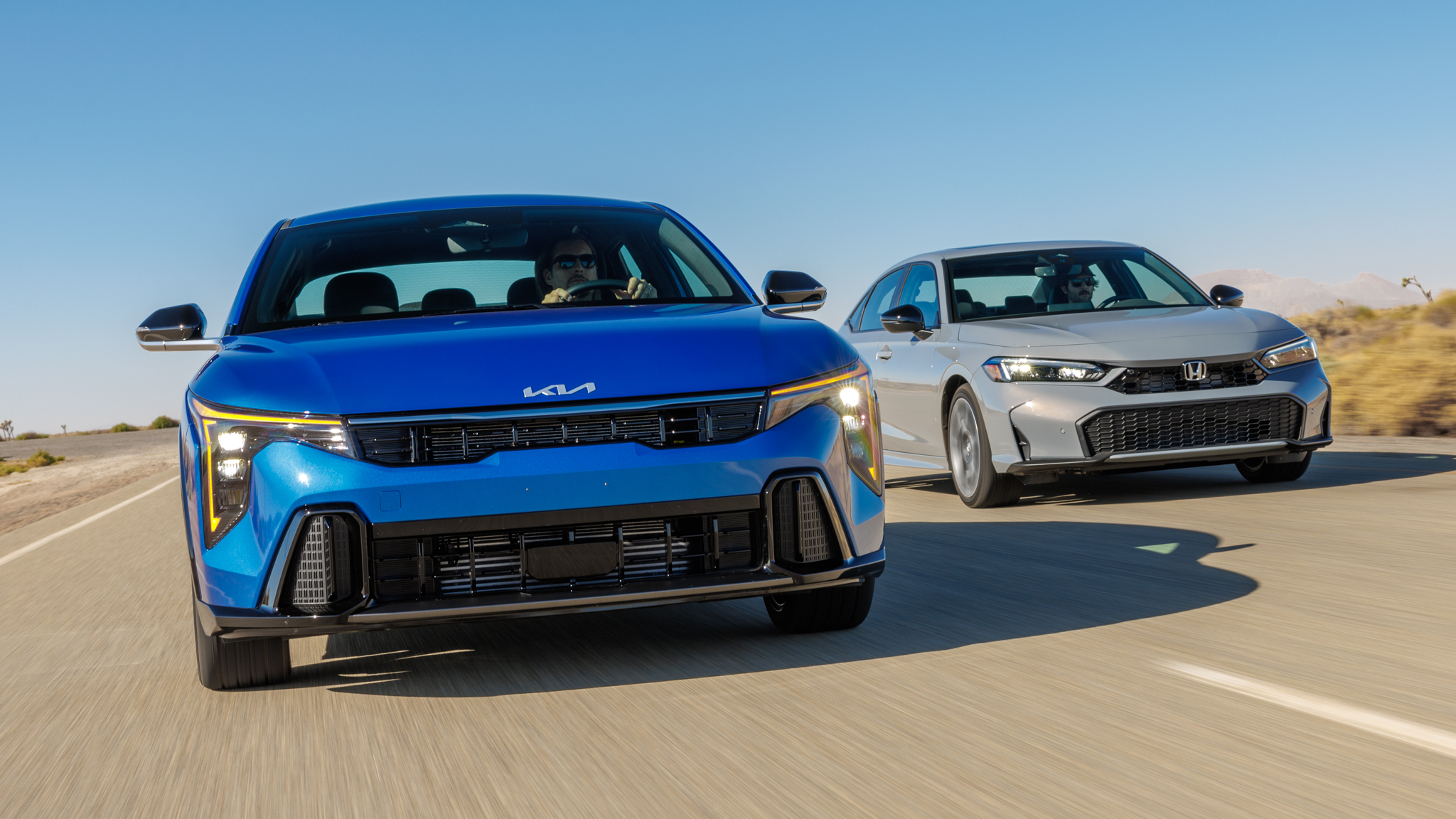
The Kia K4 and the Honda Civic may share the same segment, but their design languages couldn’t diverge more sharply. The K4, with its bold tiger-nose grille and sweeping LED headlamps, channels a sense of kinetic energy—almost as if it’s perpetually in motion even when parked. Its profile is sleek, almost coupe-like, with a fastback roofline that hints at sportiness without sacrificing rear headroom. The Civic, on the other hand, embraces a more restrained elegance. Its Honda-exclusive “H” design motif—a signature grille flanked by angular headlights—projects a timeless sophistication, reminiscent of the sedans that defined generations of drivers.
But design isn’t merely about aesthetics; it’s a statement of intent. The K4’s aggressive stance suggests a car built for those who crave attention, while the Civic’s understated refinement appeals to those who prefer to blend in. Yet, both sedans share a common trait: they refuse to be pigeonholed. The K4’s interior is a study in futuristic minimalism, with a dual 10.25-inch curved display that wraps seamlessly into the dashboard, creating an immersive cockpit. The Civic counters with its “Magic Seat” flexibility, a clever rear-seat design that folds flat or even lifts upward to accommodate bulky cargo—a feature that speaks to Honda’s long-standing commitment to practicality.

The deeper fascination here isn’t just in how these cars look, but in what they reveal about modern consumer psychology. In an age where personalization is king, the K4 and Civic offer two distinct paths: one toward bold self-expression, the other toward quiet confidence. It’s a dichotomy that mirrors broader societal trends—where individuality is celebrated, yet anonymity still holds its allure.
Performance and Driving Dynamics: Where the Rubber Meets the Road
Under the hood, the K4 and Civic take divergent routes to deliver the same promise: a driving experience that’s engaging without being exhausting. The K4, available with a 1.6L turbocharged engine churning out 190 horsepower, prioritizes responsiveness. Its seven-speed dual-clutch transmission shifts with the precision of a Swiss watch, making stop-and-go traffic feel less like a chore and more like a dance. The Civic, however, leans into refinement. Its 2.0L naturally aspirated engine—a stalwart of Honda’s lineup—delivers 158 horsepower with a linear power delivery that rewards gentle throttle inputs. It’s not about raw speed; it’s about the kind of effortless acceleration that makes every journey feel like a pleasure cruise.
But performance isn’t just about power; it’s about how a car makes you feel. The K4’s sport-tuned suspension absorbs bumps with a firmness that borders on assertive, giving the driver a sense of control that borders on telepathy. The Civic, meanwhile, softens the ride with a suspension tuned for comfort, its adaptive dampers adjusting on the fly to smooth out imperfections in the road. It’s the difference between a car that feels like an extension of your body and one that feels like a trusted companion.

What’s truly fascinating is how these approaches reflect broader cultural shifts. The K4’s performance-oriented setup caters to a generation raised on instant gratification, where every input demands an immediate response. The Civic, with its emphasis on smoothness, appeals to those who value longevity and reliability over thrills. It’s a reminder that performance isn’t a monolith—it’s a spectrum, and the best cars are the ones that align with the driver’s soul.
Technology and Connectivity: The Digital Cockpit Revolution
The modern compact sedan isn’t just a means of transport; it’s a mobile command center. Both the K4 and Civic pack their cabins with tech, but their philosophies couldn’t be more different. The K4’s dual 10.25-inch curved displays create a seamless digital environment, with touch-sensitive controls that respond to the slightest gesture. Voice commands are processed with uncanny accuracy, and the infotainment system learns from your habits, suggesting routes before you even ask. It’s a cockpit designed for the digital native—a space where the car almost anticipates your needs.
The Civic, however, takes a more measured approach. Its 9-inch touchscreen is intuitive but not overwhelming, with physical buttons for climate control that hark back to a time when simplicity was king. The system is responsive, but it doesn’t try to do everything at once. Instead, it focuses on clarity, ensuring that even the most complex functions—like Apple CarPlay and Android Auto—are accessible without a steep learning curve. It’s tech for the pragmatist, the driver who values functionality over flash.
This divergence in tech philosophy mirrors a larger debate: in an era of information overload, do we crave more data or less? The K4’s immersive interface caters to those who see their car as a second home, a place where every interaction is an opportunity for connection. The Civic, with its stripped-down approach, appeals to those who believe that technology should serve the driver, not distract them. It’s a battle between the allure of the infinite and the comfort of the finite—a tension that defines not just these cars, but the world we live in.
Safety and Practicality: The Unseen Heroes of the Compact Sedan
In the compact sedan segment, safety isn’t just a feature—it’s a given. But the K4 and Civic take different routes to achieve the same goal: keeping you and your passengers secure. The K4 comes standard with Kia’s Highway Driving Assist 2, a semi-autonomous system that gently corrects steering and maintains a safe distance from traffic. Its blind-spot monitoring and rear cross-traffic alert systems are as subtle as they are effective, blending into the driving experience without demanding attention. The Civic, meanwhile, relies on Honda Sensing, a suite of safety tech that includes adaptive cruise control, lane-keeping assist, and traffic sign recognition. It’s a system that feels almost prescient, as if the car is reading the road before you even see it.
Practicality is where these sedans truly shine. The K4 offers up to 15.4 cubic feet of trunk space, a generous figure for its class, while the Civic counters with its 14.8 cubic feet—enough for a week’s groceries or a weekend getaway. But the real star is the Civic’s rear seat flexibility. The “Magic Seat” configuration allows the rear bench to fold flat, or even lift upward to create a vertical storage space—ideal for skis, golf clubs, or even a bike. It’s a feature that transforms a compact sedan into a versatile workhorse, proving that practicality doesn’t have to come at the expense of style.
The deeper story here is one of silent heroism. In a world obsessed with headline-grabbing innovations, these sedans quietly excel in the areas that matter most: safety, space, and reliability. They’re the kind of cars that fade into the background, not because they’re forgettable, but because they’re so dependable that they become an extension of daily life. It’s a testament to the idea that the best technology isn’t always the flashiest—sometimes, it’s the kind that works so well you don’t even notice it.
Value Proposition: The Economics of Choice
At their core, the K4 and Civic are products of their price points, and their value propositions reflect the priorities of their target audiences. The K4, with its premium features and sporty demeanor, positions itself as a near-luxury offering at a mainstream price. Its starting MSRP hovers around the mid-$20,000 range, a figure that includes tech and comforts typically reserved for higher-end models. The Civic, meanwhile, starts at a more accessible $23,000, but its true value lies in its long-term ownership costs. Honda’s reputation for reliability means lower maintenance bills, higher resale value, and a peace of mind that’s hard to quantify.
But value isn’t just about numbers—it’s about perception. The K4’s bold design and cutting-edge tech make it a statement car, a vehicle that says, “I’m not like the others.” The Civic, with its understated elegance and proven track record, whispers, “I’m here to stay.” It’s a classic divide: the allure of the new versus the comfort of the familiar. And in a market where consumers are increasingly torn between innovation and tradition, this tension is what makes the compact sedan segment so compelling.
The real question isn’t which car is better—it’s which one aligns with your vision of the future. Do you crave the thrill of the new, the rush of a turbocharged engine, and a cabin that feels like a spaceship? Or do you prefer the steady hum of a reliable four-cylinder, the reassurance of a brand with a century of history, and a car that’s as practical as it is pretty? The answer says more about you than it does about the cars themselves.
The compact sedan may never reclaim its throne as the dominant force in the automotive world, but it doesn’t need to. Its strength lies in its adaptability, its ability to evolve without losing sight of what made it great in the first place. The Kia K4 and the Honda Civic are more than just cars; they’re symbols of a quieter revolution—one where efficiency meets emotion, where technology serves humanity, and where the road ahead is as important as the destination.
In a world that often feels fragmented, these sedans offer a rare kind of harmony. They remind us that progress doesn’t always roar; sometimes, it purrs. And in the end, the choice between them isn’t just about specs or features—it’s about which car feels like it was made for you. So, which side of the divide do you fall on? The bold or the balanced? The new or the timeless? The answer might just surprise you.