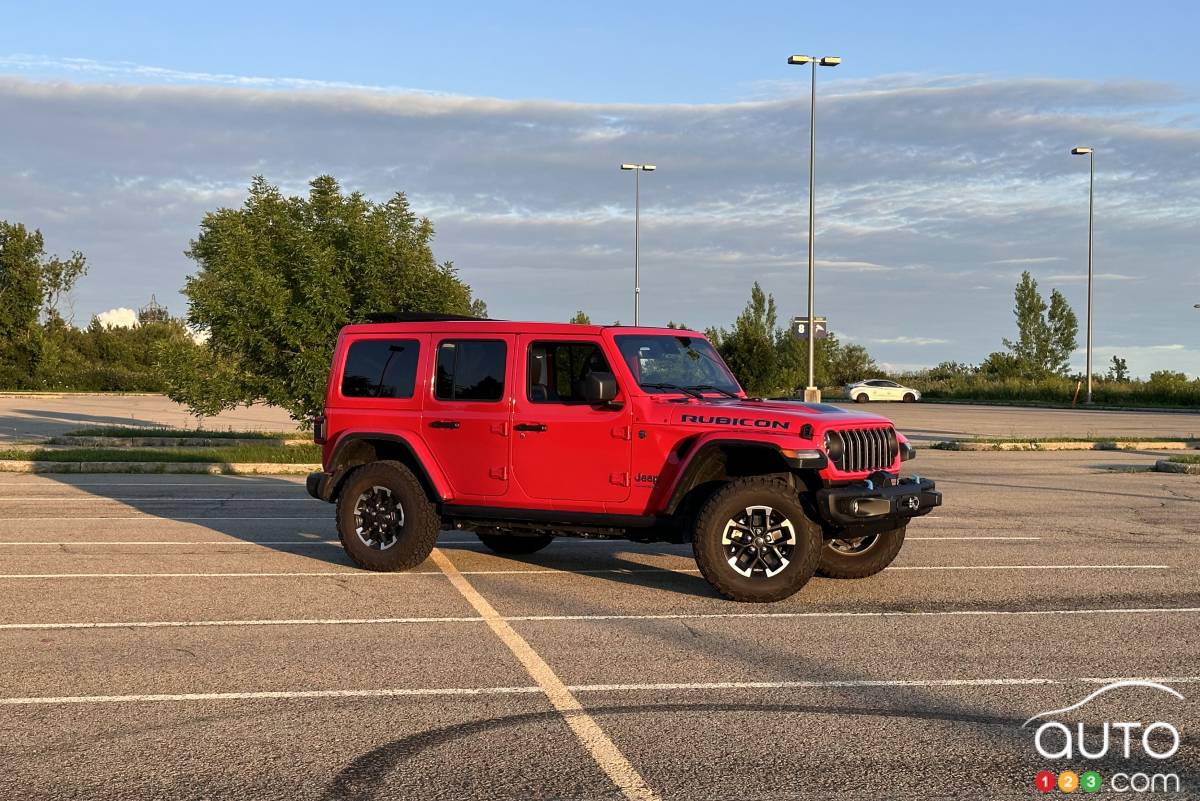
There’s a particular kind of confidence that only certain vehicles seem to wear. The Jeep Wrangler has long carried it like a badge—equal parts rugged and stubborn, old-school and unmistakably modern. Yet the real question isn’t whether the Wrangler can handle rough terrain. The real question is what happens when “capable” meets an electrified heartbeat.
In the Rubicon and 4xe versions, that question turns from hypothetical to tangible. The trail doesn’t just test traction. It tests conviction—how quickly you adapt, how naturally power arrives, and how seamlessly the vehicle translates intention into motion. This review explores that shift in perspective, moving from the obvious claims to the lived experience of driving the Wrangler where pavement ends and consequences begin.
The Wrangler’s Identity: A Shape That Refuses to Apologize
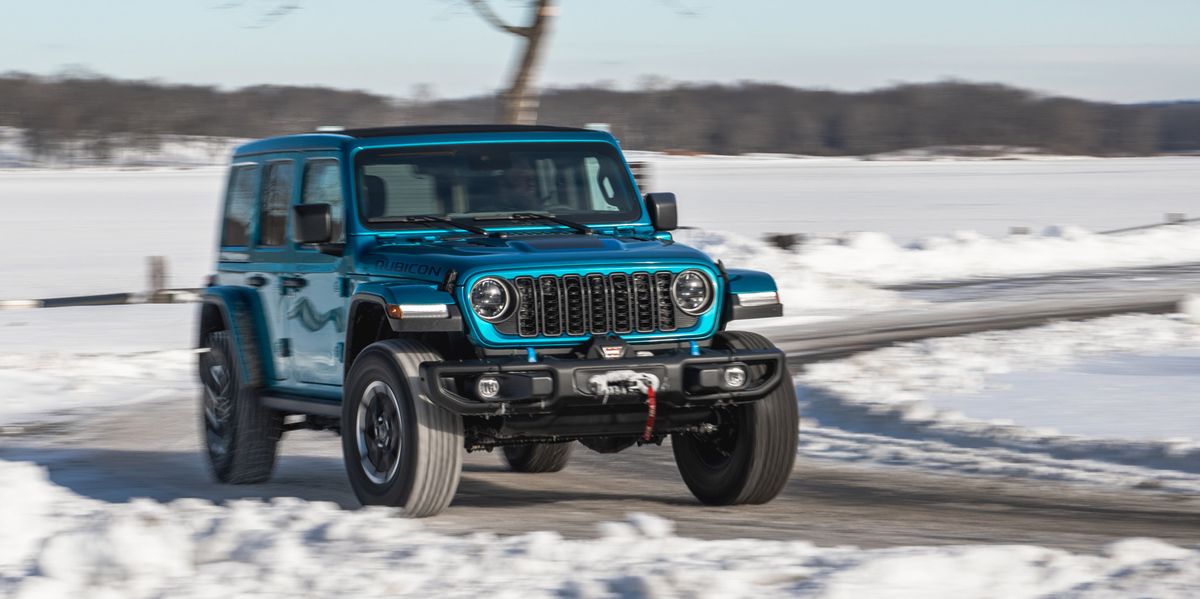
Before any numbers come into play, the Wrangler’s design signals its priorities. The boxy silhouette is less “aerodynamic experiment” and more “a tool engineered for contact with the world.” It’s visual shorthand for capability, and the Rubicon’s stance tightens the message further. Even at rest, it suggests readiness—like a coiled spring waiting for a reason.
From the driver’s seat, the ergonomics feel purposeful rather than merely convenient. Controls land with a straightforward logic. The seating position is upright, commanding, and slightly theatrical; you can see more than you expect, and you feel more connected to the terrain. That elevated vantage shifts your mindset early—no longer “Can it do this?” but “How precisely can I use what it’s offering?”
In a vehicle like this, clarity is a form of confidence. And in the Rubicon, clarity is paired with hardware designed for the sort of obstacles that don’t care about your timeline.
Rubicon Trim: The Trail Hardware Manifesto
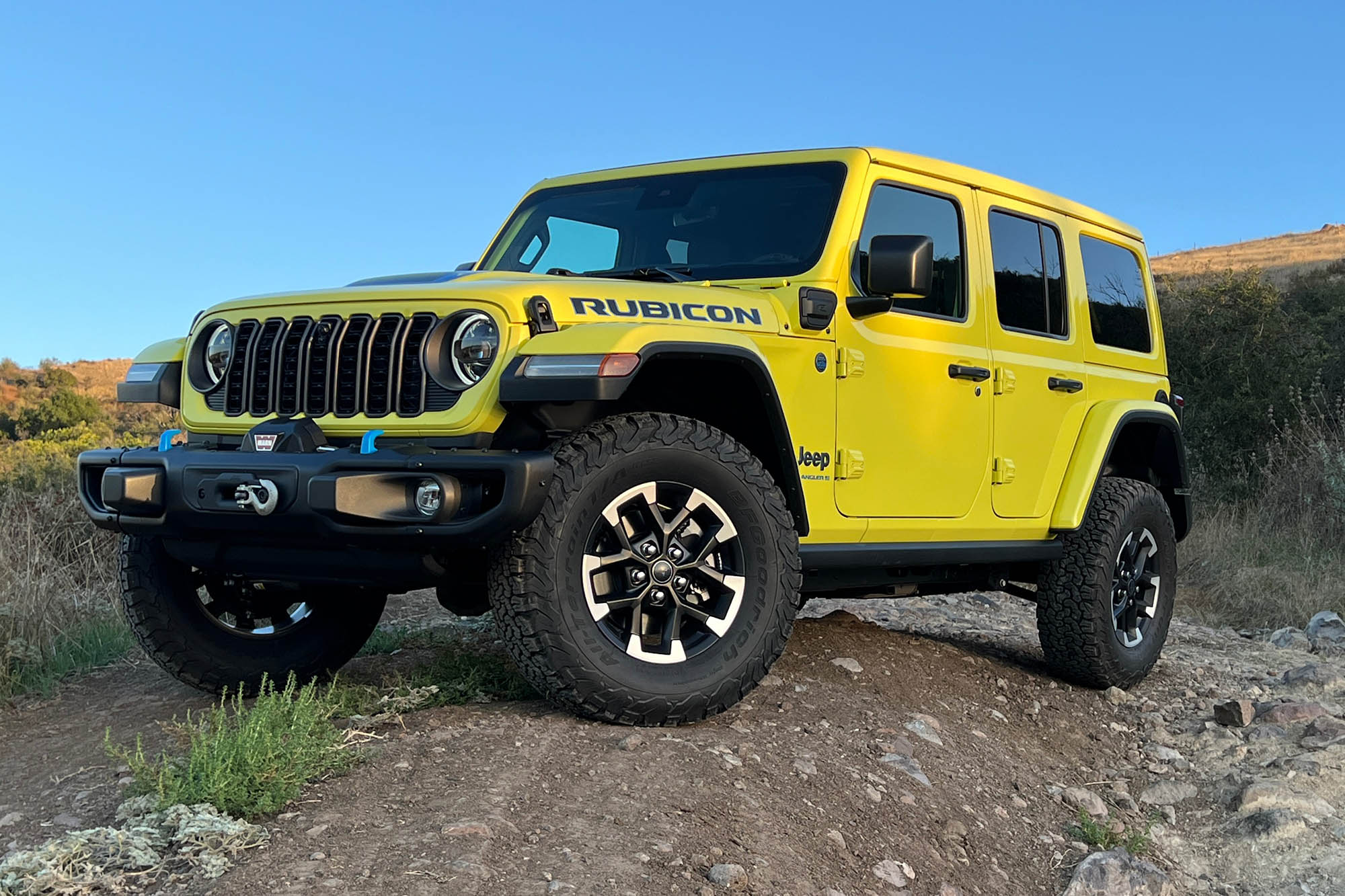
The Rubicon name isn’t marketing poetry. It’s a promise that the vehicle arrives wearing the right tools. Think suspension tuning meant for uneven surfaces, trail-focused systems, and the mechanical mindset required to keep moving when conditions turn perverse.
Where lesser trims might feel like they’re “handling” the trail, the Rubicon feels like it’s negotiating with it. It’s not that the Wrangler becomes invincible. It becomes resilient. The difference is subtle, but it’s there: when you’re crawling over ruts or threading through uneven ruts, the vehicle communicates its limits with less drama. You notice traction when it’s there, and you notice the boundaries when they appear.
Rubicon equipment also changes how you approach risk. Obstacles that would normally trigger hesitation become testable. You still respect the trail, but the mindset adjusts—more curiosity, less apprehension.
Entering the 4xe Era: Power Without Pretending
The “4xe” designation shifts the Wrangler’s identity from purely combustion-driven to a hybrid ethos. But the transformation isn’t just about technology. It’s about how power behaves moment-to-moment.
Electric torque arrives with a directness that’s almost disarming. That instant pull makes low-speed driving feel less like “managing gears” and more like “steering momentum.” On climbs, it can feel like the vehicle is quietly lending a helping hand. On descents and slow technical sections, the response is crisp enough to encourage deliberate throttle control.
Still, the 4xe isn’t a gimmick vehicle. The most compelling aspect is how it integrates rather than interrupts. You don’t need to constantly think about battery states or power modes to benefit. The system’s behavior becomes an extension of your intention—though the deeper you push the trail, the more you’ll notice the way the Wrangler balances power and efficiency.
Driving Dynamics: Where Confidence Becomes a Technique
The Wrangler’s steering and handling aren’t designed for flattering highway curves. They’re designed for traction, control, and predictability in imperfect environments. That said, the Rubicon’s off-road tuning makes on-trail driving feel remarkably composed.
On loose gravel, the vehicle moves with a controlled restlessness. On uneven surfaces, it tends to track your decisions rather than second-guess them. The chassis has a certain honesty, even when the surface is unpredictable. That honesty is a kind of mentorship: it tells you what the tires are doing, what the driveline is prepared to do, and when your inputs need refinement.
In 4xe form, the sensation of torque delivery encourages a more nuanced technique. Short throttle blips become more effective. Modulation matters. The result is less brute force and more choreography—an off-road performance that rewards calm precision.
Traction Systems and Trail Technology: Assistance That Doesn’t Take Over
Trail tech in the Wrangler ecosystem has a particular personality. It’s supportive without feeling like an autopilot for your intentions. The systems help you stay oriented, and they reduce the margin for error when surfaces become slippery or uneven.
Rubicon hardware works in tandem with these features, offering a more systematic approach to obstacles. Instead of treating the trail like a gamble, you treat it like a sequence of solvable problems. The vehicle can distribute effort through the drivetrain in ways that keep the tires engaged where they need to be engaged.
Importantly, the experience still feels human. You’re not watching a computer drive. You’re executing a plan while the vehicle handles the harsh math of traction and stability.
Battery Behavior on the Trail: The Hidden Narrative
One of the more intriguing shifts in perspective comes from how the Wrangler’s electrified system changes your mental timeline. You start thinking in terms of “power availability” rather than merely “fuel range.” That’s not obsessive. It’s clarifying.
On slower trails, the electric portion can make the Wrangler feel eerily serene. The cabin noise changes. The vehicle feels smoother at certain speeds, and acceleration can feel more effortless than expected for a heavy off-roader. Yet the trail also teaches patience. When conditions demand sustained high power, you become more aware of the system’s strategy—how it manages energy and power to keep output consistent.
This isn’t a flaw. It’s a new rhythm. The 4xe turns off-roading into a conversation between driver and machine, where decisions about throttle, terrain, and momentum influence the outcome more directly than they might in a purely combustion vehicle.
Comfort, Cabin Atmosphere, and the Art of Remaining Unbothered
Off-road vehicles are often evaluated on ruggedness, but comfort still matters. The Wrangler’s cabin tends to prioritize a practical atmosphere over luxury theater. Visibility is strong. Controls feel within reach. Even when the ride gets busy, the interior doesn’t feel chaotic.
With 4xe, the cabin experience can also become more refined in certain driving scenarios—especially during low-speed maneuvering. The overall sensation is that the vehicle is less “working against itself.” It’s a minor nuance, but it adds up to a calmer presence inside the vehicle.
Then, of course, there’s the broader Wrangler charm: the sense that you’re not just driving somewhere—you’re driving into an activity. The landscape becomes the soundtrack, and the cabin becomes the cockpit.
Real-World Usability: Beyond the Spec Sheet
It’s easy to admire an off-roader in ideal conditions. The real test is whether it fits your life when the adventure ends. The Wrangler’s versatility—its ability to shift between daily routines and trail missions—remains a cornerstone of its appeal.
The 4xe layer adds a new kind of practicality. Charging logistics matter, and they shape behavior. But rather than making the Wrangler feel constrained, electrification can make it feel intentional. If you’re the type of driver who plans routes, the 4xe rewards that mindset.
In other words: the Wrangler doesn’t just bring you to the trail. It changes how you think about preparing for it.
Who This Wrangler Is For: The Curiosity-Driven Driver
The Rubicon & 4xe combination targets drivers who want more than capability—they want engagement. If your idea of fun includes technical lines, careful throttle control, and a vehicle that responds with nuance, this is a compelling match.
It also suits those who want a greener narrative without abandoning authenticity. The Wrangler remains a Wrangler; electrification simply adds a new chapter. Not everyone needs it. Many people will underestimate it. The drivers who truly appreciate it are the ones willing to test their assumptions—then reframe their expectations in real time.
Final Thoughts: A Shift in Perspective, Not Just Performance
The Jeep Wrangler Rubicon in 4xe form doesn’t ask you to admire it from a distance. It invites you to reconsider what “off-road capability” can mean when power delivery evolves. The trail becomes less of a contest and more of a guided exercise in adaptation—where torque, traction, and timing collaborate with your driving instincts.
Ultimately, the most persuasive aspect is the feeling of agency. You steer with more precision. You approach obstacles with more curiosity. And when the terrain turns difficult, the Wrangler doesn’t just move forward—it makes forward motion feel like a deliberate choice rather than a lucky outcome.
That’s the shift in perspective: the Wrangler isn’t simply built for the trail. It’s built to make you participate in it—thoughtfully, confidently, and with the quiet thrill of learning what the next turn can reveal.