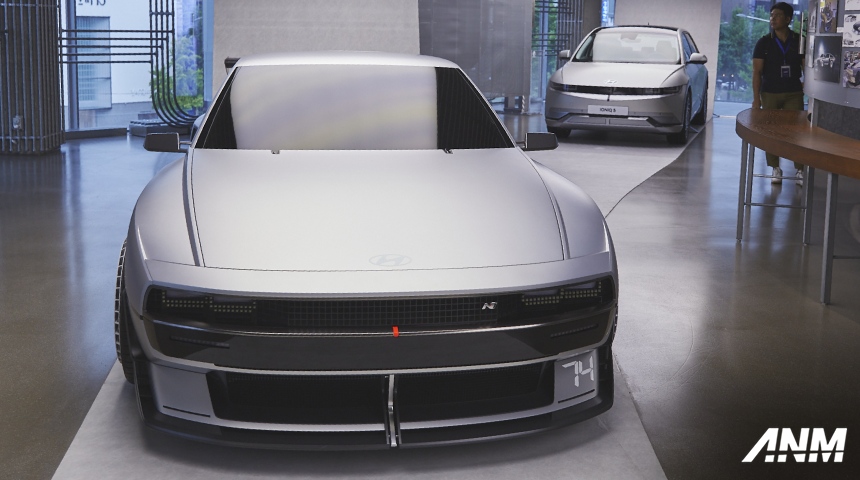
The Hyundai Ioniq 5 has always been a design statement—clean surfaces, purposeful lighting, and that unmistakable “digital” poise. Now imagine that same visual language, tuned for a higher voltage of emotion. The styling elements inspired by the N Vision 74 approach transform the Ioniq 5 from elegant commuter into something more like a road-ready manifesto. It’s not merely about looking faster; it’s about wearing performance like a tailored jacket—sharp at the seams, deliberate in every highlight, and quietly theatrical in motion.
In the sections that follow, readers can expect a guided tour through the styling DNA: how the exterior surfaces communicate speed, how lighting and graphics sharpen the silhouette, how wheels and stance reinforce the “track-capable” mindset, and how interior details translate the same design philosophy into the cabin. Along the way, the narrative leans on contrasts—soft futurism meeting muscular intent—so the finished picture feels coherent rather than stitched together.
1) The Exterior as a Performance Canvas
Great styling begins with proportion, and the Ioniq 5 platform already offers a distinctive stance: short overhangs, upright surfaces, and a body shape that welcomes both wind and identity. The N Vision 74 influence typically leans into this by making the vehicle feel lower, wider, and more “engaged,” even when the dimensions don’t radically change. The key lies in how designers treat edges and planes.
Instead of relying solely on glossy theatrics, the styling can emphasize crisp transitions between panels. These transitions catch light in a way that suggests forward momentum. The result is a silhouette that reads like a graphic poster—high contrast, confident lines, and a sense of controlled aggression. Even at rest, the car appears to be in the middle of a thought.
2) Lighting Signatures: The Road Becomes a Stage
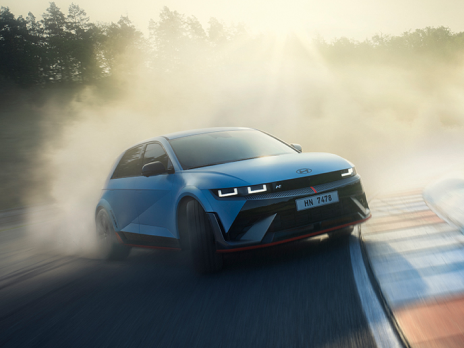
Lighting is where modern sports design becomes instantly legible. The N Vision 74 concept sensibility typically treats lights as signature typography—distinct strokes that define identity in darkness. For the Ioniq 5, this can mean a more assertive arrangement of the front and rear lighting elements, with a sharper cadence to the way they trace the car’s outline.
Expect an evolution from “friendly future” to “focused machine.” The front lighting signature often reads as a deliberate form rather than a mere illumination feature. It’s the difference between a glow and a calligraphy mark. At night, that calligraphy becomes a moving brand asset, recognizable from a distance and memorable up close.
Turn signals and DRLs can further amplify the car’s temperament. When the light pattern feels engineered rather than accidental, the entire vehicle looks more intentional. That intent is a major part of styling that many readers overlook: the way details align with driver behavior and real-world visibility.
3) Aerodynamic Details That Look Like Intent
Performance styling isn’t only visible in the obvious places. Aerodynamics can be hinted at through surfacing, vent shapes, and subtle sculpting around key zones. The N Vision 74 design philosophy tends to respect this principle: it’s possible to evoke downforce without resorting to an overabundance of wings and spoilers.
In a styling package for the Ioniq 5, you might see more pronounced front-end contours that guide airflow around the vehicle. Along the sides, designers can use creases and openings to visually frame the wheels and reduce the sense of bulk. Over the rear, diffuser-like elements can add a purposeful finish, making the tail feel planted rather than merely rounded.
These elements can be perceived even when you’re not thinking about aerodynamics. It’s the visual language of stability—like how a runner’s posture suggests momentum. The car looks ready to stay composed at speed.
4) Wheels and Stance: The Geometry of Confidence
Wheels are where “design” meets “attitude.” The N Vision 74 influence typically favors wheels that feel bold and technical—often with designs that imply strength and motion simultaneously. Larger wheel diameters and performance-oriented tire fitment visually lower the car and increase its presence.
Pay attention to how spoke patterns catch light. High-contrast wheel graphics can make the car look like it’s already rotating, even when stationary. The stance matters, too: a slightly wider track look can intensify the impression of grip, while a tight wheel-to-arch relationship gives the body a sculpted, deliberate character.
For readers who love detail, wheel design also reveals how designers prioritize heat management. Even when brake hardware isn’t clearly visible, the wheel architecture can suggest a focus on real-world endurance rather than purely decorative flare.
5) Color, Graphic Language, and the Nostalgia-Forward Twist
One of the most intriguing aspects of the N Vision 74 inspiration is its ability to nod toward tradition without becoming retro. Styling can use color and graphic marks like punctuation—accents that feel both modern and emotionally resonant. This approach often creates a dual identity: clean, tech-forward surfaces with hints of motorsport heritage.
Readers can expect color choices that look intentional under different lighting conditions. Matte or semi-matte finishes (where present) can make the car appear more tactile, less like a showroom object. Meanwhile, gloss elements can act as highlights, drawing the eye toward edges and transitions.
Graphic elements—stripes, badges, and custom placement of accents—can also reinforce the “N” identity. When those graphics are integrated into the vehicle’s form rather than simply applied on top, the styling feels engineered, not decorated.
6) The Interior: Styling Becomes Touch, Sound, and Atmosphere
Exterior styling is only half the narrative. The cabin must echo the same philosophy. The N Vision 74 influence often aims to create a cockpit that feels purposeful—an environment engineered for driver engagement. That means materials, display placement, and ergonomic decisions that align with the car’s performance identity.
Designers can emphasize contrast stitching, sports-oriented trim accents, and a layout that prioritizes control accessibility. Even the way surfaces meet—dashboard to console, console to seats—affects the perceived “quality of intent.” Smooth integration can make the cabin feel calmer; sharp, angular detailing can make it feel more kinetic.
Expect a blend of digital minimalism and performance cues. The cabin may not resemble a race car, but it can carry the same psychological message: you’re in command, and the machine is listening. Ambient lighting, if present, can underline this mood, creating an atmosphere that feels alive without overwhelming the senses.
7) Design Details That Enthuse: Badging, Materials, and Micro-Contrast
Sometimes the most memorable styling elements are small. Badging placement, distinctive trim contours, and micro-contrast between textures can elevate a vehicle from “nice” to “distinct.” The N Vision 74 vibe often favors these subtleties—details that reward close attention.
Readers can also anticipate design choices around surfaces that reduce visual noise. Performance-oriented styling often prefers clarity over clutter. That clarity can appear as clean seams, simplified graphics, and purposeful focus points—areas where the eye naturally lands.
Material selection plays a quiet but critical role. Premium textures can make the cabin feel more tactile and less generic. Metallic finishes, leather-like treatments, or performance fabrics (depending on trim) can strengthen the perception of durability and sportfulness.
8) What This Styling Approach Means for Drivers and Dreamers
Styling isn’t only for photos. It changes how people perceive the car in motion, how they feel sitting inside, and how quickly the vehicle becomes a part of their personal identity. The Hyundai Ioniq 5 with N Vision 74-inspired elements aims to satisfy two audiences at once: readers who want a futuristic, clean EV experience, and enthusiasts who crave motorsport energy.
When the styling elements harmonize—lighting, aerodynamics, stance, and cabin atmosphere—the vehicle becomes more than transportation. It becomes a mood you can drive. A car like this doesn’t just arrive at the destination; it narrates the journey through its lines, angles, and light.
Conclusion: A Futuristic Body With Motorsport Undertones
The Hyundai Ioniq 5’s N Vision 74 styling influence can be understood as a design calibration: futurism tightened with performance intent. Exterior surfaces sharpen the silhouette, lighting signatures act like unmistakable punctuation in the dark, and wheels plus stance deliver the geometry of confidence. Inside, the cabin translates that same philosophy into touchable materials, driver-focused layout decisions, and an atmosphere designed to feel alive.
In the end, this isn’t styling for styling’s sake. It’s an aesthetic argument—made in light, proportion, and micro-detail—about what the Ioniq 5 can become when innovation is allowed to move with conviction.