The trunk is supposed to be a box. A simple receptacle. Yet every road trip has a moment where that tidy notion collapses—when the suitcases slide, the cooler refuses to sit flat, and the last grocery bag becomes an architectural problem. Luggage tests turn that uncertainty into evidence. They ask a deceptively human question: how much life can a sedan actually carry before you start negotiating with physics?
This is where full-size sedans start to feel less like “just transportation” and more like rolling storage sanctuaries. The promise isn’t about bragging rights. It’s about a shift in perspective. Imagine the trunk not as a leftover compartment, but as an engineered gap where your week-long plans should fit without drama. Now picture opening it and feeling that rare quiet confidence—no frantic re-stacking, no awkward angle wrestling, no last-minute compromises that haunt the drive home.
In this luggage-focused exploration, we look at what large trunks really mean. We consider capacity, geometry, and the way real-world cargo behaves once it meets hinges, wheel wells, and the constraints of everyday life. And as you read on, let your curiosity do the driving. Because the biggest trunks aren’t always the loudest. Sometimes they’re simply the ones that make everything else feel effortless.
Why a Luggage Test Changes the Conversation
Spec sheets can be deceptively tidy. Numbers arrive neatly rounded, as if every trunk were an identical container. But a trunk is more like a landscape than a locker. Wheel wells create valleys. Tie-down points become anchors. The opening height controls how easily bags glide inside. Even the latch design influences how wide the “usable” mouth feels in practice.
A luggage test replaces abstraction with choreography. You load real cases—typical carry-on, medium, and larger pieces—then you attempt to close the lid without performing contortions. The result is a kind of spatial honesty. It tells you how a sedan’s trunk behaves under pressure, when the items you actually own show up at once.
There’s also a psychological shift. You stop wondering and start anticipating. When you know the trunk’s “personality,” you pack differently. The car becomes a planner, not a guess.
What Makes a Trunk Feel “Largest” in Real Life
“Largest trunk” is sometimes shorthand for the maximum cubic volume, but the lived experience is more nuanced. A sedan can have generous volume yet feel awkward if the opening is narrow or if the load floor sits high. Conversely, a trunk with slightly less stated capacity can still feel cavernous if its shape is friendly.
Several factors determine that sensation of abundance:
Usable cargo depth: How far your bags can extend before the lid intrudes.
Width between wheel wells: Where the trunk narrows, your packing strategy either adapts or breaks.
Load floor height: A low floor reduces the “lift cost” of placing heavy luggage.
Opening geometry: The trunk opening’s shape affects how smoothly cases slide in.
Overhang and taper: If the space narrows sharply, tall items lose their advantage.
When these elements align, the trunk stops being a storage bin and becomes a staging area. It welcomes the largest pieces first, then absorbs the smaller ones around them like puzzle parts that finally agree with the picture.
Full-Size Sedans and the Comfort of More Room
Full-size sedans bring a distinct mindset to cargo. Their proportions—longer wheelbase, wider stance, and more generous interior packaging—often translate into trunk bays designed for families, errands, and weekend escape plans. The trunk becomes the quiet companion to all that cabin comfort.
But comfort isn’t the same thing as competence. A cabin can feel spacious while the trunk still behaves like a difficult host. That’s why luggage tests matter. They measure whether the trunk’s generosity is practical, repeatable, and consistent from one packing scenario to the next.
Think of it this way: the trunk is where time becomes visible. Efficient packing means fewer adjustments, less scrambling, and fewer moments of “Maybe this won’t fit.” A large trunk doesn’t just hold cargo—it protects your schedule.
Toyota Camry: The Trunk as a Reliable Container
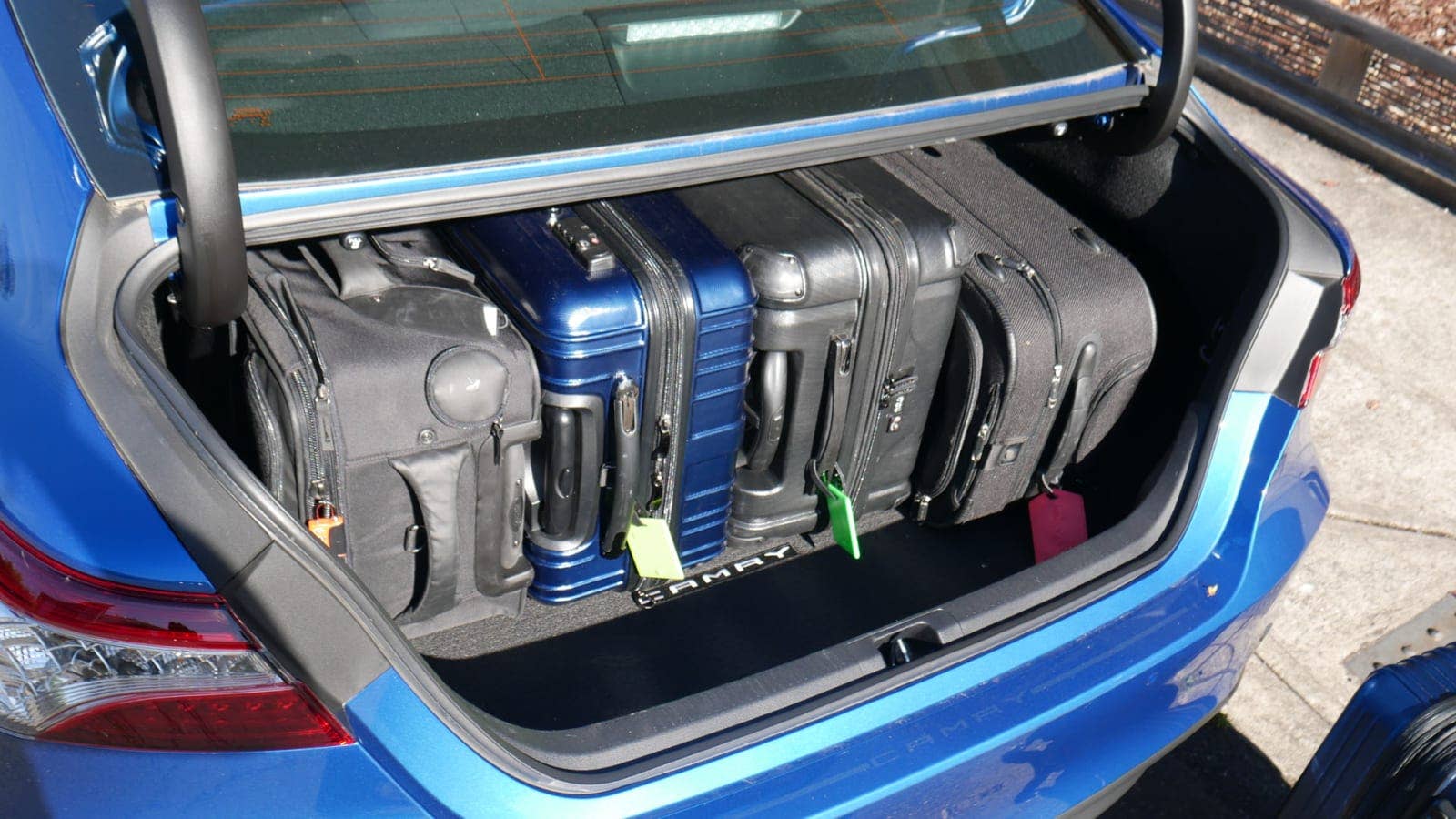
Consider the way a great trunk invites confidence on day one. In the Toyota Camry’s case, its luggage performance tends to reward careful placement rather than penalize it. This is important: the biggest trunks aren’t always the ones that accept every pile indiscriminately. They’re the ones that allow your strategy to work.
When you load larger suitcases, you’re testing more than volume—you’re testing access. Does the opening allow a natural slide, or do you have to tilt and angle? Does the load floor support the weight without forcing an awkward stance? These are the details that turn “it might fit” into “it will fit.”
A Camry-style trunk often feels like it has an intuitive flow: space expands where your bags need it, and the shape helps you stack without constant rework. And once the primary cases are seated, the remaining room for smaller items can feel almost generous enough to erase your previous overpacking habits.
Honda Accord: A Cargo Layout Built for Packing Realities
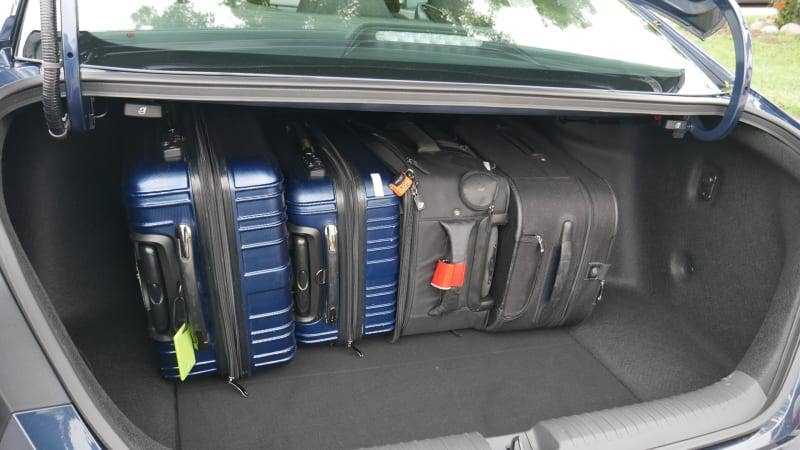
The Honda Accord’s reputation for everyday versatility extends to how its trunk behaves during a luggage test. A trunk that “works” is one that accounts for what people bring: a mix of hard-sided cases, soft bags with irregular shapes, and items that refuse to be flattened.
In practical terms, the Accord’s trunk layout often supports a straightforward packing routine. The key isn’t merely whether the largest case fits—it’s whether multiple pieces can coexist without constantly fighting for positioning. Wheel wells are unavoidable, but their impact can be either a nuisance or a manageable feature of the design.
When the trunk geometry allows your bags to settle, you gain two subtle advantages. First, you reduce wasted space caused by forced gaps. Second, you keep cargo stable. A trunk that accommodates properly can help prevent that rattling shuffle that turns even a quiet drive into an attention-demanding soundtrack.
The Packing Strategy That Reveals the Truth
Large trunks become obvious when you test them with realistic sequences. Start with the largest hard case. Set it on the load floor. Then add medium bags. Finally, attempt to tuck smaller items into the remaining spaces—corners, along the sides, and above or near the wheel-well contours where applicable.
This sequencing matters because it mirrors actual decision-making. Real travelers don’t pack in alphabetical order. They pack according to urgency and volume. A trunk that can handle a confident first placement tends to deliver more usable capacity, because the rest of the load naturally follows.
After the cases are in, the real test arrives: can the lid close with no forced compression? Do the items remain aligned, or do they create strain that suggests limited space? Closing effort is a quiet indicator. It doesn’t replace measurements, but it often predicts whether you’ll enjoy the trunk again on the next trip.
Beyond Capacity: Tie-Downs, Stability, and Access
The largest trunk is still only useful if you can secure the cargo and retrieve it without hassle. Tie-down points help transform loose items into organized load. They reduce shifting when you brake, corner, or hit uneven pavement. Stability becomes especially relevant when luggage is heavy or when the trunk is filled unevenly.
Access also matters. A trunk that opens wide and offers comfortable reach makes loading and unloading feel less like labor and more like routine. On busy days—when hands are full, time is limited, and parking is tight—good access becomes a daily convenience you don’t appreciate until you’ve experienced the alternative.
And then there’s the quiet factor: how the trunk interior handles the edges of bags. Rounded surfaces, manageable corners, and a clean load floor reduce snagging and protect the integrity of soft luggage. A trunk that treats your belongings gently feels larger, even when the numbers say otherwise.
Choosing a Full-Size Sedan for Maximum Carry
If your life includes road trips, multi-stop errands, or family logistics, trunk capacity should be considered a core feature—not a footnote. A full-size sedan with a large luggage-friendly trunk can turn weekends into plans rather than puzzles.
Look for a combination: generous usable depth, accommodating width around wheel wells, and a lid-opening design that supports smooth loading. Prioritize the experience of packing: how the trunk “receives” your luggage and how it behaves once everything is inside.
When you find a sedan that delivers that kind of predictability, you stop thinking about the trunk and start thinking about the destination.
Closing Thought: The Trunk That Lets You Plan Breathe
The best luggage tests don’t just determine fit. They change the way you pack. They make room feel less like a limited resource and more like a dependable promise. Full-size sedans with the largest trunks provide that rare combination of capacity and confidence—space you can trust, structure you can use, and a cargo experience that stays calm even when your day isn’t.
Next time you open a trunk and pause, imagining your luggage in place, remember this: the largest trunk isn’t only measured in volume. It’s measured in how effortlessly your plans come together.