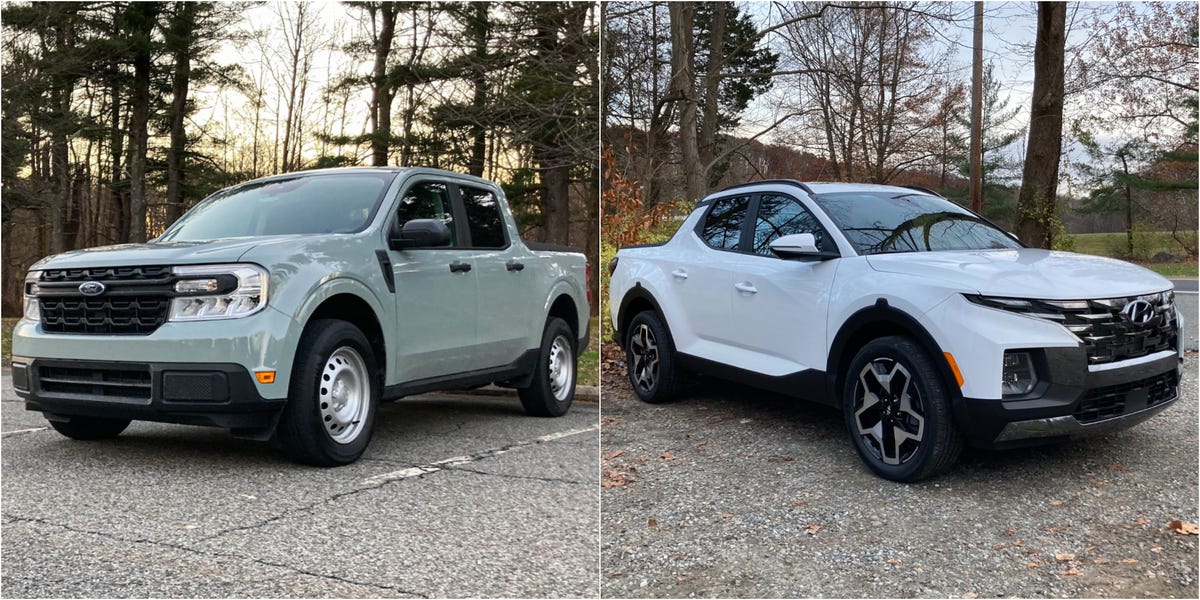
The compact truck segment has exploded in popularity over the past few years, and at the heart of this revolution are two titans: the Ford Maverick and the Hyundai Santa Cruz. These trucks, though diminutive in size, pack a punch in terms of practicality and style, appealing to urban adventurers and weekend warriors alike. But what makes these trucks so fascinating? Is it their ability to blend the ruggedness of a pickup with the maneuverability of a sedan, or is there something deeper driving our collective obsession with them? Let’s dive into the nuances of this small truck duel and uncover why these vehicles have captured the imagination of drivers everywhere.
The Allure of Compact Trucks: Why Size Matters
There’s an undeniable charm to compact trucks that larger, full-sized pickups simply can’t replicate. For starters, their size makes them far more manageable in tight urban environments, where parking spaces are at a premium and navigating through traffic feels like a game of Tetris. Yet, despite their smaller footprint, these trucks don’t skimp on capability. The Ford Maverick and Hyundai Santa Cruz both offer impressive towing and payload capacities, proving that you don’t need a behemoth to get the job done.
But the fascination with compact trucks goes beyond mere practicality. There’s an element of rebellion here—a rejection of the idea that bigger is always better. In a world where SUVs dominate the roads, these trucks offer a refreshing alternative, blending the utility of a pickup with the agility of a smaller vehicle. It’s a statement, really. A declaration that you can have your cake and eat it too, without sacrificing style or substance.
Design Philosophy: Rugged Meets Refined
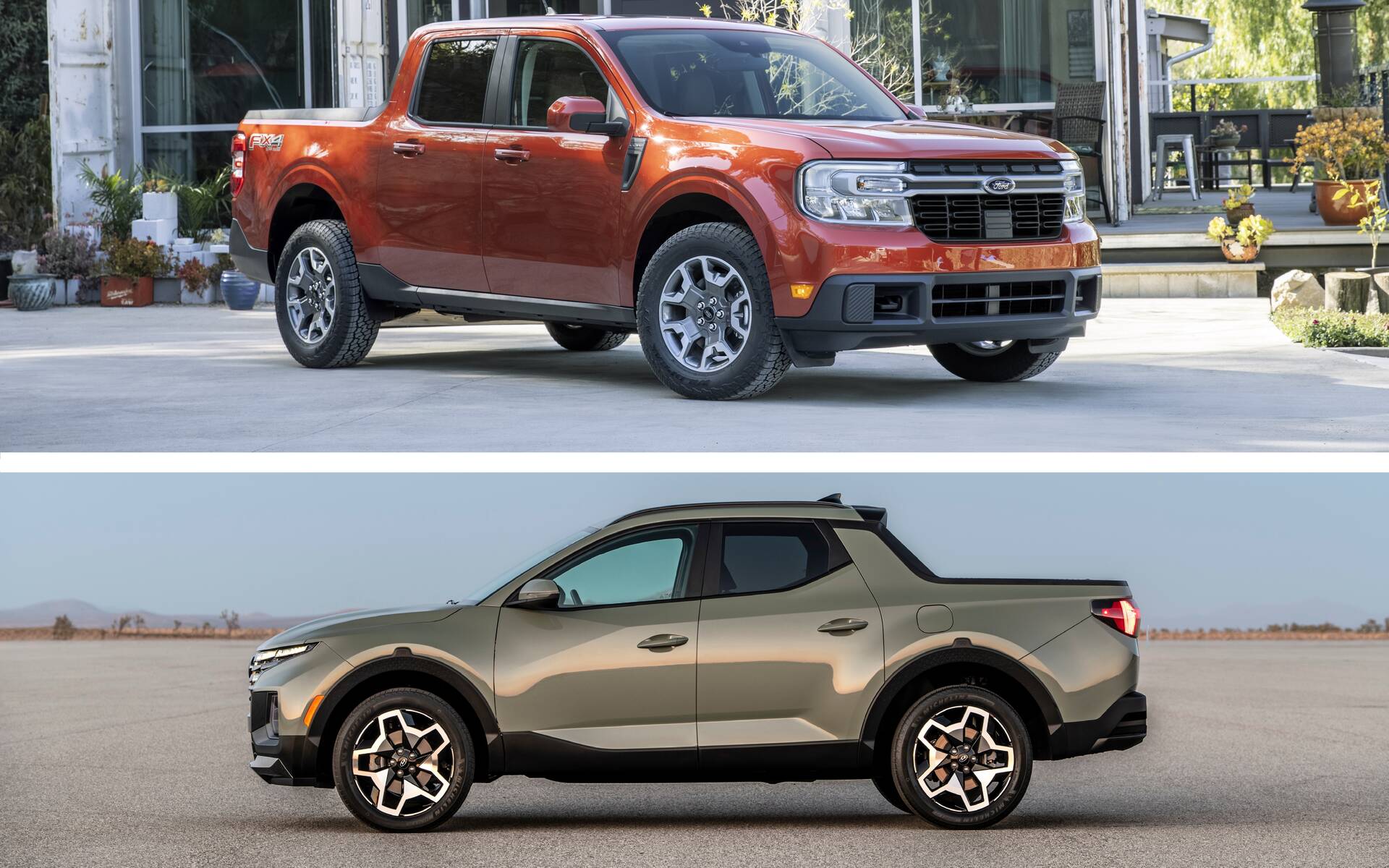
The design of the Ford Maverick and Hyundai Santa Cruz reflects a careful balance between ruggedness and refinement. The Maverick, with its bold grille and angular headlights, exudes a no-nonsense attitude that’s quintessentially Ford. Its boxy silhouette and high ground clearance scream capability, while subtle touches like the available orange-stitched seats add a dash of flair.
The Santa Cruz, on the other hand, leans into a more sophisticated aesthetic. Hyundai’s signature cascading grille and sleek LED lighting give it a futuristic edge, while its sculpted body lines hint at the brand’s commitment to aerodynamics. Yet, beneath the surface, both trucks share a common goal: to look as good as they perform. Whether parked in a city lot or parked at a campsite, these trucks are designed to turn heads.

Powertrain Showdown: Efficiency Meets Performance
When it comes to powertrains, the Ford Maverick and Hyundai Santa Cruz take decidedly different approaches. The Maverick, in its standard configuration, comes with a turbocharged 2.0-liter four-cylinder engine paired with a hybrid system, delivering a combined 191 horsepower and an impressive 42 miles per gallon in the city. It’s a powertrain that prioritizes fuel efficiency without sacrificing too much in the way of performance, making it an ideal choice for daily commuters.
The Santa Cruz, meanwhile, offers a more traditional approach with a turbocharged 2.5-liter four-cylinder engine producing 281 horsepower and 311 lb-ft of torque. While it doesn’t quite match the Maverick’s fuel economy, it more than makes up for it with brisk acceleration and a towing capacity of up to 3,500 pounds. For those who crave a bit more oomph without venturing into full-sized truck territory, the Santa Cruz is a compelling option.
But here’s where things get interesting. The Maverick’s hybrid system isn’t just about fuel savings—it’s a statement about the future of trucking. As automakers race to meet stricter emissions standards, the Maverick’s eco-friendly credentials give it an edge in a market that’s increasingly conscious of environmental impact. The Santa Cruz, with its conventional powertrain, offers a more traditional driving experience, but it’s hard to ignore the Maverick’s innovative spirit.
Cabin Comfort: Where Practicality Meets Luxury
Step inside either of these trucks, and you’ll find interiors that are as thoughtfully designed as they are functional. The Maverick’s cabin, for instance, features a minimalist layout with a large touchscreen infotainment system at its center. The seats are supportive, the materials are durable, and there’s a surprising amount of legroom for a compact truck. Ford has clearly put a lot of effort into ensuring that the Maverick doesn’t feel cramped, even on long road trips.
The Santa Cruz, meanwhile, takes a more upscale approach. Hyundai’s signature dual 10.25-inch screens dominate the dashboard, offering a futuristic feel that’s reminiscent of the brand’s more expensive models. The seats are plush, the cabin is quiet, and there’s a level of refinement here that’s often missing in trucks of this size. It’s a space that feels more like a luxury crossover than a workhorse, yet it retains all the utility you’d expect from a pickup.
But perhaps the most impressive aspect of both cabins is their versatility. Whether you’re hauling a load of groceries or a weekend’s worth of camping gear, these trucks are designed to adapt to your needs. The Maverick’s fold-flat rear seats and the Santa Cruz’s available sliding rear seats make it easy to configure the cabin for maximum cargo space, proving that compact trucks can be just as practical as they are stylish.
Technology and Features: The Modern Truck Experience
In today’s market, a truck isn’t just about raw capability—it’s about the technology it brings to the table. The Ford Maverick comes equipped with Ford’s SYNC 4 infotainment system, which supports wireless Apple CarPlay and Android Auto, as well as a suite of advanced driver-assistance features like adaptive cruise control and lane-keeping assist. It’s a system that’s intuitive, responsive, and packed with features designed to make your drive smoother and safer.
The Hyundai Santa Cruz, meanwhile, offers a similar level of tech sophistication. Its dual-screen setup is not only visually striking but also highly functional, with features like remote parking assist and a 360-degree camera making parking and maneuvering in tight spaces a breeze. Hyundai’s Blue Link system also provides seamless connectivity, allowing you to monitor your truck’s status, start the engine remotely, and even receive maintenance alerts.
But the real story here isn’t just about the tech itself—it’s about how these features enhance the driving experience. Whether it’s the Maverick’s ability to seamlessly integrate with your smartphone or the Santa Cruz’s advanced safety systems, these trucks are designed to keep you connected, protected, and in control. It’s a level of sophistication that was once reserved for luxury vehicles, now available in a package that’s as rugged as it is refined.

Driving Dynamics: Agility Meets Capability
Driving a compact truck is a unique experience, one that blends the nimbleness of a car with the robustness of a pickup. The Ford Maverick, with its front-wheel-drive-based hybrid system, offers a ride that’s smooth and composed, even on rough roads. Its independent rear suspension ensures that it handles well, whether you’re navigating city streets or winding country roads. The steering is precise, the body roll is minimal, and the overall feel is one of confidence and control.
The Hyundai Santa Cruz, with its more traditional front-engine, front-wheel-drive layout, takes a slightly different approach. Its ride is slightly firmer, with a focus on stability and control. The steering is more weighted, giving it a sportier feel, while the suspension is tuned to absorb bumps and imperfections with ease. It’s a setup that’s ideal for those who want a truck that’s as capable on the highway as it is off the beaten path.
But perhaps the most impressive aspect of both trucks is their ability to adapt to different driving conditions. Whether you’re tackling a steep incline, hauling a heavy load, or simply cruising down the highway, these trucks deliver a level of composure and confidence that’s rare in vehicles of this size. It’s a testament to the engineering prowess of both Ford and Hyundai, and a reminder that size doesn’t always dictate capability.
Value Proposition: Bang for Your Buck
At the end of the day, the Ford Maverick and Hyundai Santa Cruz are both about value. The Maverick, with its starting price under $25,000, is one of the most affordable new trucks on the market, making it an attractive option for budget-conscious buyers. Its hybrid powertrain also offers long-term savings on fuel costs, further enhancing its value proposition.
The Santa Cruz, while slightly more expensive, starts at around $27,000 and offers a level of refinement and tech that’s hard to match. Its higher towing capacity and more powerful engine also make it a compelling choice for those who need a bit more muscle without breaking the bank. And with Hyundai’s reputation for reliability and customer satisfaction, the Santa Cruz is a safe bet for those looking for a truck that’s built to last.
But the real value here isn’t just about the price tag—it’s about what these trucks represent. They’re a testament to the idea that you don’t need to spend a fortune to get a vehicle that’s capable, stylish, and fun to drive. In a market where trucks are often seen as utilitarian workhorses, the Maverick and Santa Cruz offer a refreshing alternative, proving that practicality and pleasure can go hand in hand.
The Future of Compact Trucks: A Glimpse Ahead
As we look to the future, it’s clear that compact trucks are here to stay. With automakers like Ford and Hyundai leading the charge, we can expect to see even more innovation in this segment, from electrification to advanced driver-assistance systems. The Maverick and Santa Cruz have set a high bar, but they’ve also paved the way for a new generation of trucks that are smarter, more capable, and more sustainable than ever before.
For drivers, this means more choices, more flexibility, and more ways to enjoy the open road. Whether you’re a city dweller looking for a practical commuter or an outdoor enthusiast in need of a versatile adventure vehicle, the compact truck segment has something for everyone. And with models like the Maverick and Santa Cruz leading the charge, the future of trucking looks brighter than ever.
So, as you consider your next vehicle, ask yourself: Do you want a truck that’s efficient and eco-friendly, or one that’s powerful and performance-oriented? Do you prioritize cutting-edge technology or timeless reliability? Whatever your preferences, one thing is certain—the compact truck revolution is just getting started, and the best is yet to come.