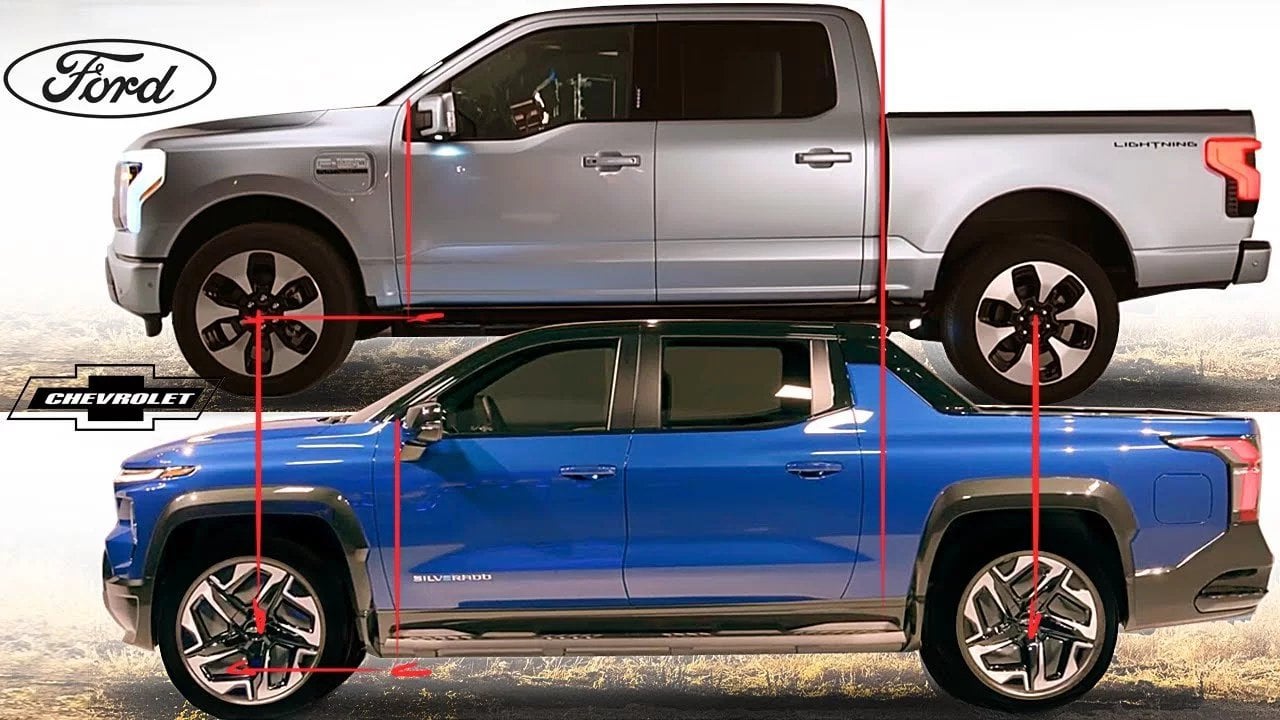
The electric truck duel has always sounded like a future-tense promise—until now. Step closer and you’ll see two vehicles that refuse to wait their turn: the Ford F-150 Lightning and the Chevrolet Silverado EV. They don’t just wear new badges. They bring a different operating philosophy, one where torque arrives like a quiet verdict, range feels less like a rumor, and daily routine becomes an experiment in possibility. Somewhere between the familiar silhouette of a pickup and the unfamiliar cadence of electrification, a new perspective starts to form.
Because this isn’t merely a comparison of specs. It’s a comparison of intent. The Lightning asks you to rethink what a truck can do for home, work, and weekend. The Silverado EV challenges you to rethink how modern convenience can be built into the bones of a utility machine. And the deeper you look, the more curiosity turns into a kind of inevitability: which one will reshape your expectations first?
The Opening Act: Two Titans, One Spark
At a glance, both trucks wear the authority of their brand lineage. The familiar proportions remain—there’s still a sense of heft, of capability at rest. Yet the underlying story changes completely. Electric drivetrains don’t behave like traditional engines. There’s no warm-up ritual, no gear hunting drama. Instead, power feels like a switch being flipped: linear, immediate, and strangely persuasive.
In the Lightning and Silverado EV, that immediacy becomes a tone. Short bursts feel effortless. Merging feels like coordination rather than effort. Even city driving—often an afterthought for trucks—can turn into a calmer experience. The question becomes less “can it tow?” and more “how naturally does it integrate into real life?”
Performance and Feel: The Torque Perspective
Electric powertrain design is an exercise in temperament. When you press the accelerator, the response doesn’t arrive with the same mechanical theater you’ve learned to expect. Instead, it comes with a certain inevitability. The truck surges, then steadies with controlled confidence.
The Ford F-150 Lightning leans into the idea that productivity should be quick and repeatable. The Chevrolet Silverado EV carries an attitude of modern robustness, built to meet demands without turning every drive into a performance audition. Both aim to deliver strong acceleration, but they may differ in how the power curve lands in your hands—whether it feels like a sharp tool or a broad, steady instrument.
Here’s where perspective shifts most: you begin to notice how often you drive with precision rather than urgency. Electric torque encourages smoother pacing. You anticipate gaps differently. You modulate power with less drama. The road stops being a place where you “need” momentum. It becomes a place where momentum is simply available.
Range Anxiety vs. Range Confidence
No conversation about electric trucks survives on optimism alone. Range is the elephant in the garage. But the most interesting developments aren’t just numbers—they’re the frameworks that help drivers make decisions. Charging habits, planned trips, and daily usage patterns become the new yardstick.
The F-150 Lightning’s appeal is often framed around practical predictability: it’s designed to fit the rhythm of workdays and home life. The Silverado EV’s appeal, similarly, is rooted in the idea that electric ownership can be structured rather than improvised. Neither truck exists solely for fantasy weekend escapades. Both aim to become vehicles you can live with—provided the charging plan aligns with your reality.
And once that alignment happens, range stops being a worry and starts being a schedule. You don’t “hope” to make it. You calculate calmly. You step into the future with a notebook of habits.
Charging Reality: From Convenience to Strategy
Charging is where electric trucks either become part of your routine or remain a distant aspiration. Home charging offers a quiet kind of power. Overnight charging can make morning feel almost ceremonial—wake up, plug in, and return to a fully energized start.
Public charging networks matter, of course, especially for longer routes. But the real insight is psychological: the more predictable the charging workflow becomes, the less emotional weight range carries. This is why charging readiness is less about convenience alone and more about control.
The Lightning and Silverado EV both target this control. They invite owners to think like strategists. Where you park becomes relevant. When you plan becomes practical. Your commute may become your baseline, and everything else can be built around it.
Towing, Payload, and the Weight of Expectation
Truck buyers rarely abandon tradition without protest. Towing and payload aren’t accessories; they’re the reasons the truck exists in the first place. Electric trucks are expected to carry the weight of expectation—both literal and emotional.
The most compelling shift comes from how electrics redefine the effort of towing. Electric drivetrains distribute torque efficiently. That means less strain in the act of pulling and more consistency in the sensation of power delivery. Acceleration may not behave like a gas engine, but control can improve—especially at lower speeds where torque is most useful.
Still, electric trucks require an informed mindset. Range under load, energy consumption during highway travel, and driving style become more significant. The win isn’t that towing becomes identical to gas. The win is that towing becomes more manageable when approached with an educated cadence.
Utility Inside the Cabin: Technology That Feels Earned
Electric trucks are often marketed as high-tech. But the difference between novelty and usefulness shows up in the cabin. The best systems don’t just look modern; they reduce friction in daily life.
In the Lightning, the cabin experience emphasizes integration—navigation, connectivity, and controls designed to keep you oriented. In the Silverado EV, the cabin leans toward an approach that treats convenience as a functional requirement, not a luxury add-on. The displays, interfaces, and driver assistance features are meant to feel intuitive rather than intimidating.
There’s also an underappreciated factor: sound. Electric drivetrains can be quieter, which changes your relationship with the drive. Conversations feel smoother. Cabin ambience becomes more prominent. The truck turns into a quieter workspace, which is often exactly what people want from a vehicle they rely on.
Worksite Power: The Promise Beyond the Drive
One of the most intriguing promises of electric trucks is not acceleration—it’s autonomy of energy. Some electric trucks can provide power for tools, jobsite equipment, or emergency needs. This is where the electric truck transforms from transportation into a portable power platform.
The Lightning’s reputation often circles around this concept of being “ready” beyond the road. The Silverado EV also aims to carry the idea that energy should be usable, not trapped. For owners who treat the truck like a mobile extension of the garage, this isn’t a feature—it’s a philosophy.
Imagine a weekend where the power tools run without frantic fuel logistics. Imagine a workday where charging becomes less of a chore and more of a background process. The truck doesn’t just take you to the site. It supports the site.
Design and Presence: Familiar Silhouette, New Attitude
Design is more than aesthetics—it’s the way the truck signals its intentions. The Lightning and Silverado EV both aim to honor the pickup identity while acknowledging a different drivetrain reality. Their surfaces, lighting signatures, and proportions communicate modernity without abandoning utility cues.
From the viewpoint of a driver standing at the curb, the truck should feel capable. From the viewpoint of a neighbor watching, it should feel current. From the viewpoint of a buyer, it should feel like the next step rather than a detour.

The Cost Conversation: Value, Ownership, and the Quiet Math
Electric vehicles come with a different ownership narrative. Fuel costs shift. Maintenance expectations change. Incentives and electricity rates complicate the math, but the result can be compelling if the lifestyle fits.
The Lightning and Silverado EV each offer a pathway to ownership value, but the best deal is always personal: home charging availability, driving frequency, route patterns, and how you use truck capability all reshape the equation.
The real perspective shift here is emotional too. The uncertainty many buyers associate with EV ownership can soften when the vehicle becomes predictable. When charging becomes routine and the cabin becomes comfortable, the truck starts to feel less like a tech experiment and more like a dependable member of daily life.
Which One Wins for You? A Thoughtful Final Decision
The electric truck war won’t end with a single winner. It will end with the buyer’s best fit. The Ford F-150 Lightning speaks to people who want an electric truck with a strong emphasis on practical integration and usable energy beyond driving. The Chevrolet Silverado EV appeals to those who want a modern utility approach—an electric pickup built to feel current in daily motion and capable in demanding moments.
Instead of asking which is “better,” ask which promise aligns with your life. How do you drive most days? Where do you park? What tasks define your relationship with a truck? The answer will reveal which vehicle’s personality matches your own.
Outlook: The Road Ahead Is Electric, and That Changes Everything
Electric trucks are no longer speculative. They’re becoming cultural objects—symbols of a shift in how we view power, convenience, and capability. The Lightning and Silverado EV represent two interpretations of that shift, each aiming to make everyday life feel smoother and work feel more empowered.
And once you start seeing electrification as a lifestyle architecture rather than a compromise, the choice becomes clearer. Not because one truck wins the argument, but because each truck invites you to imagine a different future—and then challenges you to try it.