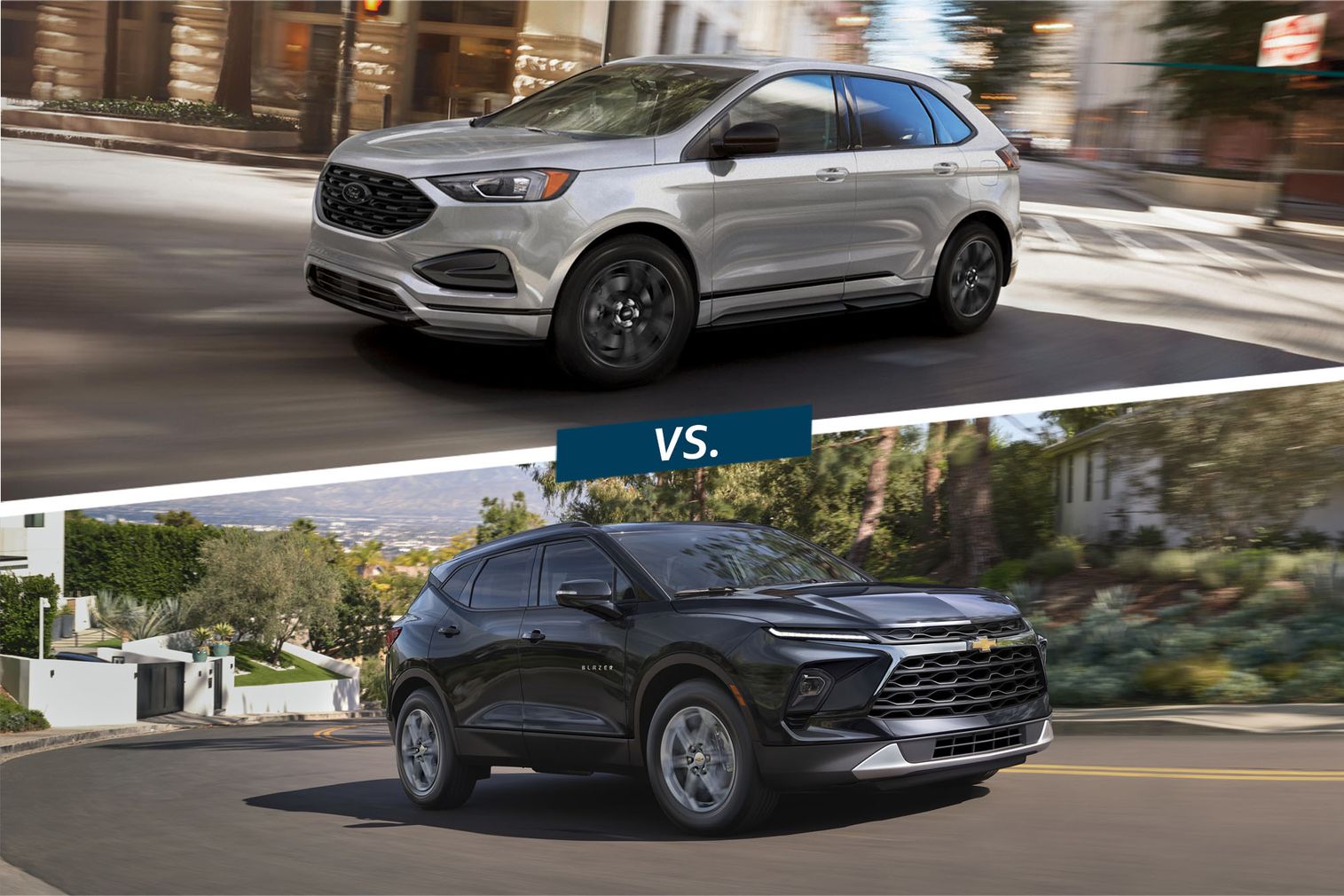
Picture a parking lot at dusk—soft headlights, polished reflections, and two very different silhouettes lined up for the same assignment. On one side sits the Ford Edge, composed and quietly assertive. On the other, the Chevrolet Blazer, bold enough to feel a little theatrical even when it’s standing still. Now comes the real dare: which one would you choose if your daily drive had to juggle commuting, errands, and the occasional craving for something more?
Consider this an American midsize duel—less about pure bravado, more about how each SUV interprets the art of versatility. The Edge and Blazer don’t just compete on badges. They compete on personality, packaging, performance character, and the small design decisions that quietly shape your day.
First Impressions: Styling That Plays to Different Radios
Styling is the handshake you can’t decline. The Ford Edge often projects a sense of measured confidence—grille and lighting elements that look engineered to stay calm under pressure. Its surfaces tend to emphasize crisp lines, creating a clean visual rhythm as you move around it. It’s the kind of design that reads as practical elegance.
The Chevrolet Blazer, by comparison, arrives with a touch more flair. Even when the car is parked in an ordinary curbside scene, the Blazer tends to look like it’s ready for a weekend detour. Its design language often leans into contrast, giving it a more expressive stance. If the Edge is composed, the Blazer is conversational—like it’s sharing a story with every angle.

And here’s the playful question that matters: when you pull into the driveway, do you want your SUV to feel like a stealth executive or a confident socialite? That choice tends to predict everything else you’ll notice later—comfort cues, driving mood, and even how you perceive cargo space.
Cabin Atmosphere: Where Comfort Becomes a Language
Step inside, and the competition turns from aesthetics to experience. The Edge cabin is typically designed to feel organized and easy to live with. Controls are positioned for quick interaction. The layout often favors clarity over clutter, which means less searching during hectic mornings.
The Blazer’s cabin can feel more character-forward. Depending on trim, it may offer a sportier ambiance—materials and seat designs that suggest the SUV is meant to be driven, not merely transported. Some drivers also appreciate how the Blazer can feel more driver-centric, as if the steering and instrumentation are nudging you to stay engaged.
Comfort isn’t only about softness. It’s about how well the vehicle supports your posture during long stretches. Both SUVs aim to provide a relaxed ride, but the “feel” can differ: one may lean toward settled composure, while the other can lean toward lively readiness.
Tech and Infotainment: The Digital Dashboard Duel
Modern SUVs are essentially rolling command centers. The Edge and Blazer both bring technology to the forefront, but the experience can vary in speed, intuitiveness, and how naturally the system responds to you. Screen visibility, button placement, and how smoothly the system handles inputs are the kinds of details you’ll either forget—or remember vividly on the first drive.
Consider the “thumb test”: when you reach for a feature, does it feel obvious within a second, or does it require intention? In a real-life world—where dinner plans are updated mid-drive and navigation gets redirected at random—clarity wins more often than sophistication.
Potential challenge: Try this experiment on your next test drive. Pick a route you know well. Then, during the drive, change music, adjust temperature, and re-route navigation without taking your eyes fully off the road. The SUV that feels easiest to command is often the one you’ll enjoy owning most.
Performance Character: Power Isn’t Everything—Cadence Is
Performance is where myths grow. Many people reduce it to horsepower numbers, but the more revealing metric is cadence: how the SUV delivers response when you ask for acceleration. The Edge tends to focus on a balanced driving demeanor, with power delivery that can feel straightforward and confident, especially for highway merging and passing.
The Blazer often has a reputation for a more energetic personality, particularly in performance-oriented trims. Its acceleration feel can seem more immediate, and the driving experience may encourage spirited inputs—light throttle, quicker changes in momentum, and a general sense of forward urgency.
Then there’s the question of drivetrain harmony. A midsize SUV should shift and respond in a way that feels synchronized, not strained. If the transmission hesitates, it interrupts your flow. If it responds too aggressively, it can feel jumpy. The best systems strike a middle ground where the SUV feels “in tune” with the driver.
Handling and Ride Quality: Smoothness vs. Swagger
Here the vehicles begin to diverge in tone. The Edge typically emphasizes ride composure—absorbing imperfections and staying composed through everyday road conditions. It’s an approach that makes city cruising feel calm and long commutes feel manageable.
The Blazer can feel a bit more poised for sporty maneuvering, especially when equipped with firmer suspension tuning. That doesn’t necessarily mean it’s harsh. Instead, it can translate road feedback more directly, giving you a sense of connection. For some drivers, that connection is addictive. For others, it’s too much talk.
Ask yourself a simple question: do you want your SUV to hide the roughness or interpret it? The answer is personal, but it’s also predictive. Your preferences today will likely echo in your ownership experience tomorrow.
Space and Practicality: Cargo Is the Real Judge
Inside the practicality arena, space and usability matter more than styling drama. Both SUVs aim to offer comfortable seating and versatile cargo solutions, but the details—opening size, floor height, and how easily you can load bags or groceries—determine day-to-day happiness.
Think about your typical week. Do you load a stroller and a cooler? Do you carry sports gear? Do you haul tools for projects that appear without warning? An SUV is only as good as its ability to handle your real routines without turning into a wrestling match.
Also consider storage for smaller items—cup holders that actually stay stable, door pockets that don’t look like afterthoughts, and rear seating that makes long trips feel less like a compromise.
Safety and Driver Confidence: The Invisible Armor
Safety features are rarely glamorous, yet they can be the difference between “fine” and “fortunate.” Driver-assistance systems—such as adaptive cruise control, lane-keeping support, blind-spot monitoring, and collision warning—exist to reduce workload and help prevent mistakes from snowballing.
While every system varies by trim and configuration, the goal is consistent: to add a layer of vigilance around the driver. The best safety tech doesn’t replace attention. It amplifies it—like a quiet co-pilot that keeps watch without stealing the spotlight.
Playful challenge: During your test drive, deliberately engage the features as if you were in traffic. Then see how intuitive they feel. Do warnings arrive at the right moment? Does steering assist feel gentle or intrusive? Confidence is not only about what the SUV can do—it’s about how predictable it is when it does it.
The Ownership Equation: Cost, Maintenance Mood, and Long-Term Feel
Owning an SUV is a long conversation, not a one-week flirtation. Consider factors like fuel economy expectations, insurance pricing tendencies, and how likely you are to care about performance trims long-term. The Edge and Blazer offer compelling reasons to choose them, but the “best” one often depends on your lifestyle cadence.
Some drivers prioritize efficiency for daily commuting. Others prioritize character and prefer a driving feel that keeps them engaged. Over time, those preferences influence the value you assign. It’s not solely about the initial purchase. It’s about how the SUV fits into your life when the honeymoon period ends.
So…Edge or Blazer? The Deciding Moment
Here’s the heart of the duel. If you want a midsize SUV that feels composed, organized, and confident in a practical way, the Ford Edge can feel like an easy decision. It often reads as steady—an SUV that grows on you because it’s easy to live with.
If you want an SUV that feels more expressive, potentially more energetic, and ready to add a little personality to ordinary days, the Chevrolet Blazer may be the stronger match. It can feel like a statement without requiring you to chase attention.
Now the challenge becomes personal. Which SUV would you choose for the kind of day that starts normal—and ends with a detour you didn’t plan? The answer might surprise you, but it will reveal what you truly value: calm confidence or bold character, practicality first or style with a wink.
Final Take: An American Duel Worth Taking Personally
The Ford Edge and Chevrolet Blazer are both built for the midsize battlefield: family schedules, weekend errands, and roads that demand confidence. Their differences aren’t only mechanical. They’re emotional. One leans into composed clarity. The other leans into spirited expression.
Test drive both. Pay attention to how each one makes you feel at low speed, how it responds when you need momentum, and how it handles daily routines. That’s where the real contest lives.
When you finally park and turn off the engine, you’ll know which one belongs in your driveway—not just which one wins on paper.