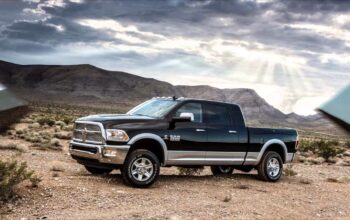
Imagine a household where electricity is no longer a distant utility bill and becomes a tangible resource—mobile, responsive, and surprisingly intimate. That is the promise of EVs with Vehicle-to-Load (V2L): a capability that allows an electric vehicle to discharge power into everyday life. A parked car becomes a battery hub. A quiet driveway turns into a micro–power plant. And when the grid falters or comfort demands surge, the vehicle can step in with an almost theatrical reliability—minus the drama.
To understand why V2L matters, it helps to think beyond “charging a car.” V2L flips the narrative. Instead of the EV being the receiver of energy, it becomes a distributor. The result is a new ecosystem of use cases: from weekend camping and tailgate parties to emergency backup during outages, and even day-to-day energy support for homes with flexible loads.
What Vehicle-to-Load (V2L) Actually Means
Vehicle-to-Load is best described as power export. An EV equipped with V2L can convert its onboard direct-current battery power into alternating current (AC) electricity suitable for typical home appliances. In many systems, the conversion is handled by an inverter, while safety mechanisms manage voltage, current, and thermal limits.
Not all EVs implement V2L identically. Some offer built-in outlets integrated into the vehicle body, while others require an adapter or specific accessory equipment. Some systems allow a limited set of circuits; others are designed for broader household-style loads. The nuance is important. The “load” in V2L can mean anything from a laptop charger to a portable refrigerator, and the practical ceiling varies by vehicle model and regional certification.
Still, the core concept remains consistent: the EV can act as a power source without requiring special wiring inside the home. You connect a compatible cable or device interface, select an export mode, and the car supplies electricity for a defined duration—bounded by battery state-of-charge, power draw, and inverter limits.
Why V2L Changes the Home Backup Conversation
Traditional home backup often implies either a standby generator or expensive battery systems. Those solutions can be effective, but they carry trade-offs: fuel logistics, maintenance schedules, installation complexity, and cost. V2L introduces a different philosophy—using an asset you already own.
When outages occur, many homes experience more than darkness. Refrigeration warms, medical devices may require steady power, Wi‑Fi routers become useless, and sump pumps can fail. V2L won’t necessarily replace an entire home energy system, but it can cover critical loads with remarkable convenience. A refrigerator, a few lights, and networking equipment can be staged to keep life moving until power returns.
There is also an operational advantage. An EV battery tends to be clean, with low noise and no onsite combustion. That matters during neighborhood outages, where generator noise can become contentious. V2L also supports a “right-sizing” mindset: run only what you truly need, rather than powering everything by default.
Emergency Scenarios: Turning Parking Into Preparedness
Consider three common outage profiles. The first is short and sudden: a brief grid hiccup that makes clocks reset and data disappear. V2L can provide a quick bridge for routers, phones, and an assortment of chargers. You can avoid frantic battery swapping while restoring connectivity.
The second is extended instability: rolling outages where power returns intermittently. Here, load management becomes crucial. A disciplined approach—running high-draw devices in deliberate intervals—can stretch the usable window. Fans, microwaves, and hair dryers typically consume more energy than refrigerators and LED lighting. Knowing what to power first transforms a crisis into a controllable system.
The third scenario is storm-season displacement: you may need power while staying in a neighborhood shelter, temporary housing, or a vehicle-accessible space. V2L supports portable living needs, from keeping a medical device charged to maintaining a safe temperature inside a refrigerator cooler. The key is to plan for battery draw and to confirm the output rating of your EV before assuming the car can run specific devices.
Daily Convenience: Powering Small Loads Without Waiting for the Grid
Not every use case is dramatic. Many V2L owners treat the feature as an everyday utility, especially for households with children, remote work setups, or frequent device charging. A desk can remain operational during micro-outages, and a backyard project can proceed without hunting for extension cords that snake across the garage.
V2L can also help with practical tasks like operating a vacuum cleaner, powering a dehumidifier during humid seasons, or running a portable air purifier. The trick is understanding peak power draw. Some appliances have starting surges—compressors and certain motors can briefly exceed steady-state power. A well-matched EV system will handle these surges more gracefully, but confirmation is always wise.
Another subtle benefit is flexibility. You can reposition the vehicle near an open outlet or choose a sheltered location, depending on the weather. This mobility reduces dependence on fixed home wiring and can enable creative staging for temporary workspaces.
Outdoor Living: Camping, Tailgates, and Off-Grid Comfort
Outdoor enthusiasts often discover V2L through the simplest revelation: comfort is power. With the EV acting as a generator-like source, you can run small appliances that elevate camping from “minimalist survival” to genuine hospitality. Think about induction cooking setups (where appropriate and safely configured), coffee brewers, string lights, and charging docks for cameras and GPS units.
Tailgates become more than social gatherings. A V2L-equipped vehicle can support sound systems, coolers, and event lighting. The atmosphere brightens, the schedule loosens, and the need for disposable batteries fades.
Longer remote trips bring different constraints: battery capacity, distance to charging points, and the rhythm of energy consumption. During the day, you might rely on V2L for entertainment and food preparation. At night, you can prioritize low-draw essentials—charging, illumination, and temperature-friendly storage.
Which Home Devices Pair Best With V2L
V2L shines when paired with equipment that is efficient, moderate in draw, and predictable in runtime. Refrigeration systems often top the “most helpful” list because temperature stability is non-negotiable. LED lights are another natural match; they deliver illumination with minimal energy expenditure.
Chargers and electronics—routers, laptops, small tablets, and phone chargers—are usually uncomplicated loads. Many modern devices are designed to accept a broad power range. That makes them forgiving and ideal for a V2L setup.
Where you need extra caution is with high-power appliances: space heaters, clothes dryers, large microwave ovens, and electric stovetops. These can exceed the inverter’s output limit or cause rapid battery drain. Motor-heavy tools can also introduce starting surge challenges. The best strategy is to check the EV’s V2L specifications and compare them with the wattage and surge characteristics of each device.
Power Management: Stretching Battery Life Like a Craft
Energy budgeting is the hidden superpower of V2L. Battery export is not magic; it is a balance between capacity, efficiency, and load behavior. Even small differences—like choosing an LED instead of a halogen lamp—become meaningful over hours.
Many users find that planning a “load ladder” works well. Start with critical systems: networking, refrigeration, and essential lighting. Then add comfort items in measured bursts. This prevents the sudden realization that the battery is nearing depletion.
Efficiency matters too. Inverters convert power, and no conversion is perfectly lossless. Shorter runtime at higher power can sometimes be more efficient than prolonged operation at intermediate levels for certain devices, but the general principle is to avoid unnecessary consumption.
Installation and Safety Considerations
Safety should be treated as a design principle rather than an afterthought. V2L systems typically include safeguards: overload protection, grounding considerations, and automatic shutdown behaviors. Still, correct cable use and proper connection procedures are essential.
Using certified adapters and compatible outlets reduces risk. Avoid improvised wiring. Keep connectors protected from weather exposure when possible. Some V2L setups work best with direct vehicle-to-device connections rather than through improvised extension chains.
Ventilation is another practical factor. Inverters generate heat. If the vehicle is exporting power for long durations, ensuring appropriate airflow and avoiding blocked vents can help maintain system stability. Treat your EV like a sensitive appliance: it performs best with respect for its thermal boundaries.
Choosing an EV With V2L: What to Look For
Not all V2L implementations are equal, and buyers should evaluate several technical and experiential criteria. First, check the maximum continuous output and whether it meets your most important “must-run” devices. Second, verify available outlet types—some systems provide household-style sockets, while others require specific connectors.
Third, consider charging and export behavior. Some EVs manage export only when certain conditions are met, such as specific battery state thresholds. Fourth, examine user experience: how the vehicle lets you enable export, monitor power draw, and estimate remaining runtime.
Finally, look for ecosystem compatibility. Accessories and adapters can significantly influence how easy it is to deploy V2L during real life, not just during a brief test. The best system is the one you can use instinctively while stressed—during an outage or a sudden weather event.
Cost and Value: Reducing Risk, Increasing Utility
EVs with V2L can add value beyond the car itself. The feature can act like a “financial hedge” against unexpected expenses associated with generator fuel, maintenance, or last-minute battery backups. It can also reduce household vulnerability during grid unreliability.
Yet value is not automatic. The cost of ownership depends on how frequently you use V2L and which loads you prioritize. If you mostly do short trips and rarely need backup, the feature might feel underutilized. Conversely, for frequent travelers, disaster-prone regions, remote work arrangements, or households with sensitive equipment, V2L can become a cornerstone capability.
Over time, the benefits accumulate in small but meaningful ways: fewer disruptions, more convenience, and a feeling of agency when power becomes uncertain.
A Practical Starter Workflow for New V2L Owners
Begin with a “test day.” Export power with a small load first—perhaps a lamp, a phone charger, and a laptop charger. Confirm stable output and note how quickly the battery state changes. Then try a slightly heavier device like a refrigerator in a controlled setting to observe runtime behavior.
Next, create an emergency kit list: essential cables, compatible adapters, a compact LED lighting pack, and a basic power plan. Consider labeling devices by wattage and priority. A short checklist can prevent decision fatigue later.
Finally, set expectations. V2L is a flexible power tool, not an all-encompassing replacement for a whole-home system. When paired with efficient choices and careful load management, it becomes an elegant bridge between dependence and autonomy.
Conclusion: A New Kind of Power Security
Vehicle-to-Load (V2L) turns an EV into a responsive energy companion. It can keep critical systems alive during outages, enhance outdoor comfort, and provide everyday convenience when the grid is unreliable—or simply when you want freedom from extension cords and fixed infrastructure. With thoughtful pairing of devices, careful load management, and a safety-first mindset, V2L offers something rare: practical empowerment in a form that feels both modern and deeply reassuring.
In the end, V2L is more than a feature. It is a shift in how power is perceived—less as something you wait for, and more as something you can deliver, wherever you park.