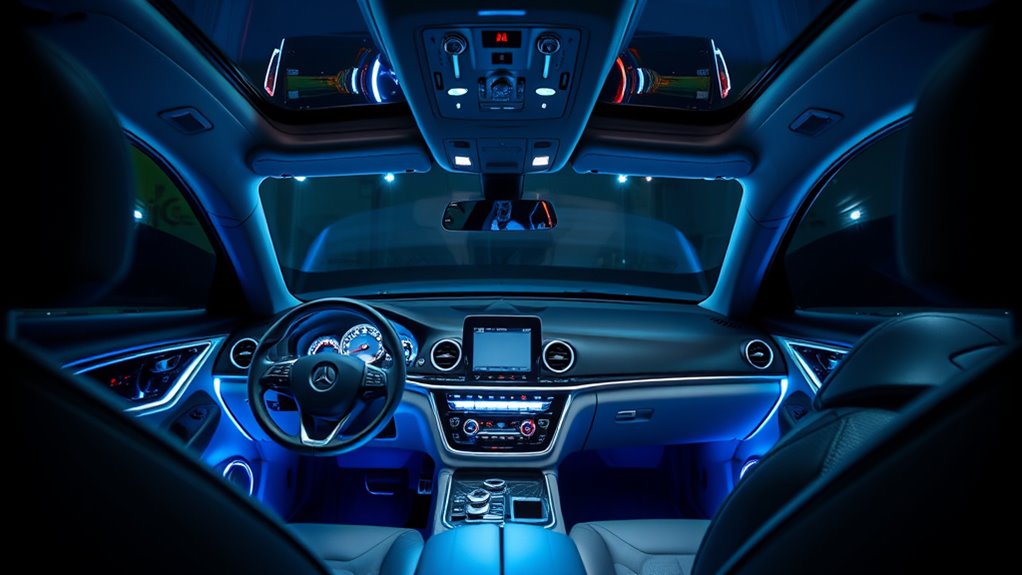
Have you ever slid into an EV at night, hit play on your favorite track, and felt the bass arrive a heartbeat before the rest of the world? It’s a surprisingly intimate experience—like the dashboard becomes a stage and your playlists transform into something theatrical. Yet here’s the playful question: what if the best-sounding EV isn’t the one you assume? The audio landscape in electric vehicles is more intricate than a simple “premium package = great sound.” It’s a choreography of speaker geometry, amplifier architecture, cabin acoustics, and digital signal processing—all tuned against the physics of a quiet powertrain.
And that’s where the challenge sneaks in. You can’t always judge audio quality from a dealer demo. Some systems sound glorious for a single song in a brightly lit showroom. But what happens when you drive on real roads, at real speeds, with real sub-bass demands and real background noise? This is where premium audio tested becomes more than a phrase—it becomes a method for separating glossy performance from lasting sonic credibility.
The EV Advantage: Silence as an Acoustic Stage
EV cabins are often quieter than their combustion counterparts. No engine rumble is constantly “painting over” the mids and highs. That absence can be a gift. When road noise is the primary antagonist, the tuning of the audio system becomes more noticeable—sometimes for better clarity, sometimes for exposing flaws like harsh treble or underpowered midrange.
In a sense, electric drivetrains turn the vehicle into a more honest listening environment. The speakers can do their job without having to fight a constant roar. But honesty has a price: if the system’s DSP (digital signal processing) is poorly tuned, you’ll hear it faster. The bass may feel thin. Vocals can sound slightly recessed. Imaging—the way instruments seem to “stand” in the soundstage—may smear when you move your head.

What “Best Sound” Actually Means: More Than Volume
“Best sound system” is sometimes used as if it’s synonymous with loudness. It’s not. True premium audio balances frequency response, reduces distortion, and preserves detail at multiple listening levels. A great EV system should sound composed whether you’re listening at whisper volume or turning it up for a long highway run.
Look for three sonic hallmarks:
1) Frequency extension: bass that reaches down without turning boomy, and treble that stays crisp without turning brittle.
2) Tonal balance: a midrange that makes vocals intelligible and instruments lifelike.
3) Imaging and staging: a soundstage with depth, where the center image feels stable and surrounding instruments remain separated.
These traits often come from a sophisticated amplifier layout, careful driver placement, and DSP algorithms that account for cabin dimensions and seating position.
Speaker Architecture: The Geometry Behind the Magic
Premium EV audio isn’t just about the number of speakers. It’s about where they sit, how they aim, and how they integrate. A system with a single “big woofer” can disappoint if the crossover design causes overlap or phase misalignment. Conversely, a well-engineered multi-driver system can sound fuller even at moderate volume.
Common configurations include:
Component front speakers: typically handling the critical mids and vocals with greater articulation.
Dedicated woofers: for controlled low-end impact rather than vague rumble.
Center or wide-range drivers: for smoother dialog intelligibility and a stable phantom center image.
Surround processing: for wider soundstage expansion—though it can also introduce “virtual haze” if overdone.
The best systems also account for vehicle-specific resonances. A subwoofer placed near a panel that likes to vibrate can create an effortless-looking bass line that’s actually slightly distorted when the pressure rises. Premium tuning uses measurement and correction to keep the cabin from acting like an unintended instrument.
Amplifiers and DSP: The Control Room Experience
Inside many premium EV setups lies a quiet superpower: intelligent amplification and DSP tuning. Without DSP, a speaker system is merely a set of drivers obeying basic physics. With DSP, the system can dynamically adjust equalization, time alignment, and crossover behavior.
Time alignment is particularly important in vehicles. Because listeners are seated at a fixed point—close to the center, not uniformly distributed like a living room—DSP can align arrival times so that the image doesn’t “lean.” Crossover tuning also determines how smoothly bass transitions into midrange. When that transition is wrong, you get a sensation that the bass is arriving late or the vocals sound slightly detached.
The result of exemplary DSP work can feel almost paradoxical: the sound becomes both bigger and clearer at the same time. That’s not magic. It’s meticulous engineering.
Cabin Acoustics: Why Interior Materials Matter
An EV’s cabin isn’t a blank canvas. It’s a mosaic of materials—glass, polymer trims, insulation layers, and seat fabrics—that each contribute to reflection, absorption, and resonance. Even the same audio brand can sound different across models because the acoustics change with body shape, window size, and seat geometry.
Seat position affects imaging. Seat upholstery affects high-frequency reflectivity. Door panel construction affects bass response. In short: the best-sounding EV is usually the one where the audio system was tuned with the cabin it actually lives in.
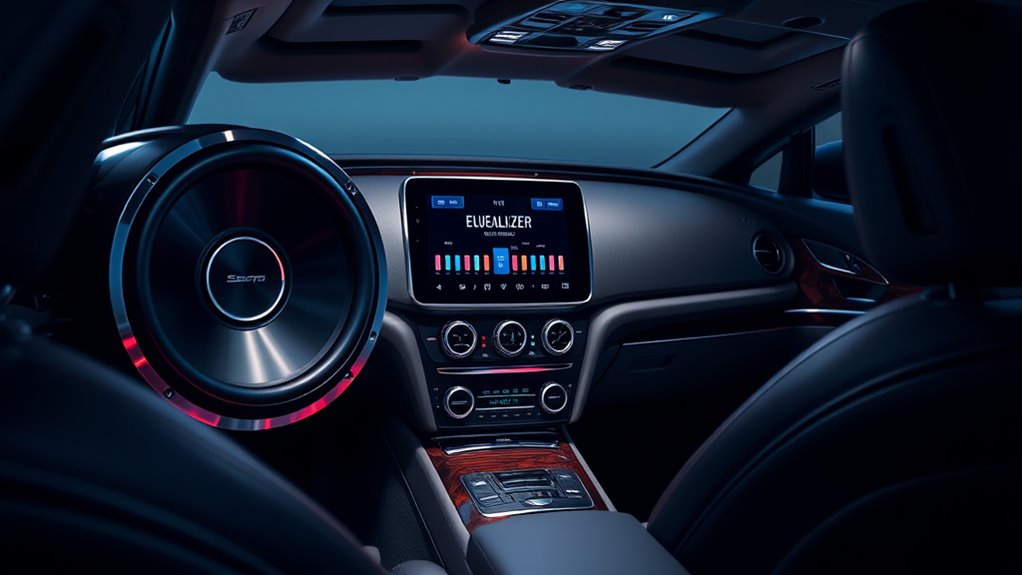
Real-World Testing: The Playlist That Exposes Weak Links
To truly evaluate EV audio, you need a listening routine. Here’s a challenge: take a familiar playlist and compare it across vehicles using the same tracks, the same volume preference, and the same driver position. Yes, it’s a bit tedious. But sonic truth rarely arrives without effort.
Use songs that test:
Sub-bass and controlled low-frequency response: tracks with steady synth lines reveal whether bass is tight or bloated.
Vocal presence: recordings with close-mic vocals show whether mids are clean or congested.
Transient detail: snare drums and plucked strings reveal whether treble remains stable when the music gets busy.
Soundstage depth: productions with layered reverb show whether imaging is layered or flat.
If an EV sounds magnificent at one frequency but collapses under complex arrangements, you’ll hear it. Premium systems should remain composed during crescendos—no brittle edges, no muffled muddiness.
Feature Sets: Surround Modes, EQs, and the Danger of Over-Tuning
Many premium audio systems offer surround effects, dynamic bass boosts, and equalizer presets. These features can be fun—but they can also create a false sense of “better.” A surround mode might widen the soundstage, but it can also smear localization cues. A dynamic bass enhancer can make a weak system feel strong for a moment, while quietly distorting when the track demands more headroom.
If the goal is best-in-class fidelity, listen with processing set to a neutral baseline first. Then experiment lightly. Treat EQ like seasoning: a little can improve flavor, too much can ruin the dish.
How to Choose the Best-Sounding EV for Your Taste
Different listeners chase different virtues. Some want thundering bass and rhythmic authority. Others want crisp detail—wide highs, articulate cymbals, and vocals that sit forward like a well-framed portrait. The best EV for you is the one that aligns its sound signature with what you value most.
Consider these questions before committing:
Do you drive mostly city or highway? Road noise profiles determine whether the system’s treble and midrange remain legible.
Do you listen to talk-heavy audio or music? Dialog clarity depends on midrange tuning and processing.
Are you sensitive to distortion? If you crank volume, systems with robust amplification and careful crossover design matter.
There’s no universal “perfect.” But there is a consistent pattern: the EV with the most coherent tuning usually wins long-term satisfaction.
The Takeaway: Premium Audio Should Feel Effortless
The best EV sound systems don’t announce themselves with gimmicks. They feel controlled. Bass arrives with authority rather than blur. Vocals stay present. Instruments maintain distinct edges. The soundstage doesn’t just expand—it locks in place like a well-calibrated instrument panel.
So, remember the playful question from the beginning: what if the best-sounding EV isn’t the one you assume? The surprise usually comes from tuning integrity—the hidden discipline behind the scenes. Test with real tracks. Compare with care. And when the music finally sounds like it belongs inside your cabin, you’ll know you didn’t just hear sound—you experienced design.
Next time you step into an EV, listen a little differently. Let the quiet do its job. Let the speakers prove themselves. And enjoy the moment when your playlist stops being content and becomes a performance.