The question always arrives with the same undertone: “Are EVs still eligible for the $7,500 federal tax credit?” It’s a reasonable concern, because the credit has been wrapped in a fog of shifting rules, headline-grabbing updates, and a steady stream of online confusion. Yet the deeper story is more nuanced. Eligibility is not a binary switch that flips once and never changes again. It behaves more like a living boundary—one that depends on manufacturing details, battery supply chains, and the exact vehicle configuration sitting in your driveway.
And there’s a more human reason the question persists. People don’t simply want a discount. They want reassurance that their choices are aligned with a future that feels technically plausible and financially survivable. That longing—half curiosity, half conviction—turns a policy question into a kind of narrative about progress.
So, let’s walk through what “still eligible” really means, why some buyers remain eligible while others don’t, and how to check with enough rigor to feel confident.
Why the $7,500 Credit Became So Hard to Interpret
The $7,500 federal tax credit isn’t a single uniform prize. It is commonly divided into parts, and those parts are tied to specific conditions. In practice, that means two cars that look nearly identical from the outside can have different outcomes on the credit. The difference isn’t always obvious at the dealership. Sometimes it’s in the fine print: the battery sourcing, the vehicle’s final assembly, and the compliance of the energy components with federal requirements.
This complexity has created a familiar observation: “I thought EVs were always eligible.” Many buyers remember earlier years when the credit felt more straightforward. Then came the rules that tightened the supply-chain requirements, and suddenly eligibility became more like engineering compliance than general incentives.
Still eligible EVs exist, but you have to treat the credit like a map rather than a rumor. The map doesn’t change every day, but it does demand attention to legend and scale.

The Core Idea Behind Eligibility: More Than Just “An EV”
It’s tempting to reduce the question to the simplest label: electric vehicle equals eligible. But federal incentives rarely operate like that. Eligibility depends on eligibility mechanics—criteria that are measurable and auditable.
Two principles shape the landscape. First, the vehicle must meet updated sourcing and manufacturing standards for its battery and related components. Second, there are limitations tied to the credits that can be claimed depending on the time and supply chain constraints that apply to each model year and configuration.
As a result, “EVs still eligible” usually means you’re looking at specific models that are either newly compliant or not yet displaced by evolving constraints. It also means that buyers should check by exact model and trim, not merely by brand or body style.
There is a certain fascination in how policy turns into a technical puzzle. It’s not only economic; it’s a quiet referendum on where the future materials are coming from.
How to Tell if a Specific EV Qualifies (Without Getting Lost)
The most practical approach is to verify eligibility at the vehicle level. Broad lists can be helpful, but they can also lull people into false confidence. A “qualifying EV” list should be treated as a starting point, not a final verdict.
When checking, focus on the details that match the federal criteria. Confirm the vehicle’s eligibility by looking up the make, model, and often the configuration that you’re considering purchasing. If you’re comparing multiple cars on a lot, note whether they are the same model year and whether trims differ in battery specifications.
It’s also wise to be mindful of dealership language. Sales teams may describe a car as “tax-credit friendly” while leaving out the conditions. You can ask pointed questions: Is this specific configuration currently eligible? Does the credit apply under the current federal requirements? What documentation is available?
Asking these questions can feel like a small act of resistance against marketing vagueness. But it leads to a calmer ownership experience.
Common Observation: “Tesla Is Complicated”—What That Really Means
One frequently heard remark is that eligibility varies dramatically across Tesla models and production timelines. Some people interpret this as inconsistency, but there’s a different interpretation: the credit is sensitive to the exact battery and manufacturing pathway used by each model.
In other words, the same brand can appear in both eligible and non-eligible contexts depending on how that particular vehicle is engineered and sourced. That’s why many buyers search for “how to choose a Tesla that qualifies” rather than simply asking whether Teslas qualify in general.
Deeper down, this pattern reveals how electrification is not a single invention—it’s a choreography of components. Eligibility simply forces the choreography to meet a set of steps.
Are Plug-In Hybrids Included, or Is It Only Pure EVs?
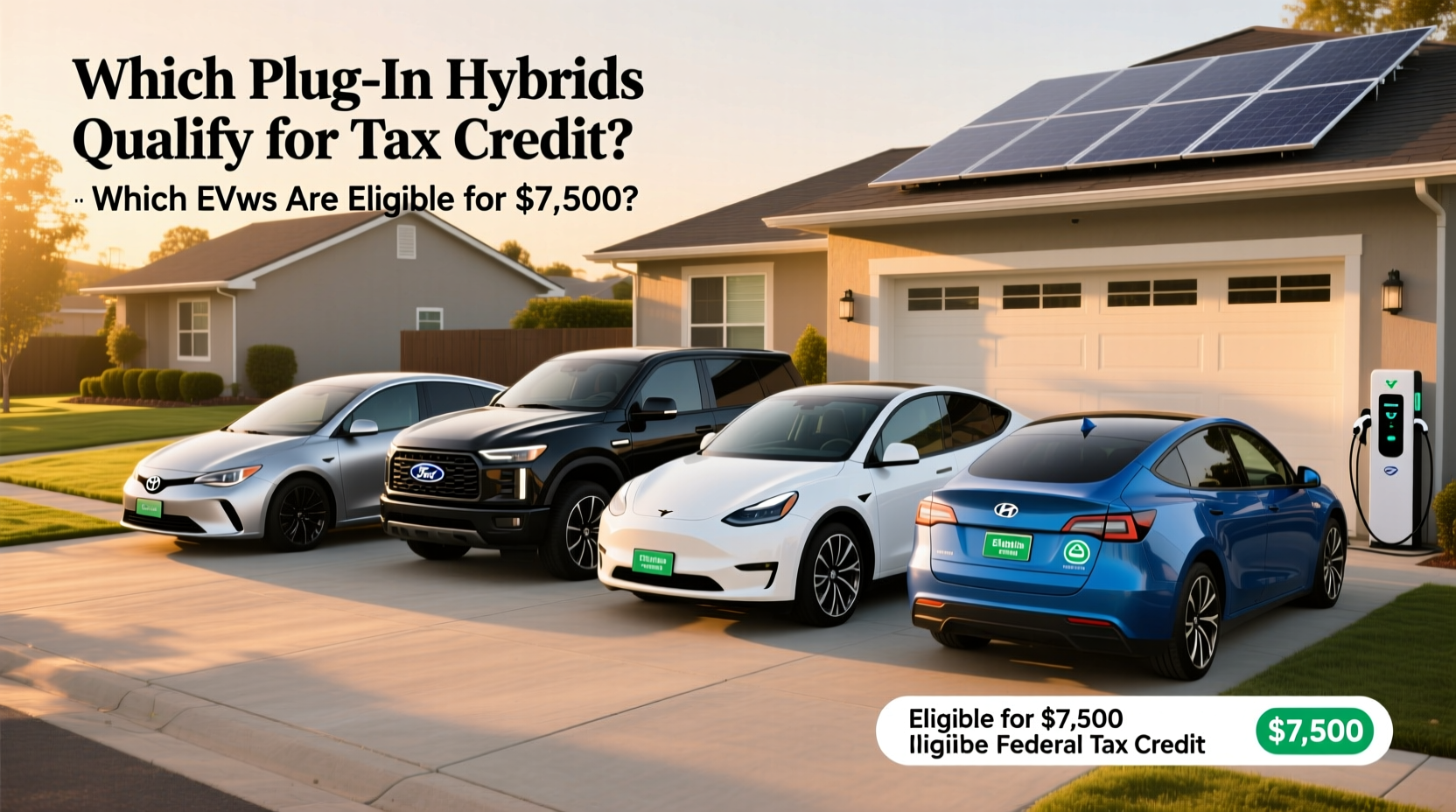
Another common point of confusion is whether plug-in hybrid vehicles are part of the conversation. Depending on the rules in effect, some plug-in hybrids may qualify for certain credit amounts, while pure EVs may be treated differently based on the eligible battery and component requirements.
Here, the most useful mindset is to treat the credit as a category of compliance rather than a category of propulsion. If the plug-in hybrid meets the current criteria, it may be eligible. If it does not, it won’t. The key is not how the vehicle is marketed, but how it is certified.
This is where the fascination deepens for many buyers: charging habits, energy storage capacity, and real-world range become part of an eligibility narrative. Even if two cars both plug in, the eligibility outcome can still diverge.
Why Eligibility Changes Over Time (And Why It Isn’t Arbitrary)
Eligibility is not capricious. It evolves because the government is steering the incentive toward certain outcomes. Supply chains do not stand still, and policy aims to reward domestic manufacturing or compliant sourcing, depending on the structure of the law.
For buyers, this means “still eligible” often refers to vehicles that remain within the compliant boundaries for the current period. Meanwhile, other vehicles may fall out of eligibility due to how their battery sourcing or manufacturing details align with the requirements at that time.
It can feel like a moving target, but there’s a logic underneath: the credit is designed to influence what gets built, not merely what gets sold.
How Much Is the Credit Worth in Real Life?
The emotional weight of the $7,500 number is understandable. It can feel like a lifeline, especially when paired with higher upfront costs. But value isn’t only about the headline amount. It’s about how the credit interacts with your tax situation, your tax liability, and how the credit is applied in your filing process.
Additionally, some buyers may be tempted to see the credit as a guarantee of affordability. It isn’t. It is an offset contingent on rules and your individual tax circumstances. Still, when eligibility aligns, the credit can significantly reduce the effective purchase price.
That’s why eligibility research feels less like bureaucracy and more like financial choreography—planning steps that must land in the right order.
Practical Steps Before You Buy an Eligible EV
If you want the process to feel straightforward, run it like a checklist.
First, identify the exact model year and trim you’re considering. Second, confirm eligibility for that exact configuration using reliable, up-to-date references. Third, keep records: quotes, VIN details if provided, and any documentation offered by the seller. Finally, verify how the credit will be handled for your situation when it comes time to file taxes.
Long sentences can mimic long spreadsheets, but the process itself can be crisp. Eligibility is not a test of your patience; it’s a test of specificity.
The Bigger Picture: Why People Are Still Fascinated by EVs and Incentives
At its heart, this topic is about more than money. The credit is a signal flare. It tells people that electrification isn’t only an aesthetic or lifestyle choice. It’s becoming an industrial standard with measurable infrastructure, regulatory backing, and an ecosystem that keeps expanding.
Even when rules shift, the fascination persists because EVs represent a change in relationship—between drivers and energy, between daily logistics and climate goals, between curiosity and commitment. The tax credit becomes part of that relationship, like a bridge that makes the first crossing less forbidding.
So yes: EVs can still be eligible for the $7,500 federal tax credit. But the real win comes from understanding the “how” behind eligibility—why certain configurations qualify, why some don’t, and how careful verification converts uncertainty into confidence.
Outro: Turning Uncertainty into a Confident Purchase
If the federal tax credit feels unpredictable, you’re not imagining it. But it becomes predictable when you stop thinking in broad strokes and start thinking in specifics. “Still eligible” doesn’t mean “everything everywhere.” It means certain vehicles—at certain times, in certain configurations—meet the criteria.
Approach the decision with clarity. Confirm eligibility at the model and configuration level. Ask questions that force precision. Then, when the numbers finally make sense, you’re not just buying a car. You’re choosing a path—one that, with the right vehicle, still carries that $7,500 weight of financial momentum.