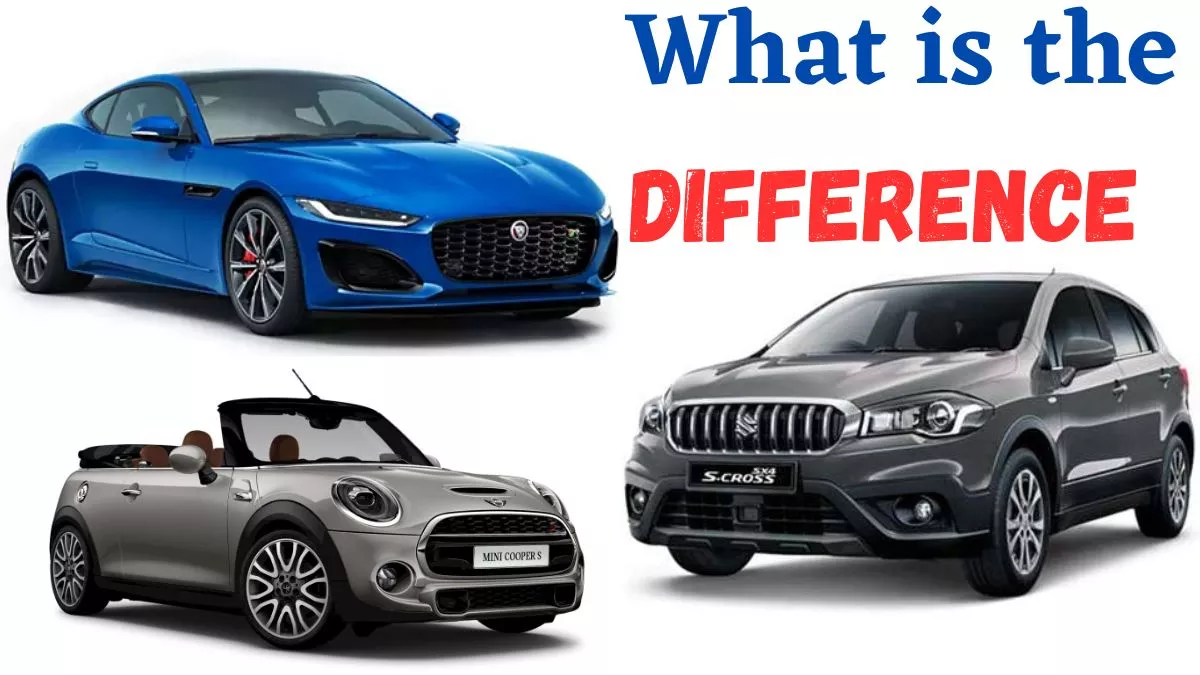
The moment you see a sleek sports car gliding down the boulevard, the first question that flashes through your mind isn’t about horsepower or 0-60 times—it’s about the roof. Is it fixed, or does it vanish into the ether, leaving only the wind to whisper secrets to the driver? The eternal debate between coupe and convertible isn’t just about practicality; it’s about identity, emotion, and the very essence of what it means to drive. Beneath the gleaming paint and polished alloys lies a deeper fascination: the choice between shelter and surrender, between control and abandon. This isn’t merely a decision about body styles—it’s a declaration of how you want to experience the world.
For some, the coupe represents the purest distillation of automotive artistry. Its lines are unbroken, its silhouette uncompromised by the clutter of folding mechanisms. Every curve tells a story of engineering precision, where aerodynamics and aesthetics merge into a single, breathtaking form. The convertible, by contrast, is a chameleon—equally at home as a boulevard cruiser at dusk or a track weapon under the blazing sun. But beyond the obvious differences in roof design, these two body styles embody fundamentally different philosophies of driving. One offers sanctuary; the other, liberation. And in that tension lies the heart of the choice.
The Psychology of Shelter vs. Exposure
At its core, the coupe vs. convertible debate is a study in human psychology. The coupe, with its enclosed cabin, provides a cocoon-like experience. The hum of the engine becomes a lullaby, the road noise a distant murmur. It’s a space where the outside world is observed through a windshield, framed like a painting in motion. This sense of enclosure can feel empowering—like a sanctuary on wheels, where the driver is both the monarch and the guardian of their own private universe. There’s a certain exclusivity to it; the coupe driver is part of an elite club, one that values precision over pandemonium.
The convertible, however, flips the script. It’s an invitation to vulnerability, a dare to the elements. The absence of a roof isn’t just a mechanical feature; it’s an emotional statement. It says, “I embrace the world as it comes.” The wind in your hair isn’t just a sensory experience—it’s a reminder of your own aliveness. The convertible driver is a participant in the world, not just an observer. There’s a thrill in that exposure, a reminder that driving isn’t just about getting from point A to point B, but about feeling every mile in between. The convertible doesn’t just transport you; it immerses you.

The Aesthetic Divide: Form Follows Function
Few automotive choices are as visually jarring as the difference between a coupe and a convertible. The coupe’s roofline is a masterclass in continuity, where the greenhouse flows seamlessly into the trunk, creating a sense of unity. This unbroken line isn’t just pleasing to the eye—it’s a testament to the car’s purpose. A coupe is designed to slice through the air with minimal resistance, its shape optimized for speed and efficiency. The absence of a folding roof mechanism allows for sharper creases, deeper character lines, and a more aggressive stance. It’s the automotive equivalent of a tailored suit—sleek, precise, and undeniably sophisticated.
The convertible, on the other hand, wears its complexity with pride. The presence of a retractable roof introduces a series of compromises—bulges in the bodywork, additional seams, and a less rigid structure. Yet, these compromises give the convertible a unique charm. The raised windshield and the exposed rear deck create a visual tension, a balance between elegance and rebellion. The convertible’s design often feels more dynamic, as if it’s perpetually in motion even when parked. It’s the difference between a sonnet and a jazz improvisation—one is structured and deliberate, the other spontaneous and alive.
Consider the Porsche 911. The coupe version is a symphony of Teutonic precision, its roofline a single, unbroken arc that speaks to the car’s racing pedigree. The convertible, while equally capable, feels like a different creature entirely. The raised windshield and the slightly bulbous rear give it a more approachable, almost mischievous demeanor. It’s the same car, but the convertible version seems to wink at you, as if to say, “Let’s have some fun.”
Performance and Practicality: The Hidden Trade-offs
Performance isn’t just about raw numbers; it’s about how a car makes you feel. And here, the coupe and convertible often diverge in unexpected ways. A coupe, with its stiffer chassis and lower center of gravity, typically offers sharper handling and more precise feedback. The absence of a folding roof means the structure can be more rigid, reducing body flex and improving cornering stability. For enthusiasts who live for the twisty roads and racetracks, the coupe is often the purer choice—a machine honed for performance, where every input from the driver is met with an immediate, unfiltered response.
The convertible, however, isn’t without its own performance advantages. Modern engineering has largely closed the gap, with many convertibles now offering handling that rivals their coupe counterparts. The key lies in structural reinforcements—reinforced sills, additional bracing, and advanced materials like carbon fiber. But even with these advancements, the convertible often sacrifices a bit of that razor-sharp feel. The extra weight of the roof mechanism and the need for a more flexible structure can dull the edges slightly. Yet, for many drivers, the trade-off is worth it. The convertible’s ability to transform from a closed cockpit to an open-air sanctuary in seconds adds a layer of versatility that’s hard to match.
Practicality is another arena where the two body styles clash. The coupe’s trunk is often larger and more usable, thanks to the lack of a roof mechanism intruding into the cargo area. This makes it the more sensible choice for those who need to haul gear—whether it’s golf clubs, luggage, or a week’s worth of groceries. The convertible, while not devoid of storage, often forces compromises. The folded roof can encroach on trunk space, and the need for a reinforced structure can reduce overall capacity. Yet, for those who prioritize experience over utility, these limitations are easily overlooked. After all, what’s a trunk when you’re cruising with the top down, the sun on your face, and the world at your fingertips?
The Ritual of the Roof: A Moment of Transformation
Few automotive experiences are as visceral as the act of lowering or raising a convertible roof. It’s not just a mechanical process; it’s a ritual. The whir of the motor, the clunk of the latches engaging, the sudden rush of wind as the world opens up around you—it’s a symphony of sound and sensation. This ritual transforms the car from a mere machine into a living, breathing entity. The coupe, for all its virtues, lacks this moment of magic. Its roof is static, unchanging. It doesn’t offer the same sense of anticipation or release. For the convertible driver, every drive begins with a choice: to cocoon or to expose, to control or to surrender.
This ritual also speaks to the deeper human desire for transformation. The convertible isn’t just a car; it’s a chameleon, adapting to the mood of the moment. On a crisp autumn morning, it can be a snug retreat, the top up and the heater blasting. By midday, it’s an open-air escape, the top down and the wind singing through the cabin. The coupe, by contrast, is a constant. It doesn’t change. It doesn’t adapt. It’s the same whether you’re heading to a business meeting or a midnight joyride. And for some, that constancy is its greatest strength.
The convertible’s roof mechanism also introduces an element of unpredictability. Mechanical systems can fail, and when they do, the experience can be jarring. A stuck roof or a malfunctioning motor can turn a joyride into a frustrating ordeal. The coupe, with its simplicity, offers a sense of reliability that’s hard to match. There’s a peace of mind in knowing that your car won’t betray you mid-journey. Yet, this reliability comes at a cost—literally. Convertibles are often more expensive to maintain, thanks to the added complexity of their roof systems. The coupe, with its fewer moving parts, is typically cheaper to own in the long run.
Cultural Icons: The Cars That Define Eras
Throughout automotive history, certain models have become synonymous with the coupe or convertible ethos. The Ford Mustang, in its early days, was a coupe at heart—a two-door muscle car that ruled the streets with brute force and unapologetic style. The convertible version was the boulevard cruiser, the car of choice for those who wanted to be seen. The E-Type Jaguar, meanwhile, was a coupe that redefined elegance. Its long hood and sweeping curves made it a rolling masterpiece, a car that didn’t just transport its occupants but elevated them. The convertible version of the E-Type was a different beast entirely—equally stunning, but with a more approachable, almost flirtatious demeanor.
In the modern era, the Porsche 911 coupe embodies the purist’s dream—a car that’s as at home on a racetrack as it is on a winding coastal road. Its fixed roof is a badge of honor, a declaration that it’s built for those who understand the art of driving. The 911 convertible, while no slouch, often feels like a concession to practicality. It’s still a Porsche, still a 911, but it’s a different kind of Porsche—one that’s willing to bend the rules a little. The Mazda MX-5 Miata, on the other hand, is a convertible through and through. Its roadster ethos is inseparable from its identity. The coupe version of the Miata, when it exists, feels almost like an afterthought—a nod to those who want the same car but with a roof.
These cultural icons remind us that the coupe vs. convertible debate isn’t just about engineering or practicality. It’s about legacy. It’s about the stories we tell ourselves and the identities we project. A coupe driver might see themselves as a connoisseur, a purist who values form and function above all else. The convertible driver, meanwhile, might see themselves as a free spirit, someone who refuses to be confined by the constraints of the modern world. These aren’t just cars; they’re extensions of the self.
The Final Verdict: Which One Speaks to You?
So, which should you buy? The answer, as with most things in life, isn’t black and white. It’s a question of what you value most. If you crave precision, exclusivity, and a driving experience that feels like a dialogue between you and the machine, the coupe is your soulmate. It’s the choice for those who see driving as an art form, a ballet of control and feedback. The convertible, on the other hand, is for those who see driving as an adventure, a chance to connect with the world in a way that no other vehicle can offer. It’s the choice for poets and dreamers, for those who believe that the journey is just as important as the destination.
Perhaps the most telling sign of which body style suits you is how you feel when you see one on the road. Does the sight of a coupe make your heart race with admiration for its unbroken lines and mechanical purity? Or does the sight of a convertible make you yearn to feel the wind in your hair, to be part of the world rather than an observer? The answer lies not in the specs or the price tags, but in the emotions these cars evoke. The coupe and the convertible aren’t just two sides of the same coin; they’re two different coins entirely. And the choice between them isn’t just about what you drive—it’s about who you are.
The road awaits. Which way will you go?