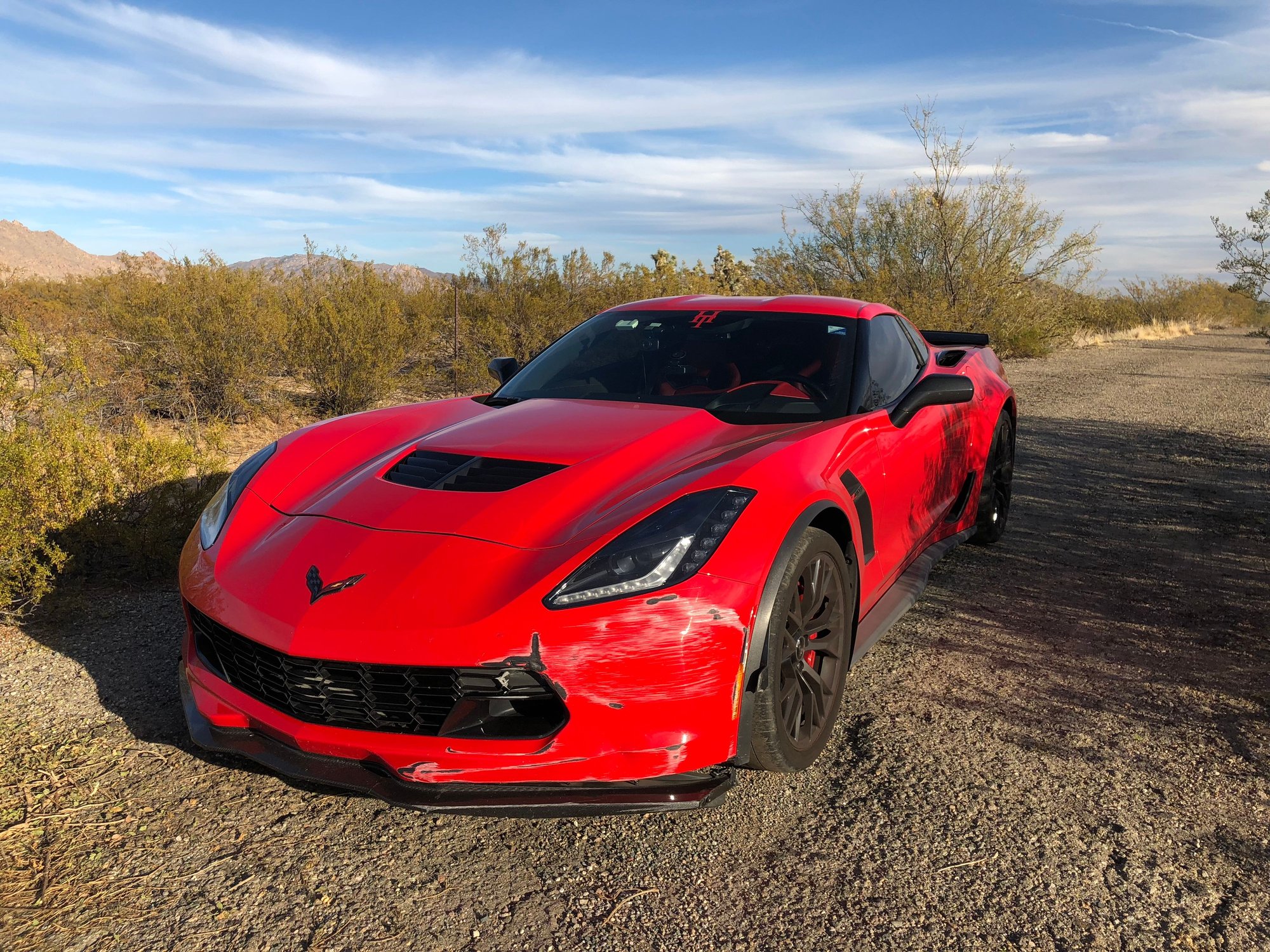
There’s a particular kind of silence that only shows up on long stretches of road—an acoustic emptiness broken by tires humming over pavement and the occasional, satisfied clink of metal as the car settles into its rhythm. Slide into the driver’s seat of a Chevrolet Corvette Z06 and that silence doesn’t feel empty. It feels concentrated, like the world is holding its breath to see what you’ll do next. A cross-country road trip in the Z06 is often described in numbers: horsepower, acceleration, lap times. Yet the real story is usually less quantifiable. It’s about why people keep returning to the same idea—speed with purpose—until it becomes a kind of fixation.
One common observation follows the Z06 around like a shadow: “It’s too much car for the highway.” That thought arrives quickly, usually before the first long on-ramp or the first effortless merge at 80 mph. But the deeper fascination begins when you realize what the car is actually offering. Not just performance, but composure. Not just power, but persuasion. The Z06 isn’t merely built to move fast; it’s built to make fast feel inevitable, almost logical—like the distance between two places can be rewritten by confidence.
Why the Z06 turns distance into a destination
Road trips succeed on variety: scenery changes, weather shifts, music evolves, and every stop becomes its own chapter. The Z06 adds another element—anticipation. You begin to anticipate the next crest in the road, the next bend that appears as if it were drawn with a compass. Even when you’re not chasing speed, the car’s responses are immediate. The steering feels connected rather than merely responsive. The chassis communicates through subtle vibrations, a kind of mechanical poetry. Short sentences help here: It feels ready. It feels awake.
That sensation is the first reason the Z06 inspires long-form affection. Many performance cars demand attention. The Z06 invites it. The difference matters. When a machine invites attention, the driver supplies the intention. The result is a relationship, not a wrestling match. Over hours and hundreds of miles, that distinction becomes emotional, not technical.

Gearbox, torque, and the choreography of cruising
A road trip isn’t one continuous sprint. It’s a choreography of accelerations, coastdowns, and quiet decelerations into towns that smell like coffee and gasoline—sometimes at the same time. The Z06’s performance character makes these transitions feel staged. Light throttle is not the same as neutral. It’s an invitation to lift, to settle, to prepare. You learn the car’s language quickly: how it responds to half-input steering, how it tightens its posture when you ask for commitment.
When the engine note rises, it doesn’t arrive as chaos. It arrives as instruction. That’s the deeper reason many drivers fall for the Z06 in particular: it turns output into clarity. Power becomes a form of communication between road and driver. You stop thinking about speed as an abstract figure and start thinking about speed as a shape—something you can sculpt.
The comfort myth: performance doesn’t always mean rigidity
There’s a myth surrounding track-bred machines: that comfort is sacrificed at the altar of aggression. But long trips expose the shortcomings quickly—bad seats, vague ergonomics, exhausting drivability. The Z06 counters that myth with an overall sense of solidity. It doesn’t feel like a race car that borrowed street legality. It feels like a daily-able instrument tuned for spirited intent.
Comfort on the road isn’t just cushion thickness; it’s how the cabin absorbs fatigue. You can drive for hours and still feel like you’re steering, not merely surviving. Wind noise matters. Steering effort matters. Seat positioning matters. And so does the way the car keeps its composure over imperfect surfaces. The Z06 tends to make potholes feel like information rather than punishment.
Planning the route like a strategist, not a tourist
A cross-country trip isn’t only about scenery. It’s about logistics, timing, and rhythm. The Z06 rewards thoughtful planning. Choose stretches where speed can be transformed into smooth progress rather than frantic lane changes. Consider elevation changes, weather patterns, and traffic density. The country is not flat; it is layered. Mountain passes ask for traction management and patience. Open highways ask for endurance and steadiness.
Short breaks become part of the performance. Step out. Breathe. Stretch. Let your own body reset as efficiently as the car resets between bursts. This is where the fascination deepens: the trip becomes a discipline. Not a chaotic adventure, but a controlled exploration with room for wonder.
Fuel stops, tire temperatures, and the quiet science of the drive
At the gas station, you’ll notice details most people miss. Tire temperatures vary after long pulls and faster downshifts. The car’s stance may change slightly as weight transfers. There’s a tactile intelligence to it: you learn how the Z06 behaves when the road becomes different. Checking fluids, inspecting tires, and observing tread wear is not paranoia—it’s attentiveness. Attentiveness is the common thread between drivers who love these cars and drivers who simply use them.
As hours pass, the road begins to feel like data turned into instinct. You’ll know how hard you can brake before the nose dives into a confident stop. You’ll sense the moment when traction becomes the limiting factor instead of engine output. This isn’t about chasing perfection. It’s about learning the boundaries in order to enjoy the freedom inside them.
Handling real roads: curves, grooved asphalt, and weather changes
Some people expect performance cars to impress only in pristine conditions—fresh pavement, clear weather, empty lanes. Cross-country travel refuses that fantasy. Rain sheets across windshields. Wind gusts tug at the steering wheel. Construction zones rearrange the surface beneath the tires. The Z06’s value emerges when the road stops cooperating.
In these moments, the car feels less like a headline and more like a tool. Stability arrives without drama. Grip feels deliberate. Even when the scenery blurs into a mosaic, the chassis keeps its attitude—composed, not frantic. The deeper reason fascination persists is that the Z06 doesn’t merely survive imperfections. It metabolizes them, translating roughness into manageable behavior.

Motivation beyond speed: identity, memory, and the myth of the open road
At some point, the trip becomes less about the next milestone and more about the story you’re making. You’ll remember the particular scent of a roadside diner, the sunrise over a highway shoulder, the quiet satisfaction of a clean overtake. These are not “car facts.” They’re emotional data—memories that bind motion to meaning.
The Z06 intensifies this effect because it carries a legacy. It’s not merely a vehicle; it’s a symbol of American engineering optimism. Yet the symbol is only the surface. The fascination is practical, too. The car’s ability to provide exhilarating moments while remaining livable turns fantasy into routine. Routine becomes thrilling. That’s rare.
Arriving changed: what the Z06 teaches after thousands of miles
When you finally pull into the destination, the steering wheel doesn’t feel foreign. It feels familiar in a deeper way—like the road taught you something and the car translated it. Fatigue may remain, but it’s the productive kind. The trip has shaped your attention. You’re more sensitive to sound, more aware of braking distances, more respectful of weather and traffic.
That’s the ultimate twist behind the common observation. Yes, the Z06 is “too much” for some people. But for the right driver, it isn’t excess. It’s possibility concentrated into metal and motion. A cross-country road trip turns that possibility into a lived experience—an extended conversation between man, machine, and the endless, unfolding geography of the open road.
And when the engine cools and the last stretch of sunlight disappears behind the horizon, the fascination doesn’t vanish. It lingers, quietly persistent. The Z06 doesn’t just carry you across the map. It carries you across versions of yourself—each one a little more confident, a little more awake, and a little more willing to believe that distance can be rewritten by courage.