The idea of a Camaro has always lived in a particular kind of weather—hot pavement, sharper exhaust notes, and the hard-edged confidence of a car that never apologizes for its presence. Yet the automotive horizon is shifting. Electricity is no longer a distant promise; it’s becoming a design philosophy. That’s where the question begins to itch at the mind: could a Chevrolet Camaro EV arrive as more than a novelty? Could it become an electric muscle car that still feels like a Camaro, even if the soundtrack changes?
There’s a particular seduction in imagining the impossible held up to engineering—performance without combustion, torque without delay, and a familiar silhouette redesigned around a new kind of power. The intrigue isn’t only in speed. It’s in perspective: the Camaro, reborn, might ask drivers to rethink what “muscle” truly means.
Why “Camaro EV” Feels Like a Shock to the System
Muscle cars are a cultural artifact as much as they are mechanical machines. They carry an emotional signature built from vibration, throttle response, and the tactile theater of driving. A combustion engine offers a certain kind of momentum—the steady churn of cylinders translating into acceleration. An electric powertrain offers something different: immediate torque, smoother progression, and a sensation that can feel almost supernatural.
That difference can be unsettling at first. Some people want the familiar drama. Others crave the new. But the most interesting possibility is the hybrid of both: an electric Camaro that doesn’t chase “quiet appliance” vibes, but instead weaponizes electricity to deliver a performance character as bold as the badge on the grille.
The promise here is not merely to go electric. It’s to preserve the Camaro’s attitude while rewriting its physics. That’s the kind of transition that can change how enthusiasts talk about cars, not just how the cars behave.

Electric Torque: The New Kind of Muscle
Torque is the language of acceleration. In an EV, it’s delivered with a swiftness that can feel like a decision being enforced by physics rather than negotiated through gear ratios. Where a traditional muscle car may build its surge across a powerband, an electric Camaro can punch from lower speeds with almost unflinching immediacy.
Imagine a launch that doesn’t wait for the engine to find its rhythm. Imagine a mid-corner shove so clean that the chassis can do its work without the interruption of power delivery lag. That’s the upside of an electrified platform: control. Not the bland kind—rather, the kind that makes driving feel precise, predatory, and strangely elegant.
Muscle, then, might become less about revs and more about intent. Less about the roar and more about the bite. And for some drivers, that will be the point where enthusiasm deepens—because the sensation is different, but the thrill can be just as intense.
Design That Must Respect the Past—Without Being Trapped by It
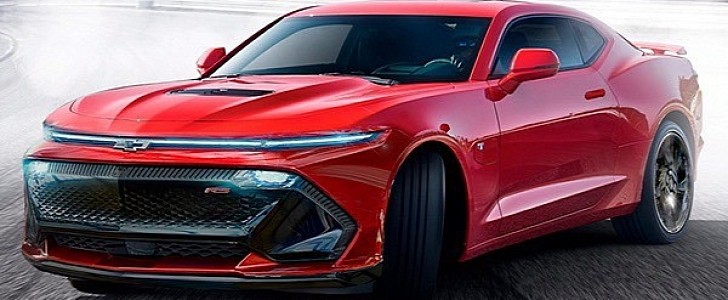
A Camaro is recognizable at a glance: the stance, the proportions, the attitude of the front end, the way the rear looks ready to leap. If the Camaro EV is real, it must walk a tightrope between nostalgia and reinvention. Electric powertrains don’t automatically make cars look futuristic. Sometimes they simply change packaging—battery placement, cooling requirements, and aerodynamics.
Yet the visual story matters. An electric muscle car can’t afford to be apologetic. It has to look like it means business. That means sharper lines, purposeful aerodynamics, and lighting signatures that feel like identity rather than decoration. Even the absence of tailpipe hardware becomes an opportunity: a canvas for new visual drama.
Curiosity grows fastest when design hints at intention. The silhouette should stay familiar enough to ignite memory, but the details should whisper: this is not a museum exhibit. It’s a new species.

The Battery Question: Performance vs. Practicality
Every EV conversation eventually returns to the battery. Not because it’s a technical footnote, but because it governs the everyday reality of the car. The Camaro EV would need to balance capacity, weight distribution, thermal management, and charging behavior—all while keeping the performance focus intact.
Weight is the inevitable elephant in the room. Batteries add mass, and mass can influence handling, braking feel, and tire wear. The antidote is engineering: smart packaging, chassis tuning, and a distribution strategy that avoids turning the car into a lumbering brute.
But there’s another angle to consider: EVs often deliver consistent performance without the same decline patterns that combustion power can exhibit during repeated acceleration runs. Regeneration can also be tuned to behave like a performance feature rather than a gentle courtesy. The key is whether the Camaro EV can translate battery management into confidence, not compromise.
This is where promise becomes strategy. The car doesn’t only have to be fast—it has to remain fast, repeatably, with a driving personality that doesn’t fade when the road turns busy or the driver grows ambitious.
Sound, Feel, and the Psychology of Speed
Electric power changes how the car communicates. Combustion engines provide audible feedback and mechanical theatre: the rising pitch, the vibration in the cabin, the drumbeat of acceleration. EVs can replicate certain elements through speaker-based sound design, but the emotional meaning of sound is more complex than mere volume.
A Camaro EV would likely lean into the concept of “audible character.” Not imitation, but style. A synthetic note could add menace, while the lack of exhaust rumble could make acceleration feel cleaner, sharper, and more clinical—depending on tuning.
Feel, too, becomes essential. Steering weight, throttle mapping, brake regeneration blending, and suspension response will determine whether the car feels muscular in the way drivers expect. A great electric muscle car should make the driver feel like the machine is listening closely. Short and long sensations should alternate—quick thrust followed by controlled composure. The goal is not monotony. The goal is a rhythm that encourages repeated engagement.
Charging Reality: The New Road Trip Myth
EV range anxiety has evolved, but it hasn’t disappeared. It has adapted into planning behavior: route selection, charger availability, and time budgeting. A Camaro EV aimed at enthusiasts must address this without turning ownership into a spreadsheet exercise.
If fast charging is accessible and charging curves remain strong, the experience becomes less about fear and more about freedom. Yet the narrative matters. People don’t want a car that merely functions. They want one that expands what feels possible.
Here, curiosity plays a role: what if the Camaro EV could offer performance runs that don’t punish daily life? What if charging stops felt like brief intermissions rather than interruptions? That’s the sort of reassurance that transforms skepticism into admiration.
Technology and the Driver: More Than Spec Sheets
Performance is not only horsepower and torque. It’s software logic: traction control decisions, stability calibration, launch behavior, and how the car interprets the driver’s intent. The most compelling electric muscle cars would treat these systems like conductors, orchestrating grip and acceleration with a sure hand.
Advanced driver assistance features could also change the relationship between driver and machine. Yet there’s a line to respect. Enthusiasts don’t want automation to dominate. They want assistance that stays in the background—like a vigilant co-pilot—while the driver remains the author of motion.
If the Camaro EV truly aims to be an electric muscle icon, it should offer multiple modes that aren’t merely cosmetic. They should change the tactile personality of the car, allowing the driver to pick aggression, poise, or economy with a simple gesture.
The Cultural Shift: Rethinking What a Camaro Must Be
The most profound shift isn’t under the hood—or under the floor. It’s in identity. Electric propulsion challenges old definitions of performance. It asks enthusiasts to value instant response, smooth control, and engineering efficiency without losing emotional heat.
A Chevrolet Camaro EV, if it delivers on its promise, could become a bridge between generations: a car that honors the mythology of muscle while acknowledging the future of energy. The result could be more than a new model. It could be a reframing of desire.
Instead of asking whether it sounds right or looks familiar, people might ask whether it feels dangerous in the best way. Whether it turns streets into arenas. Whether it treats speed as an art form rather than a byproduct of combustion.
Conclusion: An Electric Camaro That Could Rewrite the Mood
The question “Chevrolet Camaro EV—Electric Muscle Car Coming?” isn’t just about whether a vehicle exists. It’s about whether a philosophy can survive a powertrain revolution. Electric muscle is not automatically less visceral. It can be sharper, more immediate, and more controllable—if the engineering is ambitious and the design is unapologetic.
What makes the idea compelling is its potential to shift perspective. The Camaro EV could ask drivers to trade some old rituals for new ones, while keeping the essence: boldness, performance, and the sensation of being in command. If that promise holds, the electric Camaro won’t merely join the future. It will insist on being part of it—loudly, even when there’s no engine to roar.