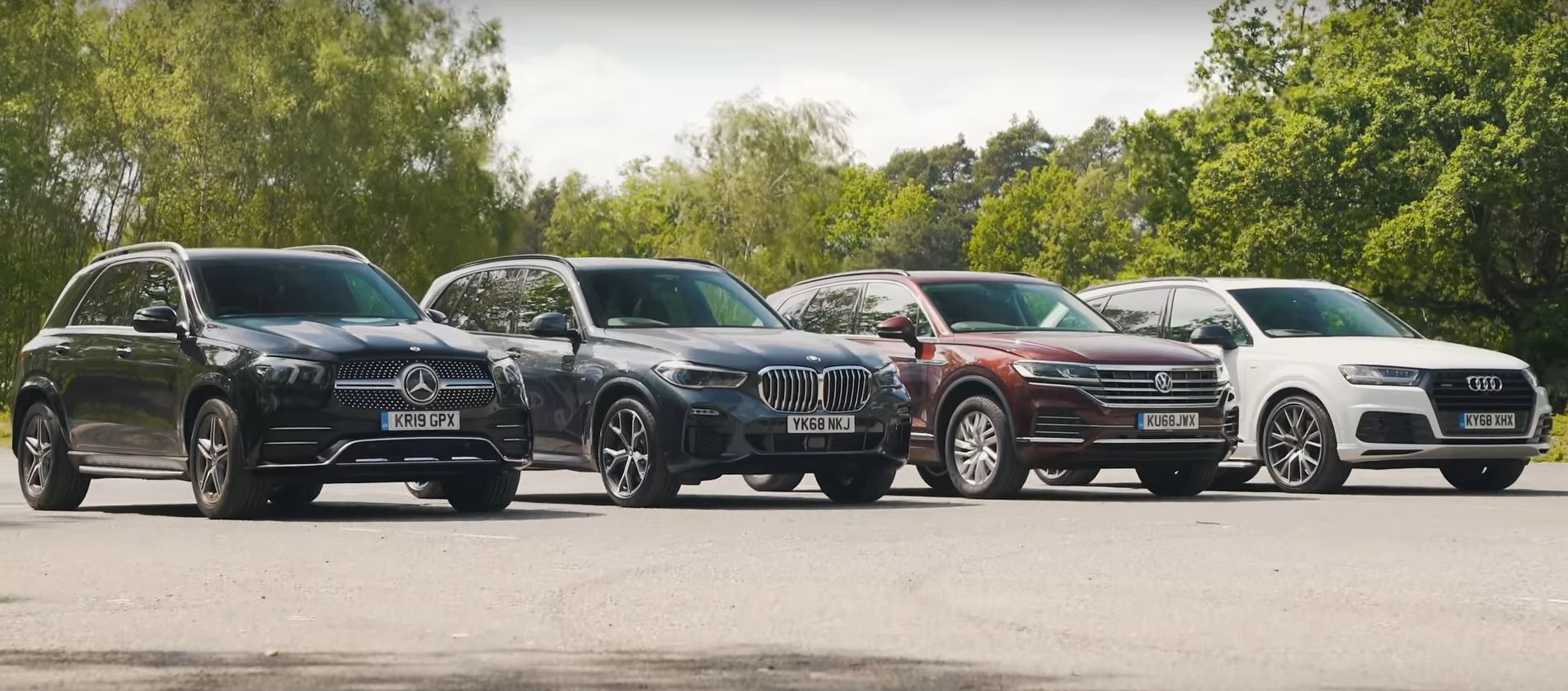
Midsize luxury SUVs have a peculiar talent: they make the ordinary feel deliberate. One moment you’re commuting through traffic. The next, you’re easing into a leather-lined cockpit where everything seems engineered for calm—sound-dampening foam, a steering wheel that feels “planted,” and dashboards that glow like a private lounge. It’s no wonder the BMW X5, Mercedes-Benz GLE, and Audi Q7 keep reappearing in the same conversations. People don’t just compare specs. They compare temperaments.
And there’s a common observation that sits beneath every test drive: these three SUVs often sound close on paper—size, power class, premium cues—yet they feel radically different when you actually drive. That mismatch is fascinating, even slightly disorienting. Why do vehicles with similar numbers create such different impressions? The deeper answer is that each manufacturer is chasing a different kind of “rightness.” Their engineering philosophies, driver-communication styles, and interior priorities converge on luxury—but they don’t converge on meaning.
The first impression: how each SUV frames the driver
The moment you settle into the driver’s seat, you can feel the brand’s agenda. The BMW X5 tends to greet you with a sense of readiness. The cabin layout often feels purpose-built for the driver’s hands and eyes, as though the SUV expects you to be active in the experience. Shorter waits between input and response can make the car feel conversational.
The Mercedes GLE, by contrast, frequently gives off a more ceremonial tone. Controls are arranged with a deliberate sense of ease, and the ride isolation can feel like a warm invitation to slow down. It’s luxury that doesn’t ask permission to be comfortable. It simply is.
Audi’s Q7 often strikes a balance of composure and precision. The interior can feel meticulously composed—surfaces and screens integrated with the confidence of a design system. It may not always feel as theatrically immediate as BMW, and it may not always cradle you quite like Mercedes. But it tends to project an “everything is accounted for” confidence.
Chassis character: comfort vs immediacy vs control
On bumpy roads, the differences stop being philosophical and start becoming physical. The BMW X5 often leans toward immediacy, meaning the suspension may feel tauter at the boundary between comfort and sport. Even when tuned for daily use, it tends to emphasize response—how the car reacts when you change your mind mid-corner or correct a line on imperfect pavement.
Mercedes GLE suspension tuning usually aims for smoothness that borders on effortless. Damping can feel more buttery, and the overall motion can seem “filtered” rather than simply cushioned. You may notice fewer sensations transmitted from the tires to your body. That’s not a lack of athleticism; it’s a different hierarchy of priorities.
The Audi Q7 brings a brand of control that feels architectural. Its dynamics often translate into a calm sense of traction and stability. The SUV may not always feel as impulsive as the X5, but it frequently delivers a confidence that comes from predictability—an ability to keep you steering with less mental arithmetic.
That common observation—similar categories, different feelings—therefore makes sense. Each SUV is optimized for how you want to think while driving. BMW encourages active collaboration. Mercedes prioritizes serenity. Audi cultivates measured confidence.
Powertrains and the art of acceleration
Luxury performance isn’t only about peak power. It’s about how torque arrives and how thoroughly the vehicle hides effort. BMW’s approach often aims for a tight, eager delivery. The vehicle may feel ready to surge at the right moment, with a responsiveness that makes overtakes feel less like chores.
The GLE often feels refined under acceleration. The experience can be less about “punch” and more about sustained momentum—like the SUV gains speed without announcing itself. That restraint is part of its charm, especially on longer drives.
Audi’s Q7 frequently balances urgency with smoothness. The powertrain character may feel calibrated for everyday pace, where passing and merging occur with minimal drama. It’s a style of acceleration that reads as competence rather than excitement.
In deeper terms, manufacturers are tuning the relationship between your right foot and your sense of control. The differences you feel are not merely mechanical; they’re psychological. BMW can amplify driver involvement. Mercedes can reduce perceived effort. Audi can keep you mentally relaxed while still moving with authority.
Interior luxury: materials, ergonomics, and the emotional temperature
When luxury works, it’s almost invisible. Seats that fit you well, steering that sits perfectly in your hands, and climate systems that don’t become noticeable. Each of these SUVs does luxury differently.
BMW interiors often highlight driver ergonomics and functional elegance. The visual language can feel clean and performance-adjacent, with digital displays and controls arranged to minimize distractions. It can feel like the cockpit of a machine engineered to be understood.
Mercedes typically leans into a more plush, lounge-forward vibe. The textures, the seat contours, and the quietness can create an emotional temperature of comfort. Even when you’re not thinking about driving, the cabin can feel like a place that welcomes pauses.
Audi’s Q7 cabin tends to emphasize precision and cohesion. The design can feel like a well-edited document: every element placed with intention. Ergonomics often support long-distance travel, and the overall ambience can be quietly premium rather than overtly flashy.
Here lies another reason fascination grows. Buyers aren’t just purchasing surfaces. They’re buying a mood—one that accompanies them daily. A luxury SUV is, in practice, a portable lifestyle statement.
Technology and driver assistance: convenience with a personality
Modern luxury SUVs come saturated with screens, connectivity, and driver assistance features. Yet the experience differs. BMW often makes the interface feel driver-centric—more about enabling action with fewer steps. Mercedes may focus on seamless usability and a calmer, more guided experience. Audi can emphasize clarity and system integration, where information appears organized rather than overwhelming.
There’s also the subtler layer: the way each SUV presents feedback. Some dashboards speak in terse confirmations. Others prefer gentle guidance. That difference becomes noticeable after hours on the road. It’s less about the feature list and more about the choreography of information.
Practicality: family life, cargo logic, and real-world comfort
Luxury SUVs earn their keep in the mundane. Grocery runs, school drop-offs, weekend trips, and the occasional “we forgot something” moment. The X5, GLE, and Q7 generally deliver strong practicality, but the “logic” can vary.
BMW often provides a driver-focused layout that still supports family hauling. Rear-seat space can feel well packaged, and cargo access is usually convenient enough for daily use. The benefit is that practicality doesn’t have to feel like a compromise to performance identity.
Mercedes GLE models often feel purpose-built for people who want comfort to be effortless. Rear-seat accommodations can be particularly inviting, with attention to how occupants settle into the ride. Cargo space tends to be usable and friendly for longer errands.
Audi’s Q7 is frequently praised for a balanced sense of space organization. The cabin can feel composed for multiple body shapes, and the overall usability of storage areas tends to work well in real life.
Across all three, fascination continues because luxury isn’t only about exclusivity—it’s about competence under everyday stress.
Which one fits you? The decision isn’t objective—it’s allegiant
If your idea of luxury is driver engagement, the BMW X5 will often feel like a willing partner. If your priority is quiet comfort and a lounge-like glide, the Mercedes GLE may resonate more. If you want measured precision with a calm sense of control, the Audi Q7 can be the satisfying middle path.
But deeper still, the “best” SUV often depends on how you experience time. Some drivers want motion to feel immediate. Others want motion to feel softened. Many want motion to feel predictable. Those preferences don’t show up in a spreadsheet. They show up in what you notice after the first 20 minutes.
Final thoughts: the magic of near-identical rivals
BMW X5, Mercedes GLE, and Audi Q7 represent the midsize luxury SUV ideal from three different angles. Their shared strengths can make the comparison feel frustratingly close—until you drive long enough to recognize each SUV’s true signature.
What makes this matchup compelling isn’t the rivalry itself. It’s the revelation that luxury is not a single formula. It’s a philosophy. And every philosophy has a voice—one that you can hear through the steering wheel, feel through the seat, and sense in the way the cabin handles the world outside. In the end, the most fascinating winner is often the one that matches your personal definition of calm, control, and confidence.