The BMW M5 Touring has always carried a certain kind of tension in the imagination: the idea of a wagon that doesn’t soften its ambition, the expectation that practicality will arrive with a thunderclap. For North American enthusiasts, that tension has recently turned into something more concrete—US confirmation, followed by the inevitable question everyone asks the moment reality gets closer: when does it arrive, and what exactly will land on American roads?
This article maps the road from confirmation to release date, but it also widens the lens. The M5 Touring isn’t merely a product launch; it’s a statement about how performance brands are rethinking utility, how emissions and regulations are shaping power delivery, and how BMW’s design language translates into a body style that traditionally favors calm over chaos. Along the way, readers will discover what to expect across key areas: timing, trims, specifications likely to matter most in the US, availability patterns, market considerations, and the practical realities of owning an M5 Touring day to day.
US Confirmation: Why It Changes the Conversation
US confirmation does more than validate a rumor. It alters the planning horizon for dealerships, logistics networks, and even consumer expectations about options, documentation, and warranty support. When a high-profile performance model is explicitly cleared for the United States, the timeline usually moves from speculation to execution. That transition is crucial because it influences how quickly press vehicles can be positioned, how soon allocations can be quoted, and how realistically buyers can plan for production slots.
There’s also an emotional dimension. For years, many enthusiasts in the US have tracked European and UK deliveries, studying images and listening for sound bites, then watching the calendar drift forward. Confirmation reorients that attention. Instead of asking whether a touring will happen, the focus becomes operational: when it will happen, which versions will show up first, and how quickly inventory will mature once orders open.
Release Date Expectations: How BMW Typically Structures Launch Timing
Release dates for vehicles at this level rarely appear as a single clean date stamped in ink. More often, the launch unfolds like a staged performance—first official confirmation, then pre-order or order windows, followed by production ramp-up and, finally, dealer delivery waves. Even when a “release date” is mentioned, it frequently refers to the moment sales commence or the first shipments arrive rather than the moment every buyer will feel the car in their hands.
With the M5 Touring, the timeline tends to hinge on homologation completion, regional certification, and the final calibration of software and emissions documentation. Some markets receive earlier allocation batches, while US stock may arrive a little later due to shipping routes, port processing, and distribution scheduling. In practical terms, buyers should prepare for a staggered rollout rather than assume a universal “day one” availability across all states.
As the US release window approaches, shoppers often begin seeing marketing updates tied to ordering and dealership previews. That is when the real countdown becomes visible: the moment configurators evolve, lead times become legible, and performance trims get pinned down with greater specificity.
What “Touring” Really Means for the M5: Space, Purpose, and Momentum
It’s easy to reduce a touring model to cargo capacity, but the M5 Touring’s value proposition is more nuanced. The body style has long been the BMW answer to a specific question: can an enthusiast car remain a daily companion without surrendering its appetite for high-speed drama?
The touring format typically brings a longer roofline and a redesigned rear area that reshapes how the cabin feels—less like a cockpit for short bursts and more like a lounge that can stretch into longer journeys. That doesn’t erase the M5’s character. Instead, it reframes the experience. The wagon body can absorb everyday logistics with a calm confidence: grocery runs, weekend gear, and family schedules—handled without turning your commute into a compromise.
Expect the load bay to be engineered with utility in mind, and the interior packaging to be designed so that the car remains usable even when the performance side is actively awake. The key is that practicality won’t be superficial; it will be structural to the ownership experience.
Powertrain and Performance: The Part That Doesn’t Need an Introduction
The BMW M5 is legendary because it behaves like a scalpel and a battering ram at the same time. In a touring variant, the promise is straightforward: you should still get rapid throttle response, confident high-speed stability, and the kind of traction that makes acceleration feel less like strain and more like inevitability.
US spec will matter, and it always does. Calibrations can shift depending on regulations and regional fuel characteristics. That means the most important performance questions for American buyers are not theoretical. They’re practical: how the car launches, how it manages heat during repeated pulls, and how it translates power into forward motion when the road stops being forgiving.
Readers should watch for details around transmission behavior, drivetrain logic, and any updates related to driver-assist integration. Even small software changes can create a new personality in how the car reacts—especially in modes that blend steering, damping, throttle mapping, and stability control.
Design and Aerodynamics: Form That Refuses to Be Background Noise
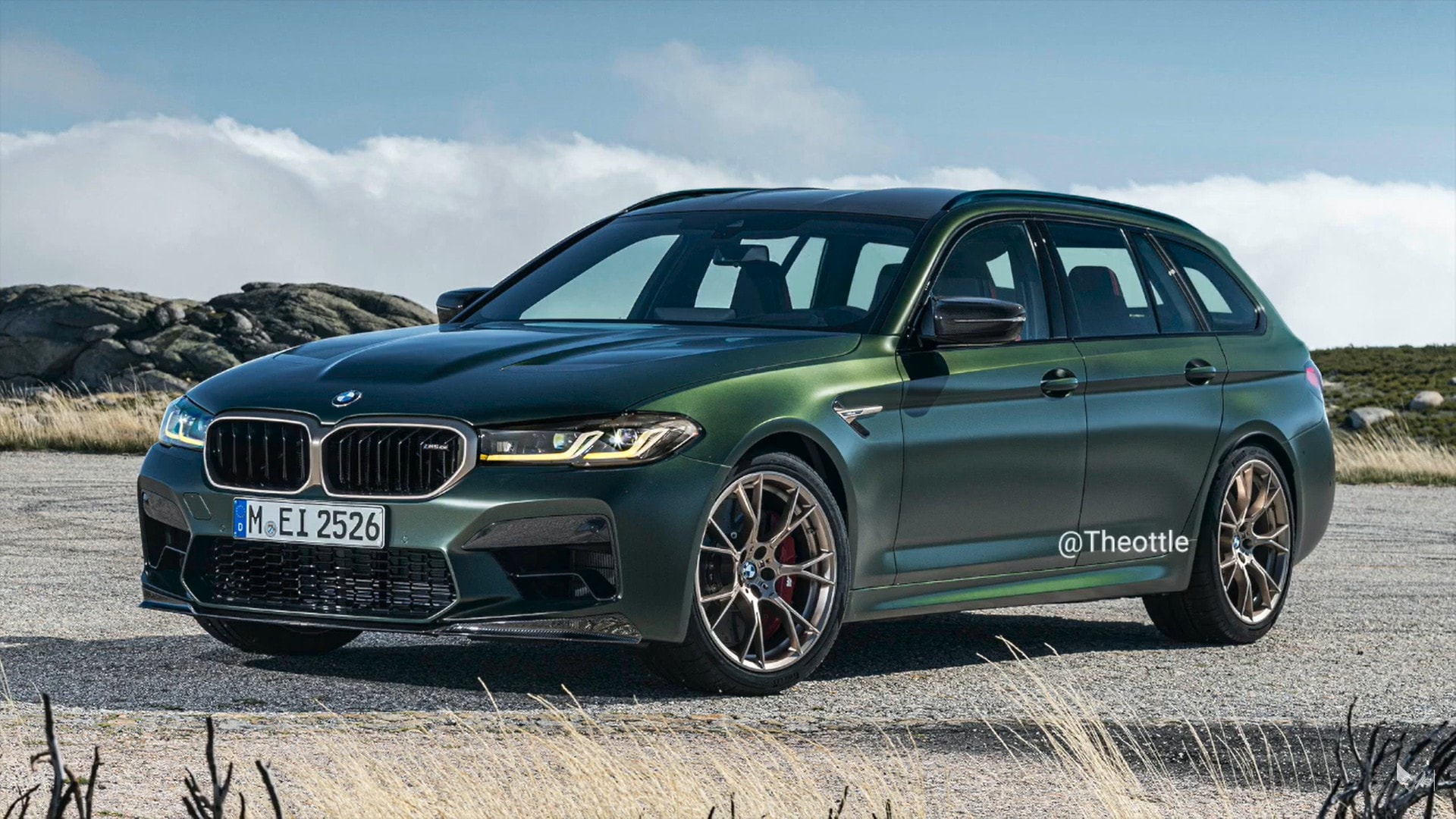
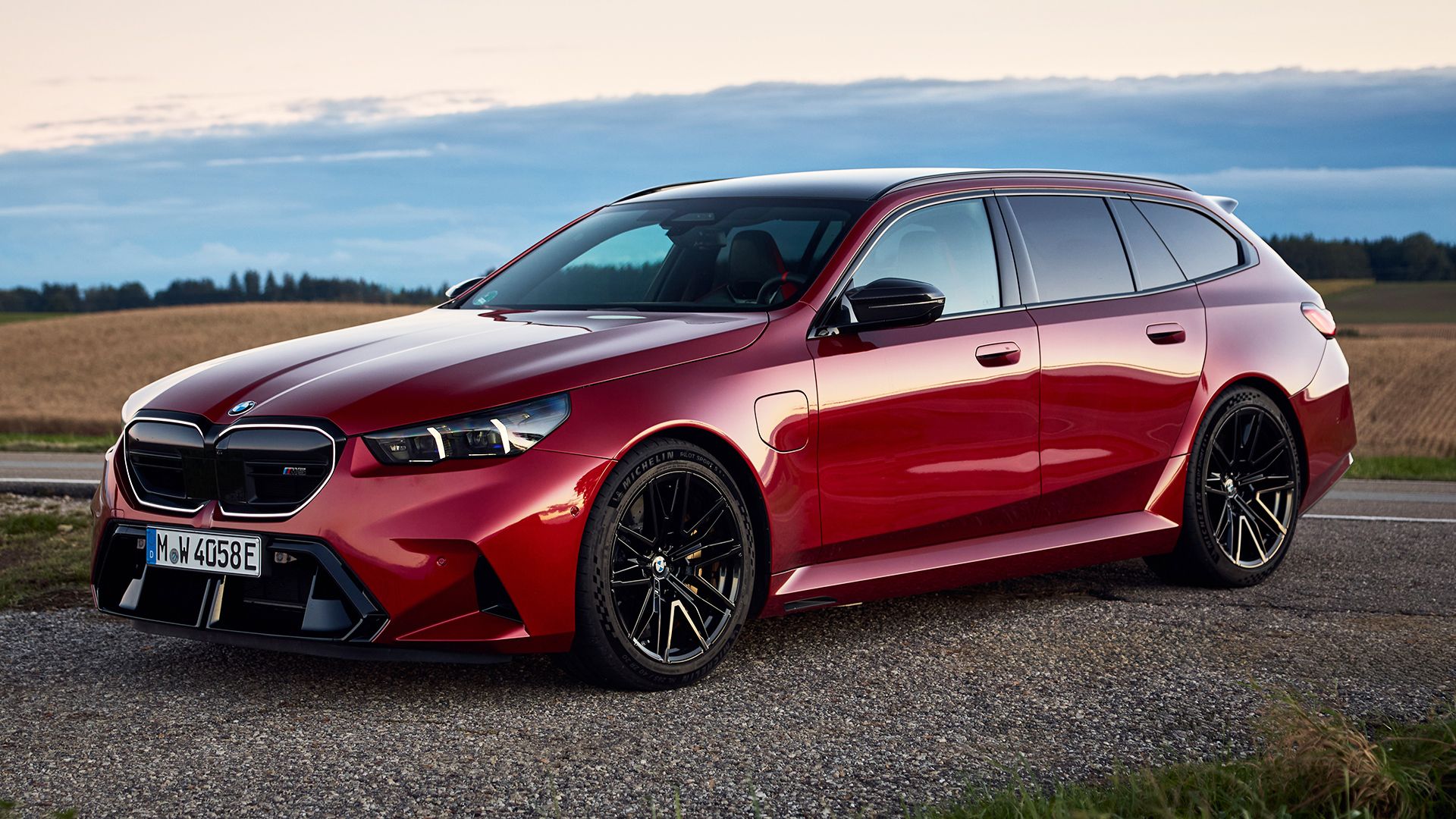
The M5 Touring doesn’t merely wear its performance. It announces it. Exterior design cues typically emphasize stance, cooling architecture, and aerodynamic efficiency. Wagon proportions can sometimes make sports cars look cautious, but BMW’s design language usually counters that by tightening visual lines and emphasizing width at key points.
Expect details that signal aggression without requiring cartoon theatrics: sculpted body surfaces, distinctive lighting signatures, and aerodynamic elements that aren’t just decorative. For US buyers, the visual identity matters because the car will live in real parking lots and real traffic—every day, not only on ideal roads.
In addition, color and wheel options will influence how the touring reads at a distance. On a wagon, the wheel design can define whether the stance looks compact or sprawling. Choose carefully, because the overall silhouette tells a story before the engine even wakes up.
Trims, Options, and the US Market Reality
When a model confirms its arrival in the US, buyers immediately begin translating global trims into local reality. Options aren’t just comforts; they can become functional. Seats determine posture and long-distance comfort. Braking packages affect confidence and fade resistance. Driver-assist tech changes how relaxed or tense commuting feels.
In the US, availability can be shaped by production priorities. Early shipments often emphasize specific configurations that streamline manufacturing. Later waves may broaden the range. This is one reason some buyers prefer to order thoughtfully rather than wait indefinitely for every possible combination.
Consider also how warranty coverage and service parts flow differ by region. Even when the vehicle is the same on paper, ownership is experienced locally. The best way to plan is to track which packages are most commonly offered in initial allocations and compare them against personal priorities: sound insulation for long highway runs, infotainment features, and the degree of personalization in exterior trim.
How to Prepare for Ordering: Timing, Allocation, and Expectations
The release date is only the beginning. After confirmation, the next phase is allocation. Allocation determines who gets the earliest builds and which configurations are easiest to source. Buyers who want the fastest path should speak with dealerships early and ask practical questions: projected build slots, estimated delivery windows, and whether the dealer can map a preferred configuration into an achievable order.
Short sentences help here: don’t procrastinate. Don’t overcommit without clarity. And don’t assume that “available” means “available everywhere.” In the US performance market, demand can compress timelines dramatically.
A disciplined approach means confirming the essentials up front: production timeline, financing or leasing terms, trade-in readiness, and the dealership’s ability to provide a firm estimate. The more you treat the process like project management rather than hope-based anticipation, the smoother the final handoff becomes.
What Readers Can Expect After Delivery: First Weeks of Ownership
Once the BMW M5 Touring arrives, the honeymoon period typically reveals two things. First, the car’s adaptability becomes obvious—how quickly you learn to trust the chassis, the responsiveness of the steering, and the ease of everyday control. Second, the car’s character emerges under different conditions: cool mornings, wet pavement, and long stretches of highway.
Because touring models are designed for use, not display, the driver learns how cargo space transforms routine. Even if the load bay rarely gets fully packed, the presence of capacity changes decision-making. Grocery runs take less planning. Weekend trips become less frantic. The wagon form is often the difference between “we should” and “we will.”
For enthusiasts, the engine’s rhythm and the car’s stability under acceleration become a repeated ritual. For families, the quietness of the cabin and the ease of handling matter just as much. The genius of the M5 Touring is that it can satisfy both personas without constant translation.
Buying Checklist Before the US Release Window Closes
As the release date approaches, keep a checklist. Verify the trim and option packages you truly want, then confirm the dealer’s expected build timeline. Ask about delivery estimates for your region and how vehicle transport works after production. Clarify which features are standard and which are dependent on packages.
Also check practical questions that often get missed: tire and wheel availability, expected service intervals, and any technology subscriptions that may be required for full functionality. These details don’t reduce excitement; they protect it.
Finally, take test-drive opportunities seriously if they become available in your area. A touring model can feel different than a sedan simply because of weight distribution, rear visibility, and how the cabin’s geometry frames the road. Those impressions turn speculation into certainty.
Final Thoughts: The Waiting Was Real, But So Is the Payoff
The US confirmation of the BMW M5 Touring feels like a door unlocking after years of curiosity. The release date—and the way it unfolds through allocations and deliveries—marks the shift from wishful thinking to real ownership planning. And when the car finally arrives, it won’t simply satisfy the performance craving. It will also reintroduce a rarer idea: speed that can share space with normal life.
For American buyers, the next chapter begins with timing and intention. When the order window opens, choose with clarity. When the vehicle lands, approach it with curiosity. The M5 Touring isn’t just a model you buy. It’s a perspective you adopt—one that proves practicality can be engineered to feel downright feral.