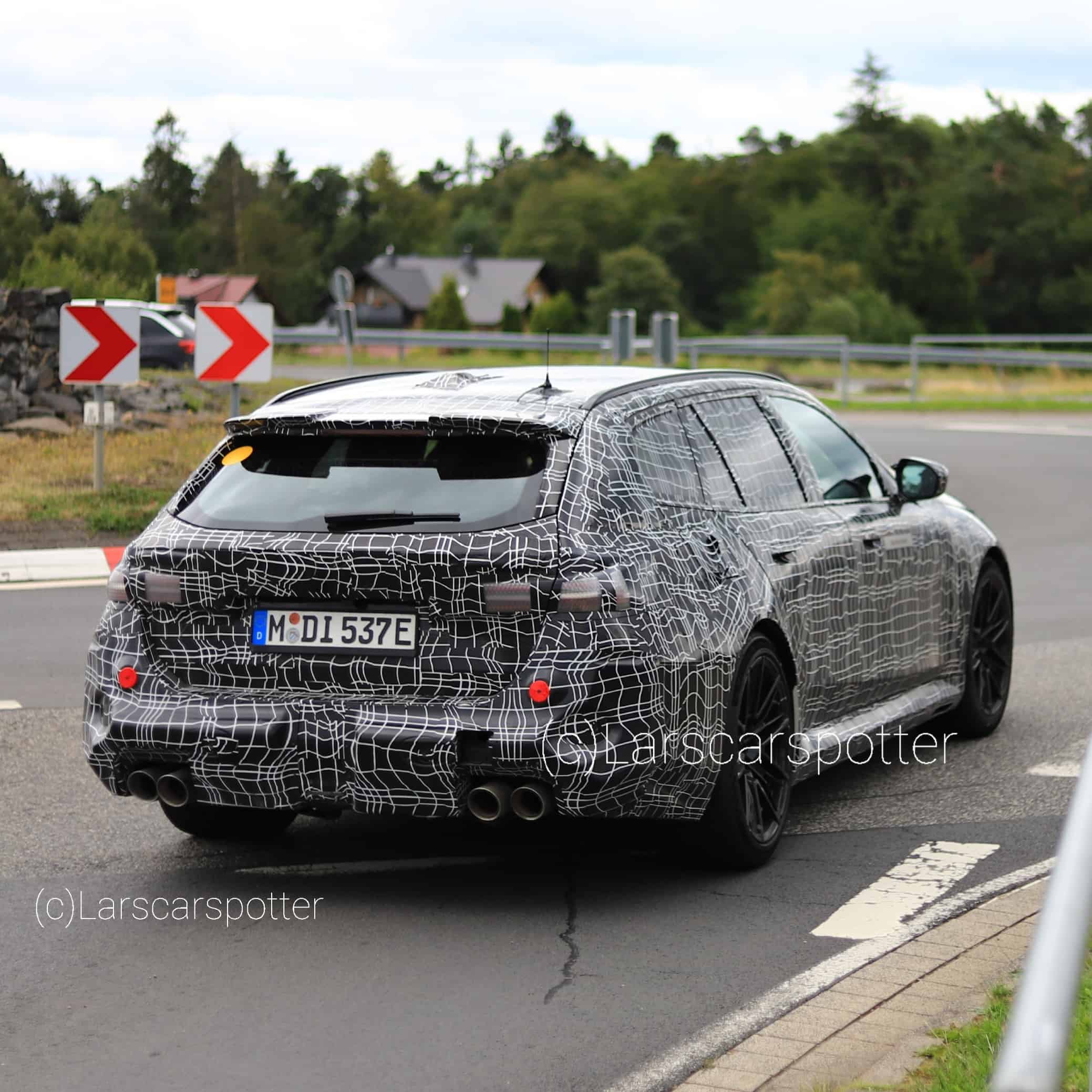
The word “wagon” can sound quaint—until the numbers are absurd, the stance is cathedral-like, and the engine tone has the kind of authority that makes traffic part like it’s listening. The BMW M5 Touring taps into that exact tension: practicality dressed in performance couture. And for American readers, the question hovering over every spy photo and every rumor isn’t whether it’s impressive. It’s whether it will ever arrive in the U.S., and what that arrival would mean for a market that already knows how to lust after speed but often treats utility as an accessory.
So what would an BMW M5 Touring represent if it becomes real stateside? A new definition of the “super wagon.” A daring recalibration of family logistics. A quiet argument against the idea that horsepower must always be paired with compromise. Let’s walk through what readers can expect—how this concept is packaged, why it fascinates drivers, and which realities might shape its ultimate fate.
What Makes the M5 Touring More Than a Longer M5
On paper, the Touring is simply an extended body style. In practice, it’s a different kind of engineering choreography. The rear overhang changes, the suspension settings are rethought, and the overall balance is tuned so the car doesn’t feel like it’s carrying furniture—it feels like it’s carrying potential. A wagon at this power level has to avoid the “limousine wobble” stereotype. Instead, the best ones behave like they’re stitched to the road, not merely bolted to it.
Expect a chassis that retains the M5’s composure under load, with traction that stays calm even when the torque arrives like a stampede. The Touring format also invites a kind of personality: one moment, it’s an executive silhouette in motion; the next, it’s a performance tool with a payload of everyday life.
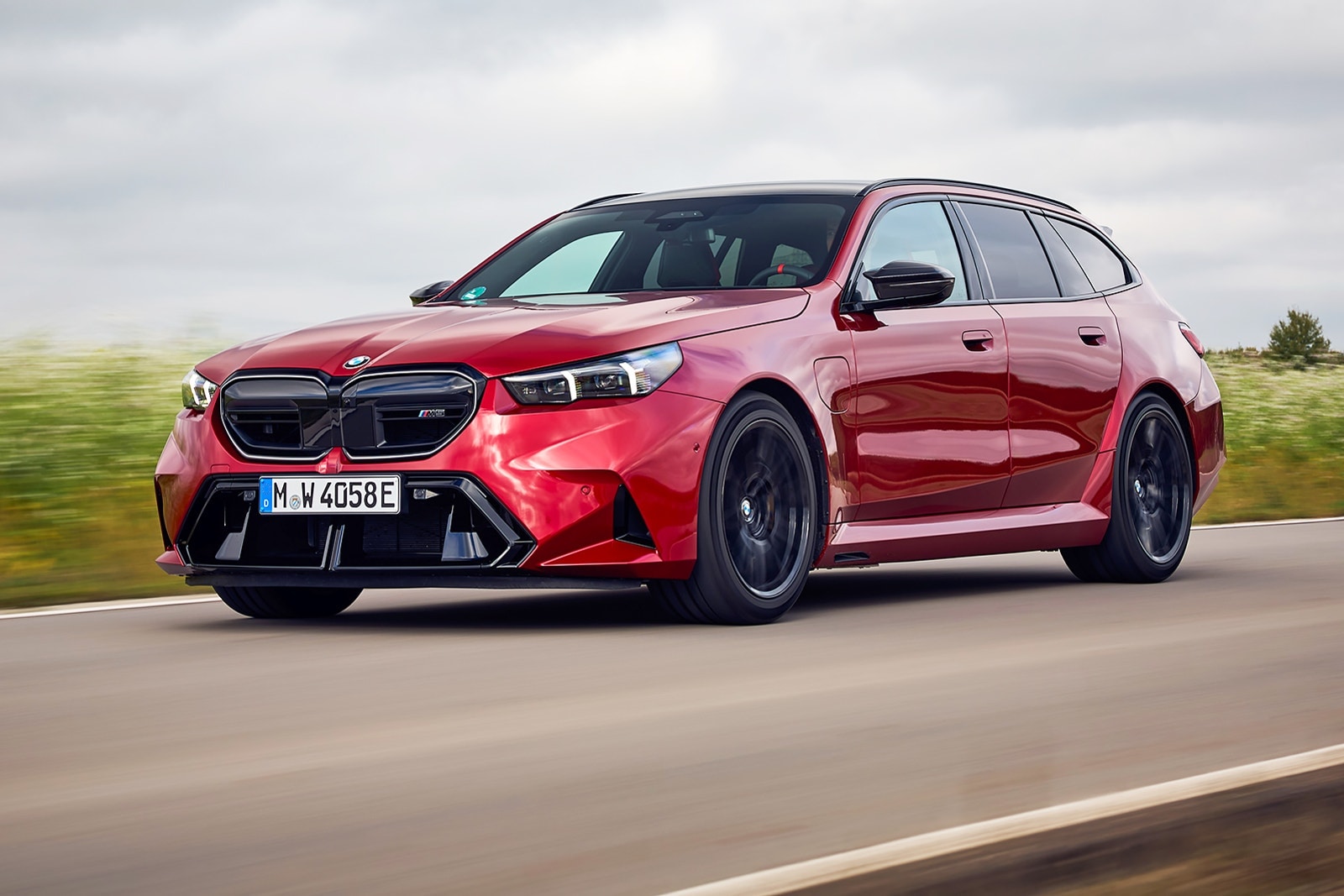
The Engine and Drivetrain: Performance as a Daily Habit
The appeal of an M5 Touring isn’t just that it can go fast. It’s that it wants to go fast regularly. That’s the subtle shift from “special occasion” supercars to a car that can absorb commuting, errands, and long drives with the same confidence as a weekend blast.
Readers can anticipate the signature M approach: immediate response, confident power delivery, and a driveline designed to remain predictable at the edge of grip. That predictability matters. When a vehicle grows in length and mass, the tuning has to be meticulous so the throttle feels consistent—whether the car is gliding through a neighborhood or charging down a highway curve.
And then there’s the drivetrain drama—how torque is managed to prevent traction from turning into drama for the driver. A true super wagon should make the fast parts feel effortless, as if the car is doing the work while the driver simply steers intent.
Interior Space: When “Practical” Becomes a Luxury Feature
A wagon earns its keep in the realm of reality. The rear seat isn’t just a place to store bags; it’s a place for people, with legroom and comfort that can make longer trips feel less like negotiations and more like pleasant routines. The trunk, too, becomes a stage for daily versatility—grocery runs, sports gear, weekend luggage, and the occasional need for something larger than thought.
Expect a cabin designed for both calm and quickened attention. Short commutes should feel silent and composed. Long drives should feel indulgent. And when the road tightens, the interior should remain supportive rather than distracting—controls within reach, steering that communicates clearly, and seats that keep posture from collapsing when cornering becomes ambitious.
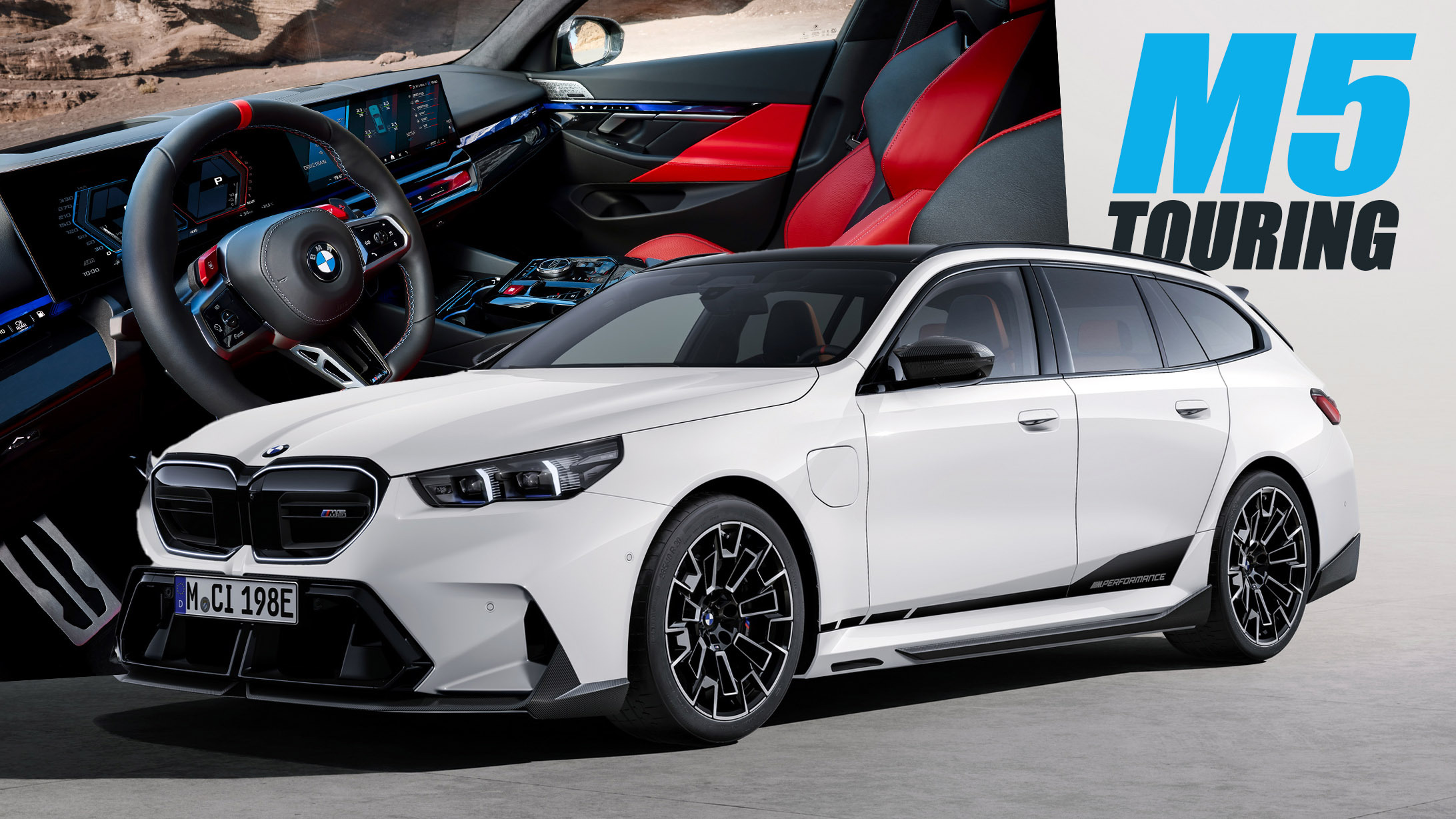
Driving Dynamics: How a Wagon Handles Like It Means It
Handling is where the M5 Touring either earns respect or invites skepticism. A wagon at this level must balance stability with agility. Too soft and it feels like a boat; too stiff and it punishes comfort. The best tuning threads the needle: it absorbs imperfections while maintaining a crisp sense of direction.
Readers should expect a drive character that can shift temperament. In everyday mode, the car should feel civilized—smooth power, manageable throttle mapping, and suspension compliance that doesn’t advertise every pothole like a billboard. In sportier settings, the response sharpens. Steering weight becomes more intentional. The car communicates grip through the tires rather than through harshness.
There’s also the question of body control under acceleration and braking. A longer car can be harder to keep composed, especially during aggressive transitions. The Touring’s success will be measured in those moments—when the nose dips, the rear settles, and the car either stays composed or starts to feel unsettled.
Tech and Infotainment: Convenience With a Performance Spine
Today’s high-performance vehicles increasingly rely on software as much as metal. Readers can expect a cabin that’s saturated with modern interfaces—digital instrumentation, driver-assistance features, and infotainment systems built to reduce friction rather than add it.
But the most important technology in a super wagon is the kind that supports the driver without hijacking the experience. That means intuitive controls, responsive navigation, clear feedback for media and settings, and driver profiles that remember preferences. When the car has this much capability, the interface should behave like a well-trained co-pilot—present, helpful, and never distracting.
In addition, performance-related systems likely play a role: traction management, stability calibration, and selectable driving modes. These systems should feel like they refine the car’s character rather than blunt it.
Safety and Ownership Reality in the U.S.
If the BMW M5 Touring lands in the U.S., it will face the full spectrum of ownership concerns. Safety equipment isn’t just about compliance; it’s about confidence. Expect a package of driver-assistance technologies designed to help on highways and in daily traffic—features that reduce workload during long stretches and make parking maneuvers less stressful.
Then comes practicality beyond the trunk. Reliability expectations, warranty terms, maintenance scheduling, and service network coverage matter immensely. A performance wagon isn’t purchased like a disposable appliance; it’s purchased like a long-term commitment. Readers will look for clarity on parts availability, tire considerations due to performance fitments, and how brake wear behaves with spirited driving.
The Market Question: Would Americans Actually Buy It?
On sentiment alone, the idea is irresistible. The U.S. already understands fast cars that deliver everyday benefits. Yet consumer behavior is complicated. Many buyers in America chase either maximum utility (trucks and crossovers) or maximum performance (sports sedans and supercars). A super wagon asks for a rare kind of taste: one that values speed and space in the same breath.
However, American tastes have evolved. Lifestyle performance—cars that can carry gear, passengers, and momentum—has become increasingly mainstream. The BMW M5 Touring fits that shift like a glove. It doesn’t ask buyers to choose between image and function. It offers an elegant refusal to compromise.
If pricing and supply align, it could become a niche icon. Not a mass seller, but a car that draws attention for all the right reasons—because it looks purposeful, drives powerfully, and still makes room for life.
What Readers Should Watch Next
Rumors are only half the story. The other half is evidence: homologation details, emissions compliance, packaging strategy, and distribution plans. Buyers should also watch for how BMW configures the Touring for American preferences—options, trim naming, standard equipment, and the availability of driver-assistance technologies consistent with local regulations.
There’s also the experiential layer. Test-drive impressions will reveal the truth about everyday usability: visibility through the rear, seat comfort on long drives, trunk access, and how effortlessly the car fits into real parking situations. A super wagon can be brilliant on paper and merely adequate in a grocery-store parking lot. The difference will be felt in the details.
Conclusion: The Super Wagon Thesis
The BMW M5 Touring is a persuasive proposition: a performance machine with the manners of a well-designed daily driver. It suggests a future where practicality doesn’t dilute excitement—it amplifies it. For American readers, the real thrill lies in possibility. If this vehicle arrives, it won’t simply broaden the lineup. It will reshape what people believe a high-performance car can be.
And if it doesn’t arrive, the fascination won’t vanish. It rarely does. A super wagon is the automotive equivalent of a well-kept secret—one that keeps calling attention from behind tinted glass, waiting for the moment it decides to step fully into the spotlight.