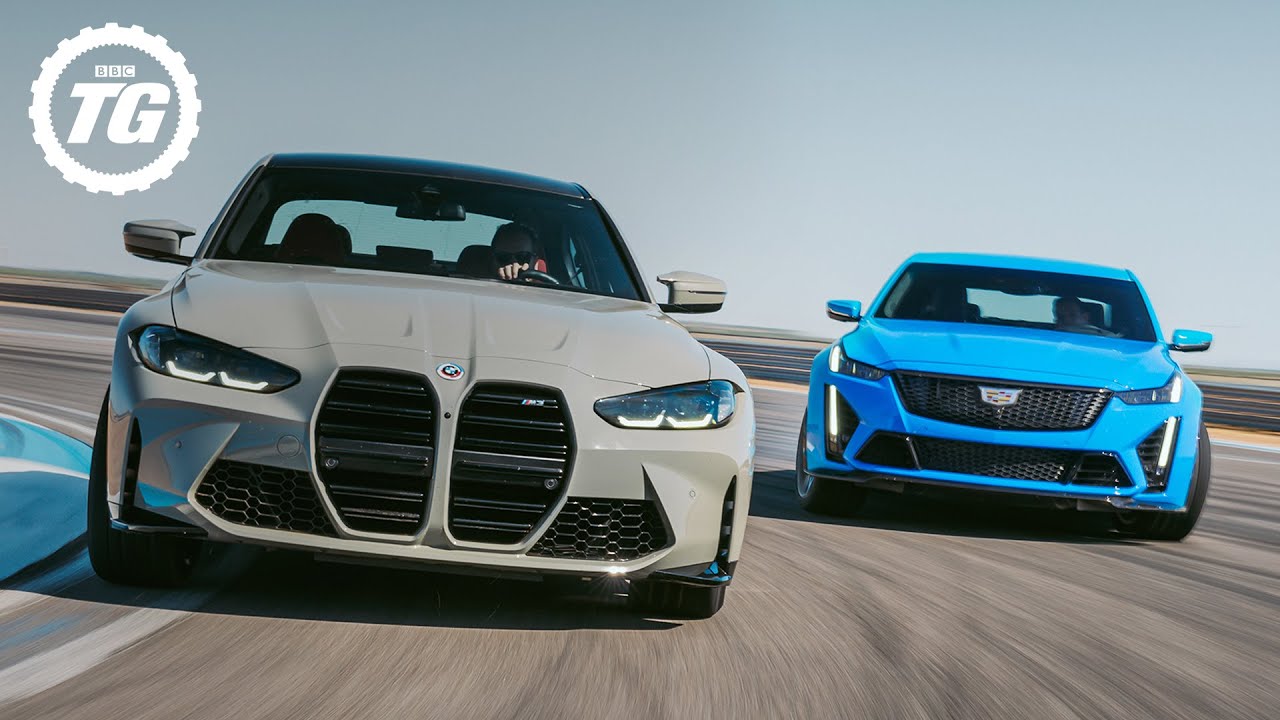
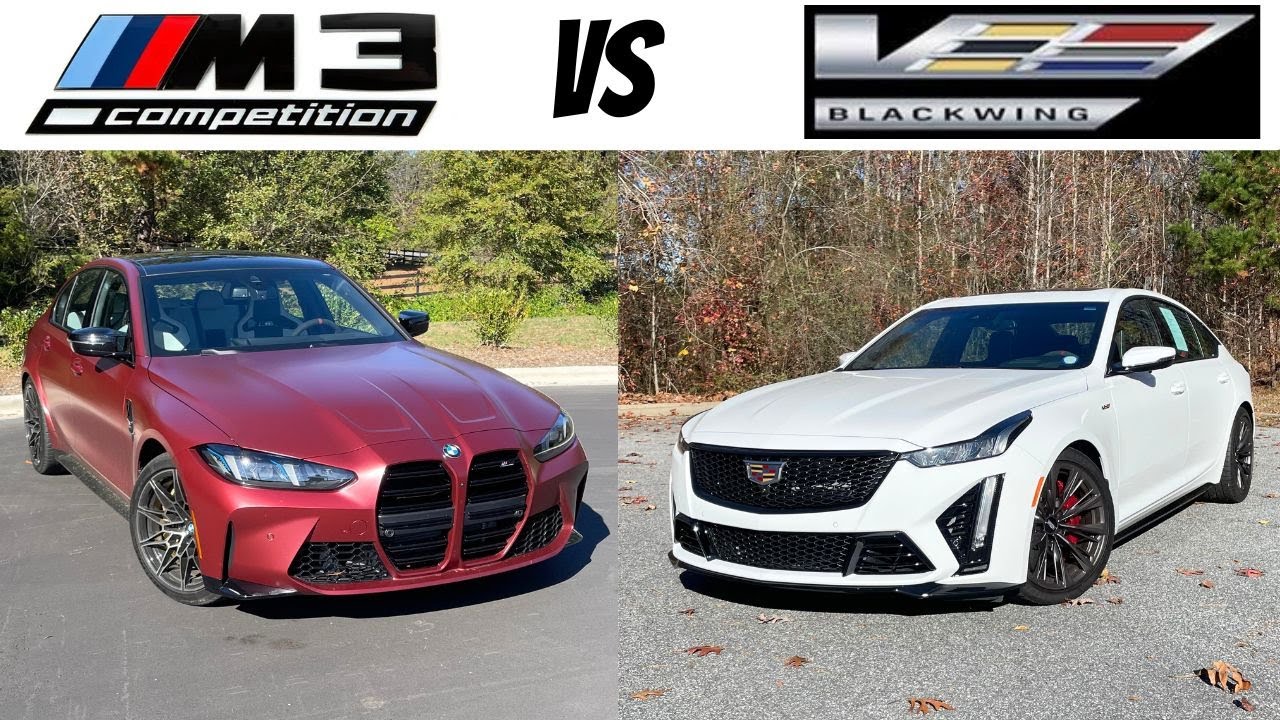
The driveway is an amphitheater. Headlights flare like proscenium lamps, taillights write brief equations in red, and the argument—always slightly romantic, always a touch irrational—begins. On one side sits the BMW M3, a sedan that carries its performance with German precision and a certain theatrical restraint. On the other side waits the Cadillac CT5-V Blackwing, the rare American machine that treats speed as an artisanal craft rather than a brute-force gesture. If you’ve ever wondered why enthusiasts keep comparing these two, you’ve noticed the surface-level headline: one is a European scalpel, the other an American sledgehammer. But the fascination runs deeper.
Some observers claim the showdown is predictable—European refinement against domestic muscle. Yet the more you look, the more the story turns into something richer. It becomes an inquiry into character: how each car translates torque into drama, how each platform defines “driver involvement,” and why the manual option, in particular, still feels like a rebellious ritual. This is a manual sedan showdown, yes—but it’s also a duel of philosophy, engineering intention, and emotional ergonomics.
Two sedans, two temperaments
At first glance, both machines promise high performance in a form factor that’s almost stubbornly conventional. A sedan should be sensible. It should be forgettable. Instead, these two sedans are memorable—because they refuse to behave like mere appliances. Their silhouettes are different languages. The BMW M3 reads as compact and tense, as if the sheet metal is subtly braced for motion. The Cadillac CT5-V Blackwing looks broader, more planted, more confident in its own mass.
That difference in stance matters. Mass changes the way a car “feels” when you apply throttle. It changes braking confidence, steering effort, and the way the rear axle communicates. More interestingly, it changes how you anticipate the next input. The driver becomes an interpreter, not just a controller.

Manual transmissions: the ritual that refuses to disappear
People often talk about manuals as nostalgia. But nostalgia is too simple a word for what’s happening here. A manual transmission is a synchronization exercise. It asks the driver to choreograph time—clutch engagement, shift timing, throttle blip, and the subtle suspension of judgment between gears. In a world of paddle shifters that can seem instantaneous, a manual introduces friction of a human kind: the car waits for you to complete the sentence you started.
The M3’s appeal lies in its ability to make that waiting feel deliberate. The shift action can feel crisp, the rev matching can feel satisfying, and the chassis seems willing to follow your intentions rather than contest them. Meanwhile, the CT5-V Blackwing carries a different kind of manual charisma. Its power delivery tends to feel more “burst-oriented,” which transforms each upshift into a brief recalibration moment. Downshifts become not just corrections, but emotional punctuation.
Here’s the common observation: “Manuals are fun.” But the deeper fascination is the way manuals alter your relationship with the car. You stop consuming speed and start participating in it.
Engine character: how torque becomes emotion
Performance isn’t only about peak numbers. It’s about where the car chooses to live. The BMW M3 tends to emphasize a willingness to rev, a briskness that makes acceleration feel like a rising tide. The CT5-V Blackwing, with its V8 presence, can feel more muscular at lower ranges, with torque arriving like an argument that doesn’t need persuasion.
This difference influences driving style. In the M3, you may find yourself leaning toward mid-to-high revs, using the engine’s responsiveness to keep momentum. In the Cadillac, you may rely on the immediacy of torque to turn corners out of slower speeds, letting the car pull rather than asking it to “catch up.” Neither approach is objectively superior. They’re different dialects of speed.
And that’s why enthusiasts keep circling this comparison. It’s not about which engine is “better.” It’s about which engine makes you want to do the next pull, the next shift, the next turn-in.
Chassis and steering: precision versus confidence
The BMW M3 often draws praise for its composure. Turn-in can feel sharp, and steering response can feel like it arrives a fraction of a second earlier than your brain expects. That kind of feedback is intoxicating. It lets you calculate risk with a greater sense of clarity—like receiving the weather forecast before stepping outside.
The CT5-V Blackwing, by contrast, can feel more like confidence made tangible. It’s not only about steering rate. It’s about how the car behaves under load and how quickly the suspension settles into a stable stance. Instead of asking you to thread a needle with microscopic correction, it can invite a more assured, weight-shift-friendly driving rhythm.
There’s a reason drivers describe one as “tight” and the other as “planted.” They’re both correct. They just refer to different aspects of chassis personality—one emphasizes reactive immediacy, the other emphasizes composure under momentum.
Brakes, grip, and the art of repeatability
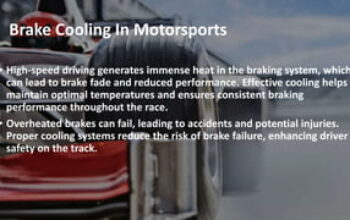
In a manual sedan showdown, braking isn’t a minor detail. It determines whether the car feels brave or merely fast. If brakes have consistent bite, you can approach turns with a stable cadence. If they fade or require excessive modulation, the confidence loop breaks.
Grip is equally important, but grip has layers. You feel it through the steering wheel—through tire compliance, through transient stability, through the way the car allows slight error without dramatizing consequences. That’s why some cars feel “predictable” even when they’re quick. Predictability is psychological as much as mechanical.
Repeatability—the ability to perform the same maneuver again with less drama—is often where the fascination becomes devotion. It’s easy to be impressed once. It’s harder to be impressed repeatedly.
Design and presence: the theatre of daily usability
Both sedans are intended for more than track fantasies. They have to live in traffic, commute in the rain, and still look good when parked near a curb. Design isn’t superficial; it affects how often you want to drive. The M3’s styling tends to communicate engineering intent. The CT5-V Blackwing communicates authority, like a luxury suit with an engine hidden under the lapel.
Interior ergonomics shape the manual experience too. Pedal placement matters. Shift lever feel matters. Driver visibility and seat support matter. A car can have astonishing performance, yet if the cockpit doesn’t fit your rhythm, you won’t fully access the machine’s potential.
Technology: performance without muting the driver
Modern performance cars are saturated with electronics, and that can spark a legitimate concern: will the car intervene so heavily that the driver’s agency becomes ceremonial? The answer is nuanced. Both the BMW and Cadillac have sophisticated traction and stability systems, and both can be tuned to match driving intent.
The fascination lies in how these systems are calibrated around human timing. A well-integrated traction system should enhance momentum without yanking you out of flow. It should feel like a safety net that doesn’t alter the tumbling act unless necessary.
In practice, enthusiasts pay attention to how quickly the car “reads” the situation, how smoothly it applies intervention, and whether it respects the driver’s chosen arc. Technology, at its best, becomes a silent collaborator.
Where the real difference lives: intent and mythology
Many comparisons miss the point by focusing only on output—0–60 times, power ratings, lap numbers. Those metrics matter, but they don’t fully explain why people argue about these cars at midnight. The real difference is intent.
BMW tends to engineer a sense of precision: a feeling that the car can be aimed, measured, and trusted. Cadillac tends to engineer a sense of presence: a feeling that the car is muscular and indulgent, like it wants you to enjoy the performance rather than merely survive it.
And mythology matters. The M3 has a lineage that feels like a tradition of driver feedback. The CT5-V Blackwing brings a different mythos: an American willingness to build a performance sedan that dares to be visceral.
When you choose between them, you aren’t only choosing an engine or a transmission. You’re choosing a narrative about driving. One narrative celebrates razor-edged communication. The other celebrates torque-forward theatrics.
Outro: the manual sedan romance continues
A manual sedan showdown is more than a performance test. It’s a reminder that speed can still be negotiated rather than delivered on autopilot. The BMW M3 and the Cadillac CT5-V Blackwing don’t merely compete; they interpret driving differently. One turns motion into a finely tuned conversation. The other turns it into a confident monologue.
So when the light changes and the tach needle climbs, the question becomes less “Which is faster?” and more “Which one makes you feel more alive?” That’s the deeper reason the fascination persists. It’s not simply about specifications. It’s about the sensation of being in sync—your hands, your mind, the shifting cadence of the drivetrain—and the quiet, thrilling certainty that the sedan can still be an instrument, not just a vehicle.