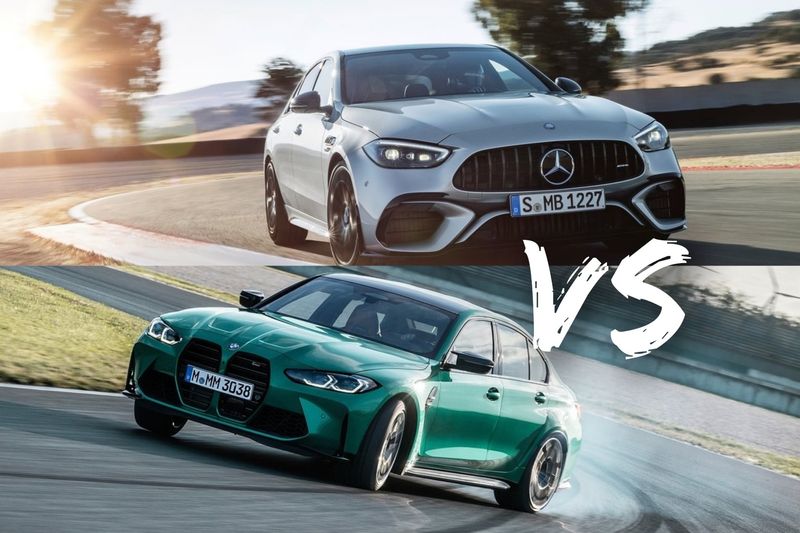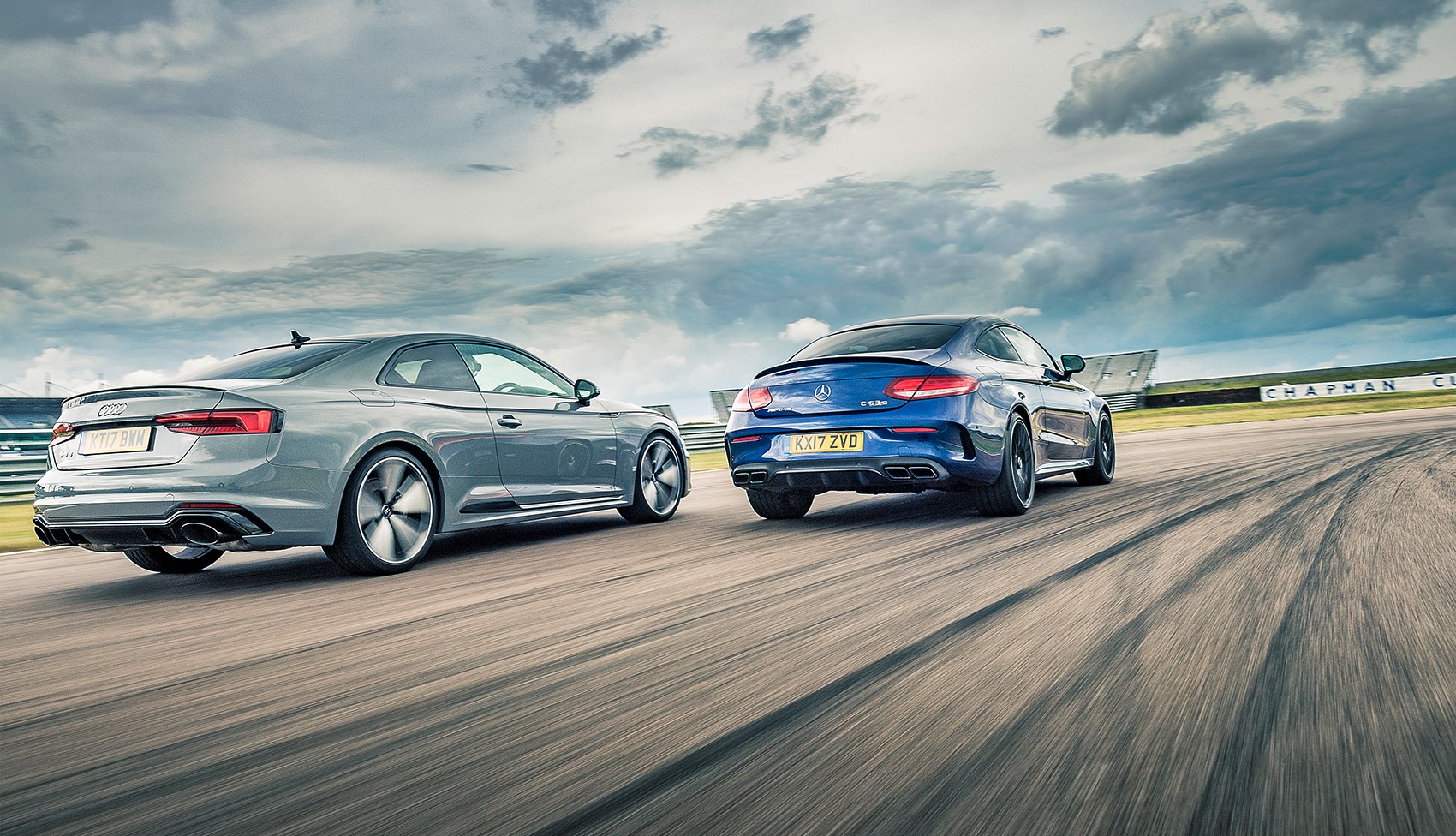
Picture this: three performance sedans, three personalities, one very real problem—choosing a “main character” when they all refuse to play second fiddle. The BMW M3, the Audi RS5, and the Mercedes-AMG C63 bring their own brand of theatricality to the asphalt. But can you feel the difference with your eyes closed? That’s the playful question hiding behind this battle: which one actually satisfies when the road stops being polite and starts being demanding? Now for the challenge. Pick a lane—any lane—then answer the next riddle: when traction wanes, when braking demands discipline, and when corners start asking for commitment, will you reach for the car that feels like a scalpel, the one that feels like a cathedral, or the one that feels like a thunderclap with a steering wheel?
Let’s settle the matter with a performance-sedan showdown that doesn’t just list numbers. It explores character: how these cars sound, how they breathe, how they persuade. Because speed is easy. Desire is harder.
Three sedans, three philosophies of speed
At first glance, the trio looks like a familiar genre: premium badges, aggressive stance, and the kind of confidence that makes parking-lot conversations sound like race commentary. Yet the engineering philosophy differs sharply.
BMW M3 tends to approach performance with a surgeon’s mindset. It’s about precision, composure, and repeatability—like it wants you to win laps without needing a mood swing. The steering often feels direct, with feedback that allows you to “read” grip rather than guess it.
Audi RS5 carries a different aura. It often feels more mature, more deliberate, as though it’s choosing its moment to unleash the good stuff. Audi’s approach can feel especially refined when the pace rises, balancing punch with polish.
Mercedes-AMG C63, meanwhile, arrives with an unignorable presence. It doesn’t merely accelerate—it announces. The driving feel leans into muscular drama, and that emotional intensity can be addictive, particularly when the road turns into a long sequence of invitations to be brave.
So which philosophy is your favorite: the scalpel, the symphony, or the thunderstorm?
Power delivery: where the cars either charm or challenge
Performance is more than horsepower—it’s how power arrives. The BMW M3 often excels at providing controllable thrust. You can modulate it, blend it with steering input, and keep it from overwhelming the moment. In other words, the M3 aims for the “no surprises” kind of exhilaration.
The Audi RS5 can feel like a momentum-builder. Instead of relying purely on raw instant drama, it may build excitement through a steadier pull—press the pedal, and it responds with a confident surge. The balance between eagerness and stability tends to stand out when you’re throttling mid-corner or catching the car after an unexpected weight shift.
The Mercedes-AMG C63 typically leans into emotional immediacy. Its power delivery can feel like a grin you didn’t ask for, the kind that appears the moment you select the right driving mode and let the engine sing. It’s a vehicle that often rewards commitment: when you commit, it reciprocates.
Here’s the challenge embedded in this section: pick one scenario—rolling onto throttle halfway through a turn, or grabbing full acceleration at corner exit. Which car would you trust to deliver a satisfying outcome without asking you to reset your confidence?
Traction and drivetrain: the invisible debate
Most drivers think they’re competing for acceleration. In reality, they’re competing for traction management. The M3 often shines with a setup that makes grip feel scalable. You can increase speed without the sensation of everything becoming chaotic. That’s a subtle advantage—especially on broken, greasy, or uneven surfaces.
For the RS5, traction behavior can feel more “predictable,” as though the chassis is committed to coherence. That matters in real-world driving, where pavement rarely looks like a racetrack brochure.
The AMG C63 often creates a more visceral relationship between power and the road. Depending on configuration, it can feel willing to rotate and surge forward with a sense of muscular urgency. Yet that same urgency can demand stronger driver timing—like it wants you to dance, not just step.
If you want a playful test, try this mental exercise: which car would you choose when the road texture changes mid-run? The one that stays calm, the one that stays composed, or the one that stays ferocious?
Braking feel: confidence in the pedal, not just stopping distance
Brakes are where heroes are made—or where they become liabilities. The BMW M3 often offers a firm, communicative brake feel. Pedal modulation tends to be intuitive, letting you build pressure smoothly. That can be especially useful when you want consistent deceleration lap after lap.
Audi’s RS5 can feel like it provides a controlled braking experience that suits both spirited driving and practical commuting. The key is the sense of stability—press the pedal, and the car answers without drama.
The Mercedes-AMG C63 frequently impresses with sheer stopping authority and a confident clamp-on feel. It can be wonderfully reassuring when you need to scrub speed quickly. Still, its personality may encourage more aggressive pedal inputs, and that can either delight you or catch you off guard if you’re chasing finesse.
Question: when you brake hard, do you prefer a pedal that feels surgical, theatrical, or quietly assured?
Chassis and steering: the art of staying connected
This is where the battle gets interesting—because steering is emotional. The BMW M3 tends to feel eager to follow input, encouraging you to explore the car’s limits rather than fear them. The chassis can feel planted when you’re in the zone, and the car’s balance often supports a confident rhythm.
The RS5 can deliver a more cohesive, composed sensation through corners. It may not feel like it’s trying to win a debate—it just gets you around with efficiency and grace, often with minimal fuss.
The C63 often brings an “attitude” to turn-in. When it’s on-song, it feels like a heavy boxer landing precise punches. When the road turns tricky, you’ll notice that the car communicates in a gruffer dialect. It’s not less capable; it’s just less interested in pretending you don’t have to drive.
Try a real-world challenge: choose a familiar bend and drive each car as if you’re trying to keep the steering input as small as possible. Which car rewards minimalism? Which car begs for momentum?
Cabin character and daily usability
Performance sedans aren’t only about racetrack mythology. They must also handle shopping trips, late-night highways, and the occasional traffic jam where your patience becomes a measurable commodity.
The BMW M3 often provides a driver-focused environment. Materials, controls, and ergonomics typically aim to keep you engaged. It feels like the cockpit is tailored for those who like their interaction direct and immediate.
Audi’s RS5 cabin often leans into refinement. It can feel sleek, thoughtfully laid out, and unusually comfortable for a car that wants to sprint. It’s the kind of interior that helps the day stay civilized even when the engine insists on being dramatic.
The Mercedes-AMG C63 may offer the richest sense of occasion. The experience can feel premium and commanding—like the car is ready for more than one type of road. Yet it can also feel theatrically tuned, and that personality shows up in everything from seating posture to the way you settle into the controls.
Which matters more to you: the cockpit that talks to you, the cockpit that soothes you, or the cockpit that enthrones you?
Sound and sensation: the senses are part of the performance
Let’s be honest: half the reason to buy a performance sedan is the way it makes you feel. The BMW M3 often delivers a kind of mechanical clarity—an engine note that can feel crisp, with a rhythm that syncs with your driving inputs. It’s less about brute intimidation and more about energized precision.
The Audi RS5 may strike a balance between excitement and elegance. The sound can be captivating without turning every drive into an audition. It’s the kind of soundtrack that stays classy even when you push harder.
The Mercedes-AMG C63 frequently offers a more emphatic presence. The exhaust character can feel like it’s telling jokes at high volume. That’s not everyone’s cup of gasoline, but for those who like personality, it’s hard to dismiss.
Challenge question: would you still want the same car if sound never existed? If the answer changes, your decision is about emotion, not only metrics.
So, who wins? The real answer depends on your driving tempo
A direct “winner” depends on what you value. If you want a car that feels like an instrument—highly controllable, communicative, and consistent—the BMW M3 often earns the spotlight. If you want a blend of punch and poise, with a refined demeanor that still delivers excitement, the Audi RS5 is an alluring contender. If you want visceral intensity, a commanding vibe, and a performance character that refuses to be polite, the Mercedes-AMG C63 is likely to steal your attention.
Here’s the final playful dare: take three short test loops—one in the morning, one at dusk, and one when the road is slightly unpredictable. Drive each car until your confidence settles. Then ask yourself: which one makes you feel in charge, which one makes you feel in harmony, and which one makes you feel alive?
Final verdict: choose the one that matches your personality
The BMW M3, Audi RS5, and Mercedes-AMG C63 are more than competitors; they’re three different interpretations of speed, each with a distinct rhythm of power, steering, and sensation. The best decision isn’t the one with the most impressive brochure—it’s the one that syncs with the way you actually drive.
So, which one are you picking for the next twist in the road? The scalpel that slices through corners, the refined momentum machine, or the muscular storyteller with a loud heart?