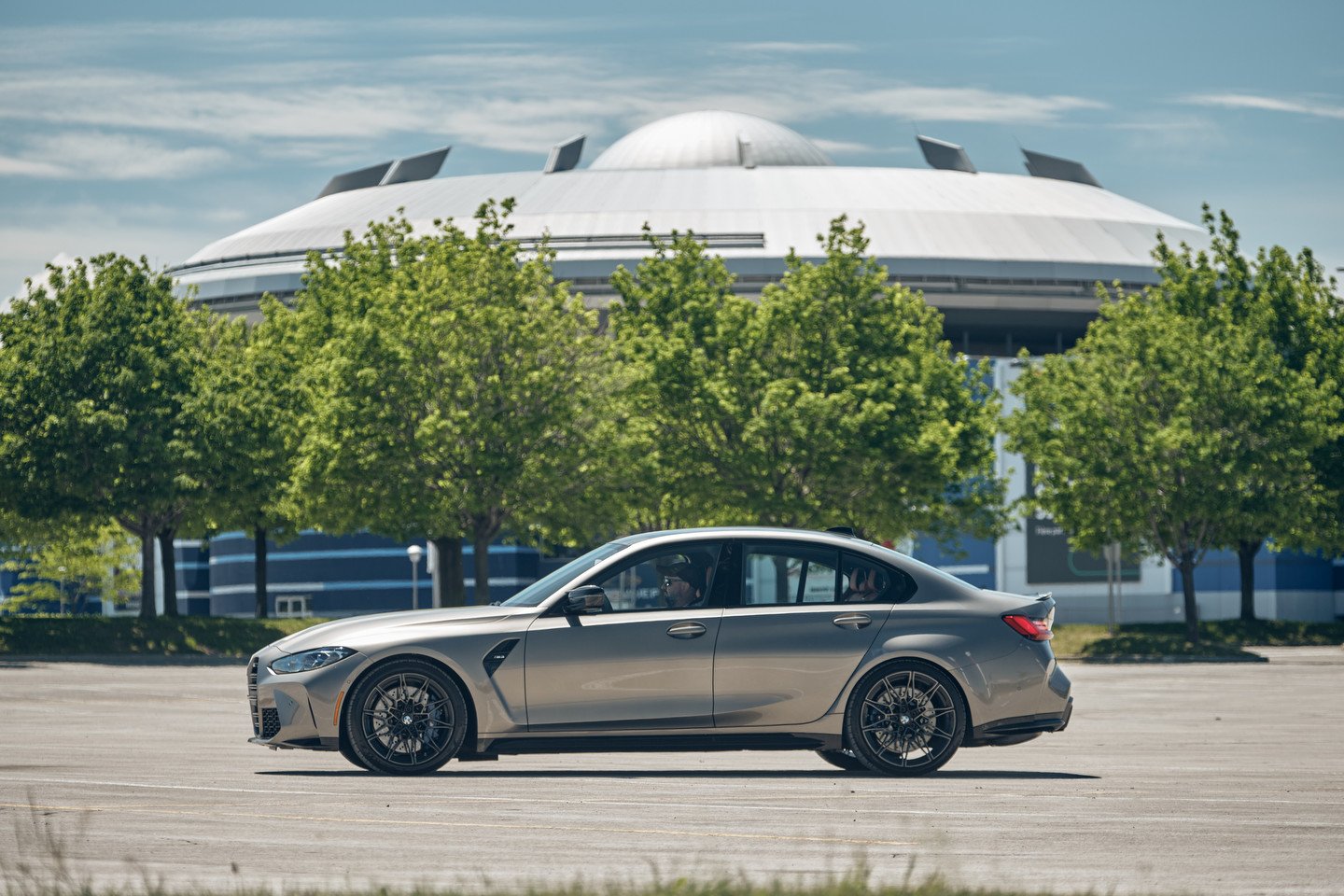
The idea of an electric BMW M3 already feels like a dare—an insistence that heritage can evolve without losing its spine. Lately, rumors have begun to circulate with a particular intensity: an electrified M3, engineered not as a polite alternative, but as a quad-motor performance sedan powerhouse. If that framing sounds theatrical, consider the implications. A traditional M3 is defined by urgency—throttle response, chassis authority, the sensation that the car is thinking in straight lines and arriving early. An electric M3 with four motors promises to reinterpret that urgency, turning traction into a living instrument and transforming performance into a kind of controlled volatility.
And yet, curiosity is the real currency here. Because the most intriguing part of these whispers isn’t merely speed. It’s perspective—the possibility that the M3’s familiar drama could shift from combustion-era theatrics to torque choreography. Suddenly, the question isn’t whether the electric M3 can be fast. It’s whether it can be unmistakably M in its feel.
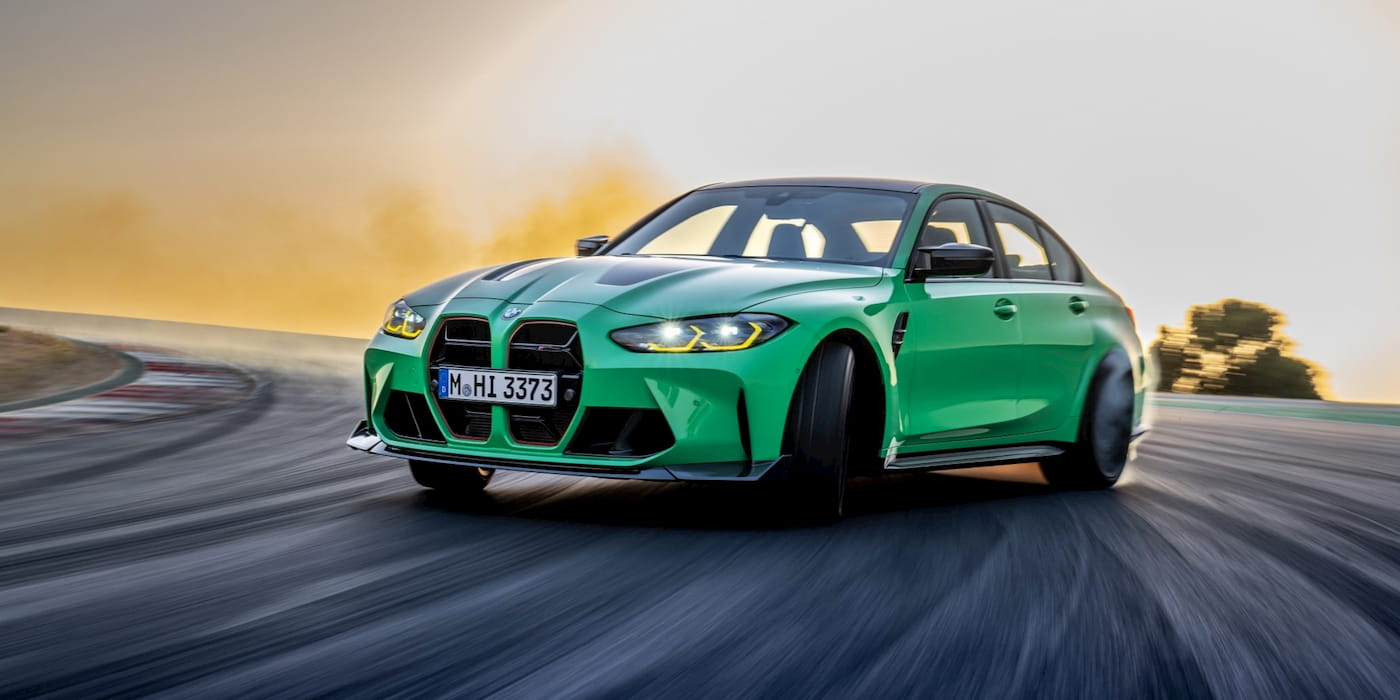
From Legacy to Leverage: Why an Electric M3 Changes the Story
Every M3 generation has carried a thesis about driving. The gasoline era leaned on sound, vibration, and the theatrical arc of power building with rpm. Electric propulsion flips the authorship. Torque arrives with almost disarming immediacy. No waiting. No lag. Just torque—available as a precise pressure you can meter with your right foot. That shift in physics invites a shift in character.
An electric M3 rumor doesn’t just suggest electrification. It suggests leverage—an ability to tune how force behaves at each wheel. That matters because an M3 isn’t only about straight-line acceleration. It’s about how the car rotates, how it grips mid-corner, and how confident it feels when the steering and throttle speak in the same dialect.
Quad-motor architecture, if real, could be the missing bridge between instant torque and true performance finesse. It’s one thing to launch quickly. It’s another to launch with intention—without overwhelming the chassis or turning every drive into a traction lottery.
Quad-Motor Muscle: The Architecture Behind the Buzz
The phrase “quad-motor” carries a particular electric glamour, but it also implies serious engineering. Four motors can distribute power with surgical precision. In theory, the system can independently command torque at each wheel, effectively granting the car a dynamic sense of balance that evolves with grip conditions.
Picture a driver entering a corner with a slight, confident commitment. If the front tires start to protest, torque can be redistributed. If the rear tires begin to lose their grip, the system can counteract with torque vectoring. The result could be a sedan that feels less like it’s being driven and more like it’s collaborating.
There’s also the possibility of distinct drive modes with different personalities—modes that don’t just change throttle mapping, but reshape how the car behaves under load. Short and long sentences both point to the same truth: torque control can become the new traction control—an expressive tool rather than a safety net.
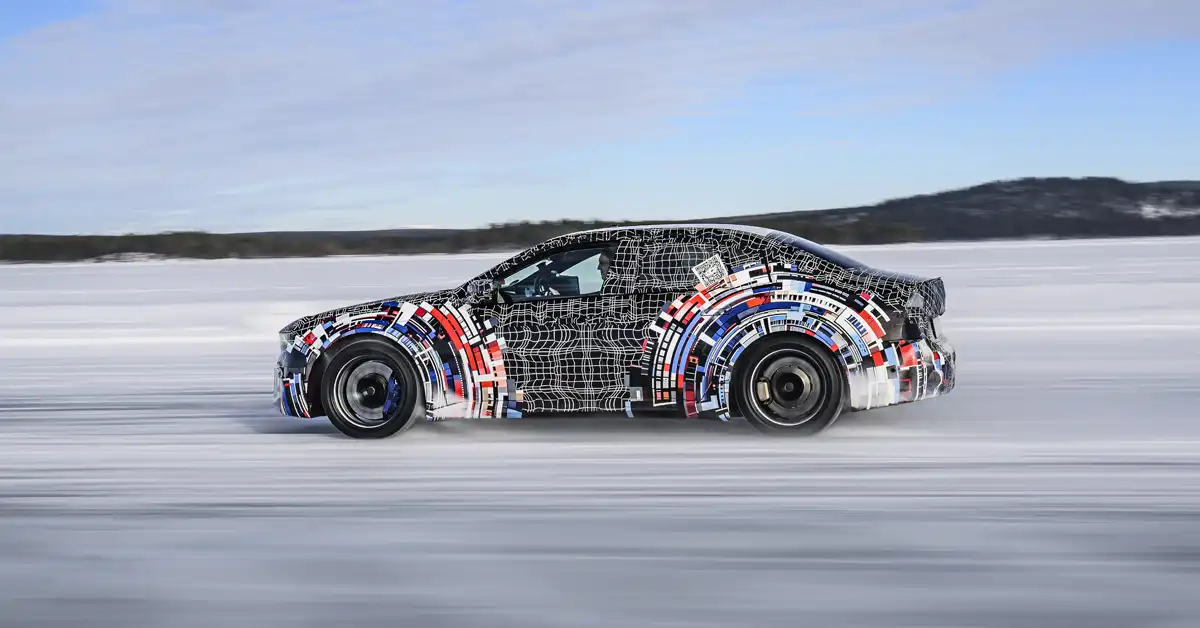
Performance That Isn’t Only Numbers: “Fast” vs. “Ferocious”
Rumors often fixate on peak output—horsepower figures, 0–60 times, and the kind of bragging metrics that fit neatly into headlines. But quad motors invite a subtler question: will the electric M3 feel ferocious in a repeatable, confidence-building way?
Electric performance can be brutally effective, but it can also become one-note if traction management is too conservative or if the torque delivery feels synthetic. A quad-motor setup, however, can potentially create layered acceleration: not just a sudden punch, but a controlled escalation that tracks the road’s mood.
That’s where perspective shifts again. Instead of asking only “How quickly does it go?” you start asking “How does it move?” The steering could feel sharper, the chassis less anxious, the weight distribution more usable. The best performance cars don’t simply outrun physics—they negotiate with it.
Torque Vectoring as Character: A New Kind of Cornering Confidence
BMW’s performance identity has always leaned on balance and crisp control. With four motors, torque vectoring could become the emotional center of the driving experience. Torque vectoring isn’t new, but quad-motor execution can make it more immediate and more granular.
Imagine exiting a corner on imperfect pavement—grip varying left to right, patches of dust or fine gravel altering the surface. A smart four-motor system can respond in milliseconds, shifting force where it’s most stable. That could translate into a more composed feel, even when the road is less than courteous.
Short sentence, long meaning: the car may not just be powerful; it may be perceptive. This kind of responsiveness can produce a different sensation entirely—less “cling and pray,” more “commit and continue.”
Battery and Thermal Reality: The Hidden Gatekeepers
Performance promises live or die by endurance. Electric cars can be stunning for a burst, then fade if thermal management can’t keep up. A rumored quad-motor M3 would need more than spectacle. It would need stability.
That means the battery system, cooling loops, and power electronics would have to operate with composure under repeated acceleration. Heat is the silent saboteur of performance consistency. The best electric sports sedans are the ones that avoid the “hero run” syndrome and deliver repeatable pace.
So the rumor’s real test becomes not just initial output, but durability of that output. Track sessions. Back-to-back launches. Long spirited drives that should not turn into slow regrets. If BMW can engineer thermal resilience alongside raw power, then the electric M3 could truly earn its status rather than merely borrow it.
Driving Feel and the M3 Signature: Will It Still Be “M”?
An M3 isn’t defined by torque alone. It’s defined by feel—steering feedback, throttle character, brake response, and the way the car communicates grip. Electric propulsion can simulate some of these sensations, but the authenticity depends on calibration, suspension tuning, and the vehicle’s overall dynamics.
There’s room for a bold interpretation. The M3’s signature could evolve into something more precise, less visceral. Or it could stay visceral, with performance mapping and chassis dynamics engineered to preserve the sense of urgency that drivers crave.
The most compelling scenario is a hybrid of intention and sensation: an electric M3 that feels sharp at low speed, insistent at mid-throttle, and commanding at full send. When everything aligns, you stop thinking about motors and start thinking about momentum.
Design and Packaging: The Practicalities Under the Visual Drama
Quad motors also raise questions about packaging. Where do the components sit? How does the center of gravity shift? Does the battery placement improve weight distribution, reduce front-end heft, or introduce new balance challenges?
Electrification often changes proportions—even when the body looks familiar. Battery mass can lower the center of gravity, but it can also alter how weight is distributed across axles. Suspension geometry and wheel sizing become more than styling decisions; they become the mechanics of emotion.
If the rumored electric M3 keeps the visual identity while modernizing the internal layout, it could deliver a familiar silhouette paired with a fundamentally different dynamic personality. That contrast—heritage outside, evolution inside—can be a powerful kind of marketing without needing to shout.
What Comes Next: The Curiosity Loop Tightens
Rumors tend to create timelines. People start projecting release windows, anticipating specs, and comparing the future to the past. But the most interesting part of this story is how the industry will respond to an electric M3 that aims to redefine what performance means in a modern sedan.
If quad-motor execution brings real torque vectoring, thermal endurance, and authentic M-like feel, the electric M3 could do more than compete. It could change expectations. Drivers may stop measuring performance solely by sprint times and start valuing control under stress, confidence through modulation, and repeatable acceleration that doesn’t collapse into heat haze.
And if BMW manages to keep the sedan’s character intact while upgrading the drivetrain into a precision tool, the “electric M3” conversation will shift from speculation to reverence.
Outro: A Sedan as a New Kind of Promise
The notion of a quad-motor BMW M3 is more than a technical headline. It’s a promise of perspective—of performance interpreted through instant torque, intelligent distribution, and a chassis that could become more communicative than ever. Whether the rumors solidify into reality will depend on engineering details that can’t be faked: durability, calibration, and the art of making power feel inevitable.
Still, the curiosity is justified. If the electric M3 truly channels ferocity through control, it could turn a storied nameplate into something startlingly current—without losing the soul that made drivers fall in love in the first place. The future, in this version, doesn’t whisper. It grips. It launches. It invites you to drive differently—and then asks why you ever wanted it any other way.