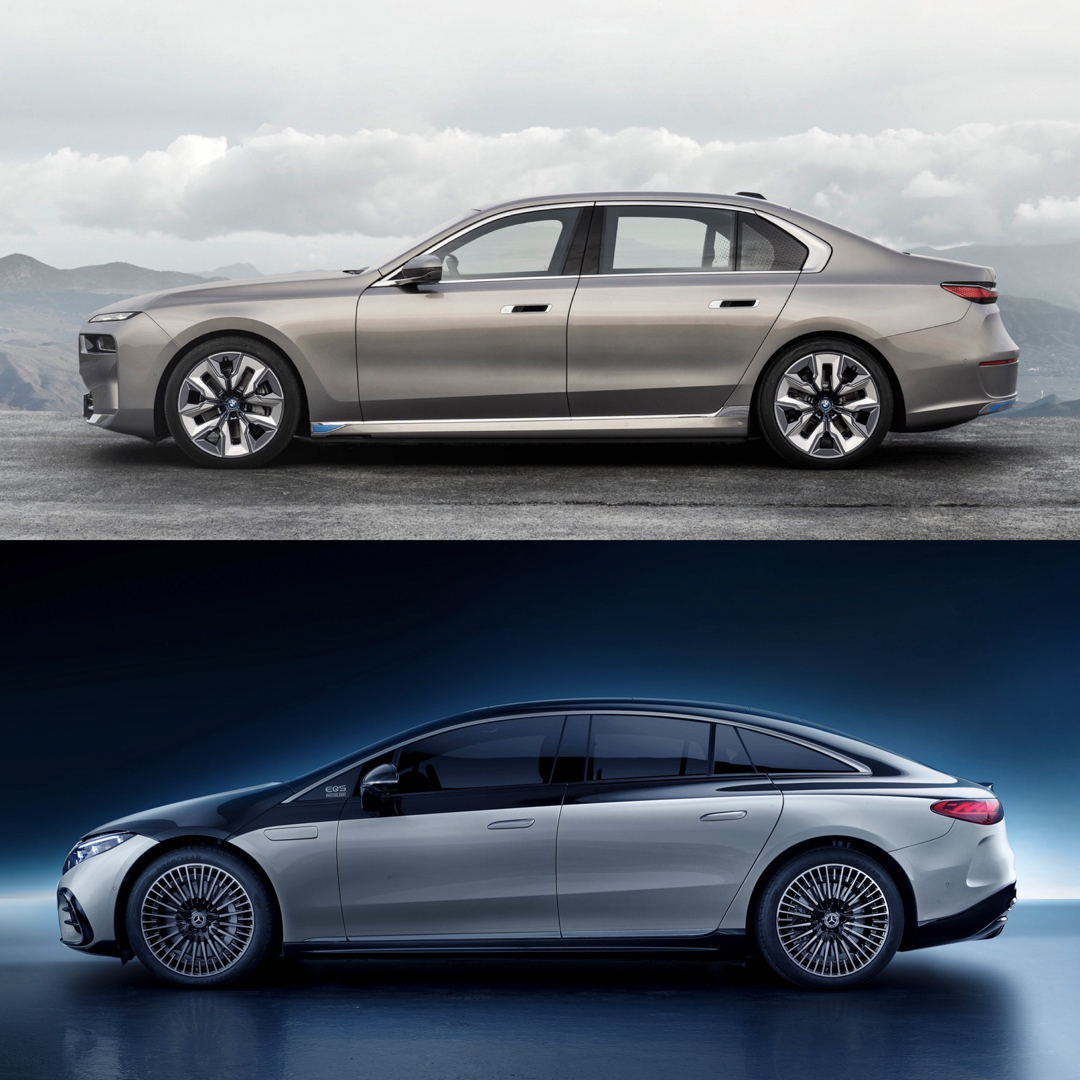
There’s a particular kind of hush that settles over a road when an electric flagship takes the wheel—one that feels less like silence and more like anticipation. The BMW i7 and the Mercedes EQS arrive with the same promise: the future, delivered with enough luxury to make it feel inevitable. Yet these two sedans don’t chase the same dream in identical ways. They translate power, comfort, and technology into distinct philosophies. And once you notice the differences, you can’t unsee them.
This is not a battle of spreadsheets. It’s a comparison of mindsets. One vehicle seems to ask, “What if elegance had a sharper edge?” The other replies, “What if serenity became an art form?” Between them sits a more intriguing question: what kind of driver—and passenger—do you want to be?
Let’s step into that tension. Let the numbers and features be the scaffolding; the real story is the emotional architecture each sedan builds around you.
Two Flagship Electric Sedans, Two Different Interpretations of Luxury
Flagship cars are often described with superlatives. But luxury isn’t just about materials; it’s about behavior—how a cabin responds to you. The BMW i7 tends to lean toward a curated sense of dynamism. Its presence feels intentional, with lines and surfaces that suggest motion even when standing still. The Mercedes EQS, by contrast, is the moving embodiment of lounge culture. It carries itself like an executive briefing that never raises its voice.
In practice, that means the experience of entering the vehicle can feel different before you even drive. The BMW i7’s interface and spatial design frequently encourage interaction—an invitation to engage. The EQS often biases the atmosphere toward passive comfort, where the technology seems to serve calm rather than stimulate it.
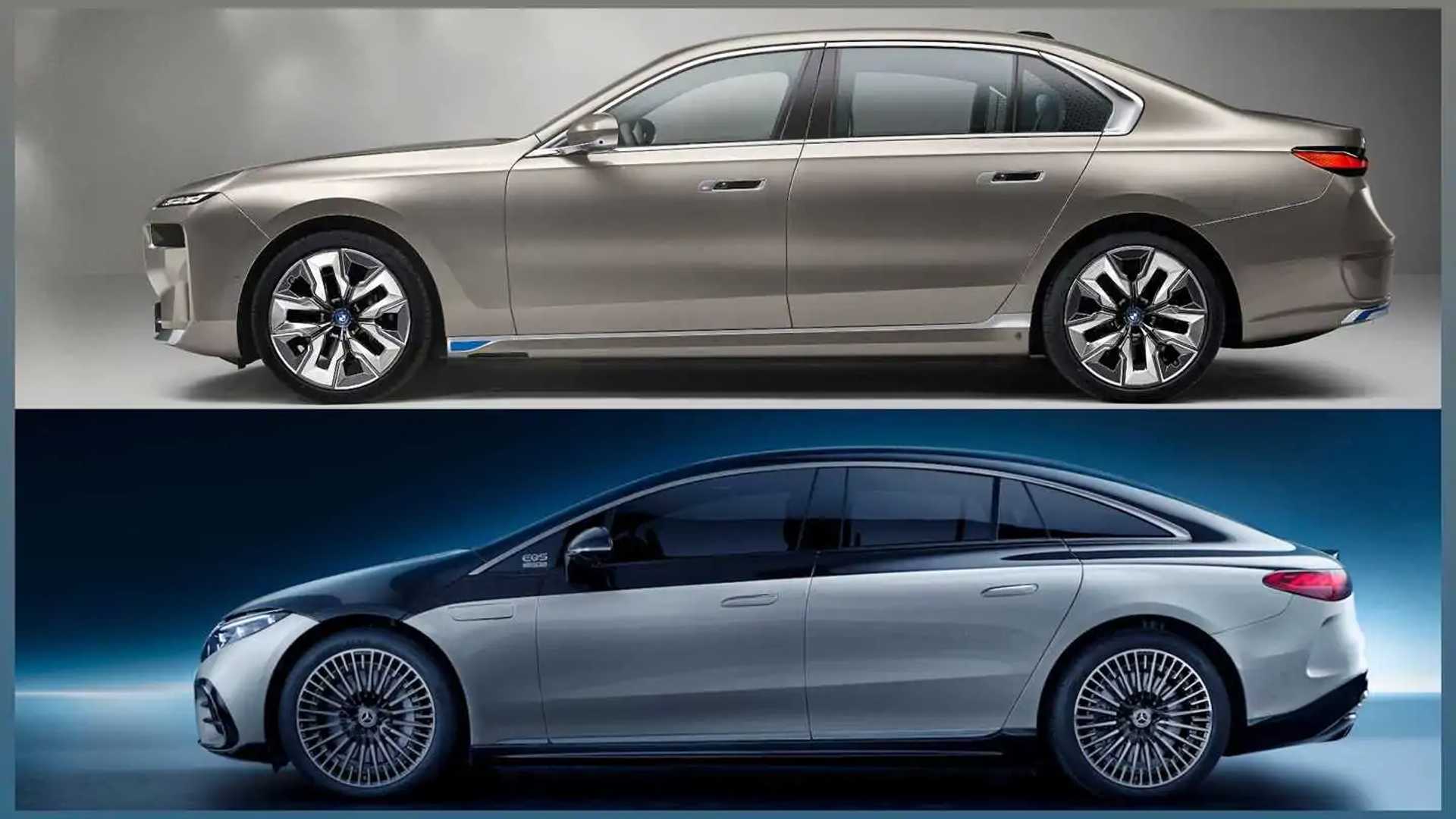
Both sedans aim high. But their definitions of “high” diverge: one scales toward precision and drama; the other drifts toward tranquility and glide.
Design Language: Presence Versus Poise
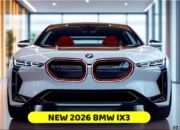
Design is where branding becomes bodily. The BMW i7 typically projects a bold, sculpted grandeur—an interpretation of “executive” that prefers confident angles and a sense of architectural solidity. You notice the way it occupies space. It looks like the car has agency.
The Mercedes EQS, meanwhile, is often discussed in terms of aerodynamic calm—smoothness that isn’t merely aesthetic. Its silhouette is an argument for efficiency and elegance at once. It feels like the car is negotiating with air, not fighting it. Even its stance suggests inevitability, as if it was always destined to be this quiet and refined.
And then there’s lighting. Both brands treat lighting as a narrative device. The BMW i7 often presents a more expressive visual signature—sharp, high-contrast cues that sharpen the sense of character. The EQS tends to lean into a softer, atmospheric signature, where illumination helps shape mood.
Ultimately, the choice of design language becomes a choice of expectation: do you want your flagship to announce itself, or to envelop you?
Cabin Ambience: The Theater of Comfort
When you sit down in a flagship electric sedan, the cabin is no longer just an interior. It becomes a microclimate with a personality.
The BMW i7’s cabin typically feels like a thoughtfully arranged command center—premium materials paired with a driver-focused philosophy, even when the car is clearly built for passengers. The interface design is meant to feel coherent and purposeful. Short sentences, crisp feedback, and a sense of control are part of the experience.
The EQS cabin often feels like a private suite. The design language prioritizes legibility and comfort, with a softer rhythm in how elements relate to each other. It’s less about “command” and more about “relaxation with intention.” The cabin’s visual serenity can make time feel slower. That matters on long drives, where fatigue is not merely physical—it’s cognitive.
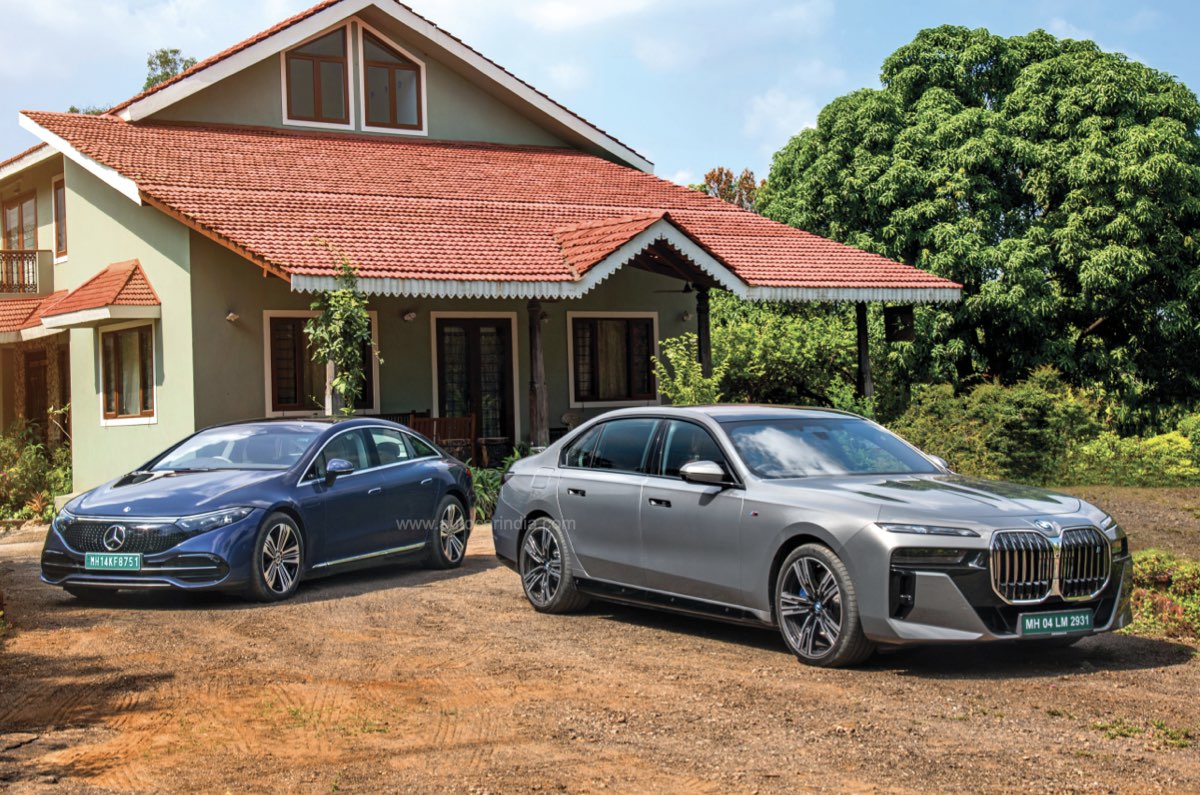
Both cabins aim to impress. But one often leans into interactive sophistication, while the other leans into restorative calm.
Technology and Interfaces: Human-Centered or Lounge-Centered?
Modern flagship EVs are essentially computers on wheels. Yet the difference lies in how they mediate between you and the machine.
In the BMW i7, technology commonly feels like it’s reaching toward the driver—presenting controls, information, and personalization in a way that implies active decision-making. It can feel like a conversation. The car responds, but it also expects you to participate. The result can be exhilarating, especially for drivers who enjoy tinkering with settings and tailoring the experience.
The Mercedes EQS tends to interpret technology as ambience. Interfaces are designed to reduce cognitive friction. Menus and controls aim to be intuitive, but the deeper message is that the car should not steal attention from the moment. Navigation becomes guidance rather than distraction. Connectivity becomes a background layer rather than a spectacle.
Both philosophies are valid. But they ask a question: do you want your flagship to feel like a partner in driving—or like a sanctuary that simply unfolds around you?
Performance and Electric Character: Instant Torque, Different Feelings
Electric sedans often share a trait: torque available at the speed of thought. Yet the way that torque is delivered can vary greatly.
The BMW i7 usually tries to translate electric thrust into a more dynamic, cohesive driving rhythm. Throttle response, steering feedback, and power delivery often feel tuned toward a sense of traction and confidence. Even when cruising, there’s a subtle readiness—an undercurrent of performance.
The EQS, conversely, frequently prioritizes composure. Its acceleration can feel remarkably smooth, like a velvet curtain being drawn. The sensation emphasizes refinement over insistence. Where the BMW may feel “engineered for engagement,” the EQS often feels “engineered for effortless motion.”
Neither is slow. Both can be quick in ways that defy expectation. The difference is in emotional temperature: BMW tends to run a little warmer; Mercedes often runs cooler and calmer.
Range and Charging: Planning as a Lifestyle
Range is the practical heartbeat of an EV. But the “best” range is not just a spec—it’s what your daily reality asks from the car.
The BMW i7 and Mercedes EQS both target the long-distance commuter and the occasional road-trip commander. Their efficiency strategies and power management systems influence how you experience real-world travel. Driving style, terrain, speed, and climate control all act like invisible conductors, shaping consumption.
Charging behavior matters as much as peak range. A flagship EV should make logistics feel less like labor. If charging networks, onboard navigation, and route planning combine smoothly, the whole ownership experience becomes less fraught. The i7 and EQS both aim at this kind of ease, but they approach it with different levels of emphasis on driver guidance versus passenger comfort.
The most satisfying scenario is not merely “more range.” It’s consistent predictability—knowing that your trip won’t be hijacked by uncertainty.
Safety, Driver Assistance, and Confidence Engineering
Flagship cars carry a responsibility beyond comfort: they must help protect occupants while maintaining trust.
Both the BMW i7 and the Mercedes EQS are equipped with advanced driver assistance systems. These technologies often include adaptive cruise capability, lane-keeping support, and collision mitigation. The experience should feel seamless—like a safety net that doesn’t tug at your sleeve every time you drive.
What differentiates flagship approaches is calibration and communication. Some systems feel more proactive, others more conservative. The tone of warnings, the smoothness of interventions, and the clarity of visual cues influence how confident you feel—especially in dense traffic or unfamiliar routes.
A good assistance suite doesn’t just prevent incidents; it reduces mental noise. In that sense, the real luxury may be cognitive relief.
Ownership Perspective: Value Beyond the Sticker
Buying a flagship EV is an investment in technology, comfort, and future-oriented mobility. But perceived value isn’t only the price. It’s how consistently the car meets expectations over time.
Consider warranty coverage, service intervals, software support philosophy, and the likelihood that the car will remain current as digital features evolve. Both brands have ambitions here. The question is whether their update cadence and feature refinement match how you live.
Also consider depreciation psychology. Electric cars can experience dramatic market shifts. Yet a flagship’s brand strength and engineering reputation can soften that volatility. Still, personal priorities matter: some drivers prioritize cutting-edge tech freshness, others prioritize long-term comfort consistency.
In this arena, the i7 and EQS compete not just on hardware, but on how they respect your time and routine.
The Final Choice: Which Flagship Fits Your Inner Narrative?
So which one wins? The honest answer is that each answers a different question.
The BMW i7 often feels like a flagship that wants you to participate—an elegant conductor of driving energy, where technology sharpens your awareness. Its luxury can be crisp, almost performative. The Mercedes EQS typically feels like a flagship that wants you to surrender—quiet competence, lounge-grade serenity, and a sense of motion that rarely startles.
If you crave a car that feels engineered to engage, the i7’s spirit may align with your instincts. If you crave a car that feels like a private sanctuary, the EQS may feel like a revelation.
Either way, you’re not just choosing an electric sedan. You’re choosing a tone for your everyday life—how the world sounds, how the cabin breathes, and how future mobility turns from promise into habit.
And once you’ve experienced that kind of refinement, the road doesn’t feel the same afterward. It becomes quieter. Or perhaps it becomes clearer. In both cases, you’re reminded that the future isn’t a distant destination—it’s a decision you can make today.