The compact hybrid SUV arena is heating up for 2026, and two titans are locked in a duel that promises to redefine eco-conscious driving without sacrificing the thrill of the road. The Hyundai Tucson Hybrid and the Honda CR-V Hybrid are not just vehicles—they’re rolling manifestos of efficiency, innovation, and style, each vying to claim the crown of the ultimate family-friendly hybrid. This isn’t just a comparison of specs and features; it’s a clash of philosophies, where one SUV whispers promises of futuristic tech while the other hums with the quiet confidence of a brand that’s mastered the art of reliability. Buckle up. The road ahead is electrifying.

The Design Philosophy: Where Form Meets Function in a Dance of Contrasts
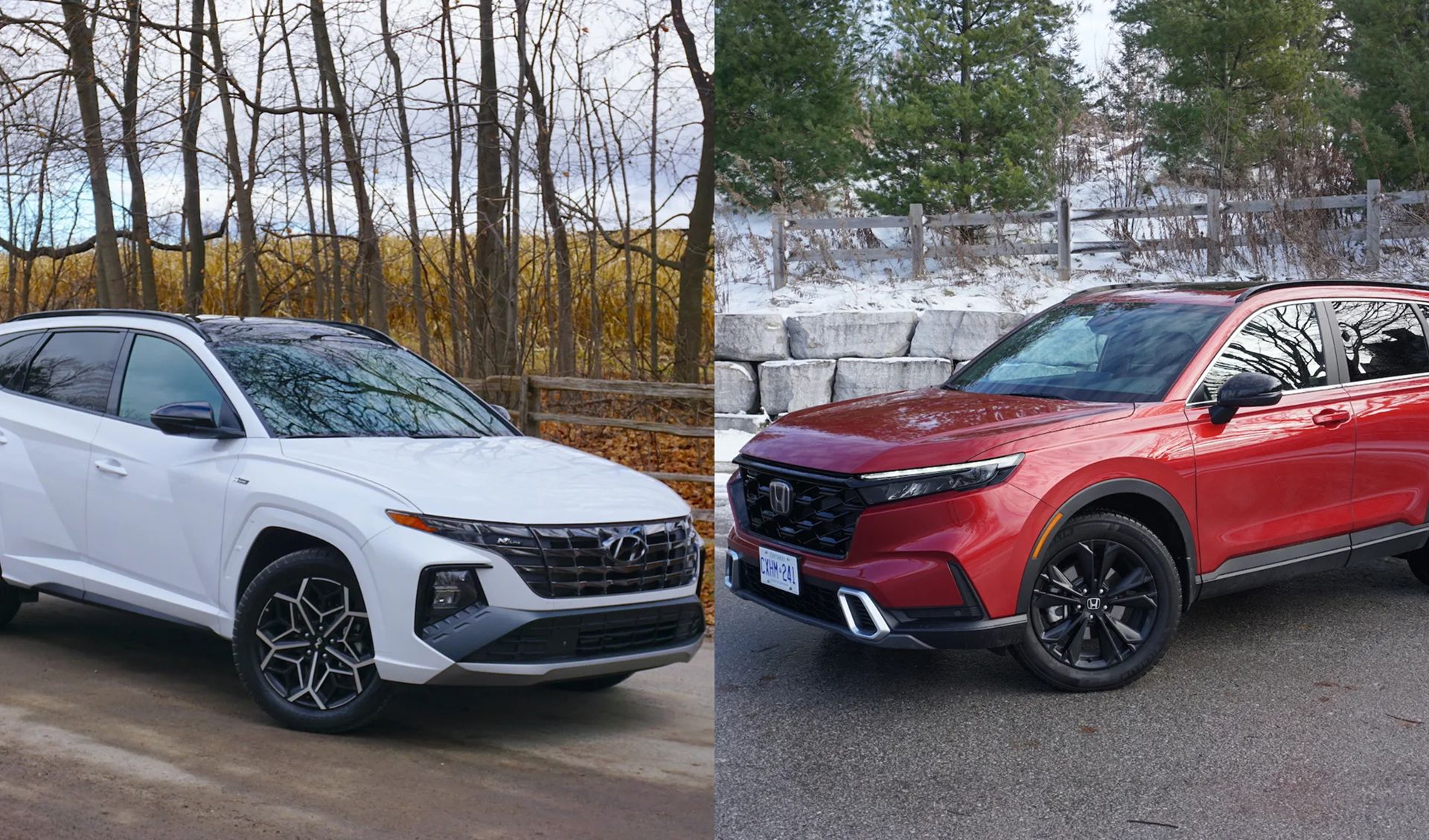
The Tucson Hybrid strides onto the scene with a bold, almost theatrical presence—its hexagonal grille and sharp, angular LED headlights scream futurism, as if it’s borrowed a page from a sci-fi thriller. Every crease and contour seems sculpted to catch the eye, transforming the mundane act of driving into a statement. Inside, the cabin is a sanctuary of digital elegance, with a dual 10.25-inch curved display that floats like a hologram above the dashboard, a symphony of touch and voice commands at your fingertips. It’s as if Hyundai has taken a scalpel to the future and presented it to you on four wheels.
Contrast that with the CR-V Hybrid, a study in understated sophistication. Honda’s approach is one of quiet mastery—sleek, aerodynamic lines that whisper rather than shout, a grille that’s refined rather than aggressive. The CR-V’s design is timeless, a chameleon that adapts effortlessly to both urban jungles and open highways. Step inside, and you’re greeted by a minimalist, wood-trimmed interior that exudes warmth and tranquility. The dual-screen infotainment system is intuitive, but it doesn’t overwhelm. It’s as if Honda has distilled the essence of comfort into a single, seamless experience, where every button and switch feels like an extension of your hand.
Where the Tucson Hybrid is a showstopper, the CR-V Hybrid is a trusted companion—each appealing to different souls, yet both undeniably compelling.
Powertrain Prowess: The Heartbeat of Hybrid Innovation
Beneath the Tucson Hybrid’s futuristic exterior lies a powertrain that’s as dynamic as its design. The 1.6-liter turbocharged engine pairs with a 51-kW electric motor, delivering a combined 232 horsepower—a spirited performance that belies its eco-friendly credentials. The eight-speed dual-clutch transmission shifts with the precision of a Swiss watch, ensuring that every ounce of power is harnessed efficiently. But it’s the electric-only driving mode that truly steals the show, allowing you to glide silently through neighborhoods or parking lots, a ghost of green innovation.
The CR-V Hybrid, on the other hand, offers a more refined take on hybrid power. Its 2.0-liter Atkinson-cycle engine and two electric motors generate a combined 204 horsepower, but don’t let the numbers fool you—this SUV is a master of torque, delivering instant acceleration that feels both effortless and exhilarating. The continuously variable transmission (CVT) is a marvel of smoothness, blending electric and gas power so seamlessly that you’ll forget you’re driving a hybrid. And with an estimated 40 miles of all-electric range, the CR-V Hybrid is a true wolf in sheep’s clothing—a vehicle that can whisper through city streets before roaring onto the open road.
In this battle of powertrains, the Tucson Hybrid is the flashy performer, while the CR-V Hybrid is the steady, reliable virtuoso. Both excel in their own right, but the choice ultimately hinges on whether you crave spectacle or serenity.
Efficiency and Range: The Silent Race to Redefine Green Driving
Hybrid SUVs are, at their core, a compromise between performance and efficiency—and the 2026 Tucson Hybrid and CR-V Hybrid are no exceptions. The Tucson Hybrid boasts an EPA-estimated 38 mpg combined, a figure that’s impressive but not groundbreaking. Its larger battery pack, however, gives it a leg up in all-electric range, allowing for short commutes and errands without ever firing up the gas engine. It’s the perfect vehicle for those who want to dip their toes into the electric world without diving headfirst.
The CR-V Hybrid, meanwhile, offers a slightly lower 36 mpg combined but compensates with a more refined driving experience. Its smaller battery pack means less weight, which translates to better handling and a more engaging drive. And while its all-electric range is shorter, the CR-V Hybrid’s ability to seamlessly switch between gas and electric power makes it a versatile choice for long road trips or daily commutes. It’s the SUV for those who want efficiency without sacrificing the joy of driving.
In the efficiency stakes, the Tucson Hybrid is the marathon runner, while the CR-V Hybrid is the sprinter—both capable of going the distance, but in their own unique ways.
Technology and Connectivity: The Digital Frontier of Modern SUVs
The 2026 Tucson Hybrid is a tech lover’s dream, with a suite of advanced features that feel plucked from a spaceship. The dual 10.25-inch curved displays are not just for show—they’re a portal into a world of augmented reality navigation, where arrows and directions float in mid-air, guiding you through traffic with eerie precision. The vehicle-to-everything (V2X) communication system is a game-changer, allowing your SUV to “talk” to traffic lights and other vehicles, reducing the risk of accidents and smoothing out your journey. And with over-the-air updates, your Tucson Hybrid will evolve over time, staying ahead of the curve without ever leaving your driveway.
The CR-V Hybrid, while less flashy, is no slouch in the tech department. Its dual-screen infotainment system is intuitive and user-friendly, with Apple CarPlay and Android Auto integration that makes it feel like an extension of your smartphone. The Honda Sensing suite of safety features is a standout, offering adaptive cruise control, lane-keeping assist, and collision mitigation braking—all designed to keep you and your passengers safe without ever feeling intrusive. And with a wireless charging pad and a suite of USB ports, the CR-V Hybrid ensures that your devices are always powered up and ready to go.
In the tech arena, the Tucson Hybrid is the avant-garde artist, while the CR-V Hybrid is the pragmatic innovator. Both offer a glimpse into the future, but their approaches couldn’t be more different.
Comfort and Practicality: The Unsung Heroes of the Hybrid Wars
No hybrid SUV is complete without a cabin that’s as comfortable as it is practical—and both the Tucson Hybrid and CR-V Hybrid deliver in spades. The Tucson Hybrid offers a spacious interior with ample legroom for front and rear passengers, and a cargo capacity of 38.7 cubic feet (expanding to 74.8 with the rear seats folded). The seats are supportive and plush, with available ventilated and heated options that make long drives feel like a first-class experience. And with ambient lighting and a panoramic sunroof, the Tucson Hybrid turns every journey into a sensory delight.
The CR-V Hybrid, meanwhile, is a masterclass in ergonomic design. Its seats are some of the most comfortable in the class, with a perfect balance of support and softness that cradles you mile after mile. The cabin is quieter than a library, thanks to Honda’s meticulous sound insulation, making it the ideal vehicle for those who value peace and tranquility. And with 39.3 cubic feet of cargo space (expanding to 75.8 with the rear seats down), the CR-V Hybrid is just as practical as it is luxurious. It’s the SUV for those who want to arrive at their destination feeling refreshed, not road-weary.
In the comfort and practicality stakes, both SUVs are winners—but they cater to different needs. The Tucson Hybrid is the social butterfly, while the CR-V Hybrid is the introverted genius.
Final Verdict: Which Hybrid SUV Steals Your Heart?
The 2026 Tucson Hybrid and CR-V Hybrid are more than just vehicles—they’re reflections of their drivers. The Tucson Hybrid is for the bold, the tech-savvy, the one who wants to make a statement every time they get behind the wheel. It’s a vehicle that embraces the future with open arms, offering a blend of performance, style, and innovation that’s hard to resist. If you crave a ride that’s as eye-catching as it is efficient, the Tucson Hybrid is your perfect match.
The CR-V Hybrid, on the other hand, is for the discerning driver who values reliability, comfort, and a touch of understated elegance. It’s a vehicle that doesn’t just get you from point A to point B—it makes the journey itself a pleasure. If you want an SUV that’s as practical as it is refined, the CR-V Hybrid is the clear choice.
Ultimately, the decision comes down to what you value most. Do you want a hybrid SUV that’s a showstopper, or one that’s a trusted companion? The road ahead is yours to choose.