The compact SUV segment has always been a battleground of innovation, practicality, and style. Yet, few rivalries ignite the same level of fervor as the perennial clash between the Toyota RAV4 and the Honda CR-V. As we peer into the horizon of 2026, this rivalry evolves into something even more intriguing. These two titans aren’t just updating their models—they’re redefining what a compact SUV can be. With each iteration, they push the boundaries of efficiency, technology, and driving dynamics, leaving enthusiasts and families alike in a perpetual state of deliberation. What is it about this rivalry that captivates us so deeply? Is it the promise of adventure, the allure of cutting-edge tech, or perhaps the subtle art of balancing ruggedness with refinement? Let’s dive into the 2026 Toyota RAV4 vs. Honda CR-V showdown to uncover the nuances that make this comparison so enthralling.
The Evolution of a Rivalry: From Humble Beginnings to Tech-Infused Titans
The Toyota RAV4 and Honda CR-V didn’t just appear as overnight sensations; they are the product of decades of refinement and rivalry. The RAV4, introduced in 1994, was one of the first vehicles to popularize the compact SUV segment, blending off-road capability with everyday usability. Meanwhile, the CR-V, debuting in 1995, quickly became synonymous with reliability and family-friendly practicality. Fast forward to 2026, and these SUVs have transformed into rolling tech hubs, each boasting hybrid powertrains, semi-autonomous driving aids, and interiors that blur the line between cockpit and living room.
The 2026 models take this evolution further. Toyota’s RAV4 now features a next-gen hybrid system with improved energy recuperation, while the CR-V introduces a turbocharged hybrid option for those craving a bit more oomph. This isn’t just about keeping up with trends—it’s about setting them. The rivalry has shifted from a simple battle of features to a nuanced exploration of what drivers truly value: efficiency, performance, or a blend of both.
Powertrain Prowess: Hybrids, Plug-Ins, and the Quest for Efficiency
At the heart of the 2026 RAV4 and CR-V lies a shared commitment to electrification, but their approaches couldn’t be more different. The RAV4’s hybrid system, now in its fourth generation, delivers an impressive 36 combined MPG, thanks to a more efficient Atkinson-cycle engine and a beefed-up electric motor. The CR-V, on the other hand, offers a choice: a conventional hybrid with 38 MPG or a plug-in hybrid variant that promises up to 45 miles of electric-only range. This duality speaks to Honda’s strategy of catering to both eco-conscious commuters and those who crave occasional electric thrills.
But efficiency isn’t just about numbers. The RAV4’s hybrid system feels more integrated, with seamless transitions between electric and gas power, while the CR-V’s plug-in option provides a guilt-free burst of acceleration when needed. For city dwellers, the CR-V’s plug-in hybrid might be the smarter pick, but for long-distance travelers, the RAV4’s reliability and lower maintenance costs could tip the scales. The choice here isn’t just about fuel economy—it’s about aligning with your lifestyle.
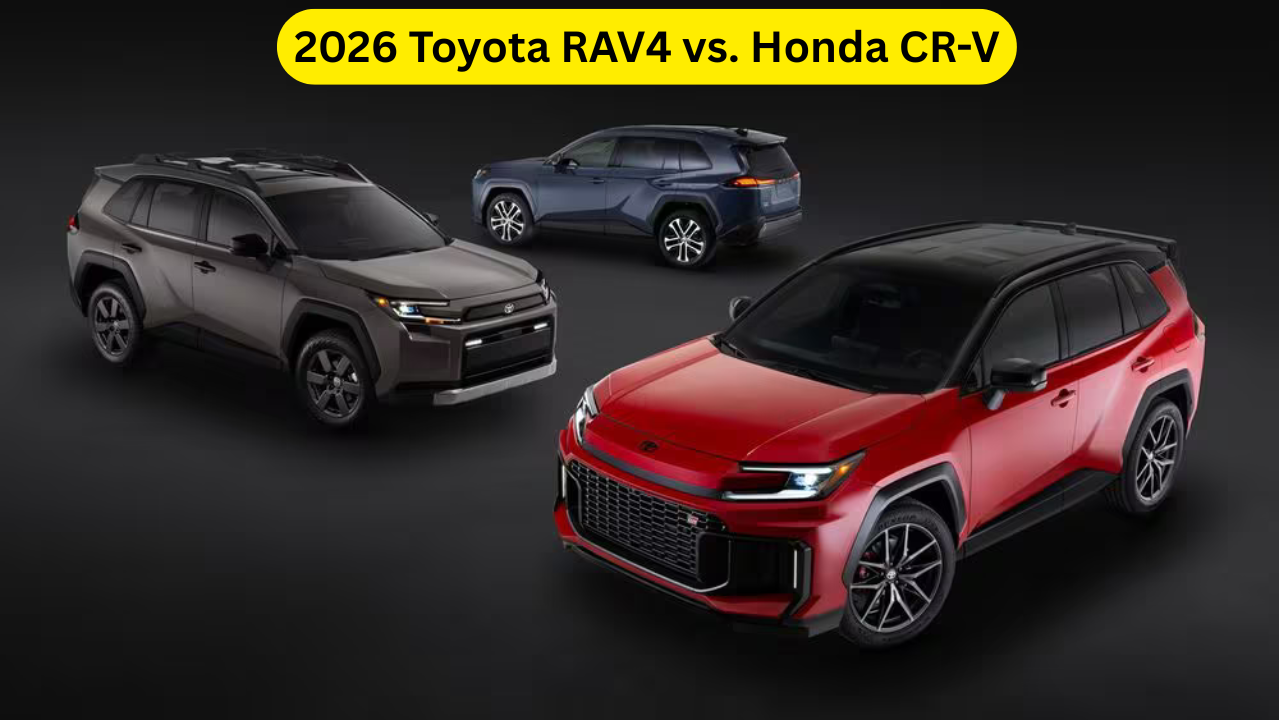
Design Philosophy: Rugged Elegance vs. Futuristic Flair
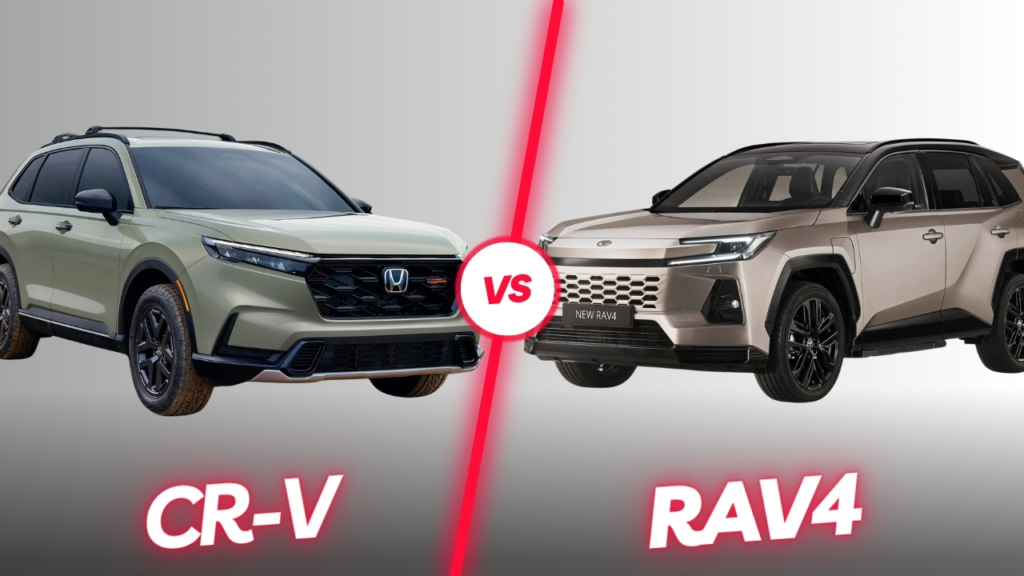
Step back from the spec sheets, and you’ll find two distinct design languages clashing—and complementing—each other. The 2026 RAV4 embraces a more rugged, angular aesthetic, with sharp creases and a bold front grille that screams off-road readiness. Toyota’s designers have leaned into a “tough yet refined” look, with available two-tone paint schemes and rugged cladding that hints at its adventurous spirit. Inside, the cabin is a study in minimalism, with a massive touchscreen dominating the dashboard and tactile buttons for climate control—a nod to practicality over gimmicks.
The CR-V, contrastingly, adopts a sleeker, more futuristic approach. Its front fascia is dominated by a striking LED light bar, and the body lines flow seamlessly from the hood to the rear, giving it a more aerodynamic profile. The interior is a masterclass in space efficiency, with a panoramic glass roof that floods the cabin with light and a center console that folds away for maximum cargo flexibility. Where the RAV4 feels like a Swiss Army knife—versatile and no-nonsense—the CR-V feels like a high-tech sanctuary, designed for those who prioritize comfort and style.
This divergence in design isn’t arbitrary. It reflects the different philosophies of the brands: Toyota’s focus on durability and adaptability versus Honda’s emphasis on innovation and driver engagement. Which one resonates with you? The RAV4’s rugged charm or the CR-V’s futuristic allure?
Technology and Connectivity: The Digital Cockpit Showdown
In 2026, a car’s worth isn’t just measured in horsepower or cargo space—it’s measured in screens, sensors, and software. Both the RAV4 and CR-V come equipped with advanced infotainment systems, but their implementations tell different stories. The RAV4’s latest iteration features a 12.3-inch touchscreen with Toyota’s latest software, which prioritizes ease of use with large, intuitive icons and voice commands that actually work. The system also integrates Amazon Alexa and Google Assistant, ensuring your smart home and car are in perfect harmony.
The CR-V counters with a dual-screen setup—a 10.2-inch digital instrument cluster paired with a 12.3-inch infotainment display—offering a more immersive driving experience. Honda’s software is snappier, with smoother animations and a more customizable interface. Both SUVs offer wireless Apple CarPlay and Android Auto, but the CR-V takes it a step further with a built-in 4G LTE hotspot and over-the-air update capabilities that keep the system fresh for years.
Beyond the screens, these SUVs are equipped with advanced driver-assistance systems. Toyota’s Safety Sense 3.0 includes features like Proactive Driving Assist, which gently steers the car to keep it centered in its lane, while Honda’s Honda Sensing 360 offers blind-spot monitoring with rear cross-traffic alert and traffic jam assist. The question isn’t which system is better—it’s which one aligns with your driving habits. Do you prioritize proactive safety or reactive assistance?
Driving Dynamics: On-Road Refinement vs. Off-Road Grit
For all their technological prowess, these SUVs are ultimately judged by how they handle the road—or the trail. The 2026 RAV4’s hybrid system delivers a smooth, linear power delivery, with the electric motor providing instant torque for brisk acceleration. The suspension is tuned for comfort, absorbing bumps with ease, but it’s not as sporty as the CR-V. The RAV4’s strength lies in its versatility—it’s equally at home on a highway as it is on a dirt path, thanks to its available all-wheel-drive system and higher ground clearance.
The CR-V, meanwhile, offers a more engaging driving experience. Its turbocharged hybrid option provides a punchy 2.0-liter engine paired with an electric motor, delivering 280 combined horsepower—a rarity in the compact SUV segment. The steering is more responsive, and the chassis feels more planted, making it a joy to navigate twisty roads. However, the CR-V’s lower ground clearance and softer suspension mean it’s less suited for off-road adventures. The RAV4 is the jack-of-all-trades; the CR-V is the master of refinement.
This dichotomy highlights a deeper truth about the compact SUV market: there’s no one-size-fits-all solution. Some drivers crave the RAV4’s rugged adaptability, while others are drawn to the CR-V’s polished performance. What’s your priority?
Interior Comfort and Practicality: Where Every Detail Matters
Step inside either SUV, and you’ll find a world of thoughtful design choices. The 2026 RAV4’s cabin is all about functionality. The seats are supportive yet comfortable, with available ventilated and heated options for all-weather driving. The rear seats slide forward for easy access to the cargo area, and the trunk itself is cavernous, with a low liftover height that makes loading groceries a breeze. Toyota has also introduced a new “Easy Clean” interior package, featuring stain-resistant materials that are perfect for families with kids or pets.
The CR-V’s interior, by contrast, is a sanctuary of luxury. The seats are wrapped in premium cloth or available leather, with a 60/40 split-folding rear bench that can be adjusted for comfort or cargo space. The panoramic glass roof bathes the cabin in natural light, and the ambient lighting system lets you customize the mood with a spectrum of colors. Honda has also paid close attention to noise insulation, making the CR-V one of the quietest cabins in its class. Where the RAV4 feels like a well-equipped toolbox, the CR-V feels like a five-star hotel on wheels.
This contrast extends to cargo space as well. The RAV4 offers 37.6 cubic feet behind the rear seats, expandable to 69.8 with the seats folded. The CR-V, however, provides 39.3 cubic feet, with a clever “magic seat” design that allows the rear seats to fold flat or tilt upward for taller items. For road trips, the CR-V’s larger cargo area and more comfortable seating make it the clear winner. But for those who prioritize versatility, the RAV4’s modular interior and higher payload capacity might be more appealing.
The Bottom Line: Which SUV Wins the 2026 Showdown?
As the dust settles on this epic showdown, one thing is clear: the 2026 Toyota RAV4 and Honda CR-V are both exceptional SUVs, each excelling in different areas. The RAV4 is the ultimate all-rounder, offering a rugged design, impressive hybrid efficiency, and a cabin that’s as practical as it is comfortable. It’s the SUV for those who want it all—adventure, reliability, and a touch of tech—without compromise.
The CR-V, on the other hand, is the refined performer, with a sleek design, punchy hybrid powertrain, and a cabin that feels like a second home. It’s the SUV for those who prioritize comfort, style, and cutting-edge technology, all wrapped in a package that’s as engaging to drive as it is spacious.
So, which one should you choose? If you’re an adventurer at heart, the RAV4’s rugged charm and off-road prowess might be irresistible. If you’re a city dweller or a road trip enthusiast who values comfort and tech, the CR-V’s futuristic flair and refined driving dynamics could be your perfect match. Ultimately, the choice comes down to what you value most in a compact SUV. One thing’s for sure: the 2026 RAV4 vs. CR-V rivalry is far from over. It’s just getting started.