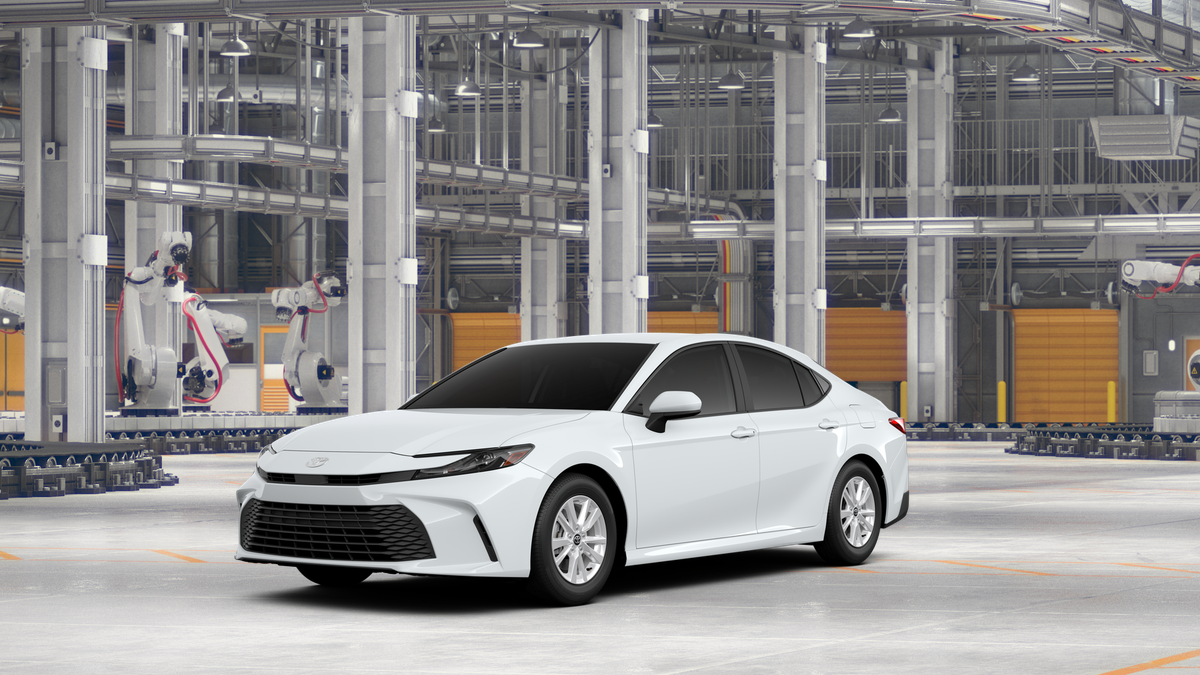
The highway is a peculiar laboratory. Out in the open, where the wind has room to invent its own moods and the road stretches like a long question, a car’s fuel economy stops being a marketing slogan and starts becoming a lived experience. The 2026 Toyota Camry, long familiar in the American imagination, invites that kind of scrutiny—especially when the stated numbers don’t quite match the way reality feels through the steering wheel. And that mismatch is exactly what draws people in. Because if you’ve ever driven past the moment when a dashboard averages began to look “too optimistic,” you already know the punchline: the real story is rarely linear.
In this real-world highway fuel economy test of the 2026 Toyota Camry, the aim is straightforward—observe what happens when normal conditions take the microphone. But the fascination runs deeper than mileage math. It’s about why certain vehicles seem to “hold” efficiency better than others, how subtle inputs (tire choice, cruising behavior, ambient turbulence) turn into measurable outcomes, and what the Camry’s engineering does when it stops being polite and starts being honest.
Why highway fuel economy is where myths either survive or collapse
City driving tends to be chaotic: stop-and-go braking, traffic rhythms, and rapid accelerations that make fuel consumption behave like a sprinter with jitters. Highway driving is different. It’s steadier, yes—but not calm. Even at consistent speeds, the car negotiates aerodynamic drag, crosswinds, rolling resistance, and grade changes that can be invisible until you watch the average fuel consumption tick upward.
That’s why highway results are often treated as a kind of truth serum. They remove some of the randomness. Yet the “common observation”—that a fuel economy claim never seems to land exactly where the brochure promised—still shows up. People notice it because the difference is usually repeatable. Not identical, but consistent enough to feel meaningful.
The deeper reason is that fuel economy claims are engineered forecasts, not filmed documentaries. They’re based on standardized test cycles with controlled assumptions: temperature windows, driving profile smoothing, and a carefully curated sequence of loads. Real life adds uninvited variables—bagged groceries, a partially full fuel tank, slightly underinflated tires, and the psychological compulsion to match traffic flow.
Test conditions: making “real-world” mean something
A credible real-world test needs structure. Without it, the outcome becomes a mood report rather than a data point. On the highway, this typically means selecting a route with long stretches of steady cruising, but also enough variation to reflect normal life—gentle grades, intermittent acceleration lanes, and passing maneuvers.
Speed is the first variable people underestimate. A few miles per hour can change fuel consumption dramatically due to aerodynamic drag rising roughly with the square of speed. That means the car may feel “almost the same” on the road while the engine works noticeably harder behind the scenes.
Wind is the second variable—especially the sneaky kind. Headwinds can be stronger than they look; crosswinds can shift the vehicle’s effective drag by disturbing airflow around the body. The Camry’s shape helps, but physics still collects its receipts.
Temperature matters too. Warmer air can improve engine efficiency indirectly, while colder conditions can cause different friction losses and affect how long the powertrain remains in its preferred operating window.
What the Camry feels like at cruising speed
The 2026 Camry’s highway behavior tends to inspire confidence—quiet enough to let you focus on the road, stable enough that speed changes don’t feel chaotic. But comfort can mask the effort being expended. Engine load doesn’t always announce itself the way acceleration does. It’s more like a pressure in the drivetrain: the invisible insistence that fuel must still flow even when the car seems to be gliding.
During steady cruising, a hybrid-oriented powertrain strategy (depending on the exact configuration and how the vehicle blends engine and electric contribution) often tries to keep the engine in efficient zones. When the road stays level, this can create that satisfying sensation of calm efficiency—where the average fuel economy holds steady rather than falling off a cliff.
However, when you ask the car to re-accelerate after a slow-down—merging, passing, climbing a grade—the system responds quickly. You can feel the transition in the cadence of power delivery. It’s not dramatic, but it’s measurable. The highway average is built from those moments.
The common observation: “It didn’t hit the number”
Most drivers report a similar pattern. The first stretch looks promising. Then, after traffic density increases or speeds rise to match a faster stream, the average begins to drift downward. The dashboard average becomes a kind of narrative arc: hopeful at the start, more complicated later.
This is often interpreted as disappointment. Yet there’s a more nuanced explanation. When people say “it didn’t hit the number,” they’re typically comparing real results to a more optimistic claim generated under very controlled conditions. The Camry is not failing; it’s adapting to the environment.
That adaptation is fascinating because it reveals how fuel economy isn’t a single outcome. It’s an aggregate of micro-decisions: when to maintain momentum, when to allow regenerative braking, when to keep the engine running, and how long to wait before the car requests more energy for acceleration.
Deeper reasons the Camry’s real-world highway economy can differ
1) Aerodynamics are unforgiving. Even small speed changes can alter drag dramatically. Highway cruising often nudges drivers into the higher-speed comfort zone, and the vehicle pays the aerodynamic tax.
2) Tire and load assumptions diverge. Fuel economy depends on rolling resistance. Tires with different compounds and sidewall behavior can shift results. Load matters too. Luggage, cargo weight, and even passenger comfort features can subtly increase consumption.
3) Hybrid blending has a rhythm. Real-world power demands can force the engine to run in less efficient states—especially during frequent passing or during grades where the battery state-of-charge management becomes a priority. The system is protecting overall efficiency, but it can look “less efficient” on a short average window.
4) Driver behavior is part of the engine map. Smoothness is not just a comfort factor. Gentle throttle transitions and anticipating slowdowns allow more opportunities for regeneration and fewer high-load accelerations. A driver who drives “like the car is an instrument” often gets better averages than one who drives “like the road is a challenge.”
How passing maneuvers and merging change the average
Highway driving isn’t a metronome. It’s a choreography. Each merge and each overtake creates a short burst of increased fuel burn. Then the car tries to recover efficiency. Recovery is not immediate; it’s a gradual return to steady-state.
That’s why a test should include at least some passing and merge behavior rather than purely empty roadway cruising. Real life features intermittent power demands, and those demands strongly shape the final mileage figure.
Consider this like storytelling. The highway average is the sum of all scenes, not just the quiet chapters where the car seems to float.
Engine, battery, and regeneration: what you can’t see on the dash
One reason fascination persists is that hybrid systems do invisible work. Regenerative braking harvests energy during deceleration, but it’s also limited by traction, speed, and battery readiness. When those conditions aren’t ideal, regeneration may be reduced, and the car relies more on friction braking or engine management.
On a highway route with repeated small speed changes—like a gentle sequence of exits or rolling hills—the availability of regenerative opportunities can vary constantly. The powertrain’s intelligence tries to stay balanced, but balance doesn’t always mean maximum efficiency on every segment.
The Camry’s ability to manage these transitions smoothly is where much of its “real-world credibility” comes from. Even when the system can’t optimize every moment, it can maintain a plausible average rather than producing erratic swings.
Interpreting results: what the numbers actually tell you
When you look at the final highway fuel economy, treat it as a diagnostic window into your driving pattern and your environment. A higher average suggests consistent cruising, moderate speeds, stable winds, and minimal aggressive acceleration. A lower average may point to speed creep, frequent passing, higher tire rolling resistance, or a route with more grade and deceleration events.
It also helps to compare averages over similar time windows and tank conditions. Fuel economy can shift based on early driving after refueling and how quickly the system reaches its preferred operating regime.
Best practices for maximizing highway efficiency in the real world
Efficiency isn’t only about technology; it’s also about tactics. A few habits often translate into measurable improvements:
Drive at steady speeds. Use adaptive cruise if available, but verify it doesn’t chase unnecessary speed changes.
Plan overtakes. Passing with momentum and avoiding repeated acceleration-recovery loops can preserve the average.
Keep tire pressures correct. Rolling resistance is quietly expensive.
Reduce unnecessary aerodynamic clutter. Roof cargo and open accessories can erode efficiency, especially at highway speeds.
Maintain a calm throttle. Smoothness increases the chance that the hybrid system can stay in its most efficient blend patterns.
Why the fascination with “real” fuel economy never really fades
There’s something magnetic about watching a car reveal what it truly consumes. Claims can be impressive, but real-world results feel personal. They connect engineering to daily choices: the route you took, the wind you faced, the speed you maintained, and the way you interacted with traffic.
And that’s why a test like the 2026 Toyota Camry highway evaluation becomes more than a number. It becomes a conversation between design and circumstance. The Camry’s efficiency isn’t merely delivered—it’s negotiated continuously, second by second, with physics.
Conclusion: the highway verdict, and what it means for your next trip
The 2026 Toyota Camry’s real-world highway fuel economy test doesn’t end with a single, universal answer. Instead, it delivers something more useful: an understanding of why highway mileage is both repeatable and variable. The common observation—that the car rarely matches the brochure perfectly—turns out to be less a flaw and more an invitation to look under the hood of assumptions.
When you drive with awareness—respecting speed, smoothing throttle inputs, and accounting for wind and tire conditions—the Camry can behave in a way that feels convincingly efficient. Yet the deeper fascination remains: fuel economy is never just engineering. It’s a dialogue between the vehicle’s systems and the messy, beautiful complexity of real roads.
For the next highway stretch you plan, remember this: the most accurate fuel economy number is the one that matches your conditions. The Camry can get you close. Then physics—and your driving rhythm—decides how close.