The electric SUV market is no longer a niche battleground—it’s a high-stakes arena where legacy automakers and tech-driven disruptors collide. Among the most scrutinized matchups is the 2026 Nissan Ariya versus the Tesla Model Y, two vehicles that embody fundamentally different philosophies of electric mobility. One leans into refinement and comfort, the other into raw performance and cutting-edge innovation. Yet beneath the surface of range figures and zero-to-sixty sprints lies a deeper narrative: the Ariya whispers of a future where electric cars feel like an evolution of tradition, while the Model Y roars with the promise of a revolution in how we move. This isn’t just a comparison of specs—it’s a clash of ideologies, a duel between the comfort of the familiar and the thrill of the unknown.
The Design Philosophy: Where Form Meets Function
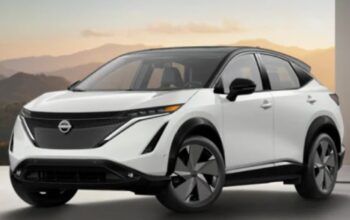
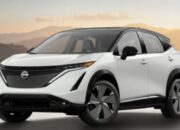
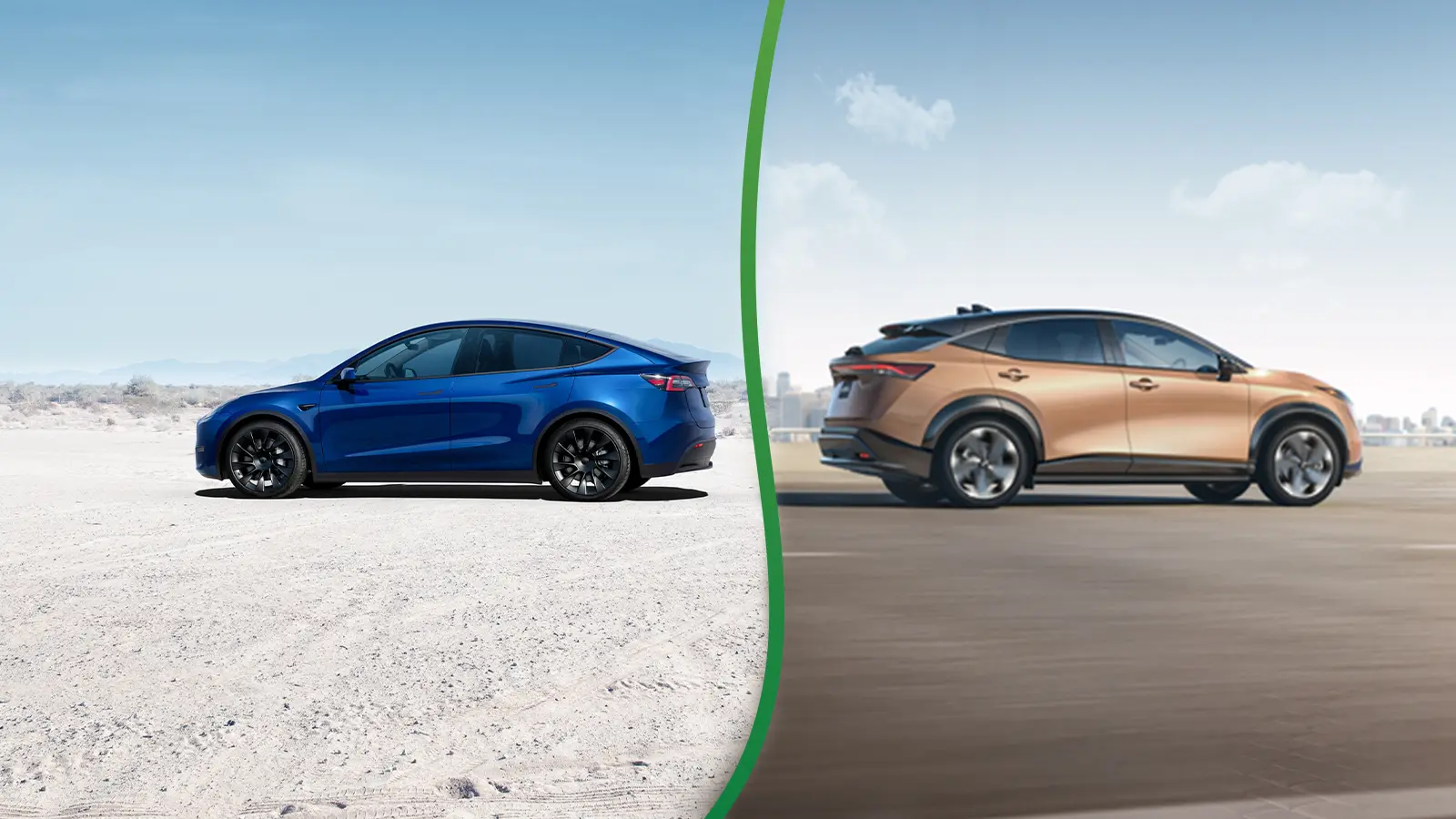
The Ariya’s design is a study in understated elegance, a deliberate departure from the aggressive angularity of its rivals. Its smooth, flowing lines evoke a sense of quiet sophistication, a car that doesn’t shout but rather invites contemplation. The front fascia, dominated by Nissan’s signature V-motion grille (now rendered in a sleek, aerodynamic form), exudes a refined presence, while the flush door handles and aerodynamic contours suggest a focus on efficiency without sacrificing style. Inside, the Ariya’s cabin is a sanctuary of soft-touch materials, ambient lighting, and a panoramic glass roof that bathes the interior in natural light—a deliberate nod to the premium segment.
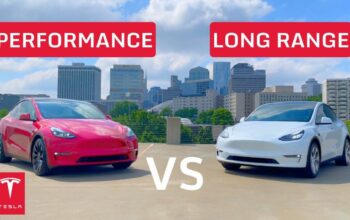
Contrast this with the Model Y, a vehicle that wears its performance heritage on its sleeve. Tesla’s design language is unapologetically futuristic, with sharp, angular lines that cut through the air like a knife. The lack of a traditional grille isn’t an omission—it’s a statement, a rejection of the past in favor of a minimalist, tech-forward aesthetic. The cabin, though utilitarian in its simplicity, is a marvel of functionality, with a yoke-style steering wheel and a massive central touchscreen that dominates the dashboard. Where the Ariya feels like a well-heeled executive, the Model Y feels like a spaceship designed by engineers who’ve never met a compromise.
Performance and Driving Dynamics: The Battle of Opposing Philosophies
Under the hood—or rather, beneath the floor—the Ariya and Model Y reveal their divergent approaches to electric performance. The Ariya, with its dual-motor all-wheel-drive system, delivers a composed, balanced ride that prioritizes comfort and stability. The steering is precise, the body roll is minimal, and the regenerative braking is tuned to feel natural, almost imperceptible. It’s a car that rewards smooth, deliberate inputs, a vehicle that feels as at home on a winding backroad as it does on a highway.
The Model Y, on the other hand, is a performance beast in disguise. With its instant torque and razor-sharp handling, it feels like it’s always on the verge of breaking free from the laws of physics. The steering is direct, the acceleration is brutal, and the regenerative braking can be adjusted to one-pedal driving, turning every stop into a statement. It’s not just fast—it’s exhilarating, a car that demands engagement and rewards aggression. Where the Ariya feels like a well-mannered guest at a dinner party, the Model Y feels like the life of the party, the one who’s always ready to dance on the tables.
Range, Charging, and the Tyranny of the Kilowatt-Hour
Range anxiety is the ghost that haunts every electric vehicle, and both the Ariya and Model Y have made strides to exorcise it. The Ariya, with its estimated 300 miles of range (EPA), is no slouch, but it’s the charging infrastructure that truly sets it apart. Nissan’s collaboration with multiple charging networks ensures that Ariya owners can plug in almost anywhere, from urban charging hubs to remote roadside stations. The Ariya’s 130 kW fast-charging capability means that a 10-80% charge can be achieved in under 30 minutes—a practicality that Tesla’s vaunted Supercharger network, while faster, doesn’t always match in accessibility.
The Model Y, with its 330 miles of range (Long Range variant), holds the edge in pure distance, but its reliance on Tesla’s proprietary Supercharger network can be a double-edged sword. While Superchargers are ubiquitous in urban areas, rural and international locations may present challenges. However, Tesla’s recent opening of its charging network to non-Tesla vehicles could level the playing field. The Model Y’s 250 kW peak charging rate means that a full charge can be achieved in as little as 15 minutes—if you’re lucky enough to be near a V3 Supercharger. The Ariya may not be the fastest to charge, but its flexibility makes it a more practical choice for those who value versatility over raw speed.
Technology and Infotainment: The Digital Divide
The Ariya’s infotainment system is a masterclass in intuitive design, with a dual-screen setup that’s both functional and aesthetically pleasing. The interface is clean, with large, legible icons and a logical layout that minimizes distractions. Nissan’s ProPilot Assist, a semi-autonomous driving system, is a standout feature, offering hands-on lane-keeping and adaptive cruise control that feels almost human in its responsiveness. The Ariya also boasts a digital rearview mirror, a high-tech solution that eliminates blind spots and enhances visibility.
The Model Y’s infotainment system, while equally impressive, is a study in minimalism. The single, massive touchscreen dominates the dashboard, offering a wealth of features but at the cost of tactile feedback. Tesla’s Full Self-Driving (FSD) beta is a polarizing feature—some swear by its capabilities, while others dismiss it as a gimmick. Yet even without FSD, the Model Y’s over-the-air updates ensure that it’s always evolving, a living, breathing entity that improves with age. The Ariya, by contrast, feels more like a finished product, a car that’s designed to be enjoyed as-is rather than constantly tweaked.
Interior Comfort and Practicality: The Quiet War for Passenger Satisfaction
Step inside the Ariya, and you’re greeted by a cabin that’s as comfortable as it is stylish. The seats are plush, the materials are premium, and the cabin noise is virtually nonexistent—a testament to Nissan’s focus on refinement. The panoramic glass roof floods the interior with light, creating an airy, open feel that’s rare in SUVs. The rear seats are spacious, with ample legroom and headroom, making it a practical choice for families or long road trips. Even the trunk, with its 19.6 cubic feet of cargo space, is surprisingly roomy for a compact SUV.
The Model Y’s interior, while utilitarian, is no less impressive in its own way. The yoke-style steering wheel may take some getting used to, but it frees up space on the dashboard for a second screen, offering a more modern take on infotainment. The seats are supportive, the cabin is quiet, and the overall feel is one of efficiency and purpose. The rear seats are comfortable, though not as plush as the Ariya’s, and the trunk is slightly smaller at 15.1 cubic feet. Yet the Model Y makes up for it with clever storage solutions, like the front trunk (frunk) and under-floor storage, which add a layer of practicality that’s hard to ignore.
The Price of Progress: Value in a Crowded Market
Pricing is where the Ariya and Model Y diverge most sharply. The Ariya, with a starting price around $45,000, positions itself as a premium alternative to the Model Y’s base price of $47,740. Yet the Ariya’s higher trims, which can exceed $60,000, bring it into direct competition with Tesla’s Long Range and Performance variants. The Ariya’s value proposition lies in its balance of comfort, technology, and practicality, while the Model Y’s appeal is rooted in its performance, cutting-edge features, and brand cachet. For those who prioritize refinement and long-term reliability, the Ariya may be the better choice. For those who crave speed, innovation, and a touch of rebellion, the Model Y is hard to beat.
The 2026 Nissan Ariya and Tesla Model Y are more than just electric SUVs—they’re symbols of two distinct visions for the future of mobility. The Ariya represents a cautious, measured approach, a car that’s designed to ease drivers into the electric era without asking them to abandon their comfort zones. The Model Y, by contrast, is a bold declaration of intent, a vehicle that’s unapologetically futuristic and uncompromising in its pursuit of performance. One is a bridge to the past, the other a gateway to the future. And in that tension lies the true fascination of this electric SUV showdown.