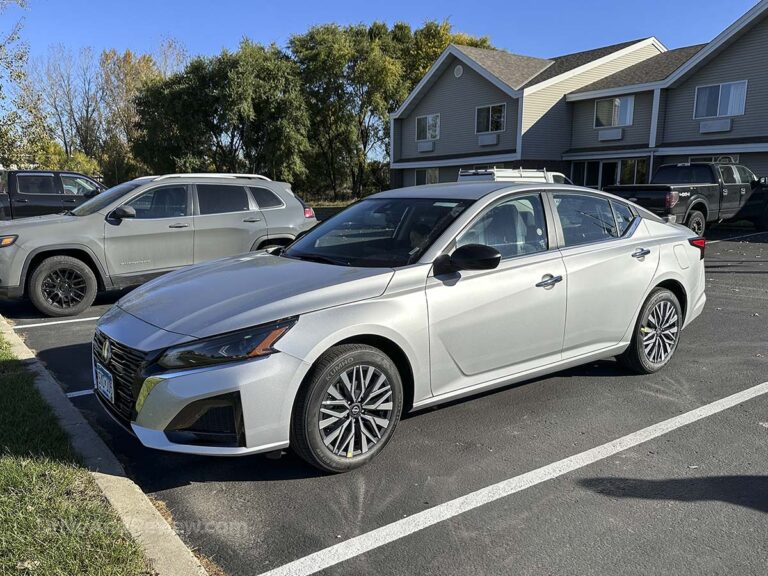
The 2026 Nissan Altima arrives with the kind of reputation that precedes it—half promise, half question. For some drivers, the name “Altima” is shorthand for quiet confidence on the highway and an easygoing daily commute. For others, the phrase “CVT” carries a sharper edge, as if the transmission itself has become a character with quirks you can’t quite ignore. And that’s the tension at the heart of the 2026 Nissan Altima CVT review: Is it still problematic, or is the fascination born from something deeper than mere mechanical compromise?
Let’s look past the buzzwords and the stereotypes. The story of a CVT is rarely just about one component failing. It’s about how the whole system—software calibration, engine behavior, driving habits, and even expected load—interlocks. When those elements align, the result can feel deceptively smooth. When they don’t, the experience can become strangely loud in all the wrong ways.
What Drivers Mean When They Say “Problematic”
“Problematic” is a flexible word. In real-world conversations, it often clusters around a few recurring observations. Some drivers describe a sensation of delayed engagement, or a “stair-step” progression that makes the car feel like it’s thinking rather than responding. Others note noises—whines, droning harmonics, or a pitch that rises as if the transmission is searching for the right ratio.
There’s also a subtler concern: durability anxiety. Owners may not always report catastrophic failures, but the feeling that the CVT is unusually sensitive—especially under certain temperatures, driving styles, or stop-and-go patterns—can still sour the relationship. The fascination begins right here. People don’t obsess over what’s merely average. They scrutinize what seems to flirt with inconsistency.
CVT Basics: Why Smoothness Can Be Misread as Strange
Unlike traditional automatics with spaced gear ratios, a CVT (continuously variable transmission) uses a belt-and-pulley system to create an effectively infinite set of “gears.” In theory, it should keep the engine near its most efficient operating band. In practice, the experience is mediated by software tuning and how aggressively the system adapts to throttle inputs.
That’s why the same car can feel serene to one driver and oddly restless to another. If you expect a classic gear shift—an event, a moment of change—CVT behavior can feel like perpetual motion. Sometimes it’s seamless. Sometimes it’s uncanny.

2026 Altima CVT Calibration: Improvements You Can Actually Feel
Modern CVTs are less about mechanical novelty and more about electronic orchestration. For the 2026 Altima, the most meaningful “update” is often not a dramatic mechanical overhaul but a more nuanced calibration—how the control module interprets demand, how it modulates ratio changes, and how it protects components under edge conditions.
In everyday driving, this can translate into smoother transitions at light throttle. You may notice fewer noticeable ratio hunts when cruising. Stop-and-go driving can also feel more composed, as if the car has learned your rhythm. Yet the question remains: does this quiet the doubts permanently?
Not entirely—because any CVT will still respond to physics. When acceleration demands spike, the system must change the effective ratio quickly. When temperatures are cold or when towing/load is higher than typical commutes, the transmission’s tolerance margins shrink. Smoothness is a target, not a constant.
Common Complaints Still Surface—But Often From Different Roots
Even when a model year improves, the internet memory persists. Owners might still point to earlier patterns—jerkiness on takeoff, a droning sensation at certain speeds, or hesitation that appears only under specific conditions.
Here’s the deeper angle: many “transmission issues” are actually symptoms of system mismatch. If the engine’s torque delivery and the CVT’s ratio selection aren’t harmonized for a given driving scenario, you can feel it. If the vehicle is driven in a way that repeatedly challenges the thermal limits—hot weather city driving, frequent hard accelerations, or long periods of aggressive throttle—the belt and pulley interface can behave differently over time.
Even tire choice and wheel alignment can indirectly affect how the car’s drivetrain loads behave. The CVT is not working in isolation. It’s responding to the entire vehicle’s cadence.
The Fascination: Why People Keep Talking About the Altima CVT
There’s an almost folkloric quality to the Altima CVT discourse. It isn’t only fear. It’s curiosity. Drivers feel an unusual emotional connection to the transmission because the CVT makes its presence known—through noise character, through responsiveness feel, through the way it “holds” certain ratios longer than a conventional automatic would.
That visibility is rare. Many transmissions are boringly consistent. CVTs, by design, are more variable in how they translate engine speed to motion. When that variability is well-managed, it becomes a superpower: steady acceleration, efficient cruising, and fewer abrupt jerks. When it isn’t, it becomes a puzzle you can’t stop solving.
Noise, Drone, and the Question of “Is It Normal?”
Sound is often where skepticism begins. CVTs can emit a particular whine or drone at certain RPM ranges. The key is whether the noise grows worse over time or appears unexpectedly during light driving.
For the 2026 Altima, the expectation should be: light, consistent CVT characteristics are not automatically alarms. But escalating intensity, harshness, or frequent “hunt-and-return” behavior are different. Those patterns can indicate lubrication breakdown, adaptive learning misfires, or mechanical wear approaching a threshold.
Pay attention to the pattern, not just the presence. A transmission that sounds slightly different at 35–45 mph might be within normal resonance. A transmission that sounds progressively more strained after repeated hot commutes is another story.
Maintenance Practices That Matter More Than People Admit
The CVT’s longevity is heavily influenced by how it’s serviced and how it’s driven. Fluid health is central. CVT fluids are engineered for specific friction and thermal properties. When a fluid change is delayed, or when the wrong specification is used, the system can behave like it’s working with incorrect inputs—leading to slip-like sensations, harsher ratio transitions, or elevated noise.
Short trips also matter. Frequent cold starts can keep the transmission from reaching optimal operating temperature, and that affects fluid viscosity and control strategy. Gentle warming is not just a comfort ritual; it can reduce stress cycles.
If there’s a single “quiet reason” behind many CVT complaints, it’s inconsistency: not just with driving style, but with maintenance timing and service quality.
Realistic Expectations: Who Should Buy This Altima (and Who Should Think Twice)
The 2026 Altima with CVT is best suited for drivers who value smoothness, steady throttle modulation, and city-to-highway versatility. If you prefer predictable, gear-by-gear engine behavior, the CVT may never feel like a perfect match. But if you appreciate efficiency and a calm ride, the car can be compelling—especially once its adaptive behavior settles into your driving routine.
Think twice if your driving profile includes repeated heavy load, sustained high-speed runs in extreme heat, or frequent aggressive acceleration that keeps the transmission operating near its most demanding conditions. This isn’t a moral judgment. It’s an engineering reality. Under those circumstances, any CVT can feel more temperamental.
How It Drives: The Human Side of the Review
Despite the mechanical debates, the 2026 Altima’s driving experience is what many people ultimately remember. The steering feel is communicative. The cabin tends to prioritize composure. Acceleration can feel smooth enough that you forget you’re aboard a belt-driven system until you ask for more.
The fascination continues because the car doesn’t present a single, obvious failure mode. It offers a range of sensations depending on tempo and context. That variability is what makes the review conversation endless—and what makes a well-informed owner so valuable.

Bottom Line: Still Problematic, or Merely Under a Spotlight?
So, is the 2026 Nissan Altima CVT still problematic? The honest answer is nuanced. If your standard of “problematic” means it’s unpredictable, loud in every condition, or prone to immediate failure, then the latest calibration and modern service practices can mitigate many concerns. But if your standard is “does it behave exactly like a traditional automatic and always feel effortless,” then the CVT will always invite critique because its nature is different.
The CVT’s reputation persists because it’s highly noticeable when things aren’t perfectly aligned. And that’s the deeper reason for fascination: the Altima’s CVT turns mechanical abstraction into a lived experience. When it’s tuned well, it feels refined. When it isn’t, it becomes an audible reminder that engineering is a negotiation between design goals and real-world usage.
For drivers willing to match the car’s strengths—smooth input, timely maintenance, sensible load—the 2026 Nissan Altima can still deliver the kind of satisfaction that keeps the name alive. For skeptics, the best approach isn’t denial. It’s informed expectation: learn how it behaves, respect its maintenance needs, and treat the CVT as a system that rewards attentive ownership rather than impatient assumptions.