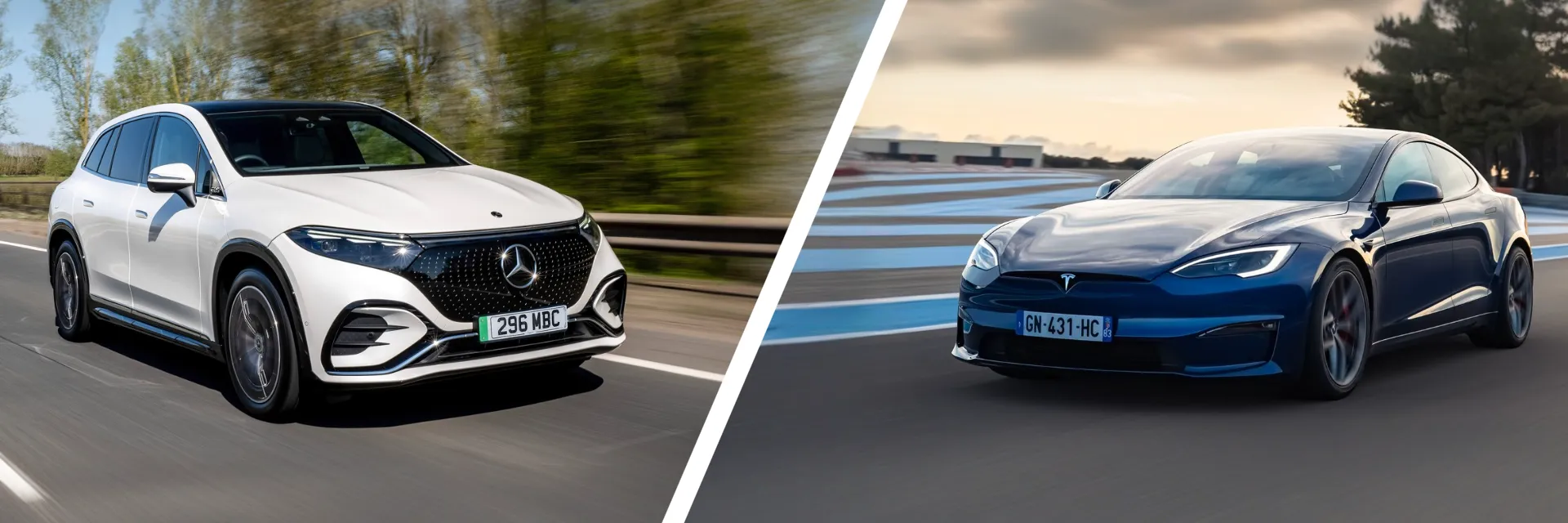
The luxury EV sedan is no longer a mere alternative to the gas-powered past. It has become a parallel universe—quiet, electrically precise, and strangely cinematic. In 2026, that universe feels especially vivid when you place the Mercedes-Benz EQS beside the Tesla Model S. Both are designed to glide rather than clatter, to persuade rather than shout. Yet they pursue that goal with contrasting philosophies: one shaped like a velvet-voiced symphony, the other honed into a streamlined, tech-forward manifesto. This is a battle not only of specs, but of temperament—of how each car turns motion into mood.
Imagine stepping into an art gallery. The EQS is the gallery that bathes every canvas in soft, diffused light. The Model S is the gallery that spotlights the sharpest details, letting you see the machinery behind the masterpiece. And when you drive? The differences become tangible—like choosing between a silk tie and carbon fiber threads.
First Impressions: The Cabin as a Sanctuary vs a Command Center
The EQS greets you with the aura of a lounge after hours. Its interior presence is deliberate and calming. Ambient lighting doesn’t just decorate; it modulates perception, turning the cabin into something closer to a private atmosphere than a vehicle. Materials feel selected with restraint, as if comfort were a design constraint rather than an afterthought.
Set beside it, the Tesla Model S feels more like a cockpit that happens to be luxurious. Minimalism is the language here. The user interface sits where your attention naturally lands, ready to serve as both companion and control surface. Short sentences, clean typography, rapid responses—everything suggests a mindset: the car is an intelligent appliance, and you are the operator.
In short, the EQS invites stillness. The Model S recruits focus.
Design Philosophy: Wind-Tunnel Grace vs Futuristic Simplicity
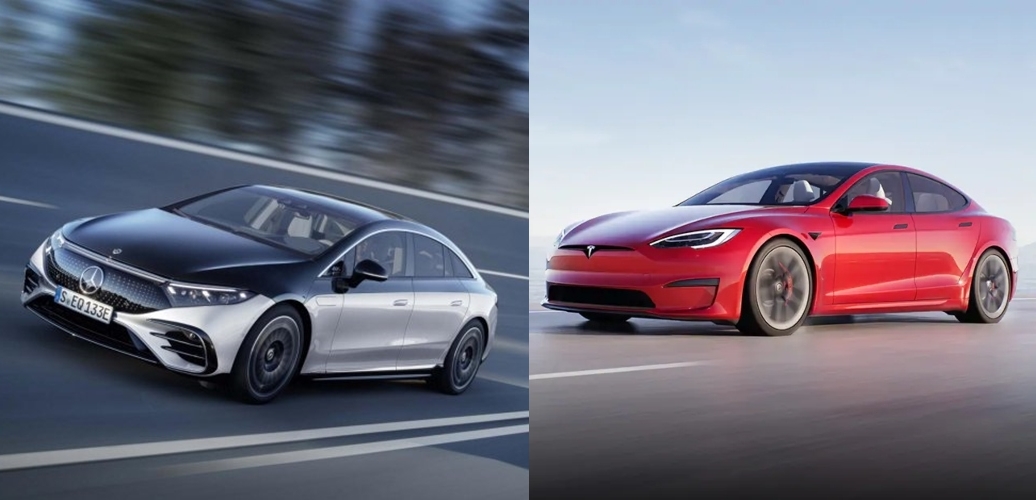
The EQS is aerodynamics rendered as elegance. Its sculpted proportions don’t merely reduce drag; they sculpt silence. The car’s silhouette is a low, confident exhale. Even standing still, it feels engineered for motion, like a swimmer already in mid-stroke.
The Model S, by contrast, uses a different kind of confidence—less about soft fluidity and more about technological clarity. It looks like the future that arrived early, clean lines and bold presence cooperating with the idea that performance can be packaged into everyday life. It’s not trying to be mysterious. It’s trying to be obvious.
Both are aerodynamic, but they speak different dialects of efficiency.
Power and Performance: Instant Torque vs Deliberate Momentum
Electric power is a shared foundation, but it arrives with different emotional textures. Tesla’s reputation is built on instantaneous torque and a performance character that can feel almost predatory in its quickness. The acceleration is the kind that interrupts conversation. You don’t just move—you get propelled, as though the car briefly renegotiates physics.
The EQS, however, is more about composed momentum. It can be quick, certainly, but it tends to deliver speed with a gentler cadence. The effect is less “shockwave” and more “rolling thunder”—power that builds confidence rather than forcing it. It’s the difference between a violin note that pierces the air and one that swells beneath your skin.
Choose the Model S if you want electricity to feel like adrenaline. Choose the EQS if you want it to feel like effortless authority.
Range and Efficiency: The Long-Trip Compass
Luxury EV ownership is often defined by how seamlessly a road trip becomes a sequence of calm moments. Range and efficiency are the compass points, and both cars aim to keep you from thinking too hard about the next charge.
The Tesla Model S typically benefits from a broad ecosystem and efficient power management strategies. Its driving experience is often described as “effortless,” and that includes energy usage. The EQS emphasizes efficiency too, but its approach feels more like a tailoring job—adjusting airflow, weight distribution, and thermal management to keep the cabin serene without wasting energy.
On long routes, the EQS can feel like a floating lounge. On long routes, the Model S can feel like a mission control that keeps optimizing your journey in the background.
Charging and Infrastructure: Confidence at the Plug
Charging isn’t glamorous, but it’s decisive. It affects peace of mind. Tesla has long leaned into the charging network strategy, and that can turn charging stops into less of an ordeal and more of a routine.
The EQS also supports practical charging behavior, but the real question for owners is predictability: where you can charge, how quickly you can return to driving, and how effortlessly planning fits into your day. In this category, Tesla often carries a comfort advantage, while Mercedes tries to make the experience feel integrated and refined.
One car tries to minimize friction with infrastructure. The other tries to minimize friction with user experience.
Autopilot and Driver Assistance: Hands-Off Dreams, Different Styles
Driver assistance is a modern luxury—one that can feel magical when it works smoothly, and complicated when expectations outpace capability. The Tesla Model S is associated with a feature set that many drivers find intuitive, emphasizing a strong blend of automation and continuous improvement. The software mentality is visible: features evolve, interfaces adapt, and the car behaves like a living platform.
The EQS approaches assistance with a more traditional automotive air—more about stability, clarity, and cautious refinement. The experience can feel like a well-trained co-pilot rather than a constantly learning system. That doesn’t make it less capable; it makes it feel more like Mercedes: thoughtful, measured, and privacy-conscious in tone.
Autonomy is not just a feature list. It’s a relationship between driver trust and system temperament.
Technology and Connectivity: Software as the Soul vs Software as the Staff
The Model S is famously software-forward. The interface is the nerve center. Everything feels designed to be controlled quickly, updated often, and kept logically connected to your habits. The result can be astonishingly seamless—like steering through an app that knows your preferences without asking twice.
The EQS treats technology as an extension of comfort. The screens and systems are polished, responsive, and integrated into a broader theme: calm control. Mercedes doesn’t always pursue the most aggressive “new feature” cadence, but the experience tends to be elegant and cohesive—less like a smartphone, more like a bespoke instrument panel.
In the EQS, tech is the staff that supports the performance. In the Model S, tech is the performance itself.
Ride Quality and NVH: Silence as a Design Standard
Noise, vibration, and harshness—NVH—is where luxury EVs truly announce themselves. The EQS is built to soothe. The cabin can feel insulated from the world, turning rough roads into whispers. You may notice the absence of drama more than the presence of comfort.
The Model S can also be remarkably composed, particularly when configured for smoothness. But its vibe may be slightly more “connected”—you feel the vehicle responding to the road with a hint of tactile communication. The EQS tries to make the road disappear. The Model S tries to make the road legible.
If you crave cinematic quiet, the EQS often wins the emotional contest. If you want clarity without harshness, the Model S often satisfies.
Practicality and Daily Use: Who Fits Your Life?
Luxury is only luxury if it fits your routines. The EQS often shines as a long-range commuter that remains composed for family or business travel. It’s a car that tolerates errands, expects smooth arrivals, and treats comfort as an ongoing contract.
The Model S is similarly versatile, but its strengths lean into efficiency and tech convenience. Owners may appreciate the way the car supports quick decisions—routes, charging behavior, and in-cabin control, often with minimal friction.
Both are capable of being daily drivers. The question is whether you want daily life to feel like time slowed (EQS) or time optimized (Model S).
Safety and Build Character: Trust Through Engineering Intent
Safety in an EV sedan is a blend of structure, driver assistance, and stability dynamics. The EQS is engineered with the kind of conservative confidence that luxury buyers value—precision, predictability, and careful calibration. The Model S similarly aims for strong dynamics and driver confidence, with a tendency toward crisp responsiveness.
Both cars work to earn trust before you even demand it. The EQS does so through composure. The Model S does so through immediacy.
Unique Appeal: Choosing the “Mood” of Electric Luxury
The Mercedes-Benz EQS offers an aesthetic of calm authority. It’s the electric limo for people who want their journey to feel upholstered in silence. There’s a metaphorical warmth to it—like driving inside a premium lounge where every detail is softened.
The Tesla Model S offers an aesthetic of intelligent momentum. It’s electric luxury as a forward-leaning platform—software, performance, and ecosystem working like synchronized gears. It feels like the future you can drive today, not merely admire.
So who wins? Not in a single decisive moment. The EQS wins when luxury is defined by tranquility. The Model S wins when luxury is defined by velocity of experience.
Verdict: Two Roads to the Same Destination
In 2026, the Mercedes-Benz EQS and Tesla Model S both demonstrate that the EV sedan can be more than transportation. It can be a philosophy. The EQS is a whispering horizon—smooth, serene, and meticulously composed. The Model S is a sharp-edged comet—bright, fast, and relentlessly optimized.
If you want your luxury to feel like a soft landing after a long day, the EQS is likely your sanctuary. If you want luxury to feel like power delivered with digital precision, the Model S is likely your command.
Either way, you’re not just buying an electric car. You’re choosing the tone of your future drives.