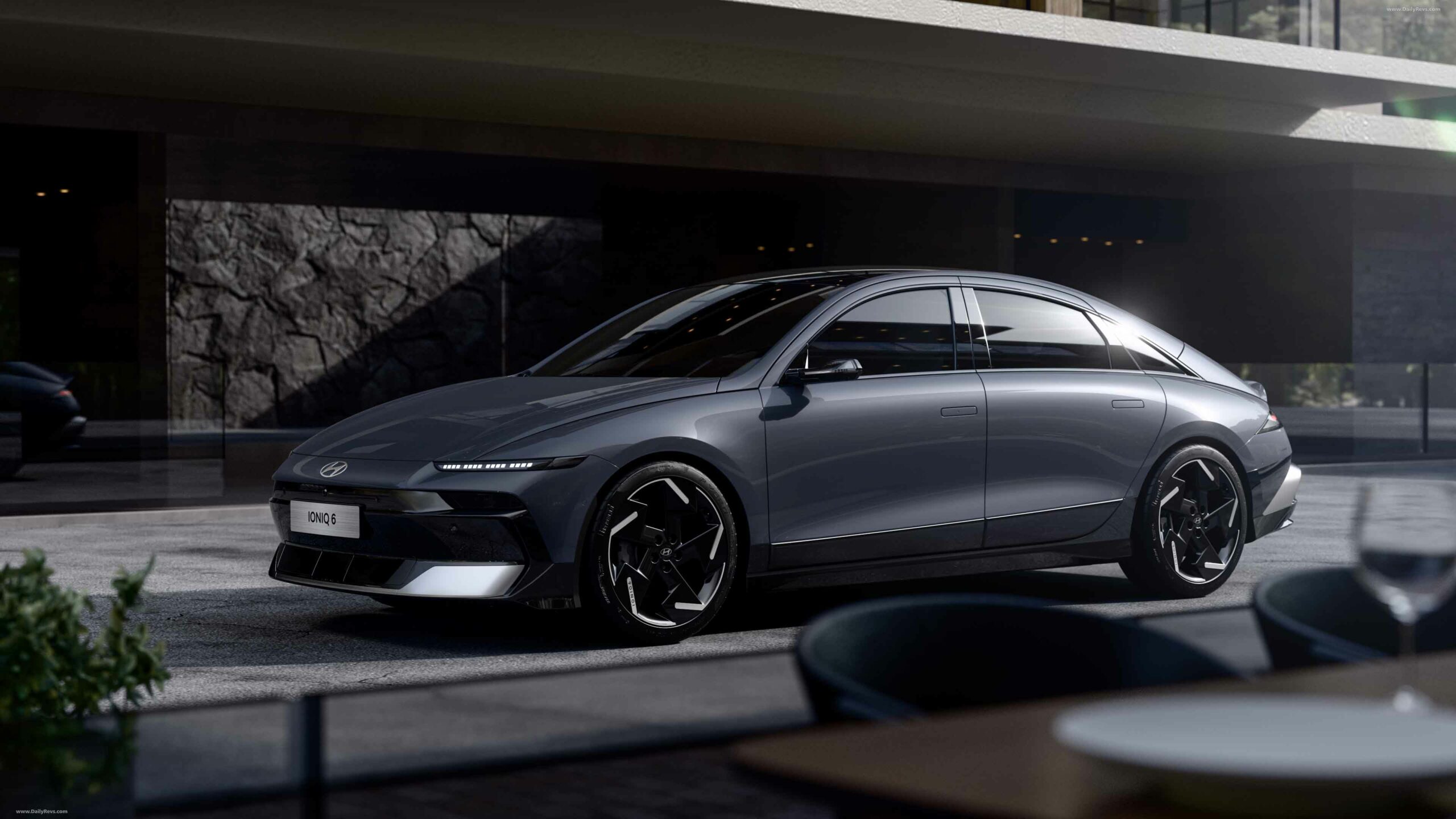
The 2026 Hyundai Ioniq 6 has an odd kind of charisma. It doesn’t announce itself with theatrical styling or aggressive noise. Instead, it glides into your attention the way a tide line finds the shoreline—inevitable, quiet, and oddly compelling. Many drivers notice the obvious first: its sleek, low-slung EV silhouette and the promise of real-world efficiency. But the deeper fascination emerges when you start treating range and charging not as numbers on a spec sheet, but as a daily ritual—one shaped by software, thermal management, route planning, and even your own driving tempo.
This review focuses on how the 2026 Ioniq 6 handles the two concerns that hover over every electric sedan: range you can trust and charging that doesn’t feel like a chore. Along the way, we’ll address a common observation—that EV range is unpredictable in the cold or on faster highways—and then unpack why the Ioniq 6’s approach to those variables feels more grounded than you might expect.
First Impressions: The EV Sedan That Refuses to Be Busy
The Ioniq 6’s design has the kind of aerodynamic poise that feels purposeful rather than decorative. Its long hood, smooth surfaces, and streamlined roofline make it look like it’s always moving—even while standing still. Yet, the reason this matters to the range conversation is simple: aerodynamic efficiency is not just a design philosophy; it’s a range multiplier.
Wind resistance grows dramatically with speed, and EVs pay for that physics quickly. When a car reduces drag, it doesn’t merely stretch the top end of your range. It also stabilizes it, making your estimates less likely to swing wildly as your driving habits change. That steadiness is part of why people keep falling back to the Ioniq 6 after their first drive impression.

EV Range in the Real World: Why “Unpredictable” Isn’t the Whole Story
A common observation with EVs is that range seems to evaporate when conditions turn hostile—cold weather, strong headwinds, or brisk highway cruising. On the surface, this feels like unreliability. In practice, it’s the result of several simultaneous energy drains that traditional gas-car intuition doesn’t prepare you for.
In winter, battery chemistry becomes less eager. The car must spend energy warming the pack and optimizing power delivery. At highway speeds, aerodynamic losses dominate. Add heavy rain or hilly terrain and you get an energy ledger that doesn’t resemble the calm, standardized testing cycle.
What’s intriguing about the Ioniq 6 is how it turns those constraints into something closer to manageable variables. Its efficiency-first engineering philosophy reduces baseline consumption, giving the battery more breathing room when extra heating or thermal conditioning is required. That’s why two drivers can report different “feel” for the same range number: one is simply paying more for the same physics.
Range Estimation and Driver Psychology: The Magic Is in the Forecasting
Range confidence isn’t only about maximizing miles; it’s about how the car helps you plan. Modern EVs rely on predictive models that consider speed, elevation changes, temperature, and drivetrain load. The best systems don’t just estimate—they learn the pattern of your driving.
When the Ioniq 6 updates its projections with increasing accuracy, it does something subtle to your decision-making. Short detours become less stressful. You stop treating every mile as a gamble. The result is a sense of steadiness that feels almost conductor-like—guiding you through the commute without overbearing instructions.
That’s the deeper reason people fixate on range: it’s not only the distance. It’s the reduction of mental friction.
Highway Driving: Efficiency Under Pressure
Highway cruising is where EV range either looks heroic or feels fragile. The Ioniq 6’s streamlined stance is built for long-distance stability. By minimizing drag, it reduces the energy penalty of higher speeds, though no EV is immune to the basic law that energy demand scales sharply with velocity.
Still, the sensation of driving the Ioniq 6 at speed can be calmer than you expect. Throttle inputs feel less like they’re commanding an immediate cost. Regen behavior and power delivery typically help smooth out efficiency, especially when you keep your tempo consistent rather than constantly accelerating and braking like you’re fighting traffic.
In other words: the car rewards disciplined momentum. That’s not a limitation—it’s an invitation to drive in harmony with the platform’s strengths.
Charging Experience: The Difference Between “Possible” and “Convenient”
Charging is often described in terms of peak power—numbers that look thrilling in headlines. But daily life is governed by practicality: how reliably the car reaches useful charging rates, how efficiently it manages heat during fast charging, and how smoothly you move from plug-in to departure without babysitting a device.
The Ioniq 6’s charging strategy is designed to maintain performance across a range of temperatures and battery conditions. Thermal management is the quiet workhorse here. If the battery overheats or falls into an unfavorable temperature band, charging curves flatten, and time becomes the real villain.
Instead of making you feel like you’re negotiating with the battery, the Ioniq 6 aims to deliver a consistent experience. That consistency changes how you schedule charging. You stop thinking in frantic windows and start thinking in errands, stops, and the rhythm of an ordinary day.

DC Fast Charging: What to Expect When You’re in a Hurry
When you’re using DC fast charging, the goal is simple: arrive with enough charge to move on, leave with more than you started. Fast charging behavior depends on state of charge at arrival and battery temperature at the moment of connection.
A practical tip follows from the physics: arriving at a mid-range battery level often yields a better charging experience than arriving nearly full. The reason is the battery’s ability to accept current without pushing into thermal or electrochemical limits. In many EVs, the car must taper charge as the battery approaches higher levels, because the system is protecting longevity.
The Ioniq 6’s charging curve tends to feel “legible.” You know that after a certain point, the car will slow down—not because it’s broken, but because it’s doing what batteries need to do. Legibility is a surprisingly rare virtue in consumer technology, and it becomes a confidence booster once you’ve relied on the car for more than one trip.
Level 2 Charging and Overnight Confidence
For most owners, home charging isn’t just a convenience. It’s the foundation of EV ownership. Level 2 charging turns the daily question—“Do I have enough range?”—into an answer that writes itself by morning.
When you plug in overnight, the car’s thermal strategy and charging scheduling help optimize battery conditions for both immediate readiness and long-term health. The Ioniq 6’s approach aims to reduce stress on the pack. That matters because battery longevity is not a single variable; it’s the cumulative effect of temperature exposure and charging habits over time.
Overnight convenience also changes how you perceive range. You stop planning around charging and start planning around where you want to go.
Efficiency Habits: How to Get More Out of the Same Battery
Efficiency is not only an engineering achievement; it’s a relationship. The Ioniq 6’s aerodynamics and power delivery create a platform where small habits can pay dividends.
Gentle acceleration tends to preserve energy, while steady highway speed reduces drag-induced spikes. Tire condition and pressure also matter more than many drivers assume. Even if you ignore everything else, keeping tires in a healthy range can make your range feel more consistent and your charging sessions more satisfying.
Regenerative braking deserves respect, too. Using regen effectively can convert routine deceleration into energy recovery. Think of it as turning everyday friction into a kind of controlled rebound—less of a “system feature,” more of a driving style lever.
Why the Ioniq 6 Keeps Appearing on People’s Minds
There’s a reason the 2026 Hyundai Ioniq 6 inspires recurring curiosity. It doesn’t merely chase efficiency as a marketing phrase. It treats energy management as a holistic craft. Range becomes less of a verdict and more of a conversation between your route, your climate, and the car’s thermal brain.
That’s why even critics who point out EV limitations often concede a feeling of cohesion. The car doesn’t fight your expectations; it reframes them. Cold weather still reduces range. Highway speed still consumes energy quickly. Yet the Ioniq 6 makes those realities feel less chaotic and more understandable.
Conclusion: Range and Charging, Rebalanced into Daily Life
The 2026 Hyundai Ioniq 6 earns its reputation by doing something quietly rare: it turns EV concerns into operational rhythms. Its aerodynamic efficiency reduces baseline consumption, making winter and highway driving feel less like a punishment and more like a predictable trade. Charging, meanwhile, is approached as an experience of stability—supported by thermal management and a legible charging strategy that helps you plan instead of panic.
If EV ownership sometimes feels like you’re negotiating with variables, the Ioniq 6 offers a different tone. It doesn’t erase the physics. It simply makes them feel more negotiable. And that—more than any headline range number—is what keeps drawing drivers back.