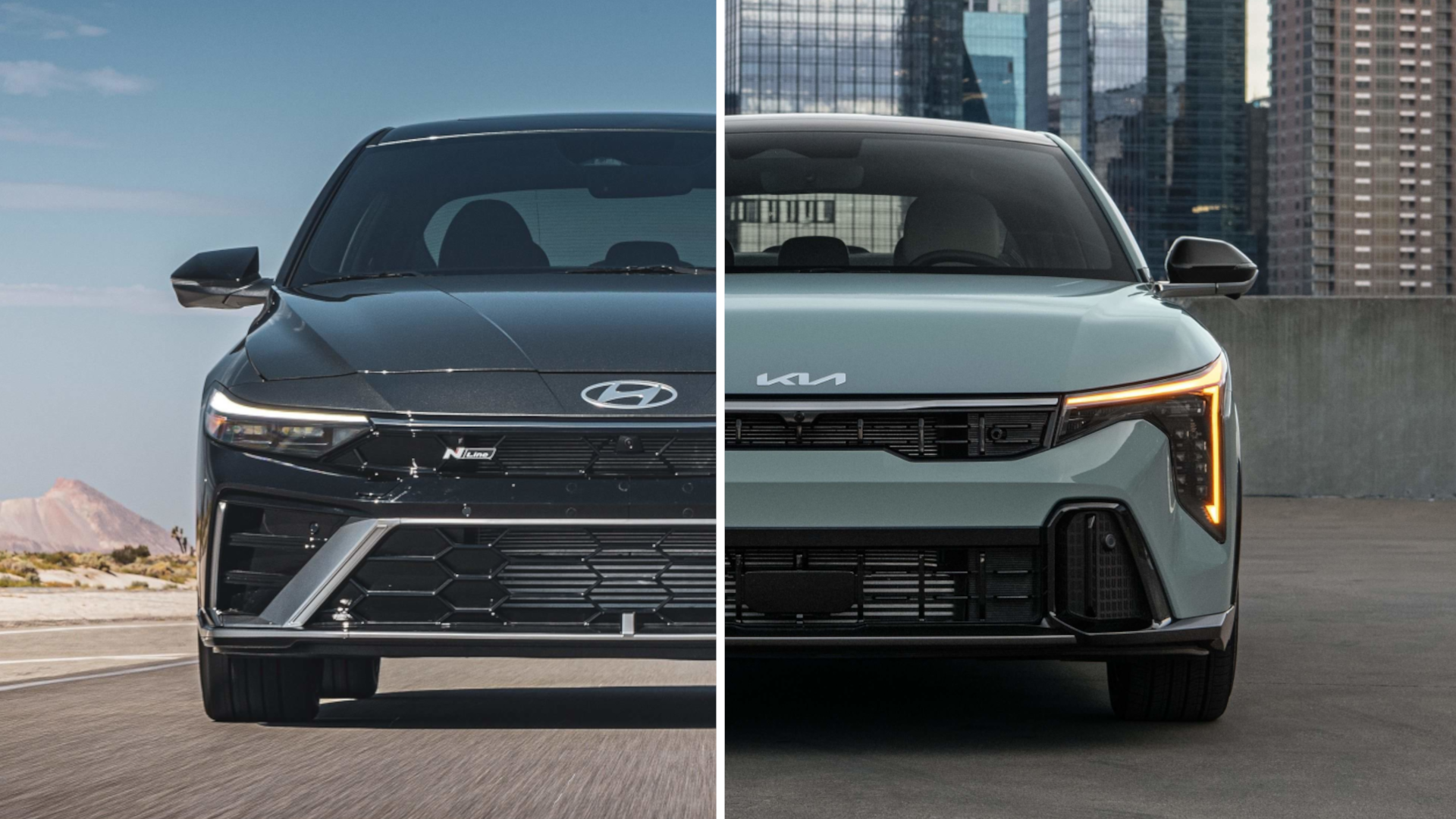
The compact sedan arena is heating up for 2026, and the gloves are off between two automotive siblings—Hyundai Elantra and Kia K4. These aren’t just any twins; they’re more like siblings who’ve grown up in different neighborhoods but still share the same DNA. One whispers efficiency, the other hums with sporty flair. One leans into tech-laden cabins, the other into tactile, driver-focused dynamics. So, which one wears the crown in 2026? Buckle up—we’re about to pit them head-to-head in a battle of budgets, brawn, and brilliance.
But here’s the twist: what if neither is the perfect fit? What if the real question isn’t “Elantra or K4?” but “Which one secretly wants to be a hatchback?” Let’s find out.
The Family Feud: Shared DNA, Different Personalities
Beneath their sleek exteriors, the 2026 Hyundai Elantra and Kia K4 share the same platform, powertrains, and even some interior switchgear. It’s like having two versions of the same personality—one introverted, one extroverted. The Elantra, the elder sibling, favors a more refined, tech-forward demeanor. Its grille is subtle, its lines clean, and its cabin prioritizes digital integration over tactile buttons. The K4, meanwhile, struts in with a bolder grille, sharper creases, and a cockpit designed to make your knuckles whiten on winding roads.
Both ride on the same 2.0L naturally aspirated engine (147 hp) paired with a CVT, though rumors swirl about a turbocharged 1.6L option in select markets. The real differentiator? Suspension tuning. The Elantra leans toward comfort, swallowing potholes with ease, while the K4’s setup is firmer, rewarding those who crave a more connected drive. It’s the difference between a lounge singer and a rock star—same genes, different stages.

Exterior Elegance vs. Aggressive Allure
The Elantra’s design philosophy is “less is more.” Its front fascia is understated, with a cascading grille that whispers sophistication. The K4, however, screams. Its tiger-nose grille dominates the front end, flanked by LED-lit “Star Map” headlights that look like they’ve been plucked from a sci-fi flick. The Elantra’s profile is smooth, with a gently sloping roofline, while the K4’s fastback silhouette hints at coupe-like agility.
Rear ends tell a similar story. The Elantra’s taillights are slender and integrated, blending into the bodywork. The K4’s are chunkier, with a horizontal LED bar that screams “look at me.” Even their wheels differ: the Elantra often rolls on 16- or 17-inch alloys, while the K4’s standard 18s give it a sportier stance. It’s the difference between a tailored suit and a leather jacket—both stylish, but one demands attention.
Cabin Comfort: Tech Temple or Driver’s Den?
Step inside, and the Elantra greets you with a dual 10.25-inch curved display—one for the digital instrument cluster, the other for infotainment. It’s a minimalist’s dream, with soft-touch materials and ambient lighting that shifts from cool blue to warm amber. The K4, however, throws convention out the window. Its center console is angled toward the driver, with a larger 12.3-inch touchscreen and physical buttons for climate control. It’s a cockpit designed for those who believe driving should feel like a dialogue, not a monologue.
Seating comfort is a toss-up. The Elantra’s chairs are plush and supportive, ideal for long hauls. The K4’s are firmer, with bolstered sides that hug you during spirited turns. Both offer ample legroom, but the K4’s rear seat is slightly narrower, making it less ideal for tall passengers. Storage is another story: the Elantra’s trunk is a cavernous 14.2 cubic feet, while the K4’s is a more modest 13.2. Choose wisely—do you value space or sportiness?

Performance: The Tortoise and the Hare
Under the hood, both sedans share the same 2.0L naturally aspirated engine, but their personalities diverge on the road. The Elantra’s CVT is tuned for fuel efficiency, delivering an EPA-estimated 33 city / 43 highway MPG. It’s the sedan for those who treat their car like a Swiss watch—reliable, precise, and never flashy. The K4’s CVT, however, is geared toward quicker acceleration, with a sportier tune that makes overtakes feel less like a chore.
For those craving more oomph, Hyundai and Kia are rumored to offer a turbocharged 1.6L option in higher trims. The Elantra N Line, if it materializes, could push 200 hp, while the K4 GT might flirt with 190 hp. Both would pair with a dual-clutch automatic for sharper shifts. But here’s the kicker: neither sedan is a performance machine. They’re commuters with delusions of grandeur—fun to drive, but not in the same league as a Civic Type R or Golf GTI.
Tech and Safety: The Digital Arms Race
Both sedans come loaded with advanced tech, but Hyundai edges out Kia in some areas. The Elantra offers Hyundai SmartSense, a suite of safety features including blind-spot monitoring, rear cross-traffic alert, and highway driving assist. The K4 counters with Kia Drive Wise, which includes a 360-degree camera and forward collision-avoidance assist. Both systems are competent, but the Elantra’s lane-keeping assist is slightly more refined.
Infotainment is where the K4 shines. Its 12.3-inch touchscreen supports wireless Apple CarPlay and Android Auto, while the Elantra’s 10.25-inch display requires a cable. Both offer wireless charging, but the K4’s ambient lighting system has more customization options. It’s the difference between a flip phone and a smartphone—both get the job done, but one feels more modern.
The Price Paradox: Value vs. Vanity
Pricing will be the ultimate decider. The Elantra starts around $22,000, with the K4 likely debuting at $23,500. The gap narrows in higher trims, where the K4’s sportier aesthetics and larger screen could justify the premium. But here’s the rub: resale values. Hyundai sedans historically hold their value better than Kias, thanks to stronger brand loyalty and perceived reliability. The K4 might turn heads today, but will it still be desirable in five years?
Lease deals could tip the scales. Hyundai often offers aggressive incentives, while Kia’s “Kia Care” maintenance plans might sway budget-conscious buyers. It’s a classic case of substance vs. style—do you want a sedan that’s built to last, or one that makes you feel like a million bucks?
Final Verdict: Which Twin Wins?
So, which one emerges victorious in 2026? It depends on what you crave. If you’re a tech enthusiast who values efficiency and resale, the Elantra is your steed. If you’re a driving enthusiast who wants a car that feels alive, the K4 is the pick. But here’s the twist: neither is perfect. The Elantra’s cabin feels a bit too clinical, while the K4’s rear seat is cramped. Both lack the excitement of a hatchback, leaving you wondering—why not go for the Kia Soul or Hyundai Elantra GT instead?
Perhaps the real question isn’t “Elantra or K4?” but “Why settle for a sedan when you could have a wagon?” The compact car wars are far from over, but for now, the twins stand side by side, each offering a piece of the puzzle. Choose wisely—your commute will thank you.