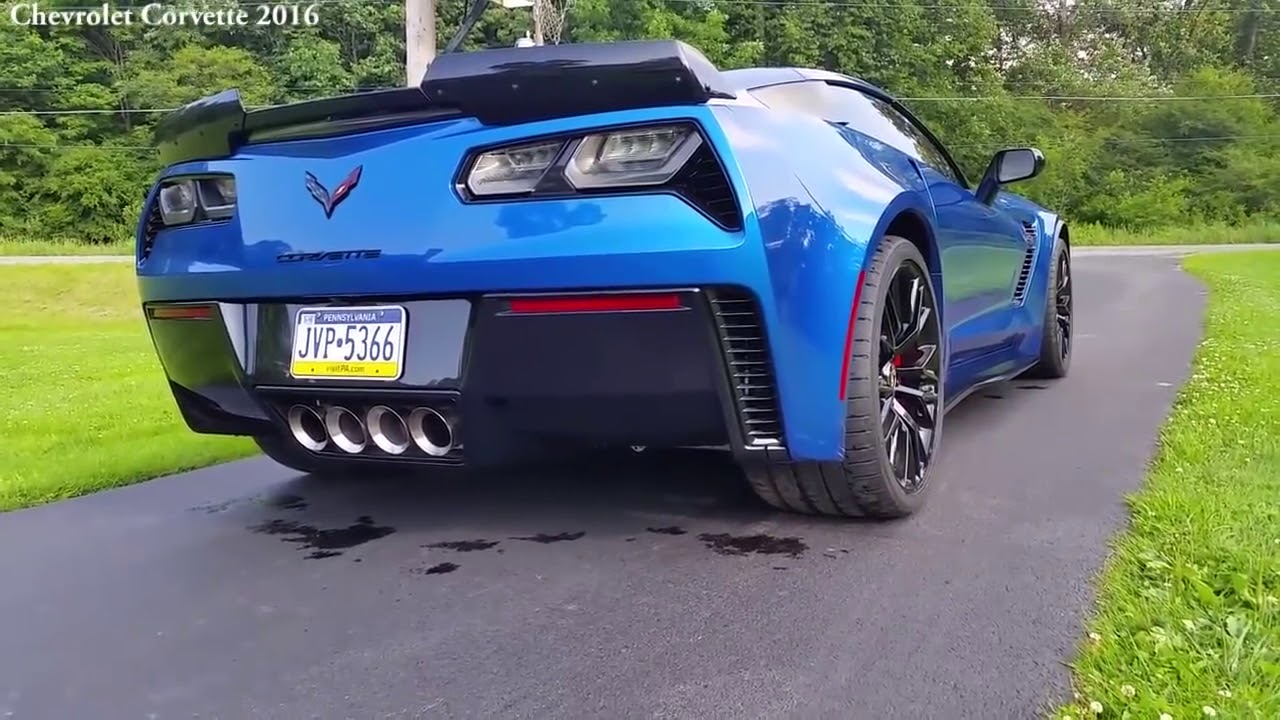
The first thing you notice in the 2026 Corvette Z06 isn’t the badge or the silhouette—it’s the voice. Not a polite murmur, not a synthesized growl from a screen-fed speaker. It’s the kind of exhaust note that seems to arrive before the car does, as if the soundtrack is already warming up somewhere down the road. People often say they’re “just drawn to the sound.” That’s true, but it’s also incomplete. There’s something more primal at work: the exhaust is a feedback loop between engineering and emotion. It tells you what the engine is doing, when it’s working hard, and how relentlessly it intends to keep doing it.
On paper, the Z06 is a performance machine. On the road, it becomes a storyteller. Each throttle input is a sentence. Each shift is punctuation. And every time the exhaust flares into a sharper cadence, you feel the same thought form in your mind: how can an object be both mechanical and musical?
Where the Exhaust Sound Starts: More Than Just Volume
A common observation is that the Z06 “sounds aggressive.” That word gets tossed around as if it explains everything. But aggression is only the surface impression. The deeper fascination comes from the exhaust’s texture—the way tone changes with engine speed and load. At idle, you might hear a restrained rumble, the sort that suggests composure rather than chaos. Crack the throttle and the note sharpens, turning from a low, steady presence into something more aerated and urgent.
This texture is rarely accidental. Exhaust sound is the outcome of multiple systems speaking simultaneously: cam timing, intake airflow, combustion stability, and exhaust-path tuning. When these factors align, the result isn’t merely louder. It’s clearer. You can distinguish events: compression, combustion, transition, and release. That clarity is part of why owners and onlookers feel a strange intimacy with the car. It’s as though the engine is making its intentions audible.
And then there’s the psychological layer. Humans are pattern-seeking creatures. When the exhaust produces repeatable cues—rising frequency on rev, a distinct bark under load, a particular cadence during gear changes—our brains reward the predictability with anticipation. That’s fascination, not just attraction.
Rev Range: The Moment the Car Becomes a Conductor
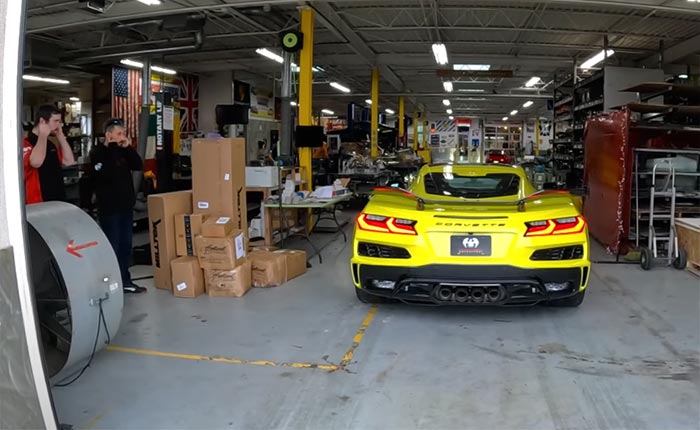
Take the 2026 Z06 out for a drive and you’ll quickly learn that its exhaust character isn’t constant. The sound evolves like a composition reaching different movements.
In the lower rev band, the exhaust tends to feel denser. It’s a growl with mass—thick enough to occupy space, steady enough to sound confident. As revs rise, the pitch climbs and the tone begins to separate into distinct harmonics. Under brisk acceleration, the exhaust becomes more percussive. It doesn’t just roar; it strikes. That’s the difference between a general “hot” sound and a specifically engineered one.
The deeper reason people are captivated is that the exhaust note becomes a real-time dashboard. You can sense traction limits, gearing strategy, and throttle demand without looking at any gauges. Listen carefully and you’ll hear when the engine is building pressure, when it’s transitioning between states, and when it’s holding back to preserve drivability.
Try this on the road: perform gentle accelerations, then slightly heavier ones, then a full-throttle pull. Notice how the sound isn’t only louder during the final scenario—it becomes sharper at the edges. That sharpening is a mechanical signature of combustion dynamics and exhaust flow, rendered audible.
Inside the Cab: The Sound That Feels Like Feedback
Every performance car has a relationship with the driver, but the Z06’s relationship is particularly vivid. From the cockpit, you don’t merely “hear” the exhaust. You feel it. Low-frequency vibrations press against the bodywork and transmit through the structure, while higher harmonics reach the cabin through a combination of acoustic pathways and resonance.
Short sentences matter here, because the cabin experience is immediate. A downshift arrives, and the note snaps into a different register. You lift the throttle, and the exhaust doesn’t simply quiet; it changes character, often with a trailing rumble that feels like the engine exhaling after exertion.
This is where many drivers realize the Z06’s soundtrack is more than entertainment. It’s an interface. The car communicates its state through sound cues, reducing the gap between intention and result. When the engine responds with the expected auditory signature, confidence rises. When it surprises you, you remember why you fell in love with cars in the first place.
The Road Test: Throttle Inputs and Real-World Dynamics
On a road test, it’s easy to talk about peak power. But the exhaust tells a more nuanced story. It reveals how the car behaves during daily-use scenarios: merging, passing, cresting small grades, and threading through traffic.
Start with roll-on acceleration in mid-range speeds. The Z06 tends to deliver its thrust with a crispness that makes the exhaust note seem synchronized with the surge. The sound climbs in tandem with the acceleration, not as an afterthought, but as a companion to the motion.
Then attempt a series of transitions: lift, coast, reapply throttle, and accelerate again. Listen for the consistency. A satisfying exhaust system doesn’t behave like a single note generator. It responds with repeatable cadence—rise, bark, and settle—like a well-trained instrument.
During braking, the engine may contribute subtle changes in tone depending on driveline behavior. These variations are often overlooked, yet they shape the overall perception of the car. When the exhaust remains coherent across states, the vehicle feels “alive,” not merely loud.
Why It Fascinates People: The Deeper Mechanism of Attraction
Many enthusiasts frame their fascination as fandom—brand loyalty, nostalgia, and the romance of American muscle. Those elements matter, but they don’t fully explain the magnetic pull. The deeper reasons are mechanical and cognitive.
First, exhaust sound is a direct byproduct of combustion. Combustion is the heart of performance. When the engine burns efficiently and the exhaust paths are tuned, the resulting sound carries information. It tells you that the machine is operating in a disciplined way, even when it’s being dramatic.
Second, there’s a resonance effect. Human hearing is exquisitely sensitive to frequency relationships. When the exhaust produces harmonics that align with our auditory preferences—without turning into harsh rasp—you get a sensation of richness rather than aggression.
Third, there’s ritual. Drivers repeat behaviors: pull away, rev gently, pass decisively, park and listen one last time. The exhaust becomes part of a loop. Each drive reinforces the emotional map, creating a personal “signature” of the car that no spec sheet can convey.
Variants, Tuning, and the “Straight Pipe” Mythos
Not every Z06 experience is identical. Exhaust character can shift depending on configuration, operating mode, and aftermarket interventions. The idea of a straight-pipe setup is often romanticized online, and it can amplify certain qualities—more direct flow, less attenuation, more raw vocalization. Yet pure volume isn’t the whole story. Straight-pipe conversions can also alter tonal balance, sometimes leading to harsher frequencies that wear on the senses over time.
What matters most is not merely how loud it gets, but how the note stays legible. A great exhaust system retains musicality across conditions. It provides variety without degenerating into drone. That legibility is where the fascination deepens: it feels like a language, not a noise source.
If your goal is the most satisfying road presence, consider how you drive. City streets demand restraint. Back roads reward clarity at mid to high rev. Long highway stints reveal whether the exhaust introduces fatigue. The best setups sound exciting and usable.
Living With It: Practical Reality After the Thrill
A road test is thrilling, but ownership is a marathon. The exhaust’s character affects daily life: cold-start moments, late-night exits, and the occasional early-morning start when the neighborhood expects quiet.
Here, context matters. The Z06’s ability to shift between modes—and its tendency to remain coherent rather than abrasive—can make it feel less like a constant performance alarm and more like a controllable instrument. You can enjoy the drama without being chained to it.
Also, the sound changes with temperature and load. That variation adds richness. It makes each drive slightly different, even when the route is the same. In a world of monotone tech, that small unpredictability can feel oddly refreshing.
Final Thoughts: The Exhaust as an Emotional Instrument
By the end of the 2026 Corvette Z06 road test, it becomes clear why people fixate on the exhaust sound. It’s not only the roar. It’s the information embedded in tone. It’s the way the engine communicates its effort with audible precision. It’s the harmony between mechanics and meaning.
The Z06 doesn’t merely transport you. It performs for you—rev by rev, shift by shift—turning every acceleration into a brief, unforgettable scene. And once you’ve heard that voice on the road, you understand the deeper truth behind the obsession: the fascination isn’t with noise. It’s with expression.