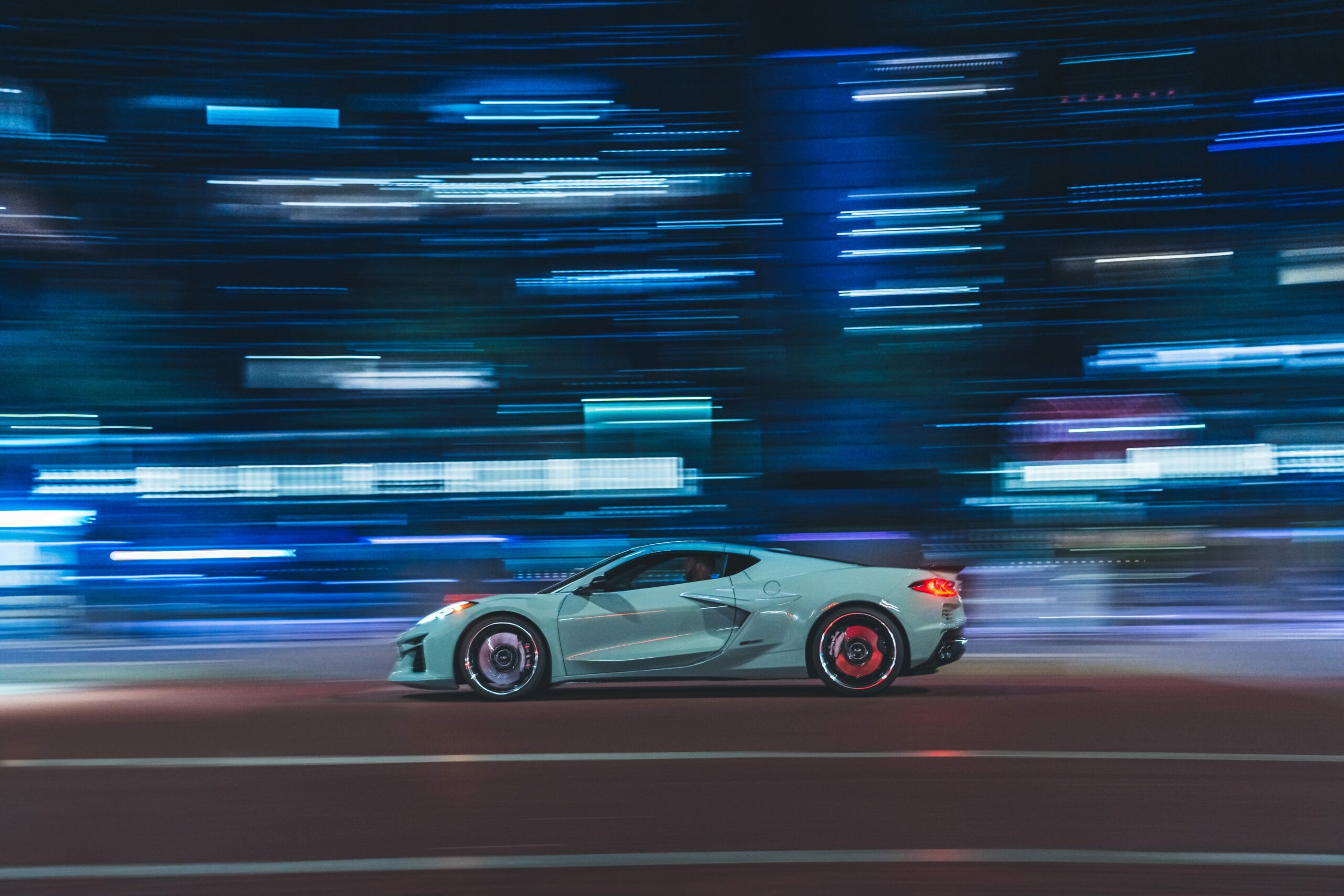
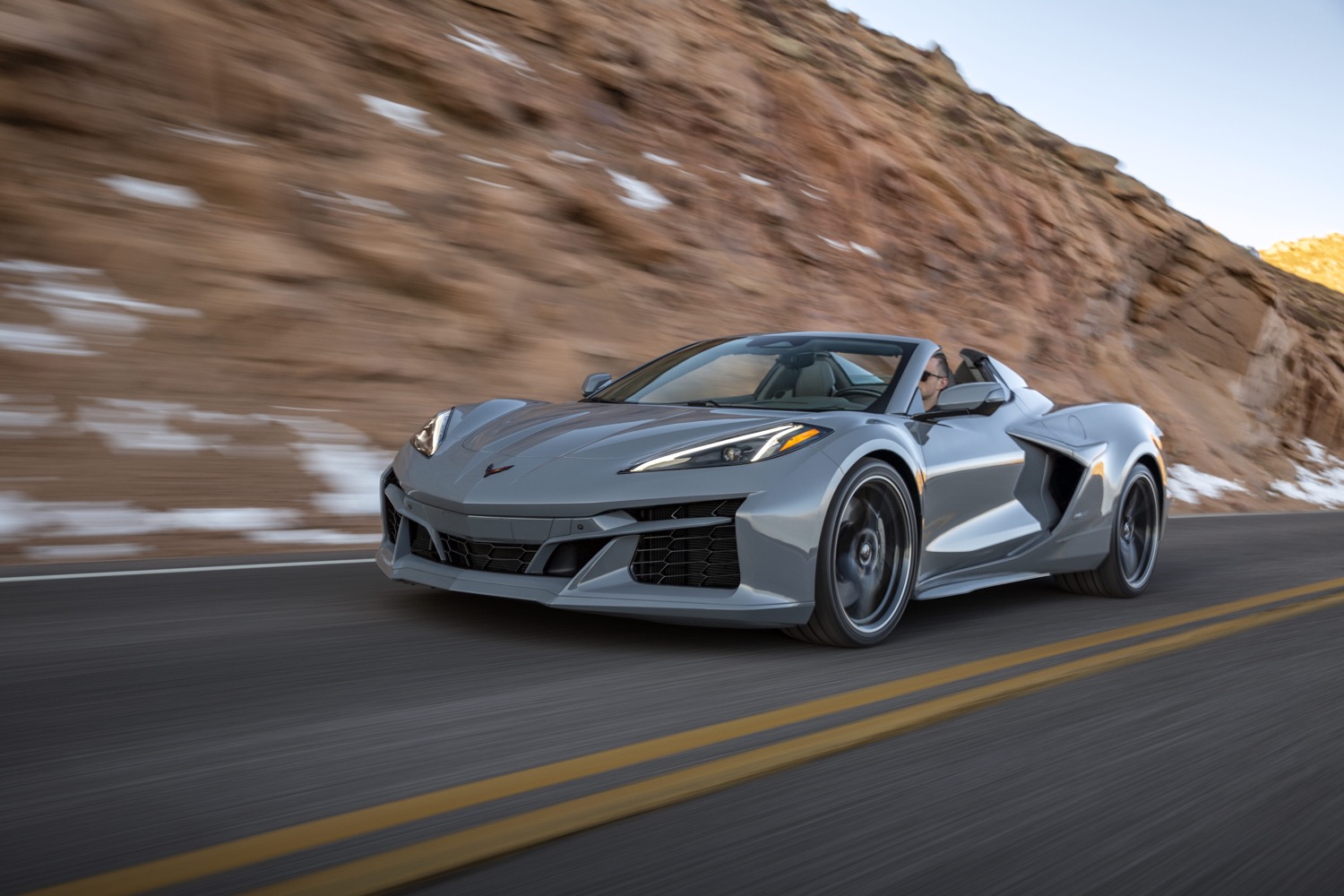
The 2026 Corvette E-Ray doesn’t arrive so much as it intrudes—quietly at first, then with unmistakable intent. The headlines around its debut tend to orbit the obvious: electrification, performance hardware, and the kind of aerodynamic posture that makes a parking lot feel smaller. Yet the real intrigue begins where the stopwatch and the asphalt meet. A 0–60 sprint is a demand; a quarter mile is a verdict. Together, they reveal whether the E-Ray’s promise is merely theoretical—or insistently, repeatedly true.
In this performance-minded walkthrough, the focus narrows to one question: how does the E-Ray behave when the world compresses into seconds? What changes when traction is no longer a compromise but a strategy? And what kind of perspective shift occurs when torque arrives not as an accessory, but as an orchestration?
To understand the test, it helps to imagine two separate engines of momentum. One is muscle—visceral, familiar, and immediate. The other is refinement—precise, responsive, and slightly uncanny in how it seems to anticipate motion. The E-Ray blends those influences into something that feels less like a car accelerating and more like a plan executing.
Why 0–60 Times Are More Than a Number
There’s a temptation to treat 0–60 as trivia—a quick metric for bragging rights. But a 0–60 run is actually a microcosm of engineering choices. It exposes how the vehicle manages initial traction, how it handles drivetrain cooperation, and how quickly it converts stored potential into real-world speed.
In an electrified platform, the early phase can become especially revealing. Electric torque is available almost instantly, and that immediacy changes the character of the launch. Instead of relying solely on the combustion engine’s ramp, the vehicle can apply force with a degree of granularity that feels almost surgical. The consequence isn’t just speed; it’s a sense of control that can turn wheelspin from a specter into a non-event.
Still, perfection is never free. The 0–60 test also reflects tire temperature, surface consistency, and the driver’s timing—elements that become variables in any meaningful performance evaluation. A good run isn’t accidental. It’s choreography.
The Launch: Where Traction Becomes a Philosophy
Imagine the first half-second as a threshold crossing. The car is deciding what it will be: a tire-squealing spectacle or a disciplined projectile. With the E-Ray, the launch phase aims for the latter. Electrification invites a different approach to grip management, because torque delivery can be tuned in real time.
The result is often a launch that feels “heavier” than expected. Not slower—just more composed. Where some high-performance cars feel like they’re fighting themselves, the E-Ray can feel like it’s leaning forward with intent, as if it already knows what the next second will demand.
That’s the promise at the heart of the perspective shift: acceleration becomes less about brute force and more about coordination. Even the soundscape changes. Instead of a simple roar, there’s a layered sense of thrust, like multiple sensations working in tandem.
0–60 Continuity: The Mid-Sprint Story
After the initial surge, the run enters the phase where many performance vehicles lose their aura. Momentum is no longer being built from zero; it’s being sustained under rising loads. Gears, traction, and throttle mapping all start to matter at once. This is where the E-Ray’s character can separate itself from the usual “launch then hope” pattern.
If the vehicle is balanced, the acceleration doesn’t stutter. It transitions. The mid-sprint should feel seamless, with the drivetrain reacting as speed climbs and aerodynamic drag begins to become a stubborn presence. In a well-executed 0–60, the driver’s foot doesn’t feel like it’s pushing against a wall; it feels like it’s slipping into a groove.
That continuity is more than comfort. It’s measurable performance. A smoother increase in speed typically means less wasted motion—no dramatic surges that flare and fade. Instead, the E-Ray should present a single, unbroken intent from start to sixty.
From Speed to Distance: Why the Quarter Mile Feels Different
A quarter mile is a longer argument. Sixty miles per hour is a milestone; the quarter mile is an endurance test of acceleration logic. Here, the vehicle’s ability to maintain traction and manage energy delivery over several seconds becomes crucial.
This is where curiosity sharpens. Many cars can be impressive in a short sprint yet lose coherence halfway through a longer pull. The question is whether the E-Ray’s electrified dynamics remain effective as speed builds, heat rises, and the surface demands change.
In the quarter mile, you’re not just chasing a time—you’re measuring how confidently the vehicle converts effort into velocity at every stage. The run becomes a sequence of decisions made by sensors and control systems, while the driver provides the initial instruction.

The Quarter Mile Stages: Hook, Build, and Hold
Think of the quarter mile as three acts. First is the hook: traction under maximum torque at the start. Second is the build: sustained acceleration as speed rises and the vehicle’s energy management becomes the true protagonist. Third is the hold: can the car keep accelerating without slipping into inefficiency?
In an E-Ray scenario, electrification can influence all three acts. The electric component can assist during the most demanding part of the run—when traction is scarce and the driver’s intent is absolute. As the vehicle moves faster, the combustion side and overall drivetrain coordination must remain crisp. The goal is a run that doesn’t merely look fast from the outside, but stays fast in the way performance engineers define success: consistent acceleration rates through the trap.
A strong quarter-mile run tends to feel relentless rather than frantic. That feeling is a sign of balance. When balance is present, the car doesn’t “hunt.” It simply advances.
What Drivers Will Notice: The Sensory Shift
Performance is often described with numbers, but the E-Ray experience is also about sensation. The steering effort, the stability under torque, and the way the car tracks down the lane can make a profound difference in confidence.
In a high-performance EV-assisted setup, torque response can arrive with an almost conversational immediacy. It’s not just quick—it’s readable. That readability affects how a driver modulates throttle. The best runs often come from a driver who doesn’t need to compensate for chaos. Instead, the vehicle’s behavior invites trust.
The perspective shift, then, is emotional as well as technical. The E-Ray aims to change what “fast” means: less about raw volatility, more about purposeful propulsion.
How Conditions Can Rewrite the Outcome
Even the finest traction strategy can be challenged by the environment. Temperature influences air density and tire behavior. Rain, oil, or uneven pavement can change the rules instantly. Quarter-mile tracks often offer consistent grip, but no two sessions feel identical.
For a 0–60 and quarter-mile comparison, consistency is king. The same tire compound, similar preload conditions, and repeatable launch technique help isolate what the car itself is doing. When the conditions align, the E-Ray’s performance identity becomes clearer—less dependent on luck, more dependent on engineering.
That’s why curiosity is justified. When you see a fast time, you want to know whether it’s a one-off miracle or a repeatable behavior. The E-Ray’s goal is repetition.
Interpreting the Results: The Real Takeaway
When the timing lights blink, the numbers will inevitably become the headline. But the deeper takeaway is how the car got there. A 0–60 test reveals early traction discipline and drivetrain cooperation. A quarter mile reveals whether that cooperation remains steadfast as demands increase.
If the E-Ray is truly delivering on its promise, the run should feel coherent from launch through the trap. The car should not merely be quick at the beginning; it should keep its composure under sustained acceleration. That composure is the signature of an efficient performance system.
In other words, the stopwatch doesn’t just measure speed. It measures the absence of doubt.
Outrunning Doubt: Why the E-Ray’s Times Matter
The 2026 Corvette E-Ray is poised to challenge expectations about what a Corvette can be in the era of electrification. The 0–60 sprint will show how quickly it can transform intention into motion. The quarter mile will show whether it can sustain that transformation when physics starts charging interest.
If the test results arrive with convincing authority, they’ll do more than satisfy curiosity—they’ll recalibrate it. The E-Ray won’t just chase faster times. It will reshape how performance is perceived: as coordination, not chaos; as strategy, not mere insistence.
And when the car finally rolls past the finish line, the most lasting impression won’t be the sound or the stance. It will be the certainty of a run executed with purpose—proof that acceleration can feel like a promise fulfilled.