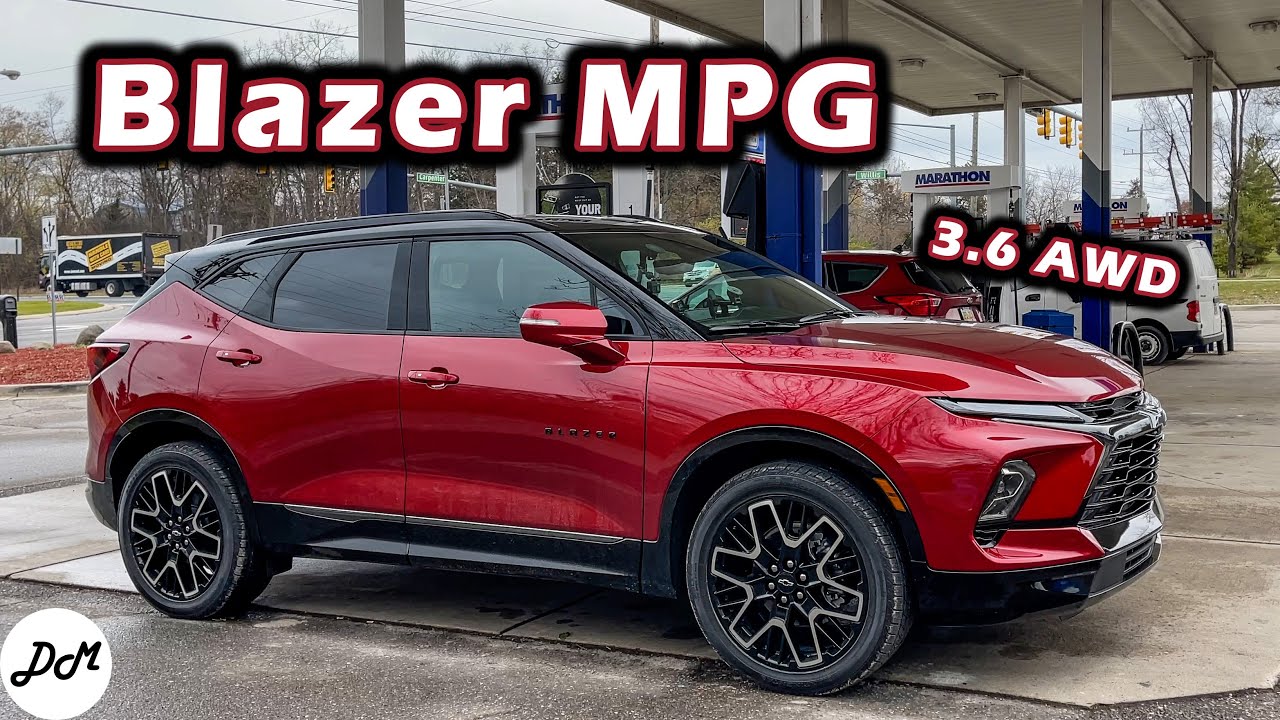
Every car has a moment of quiet skepticism in the driveway—right before the first real drive reveals what the spec sheet never quite captures. With the 2026 Chevrolet Trailblazer, that moment often arrives when someone checks the fuel economy expectations and wonders whether “real-world MPG” will feel more like a promise or a puzzle. The common observation is familiar: on paper, the numbers look crisp, but in life—traffic signals, uneven highway grades, stop-and-go commutes—the accuracy can drift. Yet fascination tends to bloom precisely where certainty breaks down.
This is where a real-world MPG test becomes more than a checklist. It’s a lens. It exposes how driving temperament, weather, tire choice, and even the way a driver blends throttle response can reshape results. And somehow, the Trailblazer invites that scrutiny. It isn’t just about squeezing miles from a tank. It’s about watching the vehicle translate everyday conditions into measurable efficiency.
Why “Real-World MPG” Rarely Mirrors the Sticker
The first lesson is almost philosophical: official MPG ratings are engineered for consistency, while daily driving is a mosaic. Even two trips that look identical on a map can behave differently in reality. A headwind can steal momentum. A slightly higher tire pressure setting can influence rolling resistance. A warm engine might behave like a different machine compared with the first minutes after cold start.
In practical terms, many drivers experience an MPG shortfall not because the vehicle is inefficient, but because the rating cycle assumes a predictable rhythm. Real life contains interruptions: idling at crossings, rapid accelerations, brief uphill surges, and the inevitable detours that stretch a “quick trip” into a longer one than expected.
The Trailblazer’s charm is that it turns this variability into something you can test. When people run their own MPG experiments—or observe a structured road test—they begin to notice patterns. The most interesting pattern is often that the vehicle doesn’t simply “underperform.” It tends to reallocate efficiency, spending fuel in certain moments and recovering it in others.
Test Setup: Turning Anecdotes into Evidence
A credible MPG test needs more discipline than most drivers expect. The goal isn’t perfection; it’s repeatability. Before measurement begins, factors such as fuel brand consistency, tire condition, and baseline vehicle readiness matter. A nearly full tank reduces the distortion that can occur when calculations use small fuel remaining values.
In a typical real-world protocol, a route mixes freeway segments with controlled city driving. The freeway portion often reveals aerodynamic influence, while the city portion highlights how the powertrain responds to frequent acceleration and deceleration. Then comes the quiet drama: the final averages. This is where it becomes tempting to dismiss the result as “only one drive,” but that would miss the deeper point. The test is not meant to flatter or punish the vehicle—it’s meant to clarify how its efficiency behaves under human conditions.

City MPG: Where the Trailblazer’s Character Shows Up
City driving can feel like a slow negotiation. Stoplights arrive in clusters. Traffic compresses and expands like a breathing organism. In these conditions, MPG becomes less about raw horsepower and more about how the vehicle manages energy.
With the Trailblazer, drivers commonly notice that the early part of a route—after cold start—can drag the average down. That first phase is when the engine and emissions systems are catching their stride. After that, the vehicle’s efficiency can stabilize. The deeper fascination lies in the “middle phase,” when drivers have learned the rhythm of throttle input and the car’s response becomes predictable.
Another reason city MPG results can surprise people: the Trailblazer’s compact SUV packaging changes aerodynamic behavior at low speeds less dramatically than a taller vehicle might. At urban pace, efficiency hinges more on gear management, regenerative deceleration, and how often the engine needs to “re-assert itself.” When those transitions are smooth, MPG tends to look better than it first appears.
Highway MPG: The Aerodynamics That Don’t Announce Themselves
Highway efficiency has a different personality. Instead of frequent starts, it’s about steady load. But “steady load” doesn’t mean constant effort; it means the vehicle is working against air resistance and grade changes while trying to maintain composure.
Drivers often assume highway MPG will be exactly what they expected from the sticker. When it doesn’t land there, they may blame the engine or the transmission. Yet the truth is usually more nuanced. Tire rolling resistance, crosswinds, temperature, and even the presence of roof rack accessories can subtly influence outcomes. A few miles at a slightly higher speed can cost fuel more than many people intuitively realize.
What makes the Trailblazer worth watching is that highway MPG is often more consistent once the vehicle reaches cruising equilibrium. In other words, it may not be the highest numbers possible, but it can deliver an efficiency curve that feels stable—like a steady metronome—rather than a jittery graph.
Real-World MPG vs. Driver Habits: The Throttle Is a Story
Here’s a common observation that many owners recognize: two people can drive the same Trailblazer and see noticeably different results. It’s tempting to call it “luck,” but it’s usually technique.
Efficiency responds to how the throttle is used during transitions—especially in rolling terrain. If accelerations are sharp and frequent, the vehicle burns fuel to rapidly increase kinetic energy, and then the opportunity to recapture some of that energy during deceleration becomes limited. If accelerations are more progressive, the system has a better chance to manage load without excessive excursions.
Even braking style matters. Gentle, earlier braking can help the car leverage regenerative strategies more effectively. The Trailblazer becomes fascinating here because it rewards calm inputs. It doesn’t demand perfection; it encourages a smoother cadence. The result is that MPG becomes a reflection of the driver’s rhythm.
Temperature, Elevation, and Wind: The Hidden Variables
Fuel economy isn’t tested only in laboratories. It’s tested by weather. Cold air can improve air density, but the engine requires additional energy to reach operating temperature efficiently. Warm weather can reduce warm-up losses, yet it may introduce other factors like stronger HVAC demand.
Elevation changes are equally influential. Climbing uses energy; descending offers recovery. However, the recovery isn’t always symmetrical. If the driver chooses to maintain speed aggressively while descending, the fuel savings can shrink. On the flip side, a more measured approach can allow the engine and vehicle systems to reduce fuel consumption during deceleration and regain a portion of lost momentum.
Then there’s wind. A headwind can turn a comfortable cruise into a constant effort. Tailwinds can deliver unexpectedly good MPG, creating the illusion that the vehicle is “mysteriously better” on some days. It isn’t magic. It’s aerodynamics. And the Trailblazer, like most compact crossovers, reveals that truth quickly when the weather refuses to cooperate.
What Tire Choice and Pressure Really Change
Many drivers overlook tires until something goes wrong. But tires quietly govern rolling resistance, which influences highway MPG in particular. A slightly underinflated tire can increase drag. A worn tread pattern can reduce efficiency while also affecting traction and braking feel.
In a well-run MPG evaluation, tire condition is checked and pressure is standardized. That matters because two Trailblazers with the same driving route can still produce different results if one has fresher tires and more accurate pressure. It’s a reminder that efficiency is not only mechanical—it’s also physical.
There’s a deeper fascination here: it makes the Trailblazer’s ownership story more participatory. Fuel economy becomes something you can influence through maintenance discipline, not just through purchasing the “right” trim.
Trim and Equipment: Why Options Can Move the Needle
Trim level affects more than appearance. Wheels, tire sizing, and aerodynamic details can alter MPG outcomes. Additionally, features like larger wheels or sport-oriented tires may reduce efficiency by increasing rolling resistance. Roof-mounted accessories—if used—can also change airflow around the vehicle.
Even interior comfort choices play a role. HVAC usage during hot or cold weather can increase fuel consumption. The Trailblazer’s efficiency, therefore, is not one single number. It’s a set of outcomes tied to equipment and usage patterns. This is precisely why some owners find the vehicle more engaging than they anticipated. The MPG conversation doesn’t end at purchase—it continues through lived experience.
So, What Do Real-World Results Suggest?
After a thoughtfully structured test, the most honest conclusion is rarely “best in class” or “worst surprise.” It’s usually something more human: the Trailblazer tends to deliver efficiency that tracks driver behavior and environmental conditions with remarkable responsiveness. The common expectation—that real-world MPG must always fall dramatically below sticker ratings—often proves too blunt. Instead, the vehicle’s real outcomes tend to cluster around a believable range, with meaningful variance caused by the invisible details of daily driving.
That variance is also part of the appeal. A car that produces consistent averages invites confidence. A car that reacts to inputs invites learning. The Trailblazer seems to do both. It’s not merely a commuter appliance. It’s a small system that turns routine decisions—speed choice, throttle finesse, tire maintenance, and weather awareness—into measurable results.
Final Thoughts: Efficiency as a Relationship
Real-world MPG testing can feel like a chore. But with the 2026 Chevrolet Trailblazer, it becomes something else: a relationship between vehicle design and human rhythm. The results are less about chasing a single magic number and more about understanding the patterns behind the number.
If the Trailblazer sometimes disappoints, it’s usually because life interrupted the script—traffic, temperature, wind, and driver habits rearranged the equation. If it impresses, it’s often because the driver learned that steady inputs and thoughtful maintenance unlock the vehicle’s efficiency potential.
In the end, the fascination isn’t just that the Trailblazer can deliver real-world MPG you can measure. It’s that the process reveals how efficiency truly works—an intricate choreography of physics, engineering, and everyday choices.