There’s a particular kind of silence that settles over a trailhead right before the first obstacle appears. Tires lose their grip on smooth gravel and find the truth beneath—stone, angle, and momentum. The 2026 Chevrolet Colorado ZR2 Bison steps into that moment with the posture of a dedicated crawler: purposeful stance, reinforced intent, and a cabin that feels more prepared for fieldwork than showroom theater. This is not the kind of truck that merely looks capable. It wants to work, and it wants to work slowly, precisely, and without apology.
In this rock crawling review, the goal is straightforward: show what readers can realistically expect once the path turns technical. Expect a thorough look at hardware, driving behavior, traction systems, control interfaces, and the practicalities that matter after the adrenaline. Along the way, you’ll also find guidance on how to judge capability yourself—because the most convincing test is the one performed at the trail’s edge.
First Impression: The Bison’s Trail Personality
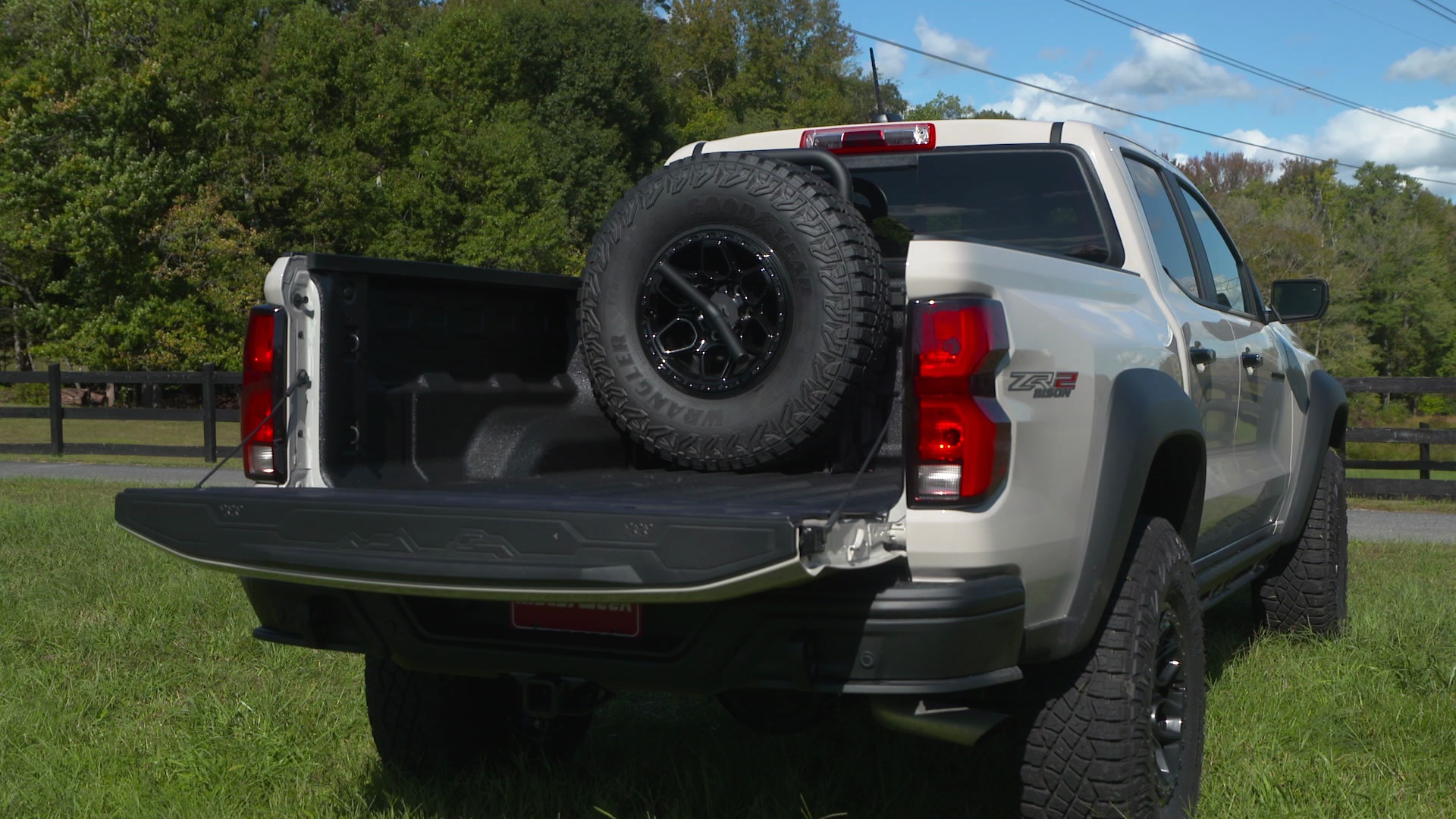
The ZR2 Bison arrives with a presence that’s less “fashioned for photos” and more “built for abrasion.” Its exterior design reads like a checklist—clearance, protection, and the geometry needed to keep tires connected to irregular surfaces. The stance is purposeful. The suspension and underbody coverage are not an afterthought; they define the truck’s silhouette and influence how it approaches an obstacle before the driver ever touches the throttle.
Step closer and the details start to explain themselves. Rock-crawler equipment tends to be obvious in hindsight: reinforced components, skids where impacts are most likely, and the kind of hardware that looks willing to endure repeated contact. Even before the first crawl, it’s clear the Bison is engineered for the sideways scuff of rock and the sharp jolts of uneven climbs.

Suspension Tuning: Flex, Control, and the Art of Staying Planted
Rock crawling is a negotiation between traction and suspension travel. The 2026 Colorado ZR2 Bison’s tuning aims to keep wheel contact stable as the chassis tilts and twists. What stands out is the balance between articulation and damping discipline. Too much “float” can make a truck feel vague at low speed; too much stiffness can prevent tires from finding purchase in the first place.
On a rocky line—where one wheel rides a ledge while another hangs in a groove—the Bison demonstrates a controlled kind of flex. The suspension allows uneven terrain to be absorbed without turning every impact into a jolt that scrambles steering input. Short, decisive movements of the driver translate into predictable adjustments at the contact patch. It feels almost like the truck is cooperating with the terrain instead of fighting it.
As the crawl progresses, this matters more than most drivers expect. Repeated obstacles demand consistency. A capable crawler doesn’t just climb once; it keeps composure across a sequence of angles, ledges, and irregular rock faces.
Underbody Protection and Approach Confidence
Confidence in rock crawling isn’t bravado—it’s clearance and protection. The Bison’s underbody shielding and rock-oriented hardware reduce the nagging fear of “something expensive hitting something ugly.” That shifts the driver’s attention away from survival math and back to line selection, throttle modulation, and body positioning.
Approach and departure angles are the silent partners in every crawl. A truck can have incredible traction but still fail if it drags a skid plate at the wrong time. The ZR2 Bison’s geometry encourages earlier commitment to the climb. The front end is willing to enter without hesitation, and the rear end tracks over uneven departure without feeling overly fragile.
When the trail turns into a series of rock steps—each one slightly higher and more abrasive than the last—these protections become psychological leverage. The truck feels prepared, which helps the driver keep inputs smooth rather than frantic.
Traction System Behavior: When Electronics Become Co-Pilots
Rock crawling is where traction management stops being a buzzword and becomes a tangible experience. The 2026 Colorado ZR2 Bison’s traction system works to distribute torque effectively while preventing wheel spin from wasting momentum. At low speeds, the goal isn’t acceleration; it’s the right amount of drive delivered to the wheels that actually have grip.
In practice, the Bison’s system excels at maintaining composure on mixed surfaces—sand over rock, wet stone over dry ledges, patches of dust that briefly turn traction into illusion. Instead of surging or hunting, it tends to apply a measured response. That’s vital for crawling, because an overzealous intervention can abruptly change wheel behavior and upset the chassis.
Drivers who enjoy methodical crawling will appreciate that the truck doesn’t feel like it’s fighting the driver’s plan. It feels like it can be trusted to manage the fine details while the driver concentrates on steering angle and throttle cadence.
Low-Speed Control: Throttle Modulation, Braking, and Torque Strategy
At crawling speeds, the difference between success and a stalled restart is often a matter of millimeters—both in vehicle position and in how the throttle is applied. The Bison’s low-speed response encourages delicate input. Throttle mapping and drivetrain behavior appear tailored for slow-motion work: smooth takeoffs, predictable engagement, and controlled torque delivery.
Braking also plays a role beyond stopping. In rock crawling, brakes can stabilize the truck and help manage traction when one wheel loses grip. The Bison’s braking feel supports measured corrections. The truck can creep forward with intent, then settle into a stable posture on a ledge without lurching.
Combine this with the traction system’s torque strategy and the result is a rhythm. The truck moves with a certain patience—like it understands that the fastest way up isn’t always the most aggressive way up.
Tires and Ground Contact: The Real Difference Between “Looks Capable” and “Is Capable”
Tires are the translator between vehicle hardware and rock physics. On rough lines, tire sidewalls flex in ways that can either rescue a line or punish it. The ZR2 Bison’s tire setup prioritizes grip on irregular surfaces, and the tread pattern supports confidence in both forward bite and lateral stability.
What matters most is how the tires behave when the truck is half-angled—when one side is loaded more heavily, and the contact patch shapes into something temporary. The Bison’s tires maintain traction long enough for the driver to reposition and correct. There’s a sense that the rubber remains engaged rather than slipping away into uncertainty.
For readers who like to tune their own crawling setups, this is where tire pressure becomes a lever. Slight adjustments can deepen compliance and improve how the tire conforms to rock. The Bison’s overall package seems designed to work with that approach rather than against it.
Cabin and Ergonomics: Staying Focused While the Trail Gets Loud
Rock crawling isn’t continuous sprinting; it’s frequent pauses, careful observation, and repeated attempts. That changes the cabin’s job. It must keep the driver oriented, reduce fatigue, and make it easy to interpret what the truck is doing.
The 2026 Colorado ZR2 Bison’s interior supports that kind of concentration. Controls are arranged for low-speed operation, and visibility is oriented toward obstacle assessment. When crawling, the ability to see wheel placement and trail position is more than comfort—it’s a safety tool.
Sound matters too. A crawling truck should communicate loads without turning into a chaotic rattle-box. The Bison tends to remain readable, even as suspension compresses and rebounds. That “readability” helps drivers refine their line and keep effort consistent.
Rock Crawling Scenarios: What the Bison Does Best
Different trails reward different strengths. The ZR2 Bison shines in situations where traction is intermittent and the correct response is measured rather than forceful. It feels particularly at home on ledges where careful torque delivery and stable chassis behavior matter most.
It also performs well on angled climbs that require steering input without compromising forward progress. In these scenarios, the truck’s stability and tire contact work together. The chassis doesn’t feel like it’s searching for balance; it feels like it can hold a line while the driver makes small, intentional adjustments.
On uneven descents, the Bison’s controlled behavior encourages deliberate pacing. Speed management becomes more confidence than chore, allowing the driver to focus on where the tires will land next.
Practical Ownership Notes: The Stuff That Shows Up After the Crawl
A rock crawling review wouldn’t be complete without the practicalities. After a trail day, mud and grit find their way into seams and under surfaces that look clean from a distance. The Bison’s crawler-focused hardware suggests a willingness to be used hard, but ownership still means planning: cleaning strategy, inspection routines, and awareness of how components wear under repeated abrasion.
Readers should also consider trail etiquette and maintenance timing. Check underbody protection, inspect drivetrain components, and ensure that tires are rotated and monitored for edge wear. Crawling is repetitive stress in slow motion. With a thoughtful routine, the truck can remain as dependable on the tenth obstacle as it is on the first.
Who Should Consider the 2026 Colorado ZR2 Bison?
The Bison is for drivers who like technical trails and appreciate control over brute force. It suits weekend explorers who want a truck that can handle rock lines without turning every outing into a gamble. It also appeals to enthusiasts who enjoy “reading” terrain—who can appreciate how throttle, brakes, suspension, and traction systems work together as a coherent whole.
If your ideal driving day involves careful lines, patient climbs, and the satisfaction of bringing a truck through a difficult section with precision, the 2026 Colorado ZR2 Bison belongs on the shortlist.
Verdict: A Rock Crawler Built for Methodical Bravery
The 2026 Chevrolet Colorado ZR2 Bison doesn’t chase drama. It earns respect through composure. It approaches obstacles with the posture of a dedicated crawler, controls low-speed motion with deliberate intent, and keeps traction management from becoming a chaotic guessing game.
When the trail grows jagged and the path narrows into a test of angles, the Bison feels like a partner rather than a project. It’s the kind of truck that makes you want to try again—slower, smarter, and with a clearer understanding of what it can do. And that, in rock crawling, is the highest praise.