What happens when your car becomes more than a chariot—when it starts anticipating your next move with the calm confidence of a seasoned co-pilot? In 2025, Volvo plug-in hybrid electric vehicles (PHEVs) lean into that idea with standard driver assistance technology designed to feel intuitive, not intrusive. Still, here’s the playful twist: will you treat those features like a helpful shadow, or will you accidentally ignore them until you actually need them most?
Driver assistance isn’t just a checklist item anymore. It’s an ecosystem—part sensor ballet, part predictive logic, part human-in-the-loop mindfulness. And while these systems can make everyday driving smoother, they also introduce a subtle challenge: learning what the technology can do, what it can’t, and how to collaborate with it when conditions turn moody—rain-slick roads, glare-heavy afternoons, construction zones, or hurried merges.
Let’s walk through the standard driver assistance tech you’ll find across the 2025 Volvo PHEV lineup, why it matters, and how to use it with the kind of deliberate ease that makes driving feel almost… theatrically effortless.
Sensor Suite: The Quiet Cartographers of the Road
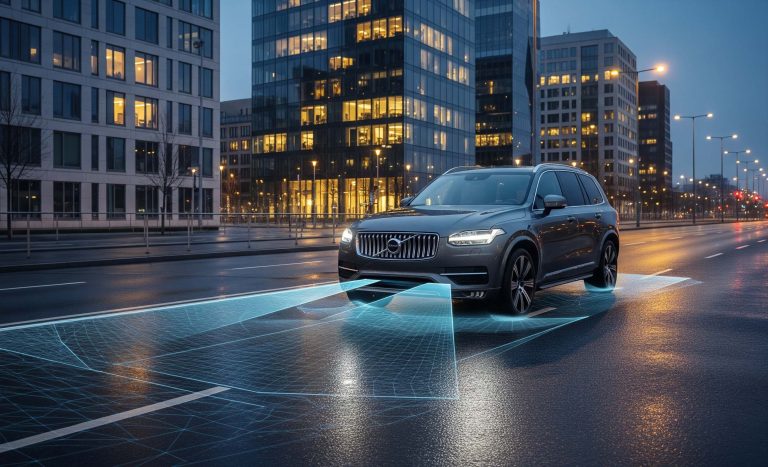
Before any warning or steering suggestion appears on the dashboard, the system has already been mapping the scene in real time. Volvo’s standard driver assistance technology relies on a sensor constellation—camera views, radar sensing, and often additional perception layers—to understand distance, lane markings, vehicle motion, and potential hazards.
That “quiet cartography” is what enables many higher-level behaviors. The car doesn’t merely look forward; it interprets motion trends. A stationary vehicle in the distance isn’t just a shape—it becomes a probability. Lane lines aren’t just paint—they’re reference points. Pedestrians aren’t merely objects—they’re movement vectors.
Here’s the challenge hiding in plain sight: if you assume the car only “sees” at a glance, you may overestimate performance in edge cases. Snow can obscure lane markings. Nighttime glare can distort perception. Heavy rain can scatter light. The technology is robust, yet not omniscient—so your situational awareness remains the protagonist.
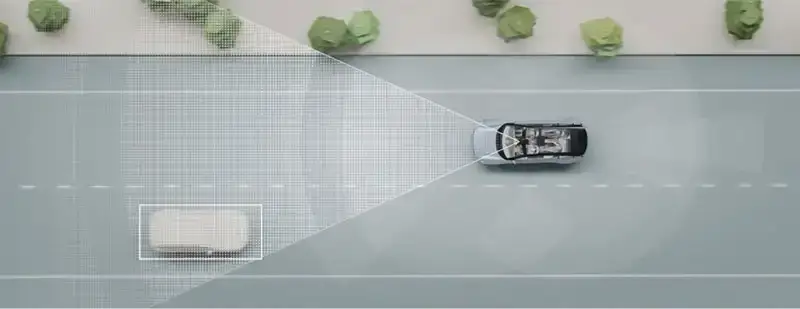
Forward Collision Mitigation: Gentle Warnings, Serious Intent
One of the most confidence-building elements in a modern driver assistance suite is forward collision mitigation. In 2025 Volvo PHEVs, standard systems are designed to help detect potential front-end collisions and respond with warnings or braking assistance depending on severity.
It’s easy to treat collision mitigation as a “just in case” feature. But the real value arrives in those seconds when attention frays—when the mind drifts, when a traffic light changes faster than expected, or when a vehicle ahead suddenly slows for an obstacle you can’t yet fully read.
Volvo’s approach aims for composed communication. The car tries to be helpful rather than dramatic. Still, this creates the playful question’s second half: will you interpret alerts as a reason to relax, or as an invitation to take command promptly?
Collaboration is the key. Let the system buy you time, but don’t outsource judgment. When the warning triggers, consider it a prompt—then act with clarity.
Pilot-Like Lane Support: Assistance Without Blind Obedience
Lane support features are where driver assistance transitions from safety net to driving rhythm. A 2025 Volvo PHEV can assist with lane keeping by monitoring lane boundaries and helping manage steering inputs to maintain position when conditions permit.
In ideal conditions—clear lane markings, moderate weather, consistent road geometry—lane assistance feels like an extra metronome for your steering. It can reduce fatigue on long stretches and help prevent unintentional drift during moments of distraction.
Yet, here’s where the potential challenge surfaces: lane systems depend on visible lane demarcations. If markings fade or curve unexpectedly through construction, the car may reduce or limit its assistance. A system that feels “always on” can become “sometimes on.” Your job is to notice the difference quickly.
So yes—lean into the assistance. But stay ready. The car can help, but it can’t read your intentions like a human passenger can.
Adaptive Cruise Control: Traffic Flow, Tuned to Your Pace
Adaptive cruise control brings a different kind of assistance: not lateral guidance, but longitudinal pacing. Standard driver assistance tech in 2025 Volvo PHEVs helps maintain a set speed while adjusting distance to vehicles ahead.
This feature shines in stop-and-go traffic and on highways where speed variations become constant. Instead of repeatedly lifting off the pedal or re-engaging controls, you can let the system smooth the process, keeping you within a safe following distance.
Here’s the nuance that often gets missed: adaptive cruise is not a substitute for attention. It’s a management layer over your driving. When roads change—when a lane merges, when traffic abruptly disperses, when a sudden obstacle appears—your reactions still matter.
Think of it as a skilled traffic conductor, not the entire orchestra. You’re still the lead instrument, and the system is harmonizing the tempo.
Driver Monitoring and Readiness: The Subtle Reminder to Be Present
Many modern driver assistance systems include elements that encourage driver engagement. Even when active features are available, the car benefits from ensuring the driver remains attentive. In 2025 Volvo PHEVs, standard technology supports this philosophy by reinforcing awareness and readiness.
This can feel slightly unusual at first. Some drivers want to settle into a purely assisted mode, believing the car will carry more responsibility than it should. But the best experience arrives when you treat the assistance as “supportive scaffolding,” not as a replacement for mindfulness.
When you stay present, the system feels more fluid—less like a watchdog and more like a collaborator that matches your focus level.
360° Awareness and Surround-View Support: Parking Becomes Less of a Guess
For many drivers, the most stressful moments aren’t highway merges—they’re the tight, low-speed scenarios: crowded parking lots, angled spaces, tricky driveways, and those “is that curb closer than it looks?” glances.
Volvo’s surround-view capabilities help reduce uncertainty by providing a multi-angle view that can make spatial judgment clearer. In a single glance, you can understand what your mirrors might miss.
Still, the playful challenge returns: will you rely solely on the camera view, or will you use it as an enhancement to your scanning routine? Cameras are powerful, but real-world depth and nearby obstacles can still demand vigilance.
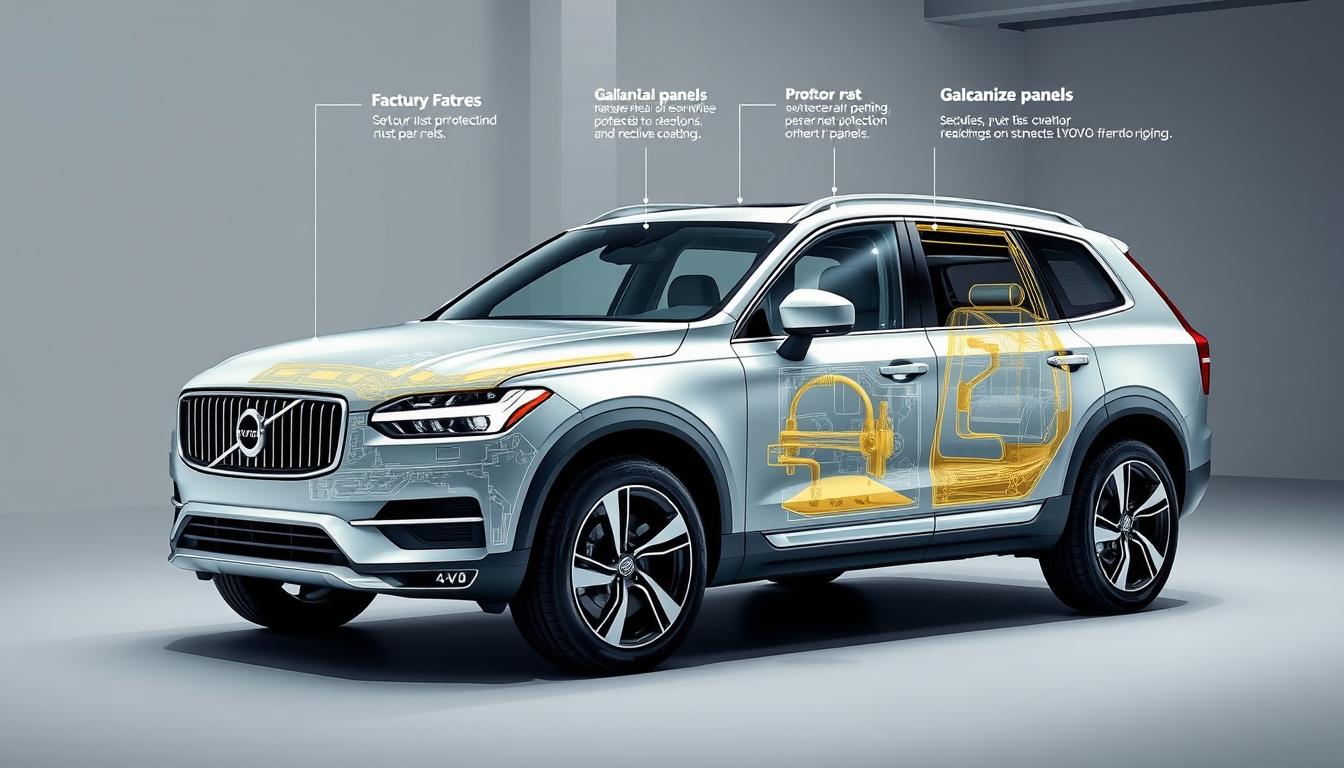
Intersection and Vulnerable Road User Awareness: Anticipation at Crossroads
Standard driver assistance technology increasingly focuses on situations where risk blooms: intersections, crosswalks, and turning maneuvers. In 2025 Volvo PHEVs, the system’s detection capabilities aim to recognize vehicles and vulnerable road users so the car can respond with warnings or mitigation where appropriate.
It’s one thing to be aware of traffic ahead. It’s another to understand what might enter your path from the side. Volvo’s assistance tries to close that information gap, offering a layer of foresight when your attention could be split by signals, signage, or complex lane patterns.
And yet, the best results come when you stay proactive. Treat warnings as a cue to slow, verify, and proceed with deliberate smoothness.
How to Use Standard Tech Like a Pro: A Practical Collaboration Checklist
Standard driver assistance features work best when you adopt a simple mindset: don’t fight the car’s logic, and don’t blindly trust it either. Instead, collaborate.
Here’s a concise approach:
First, keep the driver monitoring cues in mind. Pay attention continuously, not intermittently.
Second, respect the limitations of lane visibility and sensor conditions. Adjust your comfort level in rain, snow, or glare.
Third, when collision warnings appear, treat them as immediate prompts—not background noise.
Fourth, use surround-view support to confirm what you already suspect, not to replace physical scanning.
Short and long sentences both have a purpose here: short reactions save time; long awareness keeps you safe.
The Final Take: Comfort With Capability, Not a Shortcut to Caution
2025 Volvo PHEVs offer standard driver assistance technology that aims to make everyday driving calmer, safer, and less mentally taxing. The systems can help manage speed, lane position, collision risk, and maneuvering uncertainty—creating a sense of supportive presence behind the wheel.
But the real success story isn’t just about what the car can do. It’s about how you meet it halfway. If you stay present, adapt to changing conditions, and treat alerts as invitations to act, the technology becomes less like a safety net and more like a reliable co-pilot you can trust.
So go on—ask that playful question again. Will you let the car help you, or will you wait for the moment when help is needed most? The road will answer either way. The best choice is to be ready before the situation arrives.