What if the number on the sticker and the number in your driveway don’t quite speak the same dialect? That’s the deliciously frustrating question lurking behind every plug-in hybrid—especially the 2025 Hyundai Tucson PHEV, a crossover that promises electric driving theater with the EPA’s confident cadence. Yet reality has a way of turning tidy charts into messy, human stories. Consider the potential challenge: you might plan your daily commute like an optimist, only to discover that wind chill, tire pressure, traffic density, and battery temperature have been quietly editing your “real-world” script.
In this article, we’ll weigh real-world EV range against the EPA estimate—not as a gotcha, but as a practical calibration. The goal is not to accuse the EPA of optimism; rather, it’s to decode how driving conditions influence your electric miles, and how you can steer the Tucson PHEV toward its best-case performance.
EPA vs. Real-World: Why the Numbers Diverge
The EPA range figure is a carefully choreographed performance. It’s based on standardized testing cycles designed to be repeatable across vehicles, which means the test environment cannot fully mirror your city blocks, your temperature swing, or the idiosyncrasies of your commute. Real-world driving, on the other hand, is improvisational jazz—some days smooth, some days stop-and-go chaos.
Even when you do everything “right,” small variables can nudge electric range. Short trips can be especially tricky because the battery must support propulsion while also feeding onboard systems: HVAC, defrosting, battery conditioning, and infotainment. That’s the hidden cost of comfort. Meanwhile, highway driving tends to raise aerodynamic drag and steady power demands, shrinking the distance the battery can sustain before the engine must join the duet.
The key takeaway is simple: the EPA estimate is a benchmark. Your life is the experiment.
The Tucson PHEV’s Electric Driving Promise
The Tucson PHEV is built around a philosophy many drivers crave: access to electric motion without surrendering long-distance flexibility. In other words, it’s designed for people who want to reduce gasoline use during everyday routines, then rely on conventional power when the schedule goes rogue—family road trips, late-night errands, detours that turn into detours that become destinations.
In electric mode, the driving feel can be surprisingly composed. Throttle response often feels instant, and the vehicle’s ability to creep smoothly through low-speed traffic makes it appealing in urban environments. Still, “appealing” doesn’t automatically mean “long-lasting.” The battery’s range window depends on how the Tucson is asked to behave.

Real-World EV Range: What Drivers Actually Experience
Real-world EV range is a narrative stitched together from repeated starts, varying speeds, and fluctuating climate conditions. Drivers often report a range that can be meaningfully lower than the EPA value, particularly when the commute includes long highway stretches or when the weather forces extra thermal management.
Think about it like this: EV efficiency is a balancing act between energy demand and energy availability. If you accelerate frequently, climb elevations, or maintain higher highway speeds, the demand rises faster than your battery can replenish. When temperatures drop, the battery itself becomes more reluctant—less willing to deliver energy efficiently—while cabin heating draws power that doesn’t directly move the wheels.
That’s why your “first drive” of the day matters. A cold-start routine can behave like a small tax. The good news? Consistent charging habits and smart preconditioning can shrink that tax considerably.
Highway Reality vs. City Mythology
City driving and highway driving don’t just feel different; they consume energy differently. In urban settings, the Tucson PHEV can capitalize on regenerative braking. Every time you slow down—especially in stop-and-go traffic—some energy is reclaimed, extending the EV portion of your trip.
On the highway, regeneration becomes less dramatic. You’re typically covering distance at constant speed, and aerodynamic drag becomes the dominant energy drain. That’s when even a battery that seems “fully charged” can feel like it’s disappearing faster than expected.
So, if your daily schedule includes both city streets and expressways, your real-world EV range can land closer to the middle. If it’s mostly highway, it tends to skew lower. If it’s mostly city, it tends to cling closer to the hopeful end of the range spectrum.
Battery Conditioning, Temperature, and the Comfort Tax
Battery temperature is the quiet monarch of EV range. A battery operating at an optimal temperature can deliver energy with fewer losses. A battery that is too cold or too hot incurs inefficiency penalties—losses that don’t announce themselves until the EV range estimate feels suddenly optimistic.
Cabin climate adds another layer. Heating in colder weather can be particularly expensive because it demands significant electrical power. Many drivers underestimate how quickly those kilowatts vanish. Meanwhile, summer heat isn’t usually as punishing as winter heating, but aggressive air conditioning can still erode EV distance.
Here’s the playful challenge embedded in all of this: will you treat comfort like a luxury, or will you treat it like a bill you have to pay with range? If you want maximum electric miles, use seat heaters or targeted heating strategies when possible, and consider preconditioning while plugged in.
Driving Style: The “Gentle Throttle” Advantage
EV range is sensitive to how you accelerate and how frequently you interrupt momentum. Smooth launches and early braking maximize efficiency. A heavy right foot can be entertaining for a moment, but it turns energy consumption into a leaky faucet.
The Tucson PHEV benefits from predictable driving. If you anticipate traffic light changes and maintain moderate speeds, you reduce energy spikes. If you surge, then brake hard, you rely more heavily on regeneration—and regeneration, while helpful, is not magic. It can recapture energy, but it can’t erase every inefficiency created during acceleration.
In practical terms, the most reliable way to stretch EV miles is to drive as if you’re trying to keep the battery calm.
Charging Habits: Turning “Estimated” Into “Achievable”
Charging behavior can transform the relationship between your daily mileage and the EPA number. Starting with a full charge matters, but timing and charging duration matter too. If you charge right before departure, you can reduce the time the battery spends drifting toward less efficient temperatures.
Also, watch out for “phantom range theft” from scheduling. If you plug in, let the car sit for hours, then depart in extreme conditions, the battery may not be in its best operating state. Preconditioning while plugged in can keep energy usage focused on propulsion rather than temperature management.
In short: maximize the chances your Tucson PHEV begins each trip in its most efficient thermal mood.
So… What’s the Verdict? EPA vs. Real-World Expectations
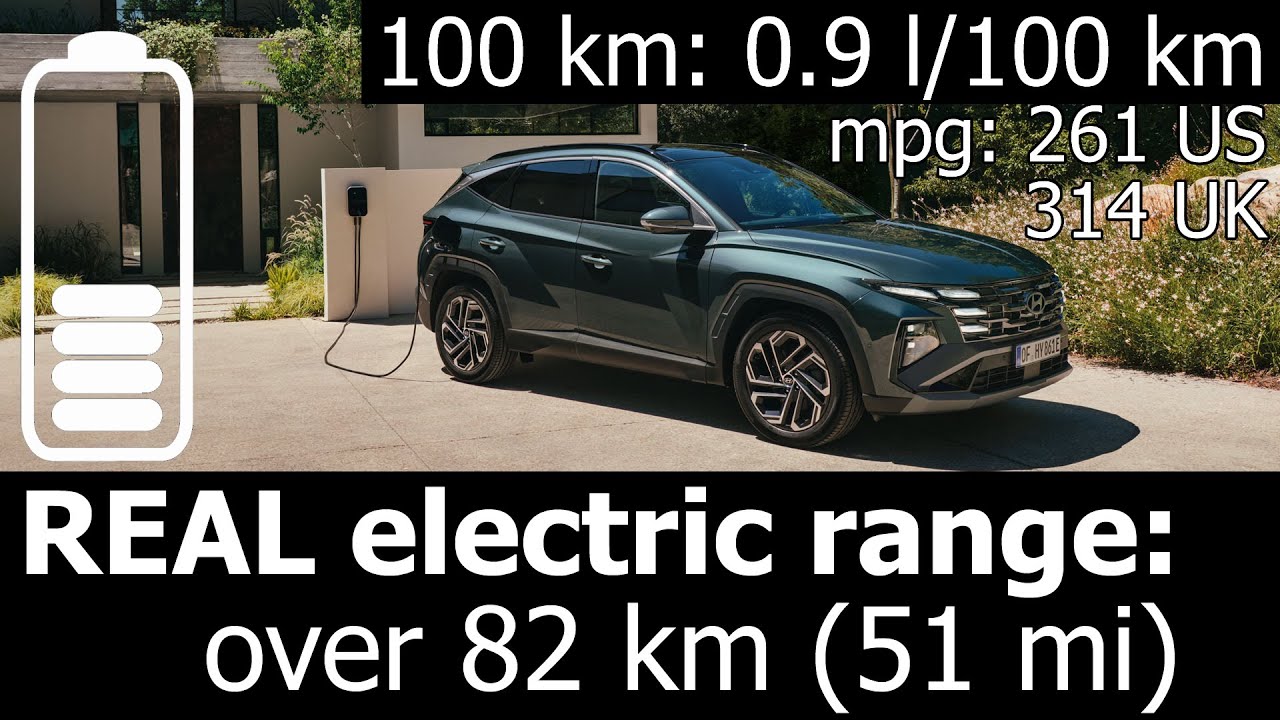
The truthful answer is that EPA range is a high bar, not a promise. Real-world EV range depends on speed distribution, weather, HVAC demands, elevation, and your personal driving rhythm. But that doesn’t mean the EPA figure is useless. Instead, it’s the upper boundary of a map. Your daily commute is where the line gets drawn.
If your driving pattern is mostly urban and your climate is moderate, the Tucson PHEV can deliver electric driving that feels remarkably close to expectations. If you regularly drive faster, farther, and colder, real-world range will likely undershoot the EPA estimate—sometimes noticeably.
The best way to avoid disappointment is to plan with a conservative mindset. Treat the EPA number as aspirational. Treat your routine as empirical.
Tips to Close the Gap and Get More Electric Miles
Want the Tucson PHEV to behave more like the EPA scenario? Consider these tactics:
1) Precondition while plugged in. This reduces the “comfort tax” at departure.
2) Keep speeds moderate. Efficiency worsens as aerodynamic drag intensifies at higher velocities.
3) Drive smoothly. Gentle acceleration and early planning reduce energy spikes.
4) Watch tire pressure. Underinflation increases rolling resistance, quietly trimming range.
5) Route strategically. If possible, favor mixed or city routes over extended high-speed stretches when you want maximum EV distance.
Outro: Your Daily Range, Your Rules
The 2025 Hyundai Tucson PHEV sits at an interesting crossroads of optimism and reality. The EPA estimate gives you a credible reference point, but real-world EV range depends on everything from climate to cadence. And that’s not a flaw—it’s the honest texture of owning a plug-in hybrid in a world that refuses to follow scripts.
So here’s the question to carry into your next charge cycle: will you drive the way the EPA test imagines, or will you drive the way your life actually happens? If you plan for the challenge, you’ll stop chasing a single number and start mastering a system. And when your Tucson delivers electric miles right when you need them, the gap between “estimated” and “experienced” stops feeling like a betrayal—and starts feeling like a skill you earned.