Every morning, the same ritual repeats: keys, wallet, phone, and that brief moment of doubt—is today the day my commute starts to feel expensive? Now imagine a different kind of anxiety. Not about traffic, not about delays, but about electricity versus fuel costs. The 2025 BMW 330e steps into this daily dilemma like a calm co-pilot, quietly making the numbers look friendlier. The question is playful, but the stakes are real: how much can you actually save when your commute turns part-electric?
Before you nod along, here’s the potential challenge: savings depend on behavior, geography, and charging reality. If your workplace parking is unavailable, if your charging plan is wishful thinking, or if your driving habits are a little chaotic, the calculation can wobble. The good news? A proper electric savings model is surprisingly straightforward—and even a bit satisfying.
Meet the 2025 BMW 330e: Why the Savings Story Starts Here
The 330e is a plug-in hybrid, which means your daily journey can be powered by electricity for at least part of the trip, with the hybrid system seamlessly filling the gaps. It’s not an “all-or-nothing” proposition. Instead, it behaves like a flexible savings portfolio: electricity when it’s available and practical, and fuel when it isn’t.
That flexibility matters because commuting isn’t a controlled laboratory. Your drive may include stop-and-go traffic, speed fluctuations, and detours that add minutes. The plug-in portion turns some of those minutes into electricity consumption—often at a rate lower than gasoline per mile. The result is a blended cost per mile, influenced by how often you charge and how much of your commute stays within electric reach.

The Daily Commute Savings Model: A Simple Equation with Real-World Teeth
To calculate electric savings, treat your commute like a repeating cycle. You’re comparing two scenarios:
Scenario A (baseline): You drive a comparable non-plug-in setup, paying fuel prices only.
Scenario B (plug-in): You drive the same commute, but you use electricity for the portion that your 330e can cover on electric power before the engine needs to contribute.
Here’s the core idea:
Fuel replaced by electricity = distance driven electrically × fuel cost per mile (baseline) − electricity cost per mile (plug-in).
Even the phrasing is revealing. You’re not just saving “money.” You’re replacing a higher-cost energy source with a lower-cost one—while still allowing the hybrid system to handle the rest.
Step One: Estimate Your Commute’s Electric Portion
Start with an honest estimate of how many miles you can cover on electricity for your typical daily route. If your commute is 12 miles each way and you can consistently charge overnight, the electric share might be substantial. If your commute includes long highway segments, spirited acceleration, or colder temperatures that reduce electric efficiency, the electric portion could shrink.
Try this approach:
1) Note your usual one-way distance.
2) Decide how many of those miles are typically completed in electric mode.
3) Use a conservative percentage if you’re unsure—being cautious makes the results more believable.
For many commuters, the “electric portion” might look like a range rather than a single number. That range becomes useful when you want to understand how charging habits influence savings.
Step Two: Know Your Energy Prices (Electricity and Fuel)
Electricity prices vary wildly. Some drivers have time-of-use tariffs with cheaper overnight rates; others pay a flat household rate. Fuel prices fluctuate too, and your driving style can change real consumption.
Use the most grounded numbers you can:
Electricity cost per kWh: your charging rate at home (or your typical charger rate).
Fuel cost per mile: calculate it from your car’s real-world fuel economy or estimate from regional averages paired with your vehicle’s efficiency.
If you’re unsure, gather one week of data. It’s quick. It’s also the difference between “cool theory” and a calculation that feels accurate enough to bet on.
Step Three: Translate Miles into Energy Costs
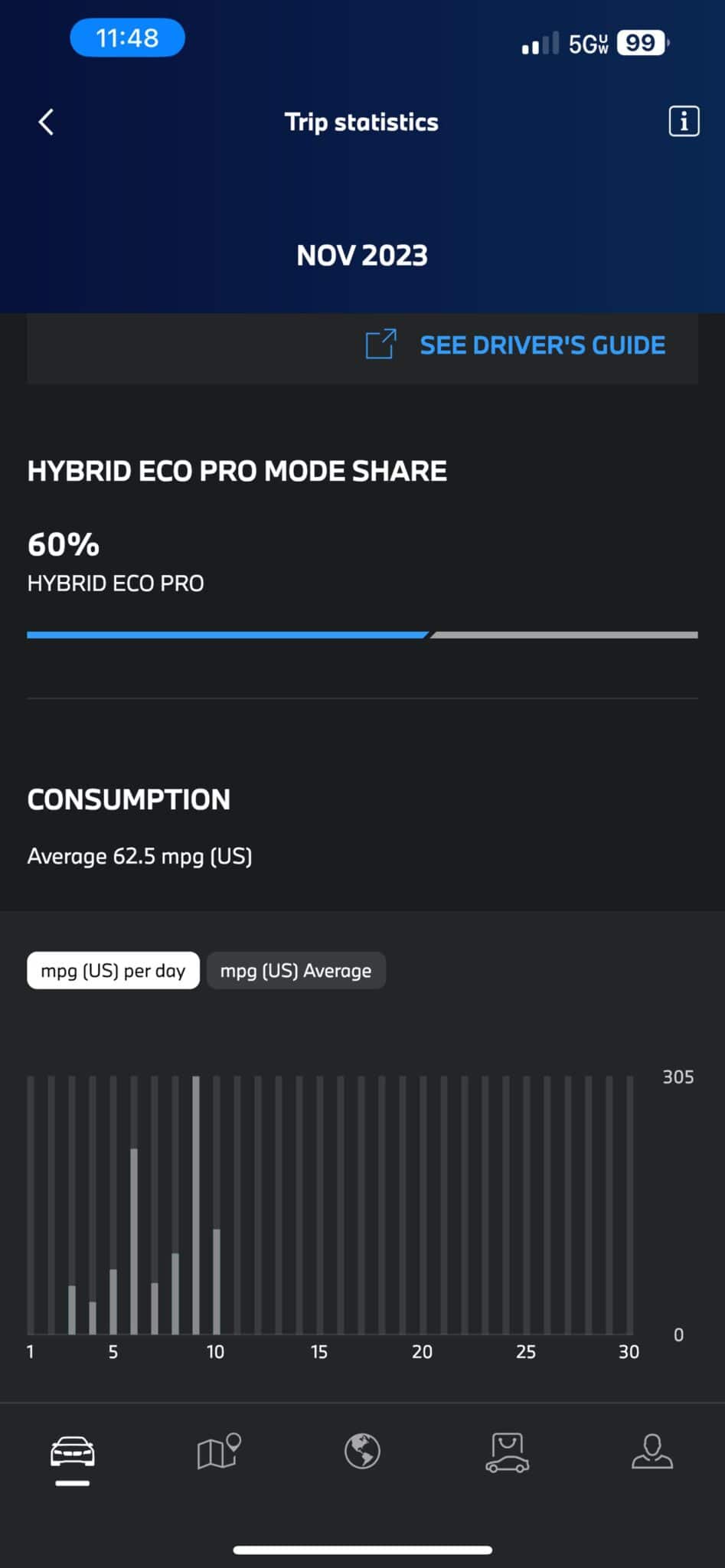
Now convert electrically driven miles into kWh consumed. If you already track your charging sessions or see trip energy usage in-app, use that. If not, you can estimate energy use based on typical plug-in consumption figures for similar driving conditions.
Once you have electricity cost, compare it to what those same miles would have cost in fuel. The comparison is where the magic happens. A plug-in hybrid isn’t guaranteed savings in every situation. But when your electricity rate is favorable and your electric driving share is meaningful, the math frequently produces a grin-inducing result.
Short sentence, important meaning: the bigger the electric share, the louder the savings.
Step Four: Factor in Charging Cadence and “Charger Friction”
Here’s the challenge posed earlier: savings are not only a function of physics. They’re also a function of logistics. “Charger friction” is real—finding the outlet, timing the charge window, dealing with cable length, scheduling around life, and making sure the battery actually starts the commute charged.
Consider three commuting patterns:
Reliable charging: you plug in most nights. Savings stabilize and become predictable.
Inconsistent charging: you sometimes forget, sometimes only partially charge. Savings fluctuate. The calculation still works, but you’ll see variability.
Rare charging: the vehicle behaves closer to a hybrid, with less electricity contribution. Savings shrink, and fuel costs dominate.
Plot your pattern honestly. Then run two scenarios: one optimistic (charged frequently) and one realistic (charged as you actually do). The gap between them becomes an actionable target.
Temperature, Traffic, and the Invisible Efficiency Tax
Efficiency is not a fixed value. Cold weather can increase energy demand. Heavy traffic can change how efficiently you accelerate and decelerate. Wind resistance on longer commutes can add drag—sometimes dramatically.
So, when you calculate savings, treat efficiency as a range. Use a conservative kWh-per-mile assumption if winter is part of your routine. On mild days, your electric range may grow; on harsher days, it may shrink. This isn’t discouraging—it’s the reality that makes your model credible.
Longer commutes can be especially sensitive to speed. A stoplight-heavy route can be more favorable because regenerative braking recaptures energy, reducing net consumption. It’s almost like the car is “foraging” for efficiency in the middle of chaos.
Example Walkthrough: Turn Your Commute into Numbers
Let’s put structure on the story. Imagine a commuter traveling 20 miles round trip, 5 days a week. Suppose you can drive 12 of those miles electrically each day when charged routinely.
Over a workweek, that’s 12 electrically driven miles × 5 days = 60 electric miles. Over a month, roughly 240 miles (assuming 4 weeks).
Now compare costs:
Baseline: those 240 miles would have been fuel-powered at your fuel cost per mile.
Plug-in scenario: those 240 miles are powered electrically at your electricity cost per kWh translated through your real consumption estimate.
The savings is the difference between baseline cost and plug-in cost. Adjust the electric miles based on your real electric share, and you’ll get a tailored result.
Even without perfect data, this method gives a practical “directional certainty” that’s more useful than guessing.
Beyond the Monthly Number: Total Cost, Confidence, and Habit Design
Electric savings aren’t only a monthly accounting entry. They influence habit formation. When your commute becomes cheaper, it reduces the emotional tax of long days. It also makes it easier to stick with energy-smart behaviors—gentle acceleration, planning charging, and using the right driving modes.
Think like a strategist: set a target. For instance, aim to maximize electric miles on weekdays by charging at the cheapest available rate. If your home tariff has an overnight window, treat it like a “quiet superpower.” If you rely on public chargers, treat the charger as a constraint and select the most efficient available option when possible.
That’s where uncommon terminology becomes useful: you’re not just saving energy—you’re optimizing a recurring energy loop. Plug in, drive, repeat.
Practical Checklist: How to Make the Calculation Actionable
Before you finalize your savings estimate, verify these essentials:
1) Commute distance: one-way and round trip.
2) Electric share: how many miles are typically electric.
3) Charging behavior: how often you plug in.
4) Electricity rate: home rate or charger rate in $/kWh.
5) Fuel cost per mile: real consumption converted into dollars.
6) Season adjustment: use conservative assumptions in winter.
Then run two versions: a realistic estimate and a best-case estimate. The realistic number tells you what you’ll likely get. The best-case number tells you what your current routine could be pushing toward.
Final Thoughts: The Real Question Isn’t “Can I Save?”
So, here’s the ending thought: the real question isn’t whether the 2025 BMW 330e can reduce commuting costs. It can, under the right blend of electricity usage and charging routine. The real question is whether you can consistently unlock the electric portion that makes the savings narrative compelling.
If you’re willing to measure your commute like a mini project—tracking a few weeks, calculating your electric share, and pricing your energy—you’ll end up with a number that feels grounded. And when the monthly total arrives, it won’t just be math. It’ll be proof that your daily routine can be a little more efficient, a little more playful, and noticeably more affordable.