The electric vehicle revolution isn’t just about replacing gas tanks with batteries—it’s about redefining what it means to drive. Two titans stand at the forefront of this transformation: the 2026 Nissan Ariya and the Ford Mustang Mach-E. Both are more than just EVs; they’re statements. One whispers elegance with a whisper of Japanese precision, while the other roars with American muscle heritage repurposed for the electric age. But beneath the sleek exteriors and polished marketing lies a deeper narrative—one of identity, aspiration, and the evolving soul of the automobile. Why do these two vehicles captivate us so deeply? Perhaps because they represent not just where we’re going, but who we’re becoming.
The Design Philosophy: Where Art Meets Aerodynamics
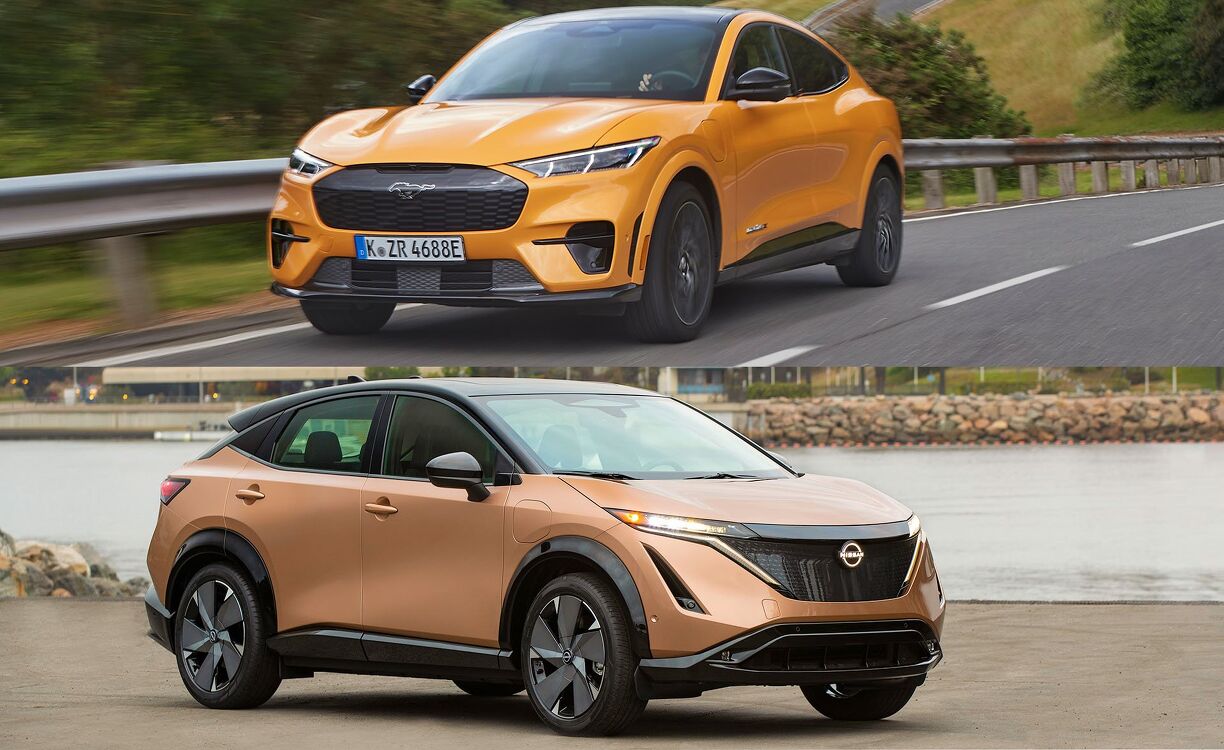
The 2026 Nissan Ariya doesn’t just park—it performs a silent ballet. Its design language is a masterclass in organic fluidity, where every curve feels like a brushstroke on the canvas of motion. The signature V-motion grille, now rendered in a seamless, illuminated panel, isn’t just a nod to Nissan’s heritage; it’s a declaration of intent. This grille breathes, pulsing with ambient lighting that shifts in hue as the vehicle accelerates or decelerates. The body, sculpted with a drag coefficient of just 0.25, slices through the air with surgical precision, its roofline dipping dramatically toward the rear to create a teardrop silhouette that whispers of speed without ever raising its voice.
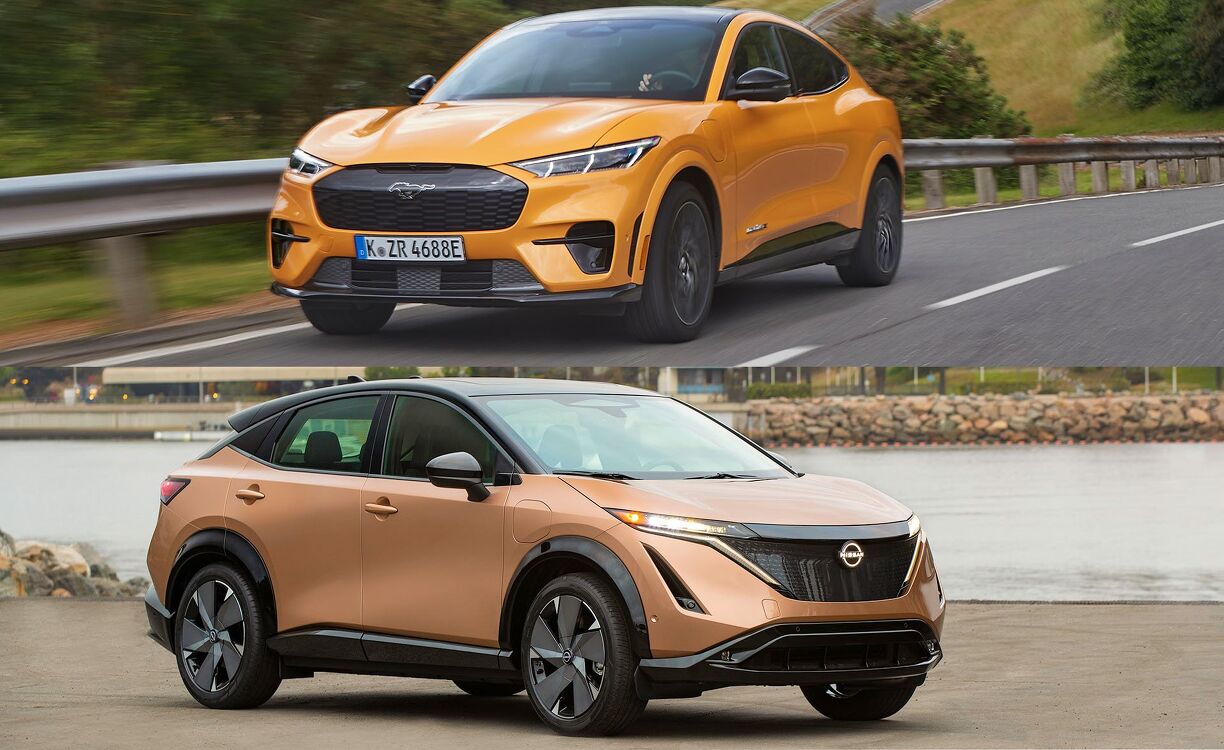
Contrast that with the Ford Mustang Mach-E, a vehicle that wears its lineage like a badge of honor. The Mach-E doesn’t whisper—it growls, even in electric silence. Its front fascia is a muscular assertion, with a honeycomb grille that pays homage to the iconic Mustang while accommodating the cooling needs of an electric powertrain. The LED light bar stretches across the width of the vehicle, a modern take on the classic pony car’s aggressive stance. The Mach-E’s design is less about fluidity and more about presence; it doesn’t blend into traffic—it dominates it. The fastback roofline and sculpted haunches give it a dynamic, almost predatory stance, as if it’s perpetually ready to pounce.
Performance and Powertrain: The Electric Heartbeat
Under the Ariya’s polished exterior lies a dual-motor all-wheel-drive system that delivers up to 394 horsepower and 400 lb-ft of torque. But power isn’t the point here—it’s the delivery. The Ariya’s e-Pedal and regenerative braking system create a symphony of one-pedal driving, where deceleration feels as intuitive as acceleration. The vehicle’s ProPilot Assist 2.0 doesn’t just keep you in your lane; it anticipates your moves, adjusting speed and steering with a level of finesse that borders on clairvoyance. The Ariya’s battery, rumored to be a 90 kWh unit, offers an estimated range of 300 miles, making it a silent marathon runner rather than a sprinter.

The Mustang Mach-E, on the other hand, is built for those who crave immediacy. With up to 480 horsepower in its GT Performance Edition, it’s a vehicle that doesn’t just move—it lunges. The Mach-E’s battery options include a 91 kWh unit, offering up to 314 miles of range, but it’s the acceleration that truly sets it apart. The GT model can sprint from 0 to 60 mph in just 3.5 seconds, a time that would make a traditional V8 Mustang blush. Ford’s Intelligent Range system uses real-time traffic and weather data to optimize battery usage, ensuring that the Mach-E’s performance remains consistent even in less-than-ideal conditions. Where the Ariya is a refined dancer, the Mach-E is a thunderous sprinter, built for those who believe speed is not just a feature—it’s a lifestyle.
Interior Ambiance: Craftsmanship vs. Tech-Driven Dynamism
Step inside the Ariya, and you’re enveloped in a cocoon of tranquility. The cabin is a study in minimalist luxury, with a panoramic glass roof that bathes the interior in natural light. The dashboard is a floating, dual-screen affair, where the digital instrument cluster and infotainment system are seamlessly integrated into a single, cohesive interface. The materials are sumptuous—soft-touch plastics, genuine leather, and sustainable wood trim—all meticulously assembled to create an atmosphere of understated opulence. The Ariya’s seats, available in a reclining configuration, invite you to sink into a state of relaxed alertness, as if the vehicle itself is urging you to savor the journey rather than rush to the destination.
In contrast, the Mach-E’s interior is a temple to modern tech and raw energy. The centerpiece is a massive 15.5-inch portrait-mode touchscreen, flanked by a 12.3-inch digital gauge cluster. The cabin is wrapped in recycled materials, from the seat upholstery to the dashboard, reflecting Ford’s commitment to sustainability without sacrificing style. The Mach-E’s seats are bolstered and supportive, designed for those who demand control and connection. The ambient lighting can shift between 20 different colors, allowing drivers to personalize their environment, but it’s the haptic feedback in the steering wheel and the adaptive damping in the suspension that truly set it apart. The Mach-E doesn’t just respond to your inputs—it anticipates them, creating a driving experience that feels almost telepathic.
Driving Dynamics: The Road as a Canvas
Driving the Ariya is like gliding across a frozen lake—smooth, silent, and effortlessly graceful. The suspension is tuned for comfort, absorbing road imperfections with a level of sophistication that makes potholes feel like distant memories. The steering is precise but not overly heavy, offering a balance between responsiveness and stability. The Ariya’s regenerative braking system is so seamless that it’s easy to forget you’re driving an electric vehicle at all. It’s a car that makes you want to take the long way home, just to savor the experience.
The Mach-E, however, is a different beast entirely. The steering is heavier, more communicative, with a directness that makes the road feel like a racetrack. The suspension is firmer, designed to keep the vehicle planted during aggressive maneuvers, and the adaptive dampers adjust in real-time to provide the perfect balance between comfort and sportiness. The Mach-E’s launch control is a revelation, pinning you to your seat with a force that’s as exhilarating as it is unexpected. Where the Ariya invites you to float, the Mach-E dares you to conquer.
The Unspoken Rivalry: Identity and Legacy
At its core, the rivalry between the Ariya and the Mach-E isn’t just about specs or features—it’s about identity. The Ariya represents the future as seen through the lens of tradition, a vehicle that respects the past while boldly stepping into the future. It’s a car for those who value refinement, elegance, and the quiet confidence that comes from knowing you’ve made a considered choice. The Mach-E, on the other hand, is a vehicle for those who refuse to compromise. It’s a Mustang in spirit, a machine that demands to be driven, not just admired. It’s for the rebels, the thrill-seekers, the ones who see the electric revolution not as an evolution, but as a revolution.
This isn’t just a comparison of two electric vehicles—it’s a clash of philosophies. One car whispers, the other roars. One is a sanctuary of calm, the other a temple of adrenaline. Yet both are united by a single, unshakable truth: the future of driving isn’t just electric. It’s emotional.
The choice between the 2026 Nissan Ariya and the Ford Mustang Mach-E isn’t just about which vehicle suits your needs—it’s about which one resonates with your soul. Do you crave the serenity of a perfectly composed symphony, or the electrifying rush of a live concert? The road ahead is yours to shape. All that’s left is to choose your companion for the journey.